




Maritime Ship Diorama Case
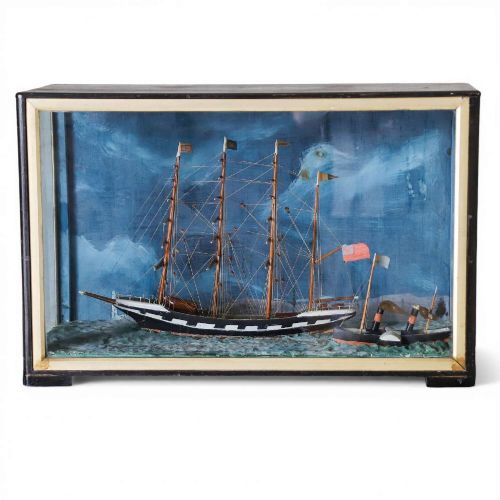
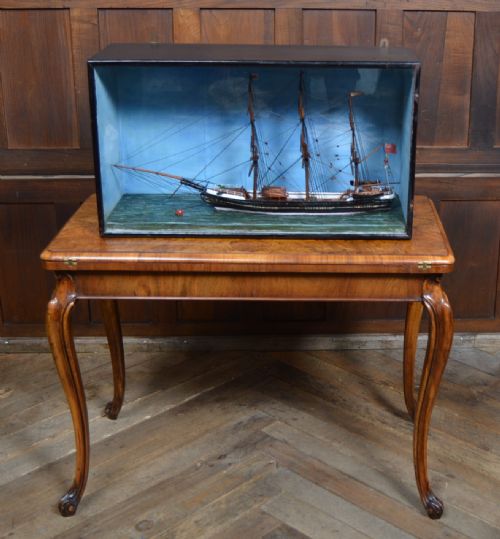
A maritime ship diorama case brings the sea indoors, offering detailed model vessels framed in wood and glass for display on the wall or shelf.
Maritime Ship Diorama Case
A maritime ship diorama case presents miniature sailing vessels set within three-dimensional coastal or open sea scenes. These pieces capture specific vessels like the Glynllifon or racing ships, preserving historical maritime moments in shadow boxes.
Most examples found here date from the nineteenth century, including works from around eighteen sixty, eighteen eighty, and nineteen hundred. Creators utilised wood, glass, paint, plaster, canvas, fabric, gilt, and straw to construct these detailed folk art objects.
Forms range from shadow box dioramas and wall art to scale models and model ships enclosed in protective glazing. French handmade boat models from Vienne and English pieces both appear within this selection.
Materials and construction methods
Maker construction relies on wooden shadow boxes and frames fitted with glass panels to protect the delicate contents within. Canvases, fabrics, and plaster form the foundations of the waves and backgrounds, often enhanced with paint.
Makers fashioned miniature rigging, hulls, and sails from wood and canvas, sometimes incorporating decorative straw work into the design. Gilt accents occasionally highlight the frames, adding a finished decorative touch to the folk art presentation.
Maritime Ship Diorama Case Retail Price Guide 2026
Typical asking prices for maritime ship diorama case among the pieces listed under this phrase on Sellingantiques today, from the lower quarter to the upper quarter. They describe what is for sale here now, not the wider market.
Listings feature nineteenth century pieces including works from eighteen sixty, eighteen eighty, and nineteen hundred, utilising wood, glass, paint, plaster, canvas, fabric, gilt, and straw.
Assessing quality and craftsmanship
Quality separates simple folk art constructions from finely detailed scale models through the precision of the rigging and the realism of the painted seascapes. Turneresque seascapes demonstrate a higher artistic ambition in the background painting behind the vessels.
The complexity of the subject matter influences the overall character of the piece, such as multi-vessel racing scenes or specific named ships like The Hippolyta. Intricate material use, including detailed straw work, distinguishes superior examples from standard model boxes.
The Maritime Ship Diorama Case Glossary
- Diorama case
- A three-dimensional scene enclosed in a protective box with a glass front. This format protects fragile model ships from dust and damage.
- Shadow box
- A deep frame designed to hold objects in relief rather than flat against a wall. These boxes provide the necessary depth for layered model waves and rigging.
- Straw work
- A decorative technique utilising flattened straw applied to surfaces to create geometric or pictorial patterns. In maritime pieces, it renders textural details on hulls or backgrounds.
- Turneresque
- A style of painting reminiscent of J.M.W. Turner, characterised by dramatic light and atmospheric seascapes. This appears in the painted backgrounds behind nineteenth century ship models.
- Scale model
- A physical representation of an object maintaining accurate proportions to the original subject. These models accurately depict historical vessels within their display cases.
Maritime Ship Diorama Case: Frequently Asked Questions
How were these dioramas used historically?
Owners displayed these cased models on walls or tabletops in homes and offices. They celebrated specific ships, racing events, or general seafaring themes.
The glass enclosure protected the fragile rigging, canvas, and straw work from environmental damage, allowing owners to preserve intricate marine scenes indoors over generations.
How do I date a ship diorama?
Dating relies on stylistic clues, framing techniques, and material analysis of the wood, paint, and canvas. Many pieces date specifically to the nineteenth century, around eighteen sixty, eighteen eighty, or nineteen hundred.
Inscribed names on the models or cases, such as known vessels or specific locations like Vienne, France, also help establish a reliable timeframe of origin.
How do I care for a cased diorama?
Keep the piece away from direct sunlight and excessive humidity to protect the delicate wooden components, canvas sails, and painted backgrounds. Stable indoor environments prevent the wood from warping and the paint from degrading.
Clean the exterior glass gently with standard glass cleaner while avoiding any moisture contact with the interior materials.