





Framed Ship Model Box
These framed ship model box pieces bring traditional maritime craftsmanship indoors, offering detailed three-dimensional sailing scenes enclosed in glass-fronted wall displays.
Framed Ship Model Box
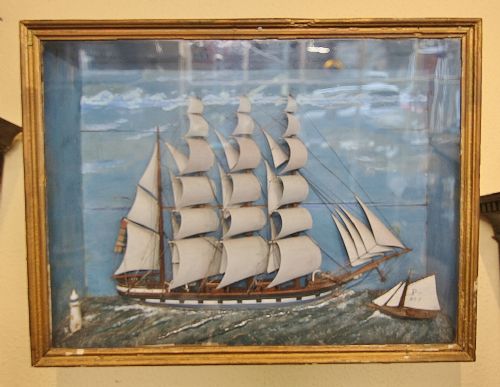
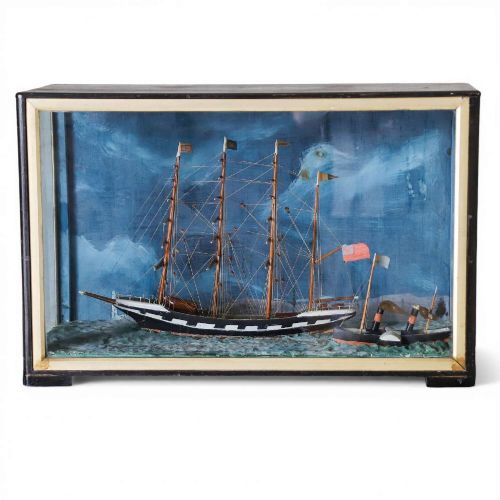
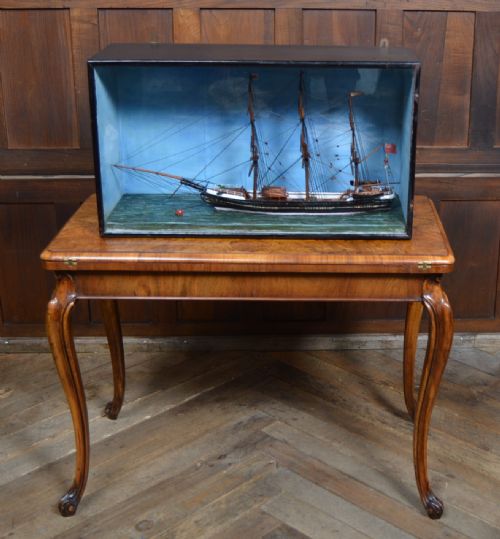
A framed ship model box presents a detailed maritime diorama encased within a wooden shadow box or cased frame, designed specifically for wall display. These pieces combine miniature model ships with painted backgrounds and layered elements to create a convincing sense of depth and perspective.
You are most likely to encounter Victorian maritime examples featuring clipper ships, four-masted vessels, or named craft like the Glynllifon and Queen Anne. The makers typically utilised wood, canvas, and painted plaster to build these miniature seascapes during the nineteenth and early twentieth centuries.
The style spans British and French folk art traditions, often displaying scratch-built hulls, fabric sails, and occasionally straw work details. These wall art pieces capture the naval history and craftsmanship of an era deeply connected to seafaring commerce.
How they were made
Artisans constructed the hulls of these model ships from carved wood, sometimes employing scratch-built techniques to achieve accurate proportions at a miniature scale. Canvas and fabric served for the intricate rigging and billowing sails, bringing a sense of motion to the static display.
The backdrop typically consists of oil paint applied to paper, canvas, or wood, creating Turneresque seascapes with stormy skies and rolling waves. Plaster and mixed media were often layered in the foreground to simulate cresting water and give the illusion of three-dimensional depth inside the box frame.
A glass-fronted wooden case enclosed the entire scene to protect the delicate paper, paint, and fabric components from dust and damage. These shadow boxes relied on simple carpentry joinery and hand-mixed pigments, reflecting the domestic and workshop methods of maritime folk art makers.
Framed Ship Model Box Retail Price Guide 2026
Typical asking prices for framed ship model box among the pieces listed under this phrase on Sellingantiques today, from the lower quarter to the upper quarter. They describe what is for sale here now, not the wider market.
Some nineteenth-century makers incorporated actual straw work into their maritime dioramas to catch the light and simulate shimmering ocean spray.
What varies in quality
The fidelity and complexity of the miniature rigging set finer examples apart from simpler pieces, requiring steady hands to scale down complex nautical cordage. Superior models feature individually carved and painted hulls rather than generic mass-produced shapes.
The structural integrity and condition of the enclosing wooden box and glass front influence the overall retention of the piece, as exposure to dampness affects paper backgrounds and fabric sails. Original framing and undisturbed interior components preserve the integrity of these maritime folk art objects.
The Framed Ship Model Box Glossary
- Maritime Diorama
- A three-dimensional display depicting a ship scene, combining a physical model with a painted background inside a shallow case.
- Shadow Box Diorama
- A walled display case with a glass front that encloses objects to create depth and protect them from environmental wear.
- Maritime Folk Art
- Decorative or utilitarian objects created by self-taught or local makers with nautical themes, ranging from model ships to scrimshaw.
- Turneresque Seascape
- A painted background style reminiscent of J.M.W. Turner, characterised by dramatic light, expressive brushwork, and atmospheric weather conditions.
- Scratch-Built Model
- A scale model constructed from raw materials rather than assembled from a pre-manufactured kit.
Framed Ship Model Box: Frequently Asked Questions
What is a framed ship model box?
A framed ship model box is a wall-hanging display case containing a three-dimensional miniature sailing ship set against a painted maritime background.
These pieces combine carpentry, model-making, and landscape painting to preserve historical vessels and naval scenes behind glass.
How were these dioramas displayed originally?
These items were designed to hang on interior walls in homes, offices, or captain's quarters as decorative reminders of maritime trade and exploration.
The enclosed glass box protected the delicate fabric sails and paper backgrounds from soot, smoke, and household dust.
How do I identify nineteenth-century examples?
Nineteenth-century pieces typically exhibit hand-carved wooden hulls, early pigments on paper or canvas backgrounds, and traditional hand-cut framing methods.
Folk art examples from this period often bear inscriptions naming specific vessels or maker annotations on the reverse or within the scene.
How do I care for a maritime shadow box?
Keep the display out of direct sunlight to prevent the fading of oil paints, fabric sails, and paper backgrounds.
Maintain stable indoor humidity levels to protect the wooden frame and prevent the delicate plaster or canvas interior elements from degrading.