
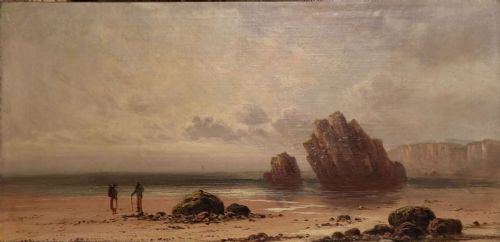


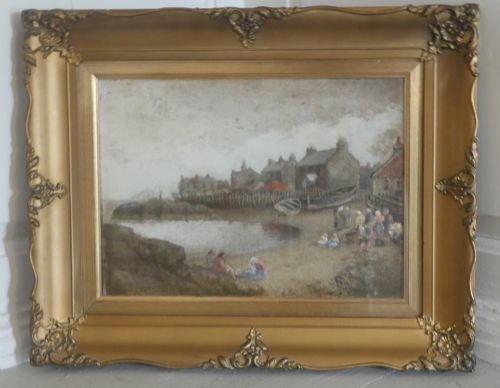

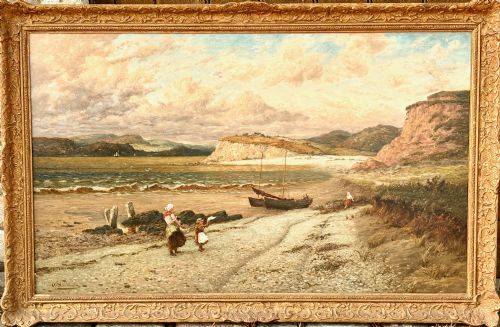
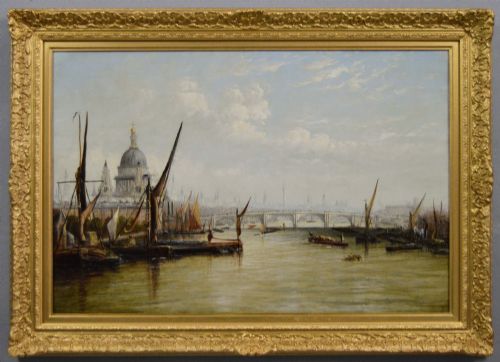

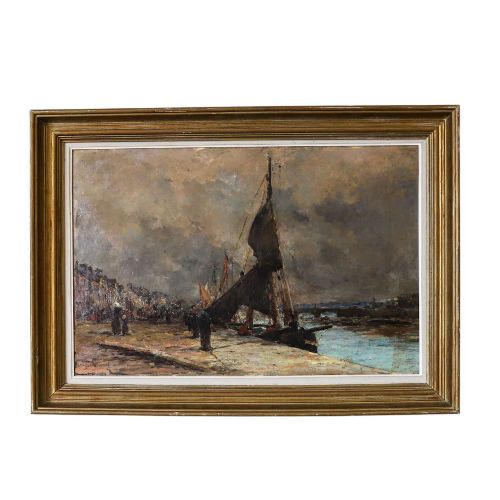
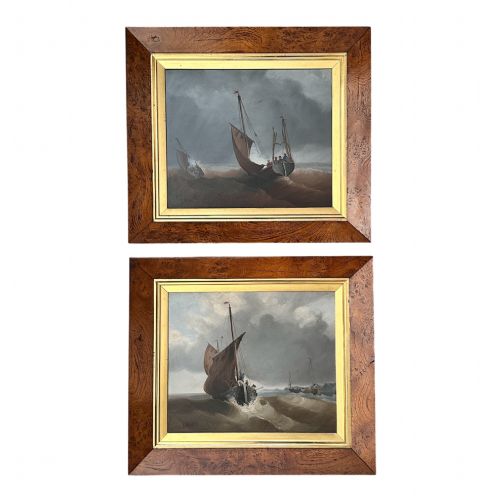
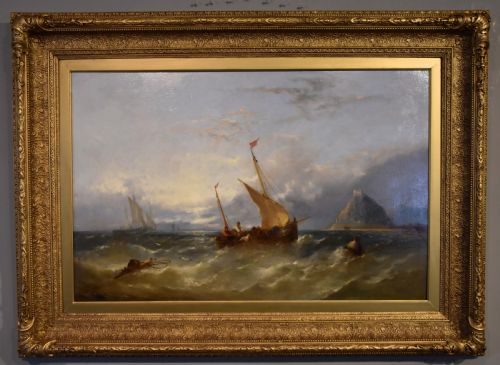
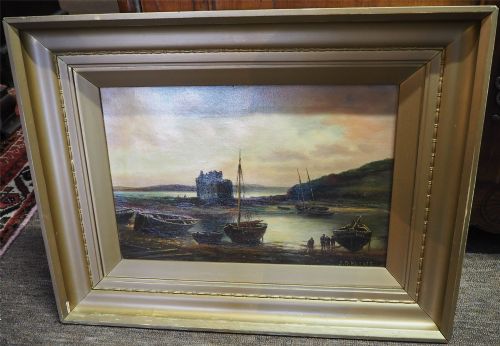
Victorian Marine Landscape Painting
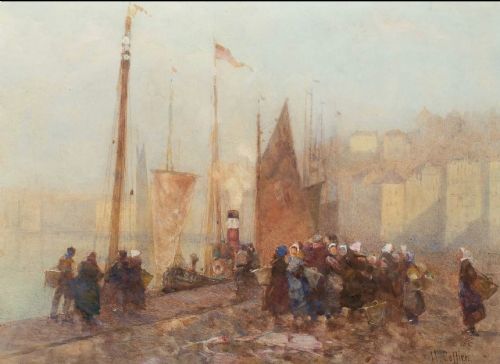
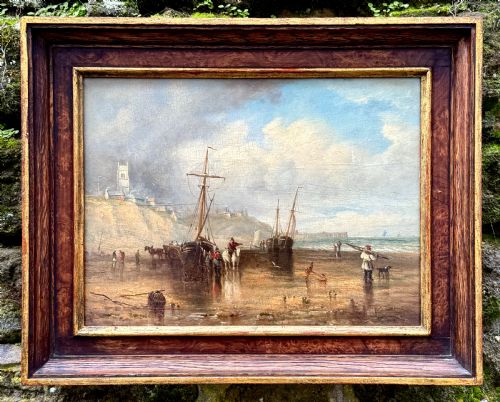
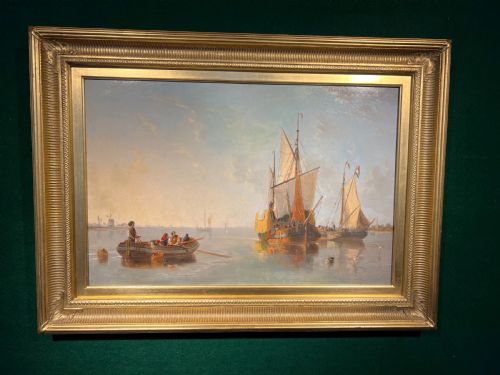
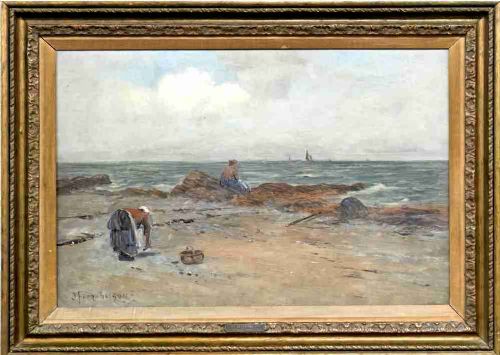
Victorian marine landscape painting captures coastal life, bustling harbours and tall ships on canvas and paper.
Victorian Marine Landscape Painting
A victorian marine landscape painting portrays coastal views, busy harbours, and shipping scenes rooted in nineteenth-century maritime life. The selection on this page relies heavily on nineteenth-century dates, framed canvases, and works on paper.
Buyers encounter regional views ranging from Scottish castles and Cornish fishing ports to foreign canals and river traffic on the Thames. These pieces combine topographical record with atmospheric depictions of sea and shore.
Most examples date from the middle decades of the nineteenth century through the early nineteen-hundreds. They appear primarily as oil paintings or watercolours, frequently housed in giltwood frames.
How They Were Made
Artists worked primarily with oil paint on canvas or board, and watercolour on paper, capturing the changing light of the coast. Pigments were applied to build up the movement of water, skies, and coastal architecture.
Finished works were typically mounted behind glass for watercolours or set into carved gilt wood frames for oils. These mountings protect the paper and canvas while giving the pictures their traditional presentation.
Listings feature works from the nineteenth century into the early twentieth century, spanning oil on canvas and watercolour.
What Varies in Quality
The strength of a composition depends on the artist's handling of light, atmosphere, and maritime detail in the water and rigging. Stronger examples demonstrate confident brushwork or watercolour technique that conveys movement in the sea and sky.
The condition of the canvas, paper, and original frame contributes to the overall integrity of the piece. Works that retain their period gilt frames and stable surfaces preserve their historical character more fully.
James Orrock·Edward Mills·William Banks Fortescue·Francis Moltino·Hector Caffieri·Bernard Benedict Hemy·Thomas Creswick·John Wilson Carmichael·Joseph Farquharson·John Moore of Ipswich·William Henry Williamson·John Holland·George Stanfield Walters·Henry Barlow Carter·John Moxon·William Frederick Settle·Alfred George Morgan·Charles William Wyllie·John Bedloe Goddard·Charles William Adderton·William Edward Webb·Gustave De Bréanski·Thomas Bush Hardy·Stanley Leader·F J Aldridge
The Victorian Marine Landscape Painting Glossary
- Seascape
- A work of art depicting the sea, coast, or marine vessels. These scenes focus heavily on maritime activities and coastal topography.
- Watercolour
- A painting method where coloured pigments are suspended in a water-based solution on paper. It offers translucent effects suited to coastal light and skies.
- Giltwood
- Wood that has been covered with a thin layer of gold leaf. Frames made with this material are typical of nineteenth-century picture presentation.
Victorian Marine Landscape Painting: Frequently Asked Questions
What subjects do these paintings show?
These works depict coastal harbours, fishing boats, racing yachts, and river scenes with shipping. They record specific locations around Britain and abroad during the nineteenth century.
Common settings include Cornish fishing villages, Scottish castles, and busy London river traffic. Artists focused on capturing the daily work of sailors and fishermen alongside coastal architecture.
Where were these artists active?
Painters travelled extensively along the British coastline and rivers to record maritime activity. Locations range from the Thames in London to ports in Yorkshire, Dorset, and the Isle of Man.
Some artists also depicted continental scenes, including Dutch waterways and Venetian canals. Their travels reflected a growing Victorian interest in coastal tourism and maritime trade.
How should I display these paintings?
These framed works suit traditional and contemporary interiors alike when hung away from direct sunlight. Proper placement protects both watercolours on paper and oil paintings on canvas from environmental damage.
Maintaining stable room temperatures helps preserve the integrity of the canvas, paper, and original gilt wood frames. Allowing adequate wall space lets the detail of the maritime scene stand out.
How can I tell watercolours from oils?
Watercolour paintings are executed on paper and are typically displayed behind protective glass. They display a translucent quality that captures subtle changes in coastal atmosphere and light.
Oil paintings utilise heavier paint applied to canvas or board, often housed in heavy gilt frames without glass. The textured surface and visible brushstrokes distinguish them from works on paper.