



Victorian Mantel Lustres
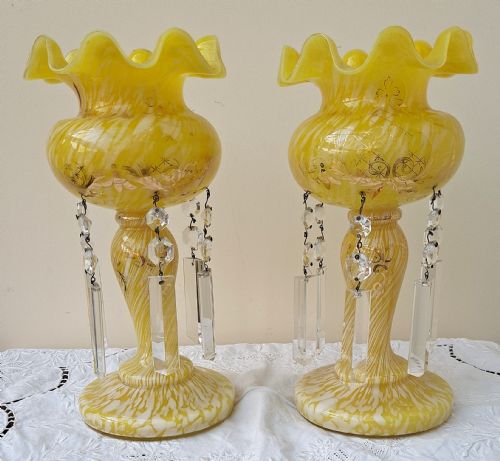
Victorian mantel lustres are striking glass ornaments designed to catch the flickering light of a room, prized for their dangling crystal drops.
Victorian Mantel Lustres
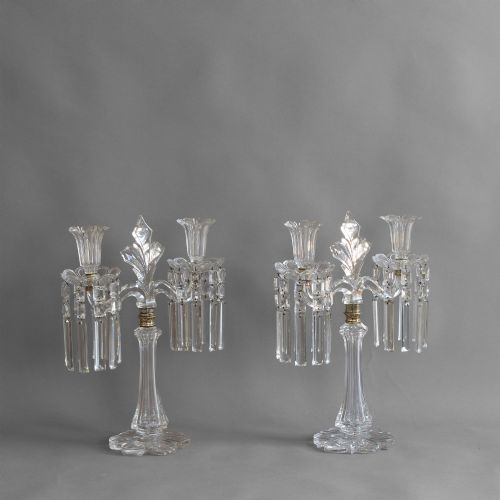
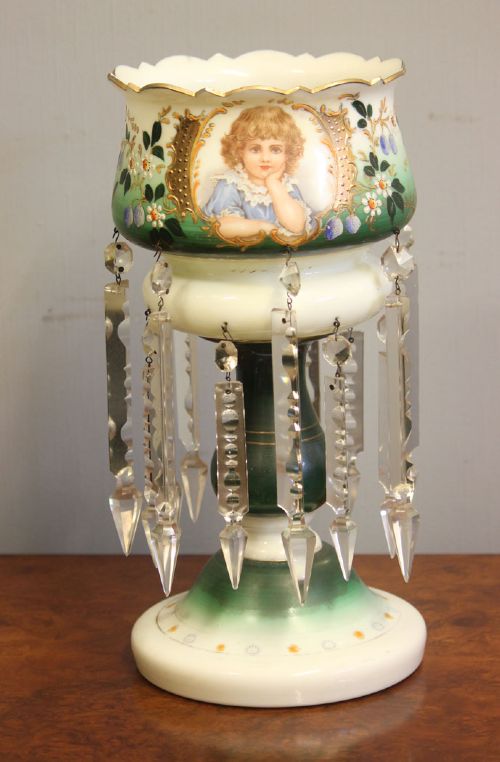
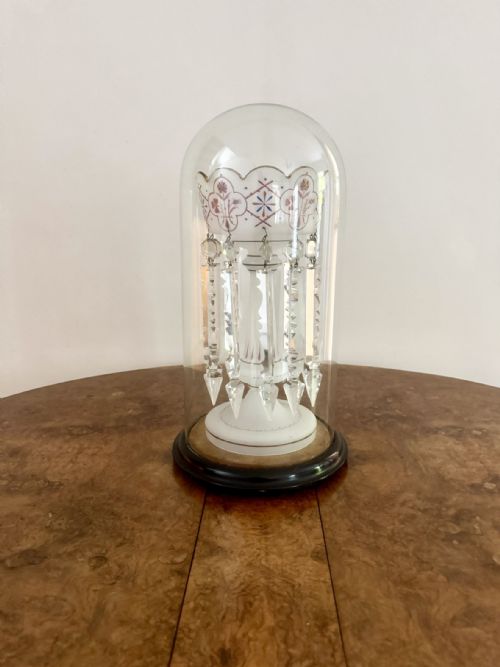
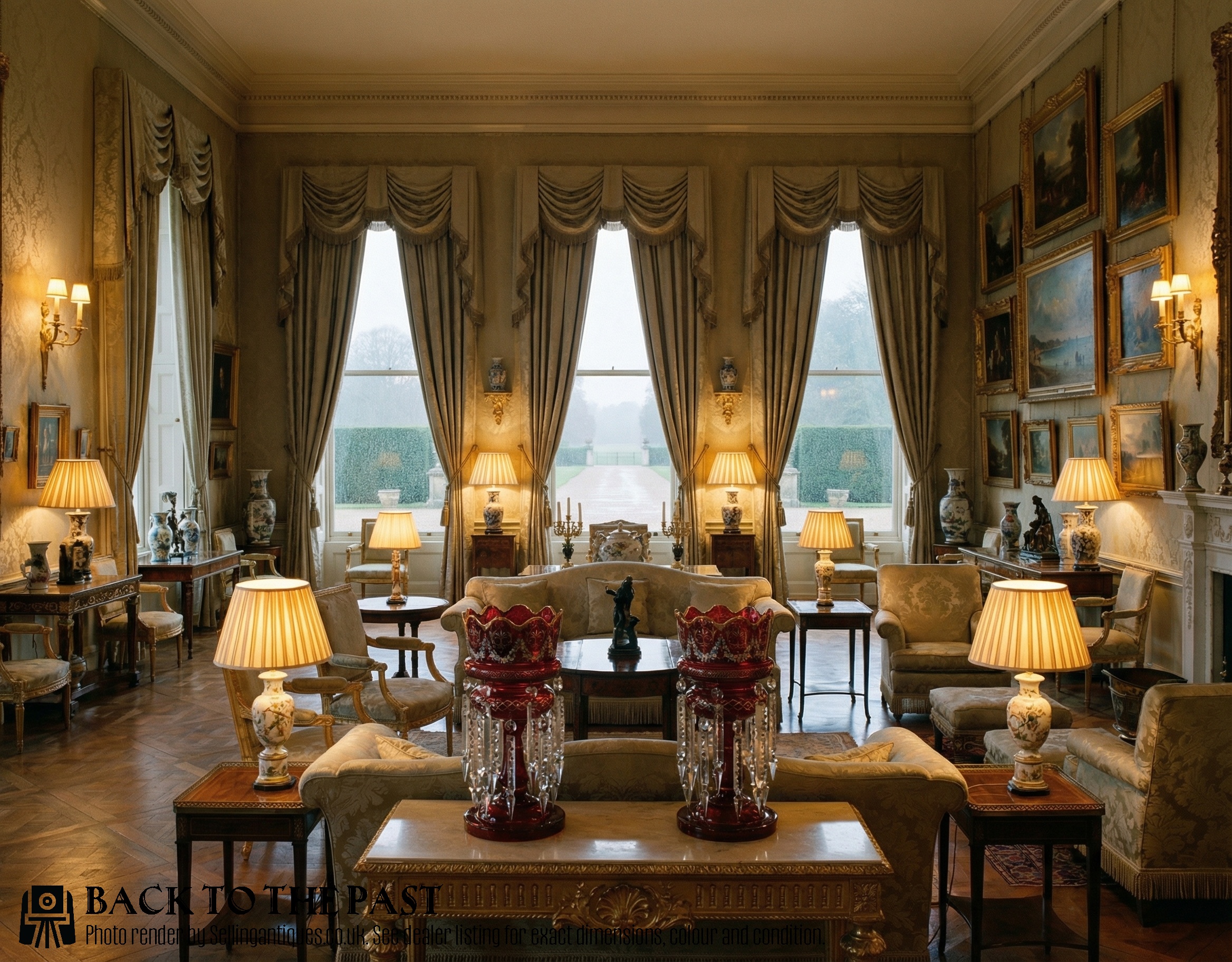
When searching for victorian mantel lustres, buyers encounter ornamental glass or crystal stands fitted with suspended glass prisms around a central column or vase. These pieces sit upon mantelpieces or tables to reflect candle or gas light through coloured glass bodies.
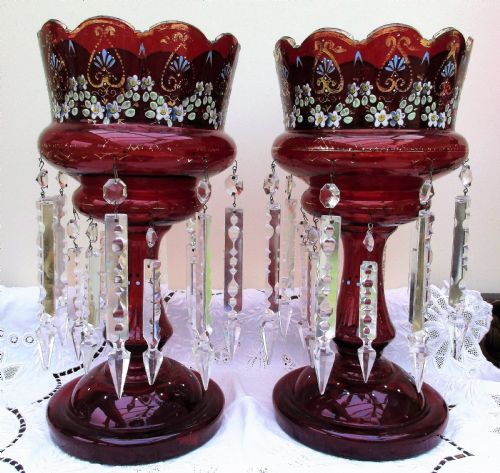
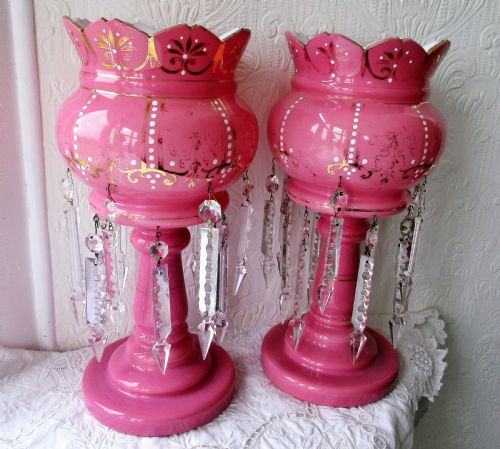
The most common examples on this page are pairs of glass lustres produced in rich hues such as ruby, green, pink, yellow, and cranberry glass. Many incorporate cut crystal or overlay glass techniques originating from English and Bohemian workshops.
Other variations appearing alongside standard mantel lustres include French opaline glass specimens and related Staffordshire pottery figures finished with metallic copper lustre glazes.
Materials and construction
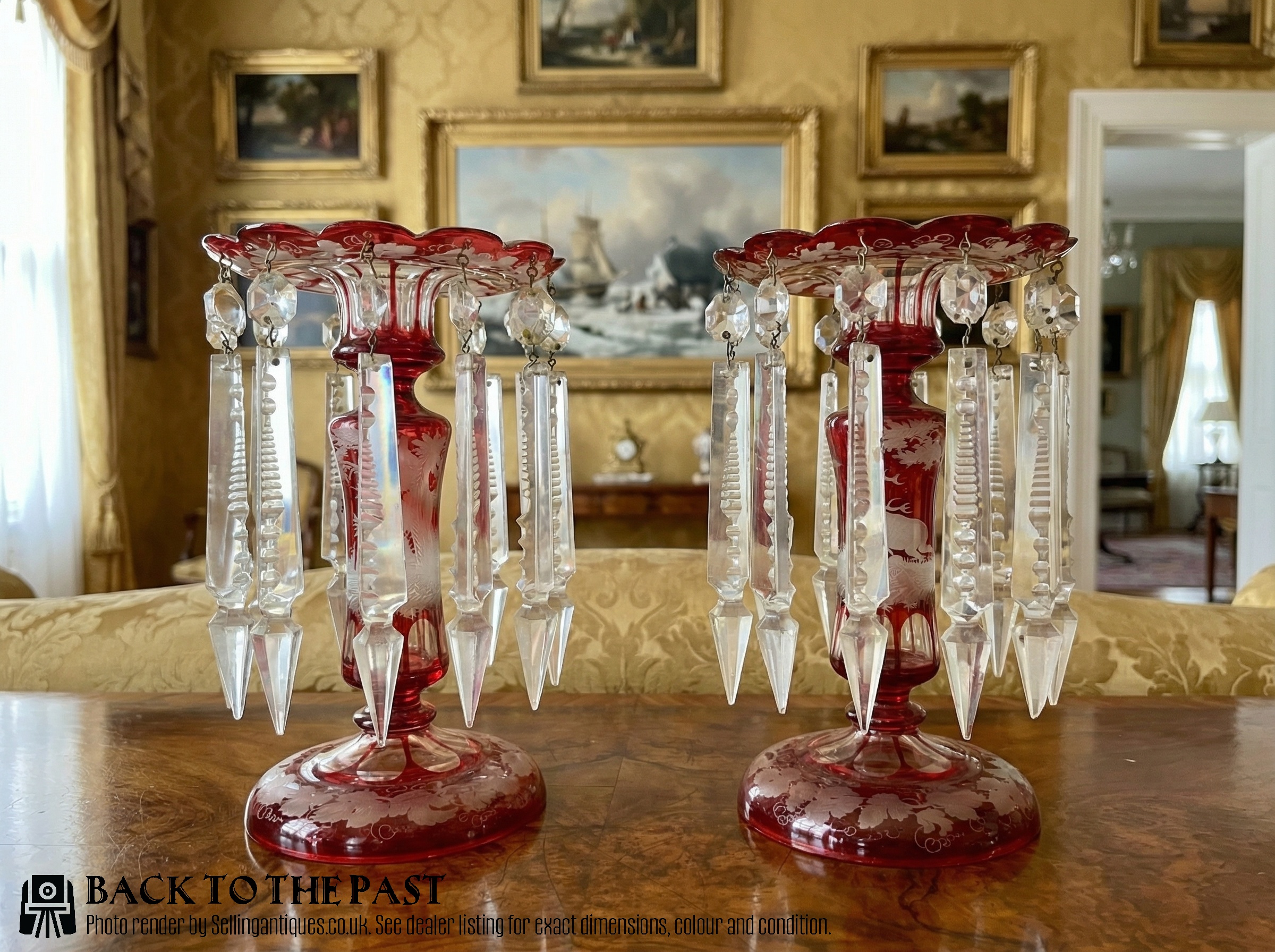
Glassmakers created the bodies of these pieces using blown or moulded glass, often applying coloured glass layers or flash glass coatings that were subsequently cut away to reveal contrasting under-layers. Workshops utilised rich mineral oxides to achieve deep ruby, green, and cranberry colourations.
Cut glass and crystal components provide the faceted surfaces that refract light, suspended from the main body by metal pins or wire loops. Gilt highlights, enamel details, and occasional gold leaf embellishments complete the decorative scheme on many 19th-century specimens.
Assessing quality and craftsmanship
The standard of a lustre rests heavily on the depth and saturation of the coloured glass, alongside the precision of the hand-cut facets on the crystal drops. Finer examples display crisp wheel-cutting and substantial glass weight rather than thin, light mouldings.
Completeness dictates much of the value, as suspended drops frequently suffer losses over time. Lustres retaining their original matching set of crystal prisms and undamaged gilt or enamel decoration command greater appreciation among collectors.
The Victorian Mantel Lustres Glossary
- Lustre
- An ornamental glass or porcelain vessel featuring hanging crystal pendants designed to reflect light. These pieces typically function as mantel or table decorations.
- Prism
- A cut glass or crystal pendant suspended from the rim of a lustre. Prisms disperse light into spectral colours when illumination strikes them.
- Flash glass
- A vessel comprising a thin layer of coloured glass applied over a colourless or contrasting base glass layer. Artisans cut through the outer coloured layer to expose the base material underneath.
- Opaline glass
- An opaque or translucent pale glass popular in nineteenth-century French manufacture. This material yields a soft, milky appearance well suited to decorative table objects.
- Cranberry glass
- A transparent pinkish-red glass coloured by the addition of gold chloride into the molten mixture. The resulting shade ranges from pale pink to deep ruby.
Victorian Mantel Lustres: Frequently Asked Questions
What is a mantel lustre?
A mantel lustre is a decorative glass or crystal stand featuring a central vase or column encircled by hanging crystal pendants. These ornaments were placed on fireplace mantels to catch and reflect ambient light from candles or lamps.
Most surviving examples date from the nineteenth century and come in pairs designed to flank other mantel ornaments like clocks. Their vibrant coloured glass bodies make them striking decorative focal points in a room.
How do I clean my lustres?
Cleaning requires patience and gentle handling, particularly around the delicate crystal drops and any applied gilt or enamel decoration. Each suspended pendant should be removed and washed individually in lukewarm soapy water.
Avoid submerging pieces that feature painted enamel work or gold leaf, wiping them instead with a soft, damp cloth. Ensure all components are completely dry before reassembling the glass prisms.
Are lustre drops interchangeable?
Replacement crystal prisms can be sourced, but finding exact matches in age, cut, and glass colour proves challenging. Original drops share specific hand-cut characteristics and wear patterns consistent with the main body.
Mixing replacement drops alters the visual harmony of the piece, as slight variations in glass tint or facet size become noticeable under light. Collectors prefer specimens retaining their matching period pendants.
Where were these glass pieces made?
Nineteenth-century production centered heavily in English glassworks, Bohemian factories, and French ateliers. English and Bohemian makers excelled in rich coloured and overlay glass techniques.
French manufacturers, particularly in Paris, produced refined opaline glass variations. Staffordshire potteries also contributed ceramic versions finished with metallic copper lustre glazes.