





Victorian Mahogany Wall Shelf
A victorian mahogany wall shelf brings warmth and practical display space to a room, utilising rich timber to create architectural interest at eye level.
Victorian Mahogany Wall Shelf
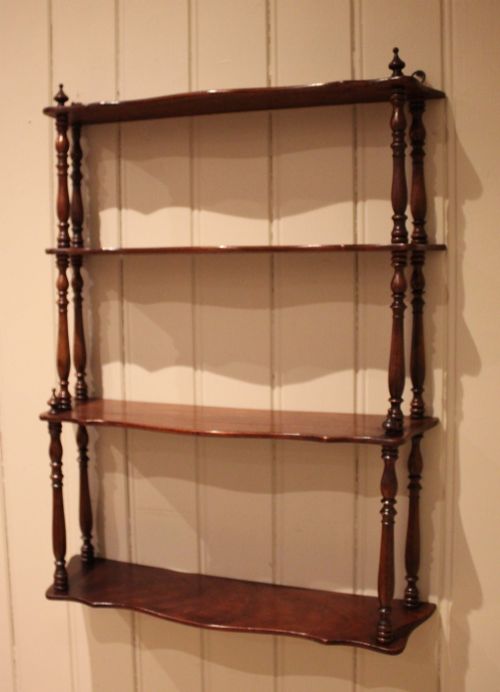
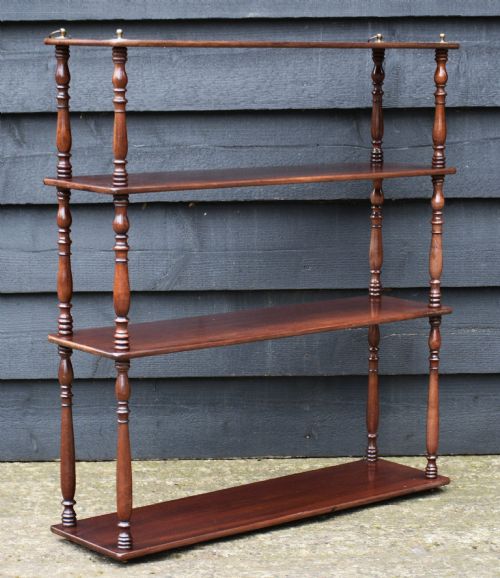
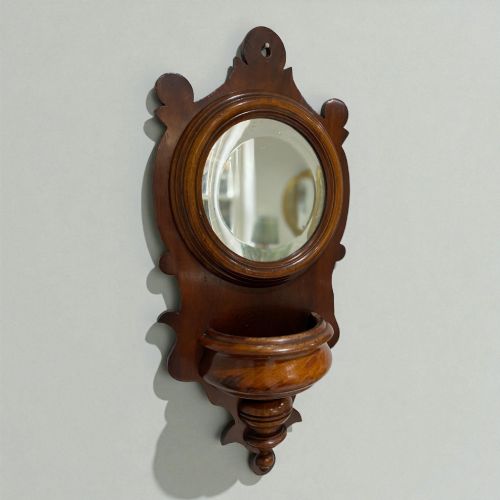
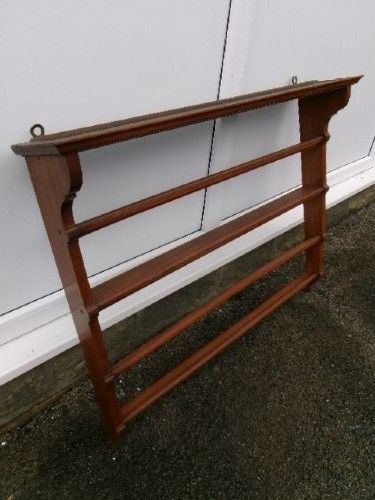
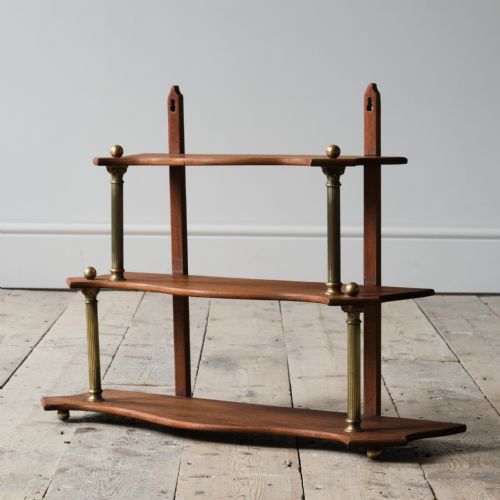
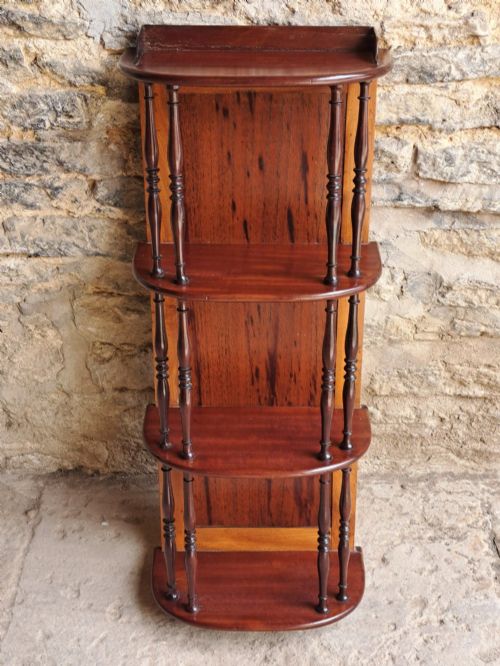
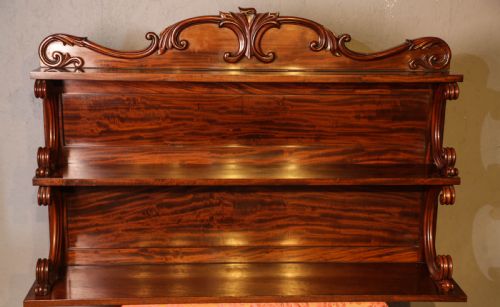
When you search for a victorian mahogany wall shelf, you encounter architectural ledges, multi-tiered hanging units, and display cabinets designed to utilise vertical wall space in nineteenth-century interiors. The pieces on this page span several decades of the nineteenth century and into the early twentieth century, taking the form of open bookshelves, fretwork brackets, and mirrored overmantel combinations.
Most examples appear as two or three tier hanging shelves, constructed to hold books, small ceramics, and collectibles off the floor. Variations include waterfall designs, enclosed cabinets with glass, and tall hanging bookcases reflecting styles from Regency to Chippendale Revival.
Originating predominantly from British and continental workshops, these items served practical functions in hallways, parlours, and bedrooms before becoming decorative antiques today. The surviving examples demonstrate how everyday utility met refined cabinetmaking across the Victorian period.
Judging the grade and finish
The distinction between standard utility pieces and finer examples rests upon the selection of timber, such as highly figured flame veneer, and the crispness of carved fretwork or inlay. Superior items display meticulous attention to joint construction and retain their original brass galleries or hanging hardware without replacement.
Victorian Mahogany Wall Shelf Retail Price Guide 2026
Typical asking prices for victorian mahogany wall shelf among the pieces listed under this phrase on Sellingantiques today, from the lower quarter to the upper quarter. They describe what is for sale here now, not the wider market.
Listings feature mahogany, brass, glass, and boxwood inlay across nineteenth-century wall shelves and brackets.
The Victorian Mahogany Wall Shelf Glossary
- Mahogany
- A durable tropical hardwood known for its reddish-brown colour and stability in furniture construction. It accepts polish exceptionally well and forms the primary body of these wall units.
- Fretwork
- Openwork ornamentation cut from thin wood panels using a fretsaw. This technique creates delicate geometric or scrolling patterns along the sides and galleries of hanging shelves.
- Whatnot
- A piece of furniture consisting of multiple open shelves for displaying small objects. They are designed to be mounted on walls or placed on floors.
- Overmantel
- A large mirror or shelf designed to be hung specifically above a fireplace mantelpiece. These often incorporate carved wooden frames and smaller display ledges.
- Gallery
- A raised rail or balustrade running along the edge of a shelf. It prevents items from sliding off when the unit hangs above floor level.
Victorian Mahogany Wall Shelf: Frequently Asked Questions
How do I hang a heavy wall shelf safely?
Heavy wall shelves require secure fixing directly into wall studs or masonry using appropriate wall anchors matched to the weight of the timber. Ensuring the mounting brackets or screw eyes on the back of the piece are structurally sound prevents accidental pulling under a load of books or ceramics.
Distributing weight evenly across the tiers also protects the vintage joinery from undue stress over time. Consulting a professional installer ensures the piece remains firmly anchored to your wall.
What rooms suit these hanging shelves best?
These shelves fit naturally into hallways, studies, and sitting rooms where vertical storage adds character without cluttering floor space. Smaller tiers work well in bedrooms for displaying personal collections, while larger mirrored overmantels anchor the wall above a fireplace or sideboard.
The rich timber tones complement both traditional interiors and modern spaces seeking warmth through antique woodwork.
Were these always meant for books?
While many served as portable bookshelves or desktop organisers, others functioned primarily as display ledges for ceramics, glassware, and decorative ornaments. The inclusion of brass galleries and delicate fretwork often points towards display rather than heavy book storage.
Their versatile design meant owners repurposed them according to domestic needs across different decades.