




Victorian Mahogany Waiter
When you search for a victorian mahogany waiter, you are tracking down tier upon tier of functional timber built to hold food, drink, and books.
Victorian Mahogany Waiter
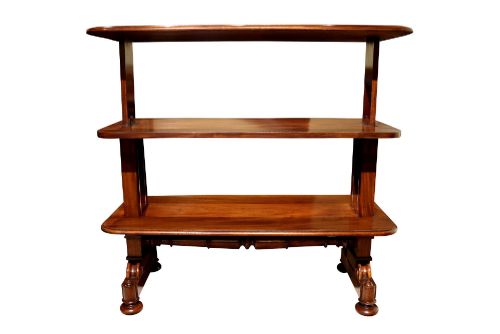
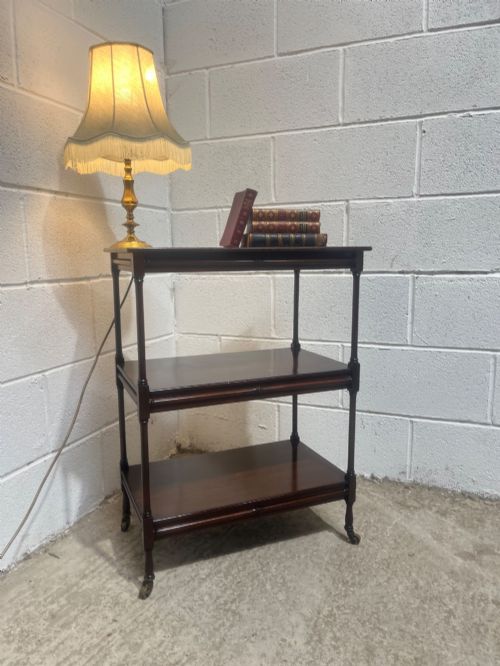
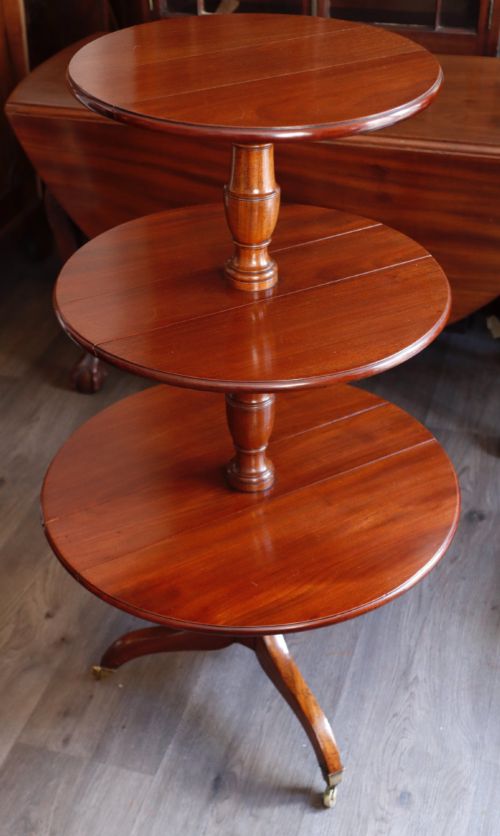
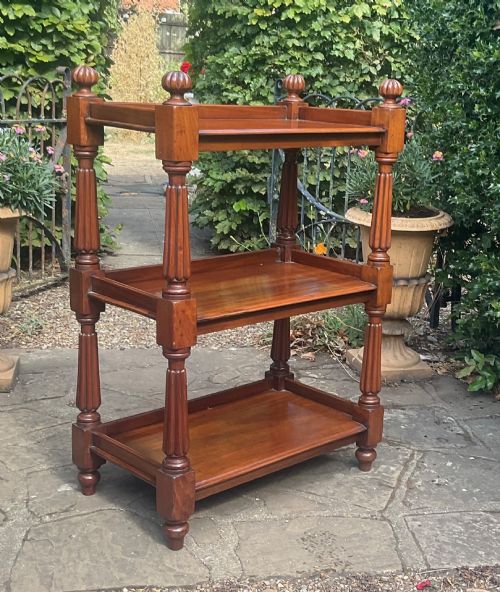
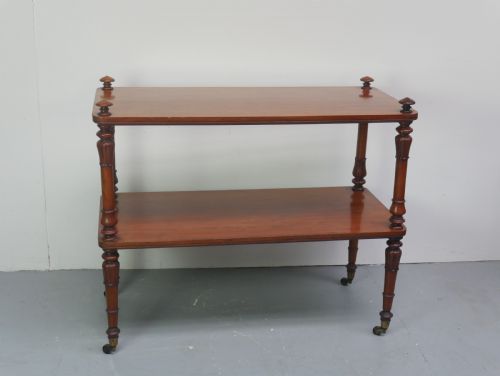
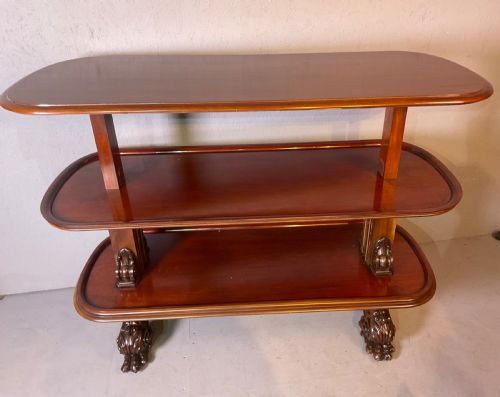
When searching for a victorian mahogany waiter, buyers encounter multi-tiered serving pieces designed to hold food, drinks, and books within dining rooms and hallways. These forms span dumb waiters, buffets, etageres, and cake stands, usually featuring two to four graduated shelves supported by turned or carved uprights. The most common examples on this page are three-tier Victorian buffets and revolving tables that sit on castors or tripod bases.
Originating largely across the nineteenth century, these practical items served domestic life before passing into collections as decorative furniture. Alongside standard stationary designs, pieces often include rotating trays, galleries, and rising mechanisms to aid service. The evidence records examples stretching from Georgian roots through William IV and Edwardian periods, demonstrating a continuous evolution of the multi-tiered serving stand.
How they were made
Cabinet makers utilised dense mahogany for its stability and rich grain, pairing the primary timber with brass castors, handles, and occasional ceramic components. Frames rely on turned and block supports, carved details, and framed shelves often bordered by raised gallery edges to secure items during movement. Metal mechanisms within revolving or rise-and-fall pieces allow trays to turn smoothly or adjust in height.
Construction techniques combine sturdy vertical framing with securely fixed tier boards, ensuring the heavy timber handles the daily weight of glassware and porcelain. Original castors and turned knob finials frequently complete the assembly, showing the careful attention paid to mobility and finish. Makers employed golden mahogany and dark variants alike, finished to highlight the natural figuring of the wood.
Several items include built-in revolving trays, proving that nineteenth-century diners appreciated the lazy susan just as much as modern hosts do.
What varies in quality
The standard of a piece rests heavily on the depth of the mahogany grain, the crispness of any carved decoration, and the integrity of the original joints. Superior examples display carefully matched timber veneers and well-turned supports that remain rigid under load, unlike lesser items that feel loose or mismatched. The presence of original brass castors and functioning mechanical elements like revolving tiers or rise-and-fall actions elevates a piece significantly.
Proportion and utility also divide the ordinary from the exceptional, as finer pieces balance multiple tiers without appearing clumsy or heavy. Thoughtful details such as gallery rails, inlaid borders, and sound mechanism housing separate workshop output from mass production. Collectors look for pieces that retain their original surfaces and structural harmony rather than those altered by later repairs.
Gillows of Lancaster and London·Maple & Co·Oetzmann & Co.
The Victorian Mahogany Waiter Glossary
- Dumb Waiter
- A multi-tiered piece of dining room furniture used for holding food and serving dishes without the need for attendants. These items frequently feature revolving trays or stacked shelves on castors.
- Etagere
- A set of open shelves for displaying small objects, books, or serving items. In the context of these listings, it often overlaps with the form of a multi-tier buffet.
- Gallery
- A raised wooden or brass rail running around the edge of a shelf to prevent items from sliding off. This feature is common on serving tables and revolving trays.
- Metamorphic
- Furniture designed to change its form or function through mechanical parts, such as rising tiers or folding sections. These versatile pieces allowed single items to serve multiple domestic purposes.
- Castor
- A small wheel mounted on a swivel assembly at the base of a leg to allow easy movement across the floor. Original brass or ceramic versions are characteristic of nineteenth-century pieces.
Victorian Mahogany Waiter: Frequently Asked Questions
What is a dumb waiter?
A dumb waiter is a multi-tiered piece of furniture designed to hold dishes, glasses, and serving items near a dining table. It allowed households to manage meals without constant assistance from staff.
Over time, these versatile pieces transitioned from active dining rooms into living spaces, libraries, and hallways where their stacked shelves proved equally useful for display and storage.
How do revolving tables work?
Revolving tables utilise a central pivot or spindle mechanism that allows the upper trays or lazy susan sections to turn independently of the base. This allowed diners to reach items easily without passing dishes across a crowded table.
Many of these revolving mechanisms rely on concealed wooden or metal bearings built directly into the central column during manufacture.
Where were these pieces used?
These pieces were primarily placed in dining rooms next to the main table to hold extra plates, silverware, and serving dishes. They acted as practical extensions of the sideboard during large meals.
As domestic habits changed, smaller versions found homes in drawing rooms and bedrooms to hold books, tea services, and decorative items.
How do I spot a Georgian piece?
Georgian pieces generally exhibit simpler, robust proportions with heavy timber framing, understated column supports, and traditional tripod bases. They predate the more elaborate carving and mechanical complexity seen in later Victorian designs.
Examining the construction methods, screw types, and wood patination helps distinguish these earlier examples from nineteenth-century revivals.