





Victorian Mahogany Trinket Box
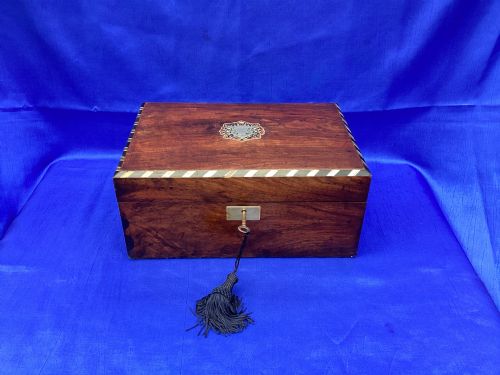
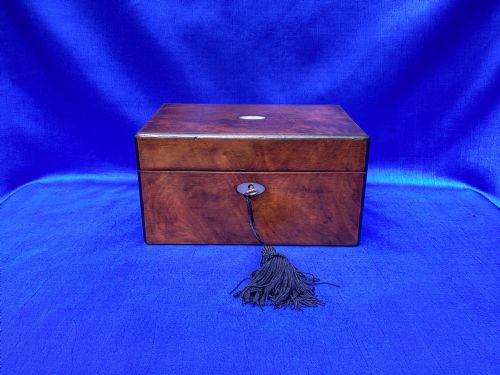
A victorian mahogany trinket box brings solid timber warmth and small-scale ingenuity to a dressing table or desk.
Victorian Mahogany Trinket Box
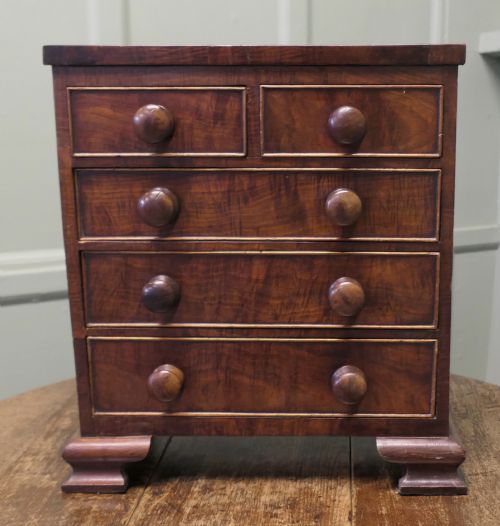
When you search for a victorian mahogany trinket box, you encounter a variety of small wooden containers designed for keepsakes, jewellery, and daily valuables. The selection spans miniature chests of drawers, sewing boxes, tea caddies, and specialised storage forms from the nineteenth century.
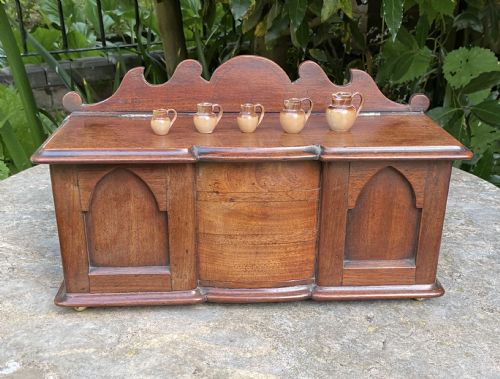
Most items on this page date from the Victorian period and the wider nineteenth century, alongside occasional Georgian precursors. Forms range from simple turned circular containers and bowfront chests of drawers to inlaid jewellery boxes and apprentice pieces.
How they were made
Makers utilised solid mahogany as the primary timber, often enhanced with contrasting boxwood stringing, brass fittings, and mother-of-pearl inlay. Surface decoration relies on natural wood grain, fine patination, and occasional Tunbridge Ware mosaic detailing.
Construction techniques include dovetail joints for small drawers, spring locking mechanisms for security, and precise miniature cabinetry that mirrors full-scale furniture of the era.
Listings feature mahogany, oak, walnut, and boxwood combined with mother-of-pearl and brass.
What varies in quality
Quality rests upon the precision of the cabinetry, the crispness of any inlaid mother-of-pearl or boxwood, and the depth of the timber's natural patina. Superior examples display careful proportion in miniature forms, tight joinery, and well-fitted internal compartments.
Secondary elements such as original brass hardware, working locks with keys, and intact interior linings elevate a piece. Plain utilitarian containers contrast with highly decorative inlaid boxes and miniature bowfront chests that required advanced joinery skills.
The Victorian Mahogany Trinket Box Glossary
- Apprentice piece
- A small-scale item demonstrating a woodworker's mastery before joining a guild, often taking the form of a miniature chest of drawers or sideboard.
- Bowfront
- A furniture front that curves outward in a convex shape, frequently seen on nineteenth-century miniature chests.
- Tunbridge Ware
- Woodworking style featuring microscopic mosaic tiles created from different coloured woods to form geometric or pictorial surface patterns.
- Tea caddy
- A lidded container originally built to store dry tea leaves securely, often featuring internal compartments and locking lids.
Victorian Mahogany Trinket Box: Frequently Asked Questions
What were miniature chests used for?
Miniature chests served as functional storage for small personal items, rings, and trinkets on dressing tables. Many also functioned as apprentice pieces showcasing advanced cabinet-making techniques.
Their small scale made them versatile desktop companions for organising correspondence, seals, and valuables in nineteenth-century homes.
How do I date a mahogany box?
Dating relies on construction methods, timber choice, and decorative styles typical of the Georgian and Victorian eras. Secondary woods, dovetailing techniques, and hardware styles provide clues to the decade of manufacture.
Makers often incorporated period-specific elements such as mother-of-pearl inlay or brass escutcheons that reflect nineteenth-century aesthetic shifts.
Are these boxes suitable for daily use?
Solid mahogany construction makes these boxes robust enough for everyday storage of modern jewellery and small keepsakes. Interior compartments keep delicate items separated and protected from dust and light.
Care should be taken with antique hinges, spring locks, and delicate inlay to preserve their historical condition during regular handling.
What is Tunbridge Ware?
Tunbridge Ware refers to decorative wooden items decorated with mosaic patterns built from tiny tiles of naturally coloured British timbers. These intricate designs often depict geometric motifs or architectural views.
Such decorative surfaces require gentle cleaning and protection from moisture to maintain the stability of the microscopic wood pieces.