



Victorian Mahogany Stationery Desk
A victorian mahogany stationery desk organises correspondence with portable boxes and fitted compartments, bringing period function and warm timber grain to any study.
Victorian Mahogany Stationery Desk
A victorian mahogany stationery desk encompasses portable writing slopes, correspondence boxes, and fitted Davenport desks from the nineteenth century. These objects served the Victorian writer by storing paper, pens, and letters within secure compartments and desktop racks.
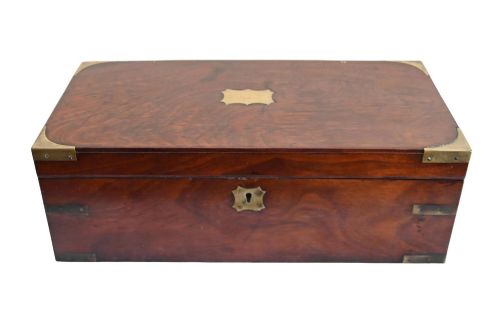
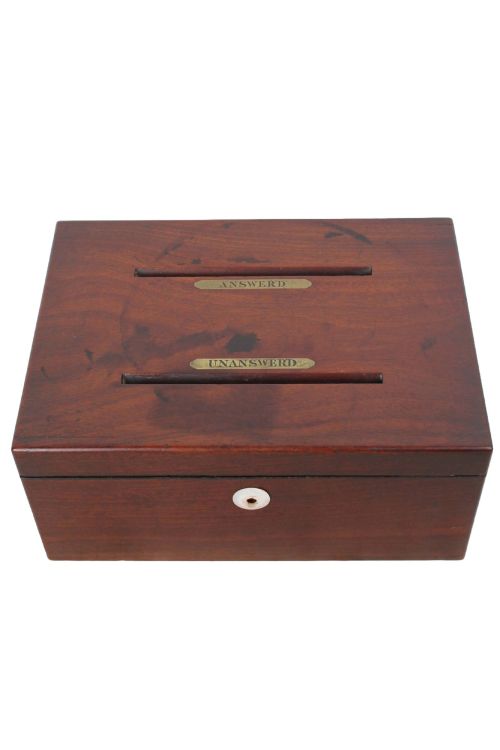
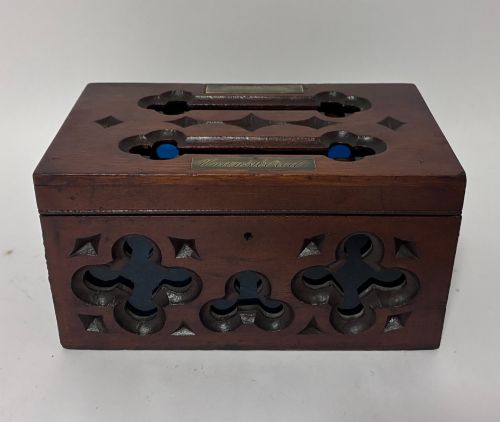
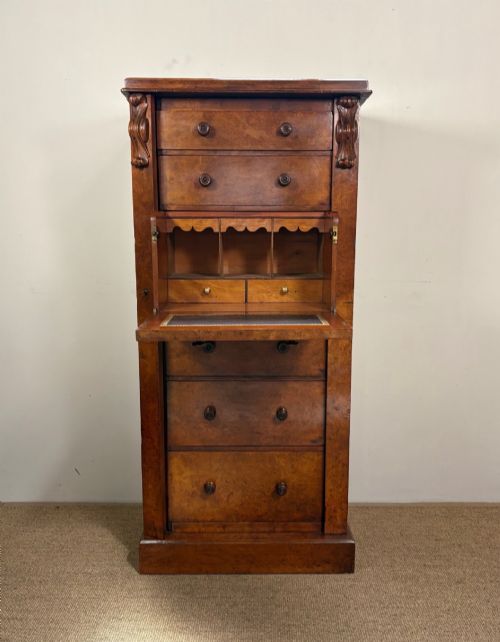
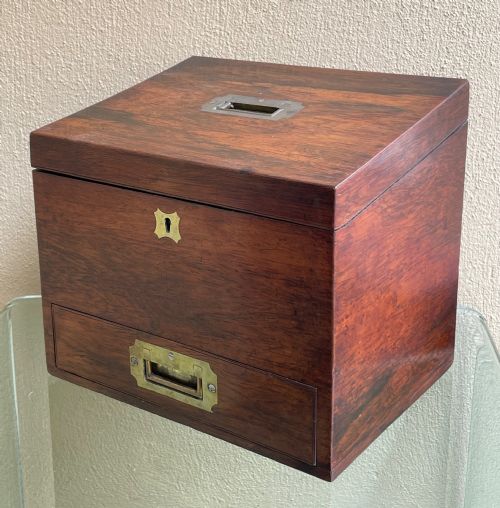
The pieces on this page appear most frequently as folding writing slopes, freestanding Davenport desks, and stationary cabinets. Many examples incorporate campaign brass mounts or hinged letter slots designed for household and office correspondence.
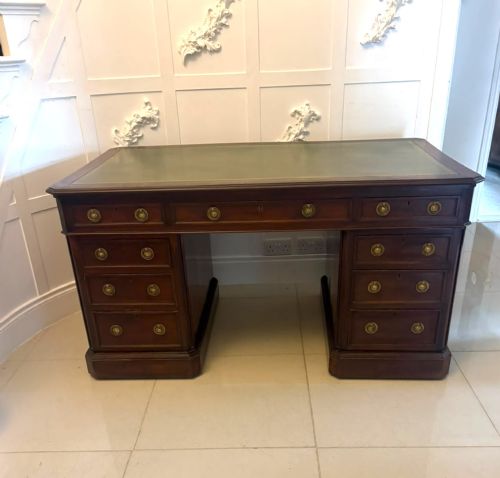
Originating predominantly in the Victorian era alongside Regency and Edwardian variants, these items reflect the heavy reliance on handwritten communication before the telephone. Makers constructed them in various forms, from simple letter boxes to elaborate pedestal kneehole desks with fitted stationery drawers.
What varies in quality
The calibre of a piece rests on the selection of timber figures, such as flame mahogany or burr walnut, and the precision of the cabinetwork. Superior examples display tight dovetail joints, perfectly flush brass inlays, and unaltered interior velvet or leather.
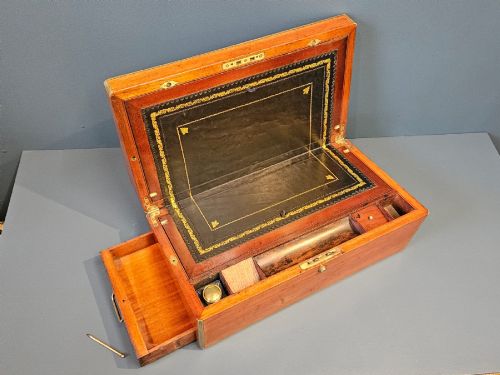
Maker attribution elevates certain pieces, particularly those bearing signatures from established workshops like Fisher or Mappin & Webb. Quality also shows in the complexity of internal mechanisms, such as secret drawers, spring-loaded letter racks, and multi-tiered stationery compartments.
Listings span the Victorian, Regency, and Edwardian periods, showcasing mahogany, rosewood, teak, and brass.
Mappin & Webb·Fisher
The Victorian Mahogany Stationery Desk Glossary
- Writing slope
- A portable box with a slanted, hinged lid that opens to reveal a velvet or leather-lined writing surface and compartments for stationery. These boxes were designed for travel and home use alike.
- Campaign style
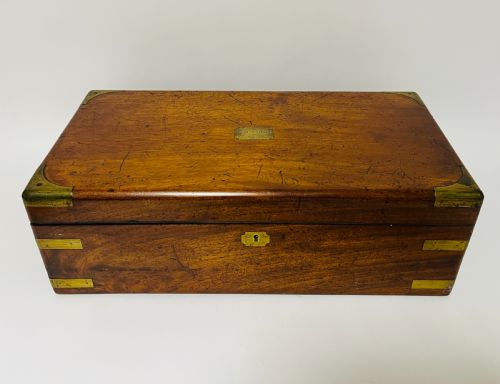
- Furniture constructed for military officers, characterised by robust hardwood timbers, brass corner binding, and recessed carrying handles. Such design allowed pieces to pack down securely for transit.
- Davenport desk
- A compact pedestal desk featuring a sloped writing top above a bank of drawers. The side often houses pen trays and auxiliary compartments.
- Stationery cabinet
- An upright desk accessory or small piece of furniture designed specifically to hold envelopes, paper, and ledgers. They frequently feature tambour doors or folding front panels.
- Inkstand
- A desktop tray or stand fitted to hold one or more inkwells along with pen holders. They kept writing materials organised and ready for daily correspondence.
Victorian Mahogany Stationery Desk: Frequently Asked Questions
What is a victorian mahogany stationery desk?
It is a nineteenth-century wooden desk, box, or cabinet designed to hold writing paper, envelopes, and ink.
These pieces range from portable folding slopes to large pedestal kneehole desks used in country houses and offices.
How were stationery boxes used?
Victorians used them to organise incoming mail, answered correspondence, and writing materials in an era before digital communication.
Compartments kept different paper sizes and envelopes separated neatly on a desk or table.
What is a campaign writing slope?
A campaign writing slope is a portable desk reinforced with brass corners and flush handles for military travel.
Officers carried these sturdy wooden boxes across the British Empire to maintain paperwork in the field.
How do I care for mahogany furniture?
Keep mahogany desks away from direct sunlight and heat sources to prevent the timber and veneers from drying out.
Apply traditional beeswax occasionally and buff gently with a soft cloth to maintain the polished finish.