



Compact Mahogany Writing Table
A compact mahogany writing table gives you a dedicated spot for letters and daily tasks without overwhelming your room.
Compact Mahogany Writing Table
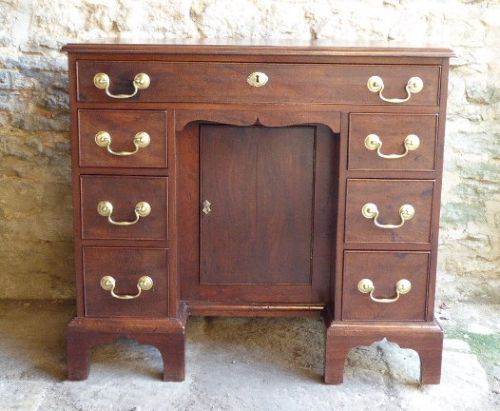
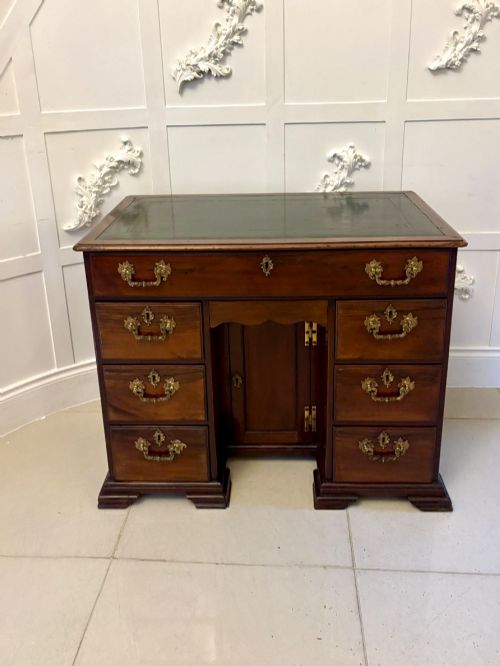
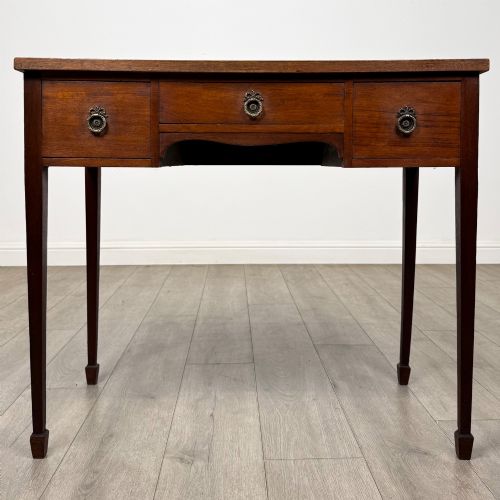
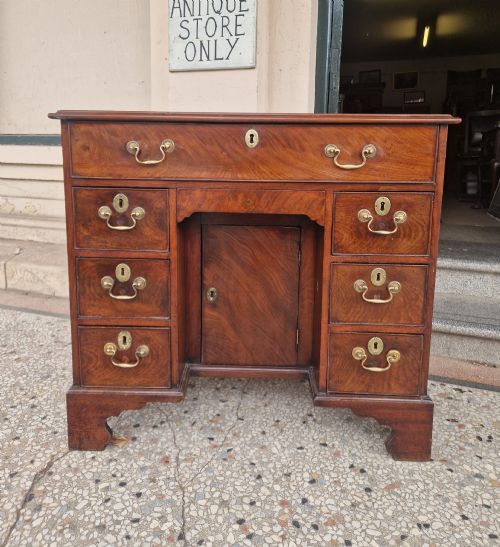
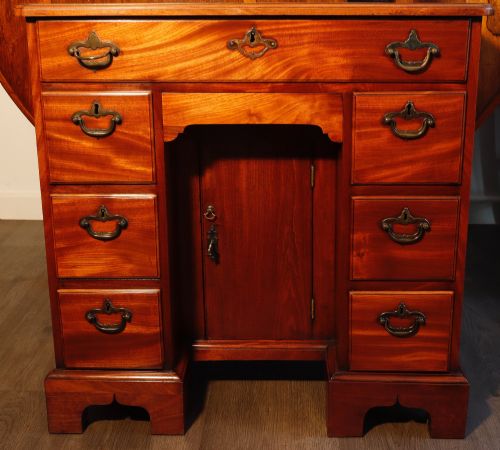
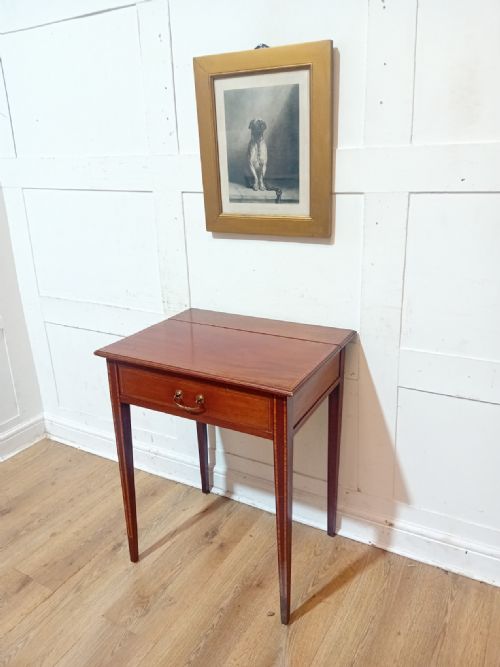
A compact mahogany writing table serves as a functional workspace designed for smaller rooms, drawing from Georgian, Victorian, and Edwardian traditions. You will frequently encounter kneehole desks, ladies' writing desks, and small library tables that suit domestic studies or bedrooms.
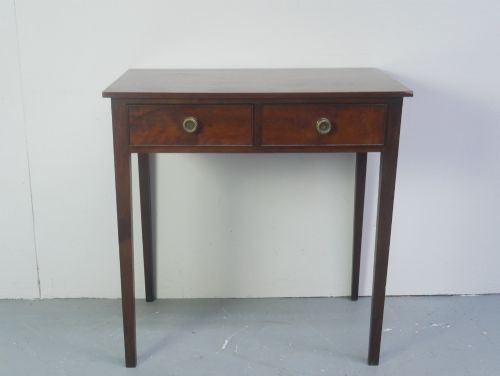
The pieces listed range from eighteenth-century examples to twentieth-century revivals, often appearing as diminutive forms, side tables, or specialised davenports. Makers and workshops constructed these tables to fit neatly against walls or into corners while providing practical surfaces and internal storage.
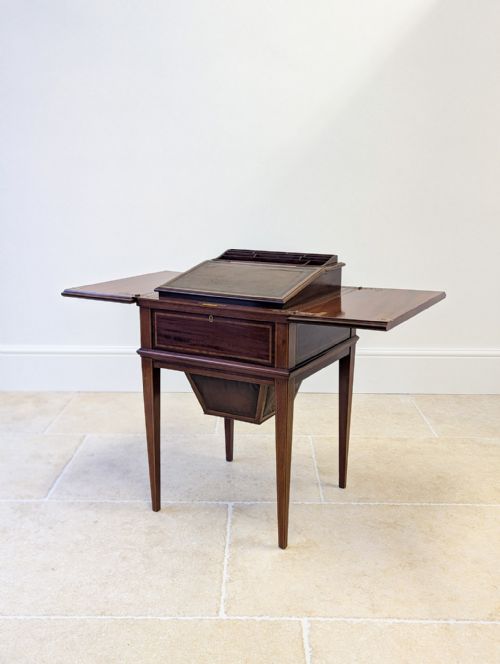
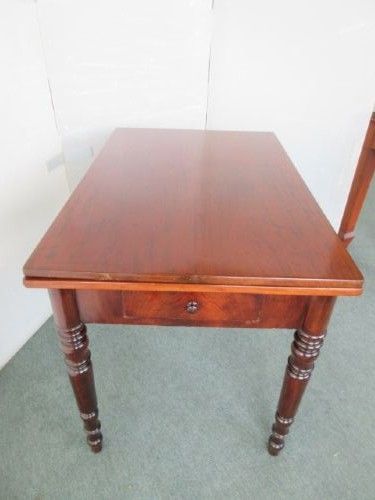
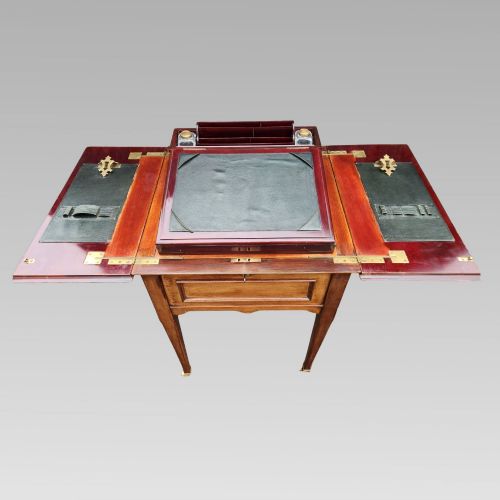
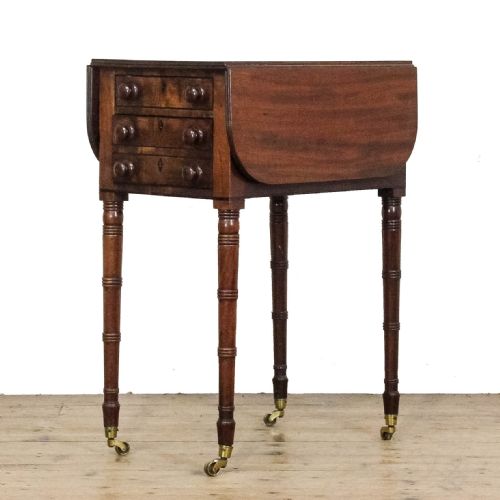
Makers utilised mahogany as the primary timber, sometimes pairing it with secondary woods such as satinwood or walnut. The forms vary from simple drop-leaf Pembroke tables to intricate metamorphic and fold-over desks equipped with leather inserts.
What varies in quality
The choice of timber and veneer figure largely determines the quality of a compact mahogany writing table. Pieces displaying rich flame mahogany or precise satinwood inlay sit at the upper end of the range, while plain grain timber marks simpler domestic examples.
Construction details such as dovetailed drawer linings, original brass fittings, and intact leather inserts separate superior pieces from standard workshop output. Refined proportions and tight joinery indicate skilled cabinet work across Georgian and Victorian eras.
Listings feature mahogany, satinwood, walnut, and boxwood across Georgian, Victorian, and Edwardian periods.
James Shoolbred·Edwards and Roberts·Liberty
The Compact Mahogany Writing Table Glossary
- Kneehole desk
- A small pedestal desk featuring a central recessed space for the user's legs, flanked by banks of small drawers.
- Davenport
- A compact pedestal writing desk with a sloping, hinged desktop and side drawers, originating in the late eighteenth century.
- Pembroke table
- A small occasional table with hinged drop leaves on either side, often fitted with a single drawer.
- Metamorphic
- Describing furniture designed to transform its shape or function, such as tables that fold out or reveal hidden compartments.
- Satinwood inlay
- A decorative technique using contrasting lighter wood veneer to create geometric or floral patterns on the mahogany surface.
Compact Mahogany Writing Table: Frequently Asked Questions
Where should I put a compact mahogany writing table?
These tables fit easily into smaller studies, bedrooms, or living room corners where a full-sized desk would overwhelm the floor plan. Their finished backs and neat proportions also allow them to sit away from the wall as freestanding pieces.
Position the table near a natural light source to make the most of the writing surface and highlight the mahogany grain. Pairing the desk with an appropriate small chair ensures comfortable daily use for writing or correspondence.
How do I care for the leather top?
The leather insert on the writing surface requires gentle cleaning with a dry or barely damp cloth to avoid moisture damage. Conditioning balms formulated for leather help maintain the suppleness and prevent cracking over time.
Keep sharp objects and liquids away from the writing surface to protect both the leather and the underlying timber frame. Regular dusting preserves the finish without the need for harsh polishes.
What is a davenport desk?
A davenport is a compact form of writing desk featuring a sloping desktop above a set of drawers built into the side. The sloped top often lifts to reveal internal storage compartments for stationery and writing supplies.
Cabinet makers designed these pieces to save space while offering secure storage within a small footprint. They became particularly popular during the Victorian period for use in private rooms.
How do I tell an 18th-century desk from a later revival?
Eighteenth-century desks typically feature hand-cut dovetails, solid timber construction, and ageing patterns consistent with extensive use. The joinery and internal secondary woods reflect the manual tools and methods of the Georgian period.
Revival pieces from the Edwardian era often show standardised machine-cut components and different interior framing materials despite imitating earlier styles. Examining the drawer linings and timber thickness helps reveal the true period of manufacture.