


Edwardian Davenport Writing Desk
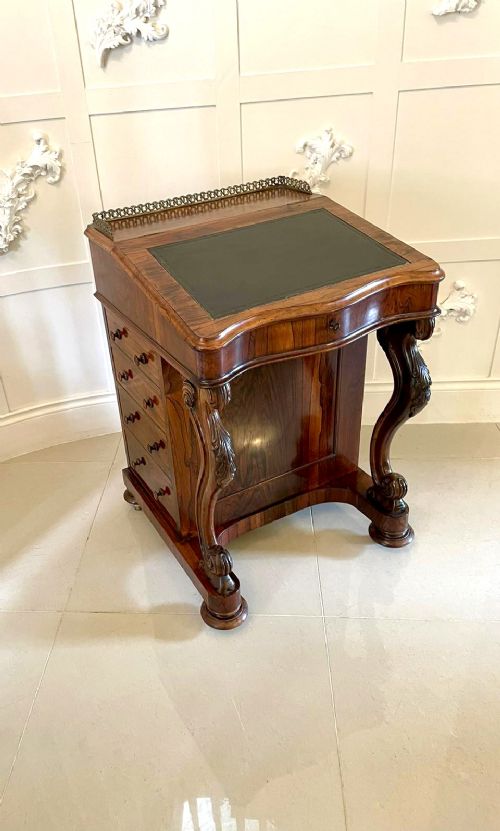
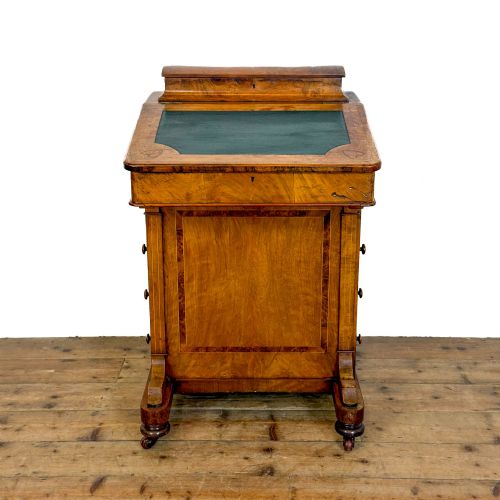
An edwardian davenport writing desk brings compact practicality and fine timber to a study, offering a sloping writing surface over drawers.
Edwardian Davenport Writing Desk
When searching for an edwardian davenport writing desk, a buyer encounters compact compact writing cabinets primarily rooted in the Victorian and Edwardian eras, though earlier Regency and nineteenth-century examples appear.
The pieces typically combine a sloping, leather-lined writing lid with a pedestal of side drawers, occasionally incorporating stationary compartments or pop-up superstructures.
While the search names the Edwardian period, the selection spans Victorian burr walnut, mahogany, and rosewood forms alongside Sheraton Revival and Arts and Crafts interpretations.
Materials and Technique
Cabinet makers utilised dense hardwoods such as mahogany, walnut, burr walnut, and rosewood, often enhancing surfaces with boxwood inlay, marquetry, or contrasting satinwood.
Writing surfaces were traditionally inset with leather, complemented by brass hardware and fitted interior compartments for stationery and ink.
Listings feature walnut, burr walnut, mahogany, rosewood, and amboyna woods, alongside boxwood inlay and leather writing surfaces.
Judging Quality
Quality rests upon the selection of timber figures, such as highly figured burr walnut or rich rosewood, paired with precise cabinetry like boxwood inlay and marquetry.
Refinement shows in whether the piece is freestanding with finished panels on all sides and how cleverly internal stationery drawers or pop-up mechanisms operate.
Gillows Designed·James Winter and Son
The Edwardian Davenport Writing Desk Glossary
- Burr walnut
- A prized timber cut from the gnarled growths of walnut trees, yielding rich, swirling grain patterns across the front and slope of a desk.
- Secretaire
- A desk featuring a pull-out or drop-front writing surface that conceals smaller internal drawers and pigeonholes.
- Marquetry
- Decorative patterns formed by fitting together thin veneers of different coloured woods.
- Freestanding
- A piece finished on all sides so it can sit in the middle of a room rather than against a wall.
Edwardian Davenport Writing Desk: Frequently Asked Questions
What is a davenport desk used for?
A davenport provides a dedicated, compact station for correspondence and paperwork. The sloping lid offers a convenient angle for writing.
Beneath the lid and within the side drawers, owners store stationery, pens, and personal documents without occupying the space of a larger partner desk.
How do I tell a Victorian davenport from an Edwardian one?
Victorian examples tend to feature heavier timbers like burr walnut and rosewood, often displaying rich grain and darker patination. Details can include elaborate marquetry or boxwood inlay.
Edwardian pieces generally lean towards lighter mahogany construction, sometimes reflecting Sheraton Revival influences with more restrained proportions.
Are these desks suitable for modern laptops?
The sloping writing surface is proportioned for traditional letter writing and paperwork rather than modern computing. Placing a laptop on the leather slope may prove cramped.
Instead, use the surface for occasional writing and store smaller electronic devices within the stationary compartments when not in use.
What does freestanding mean for a davenport?
A freestanding davenport has finished timber panels on the back and sides rather than plain secondary wood. This allows the desk to sit centrally in a room.
Standard versions were designed with one finished side meant to stand against a wall, while freestanding pieces present a polished appearance from every angle.