

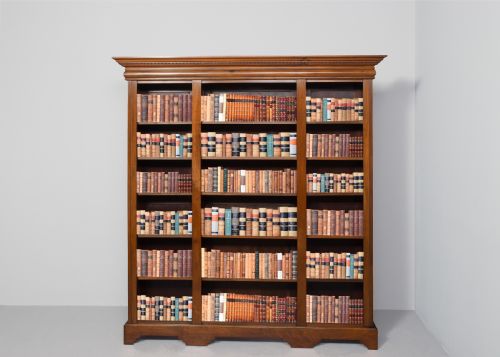
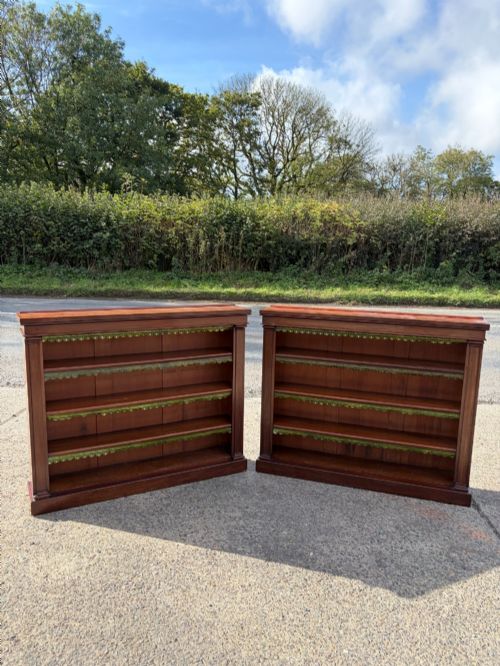
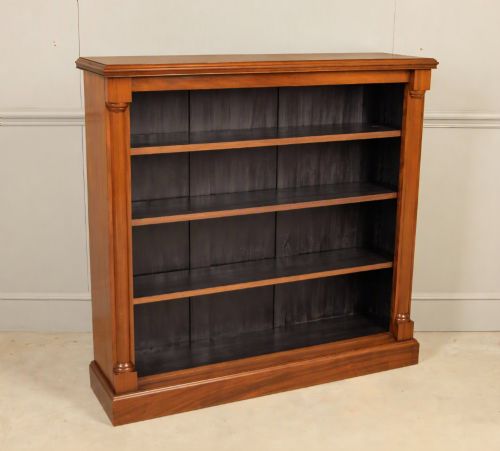
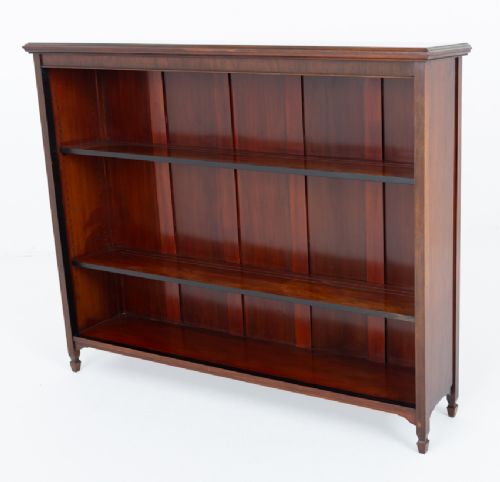

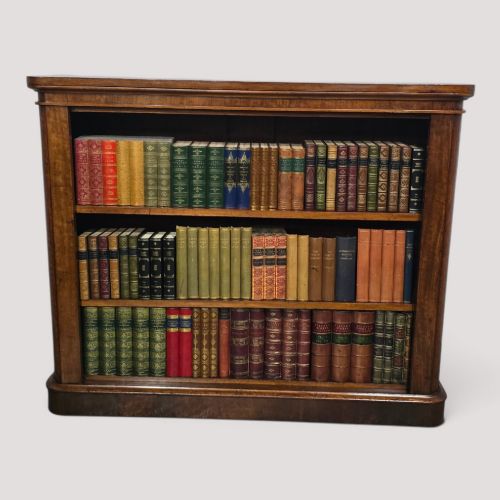
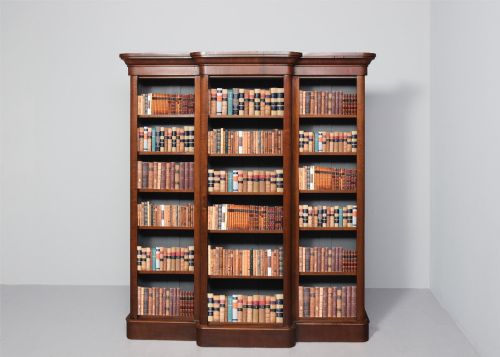
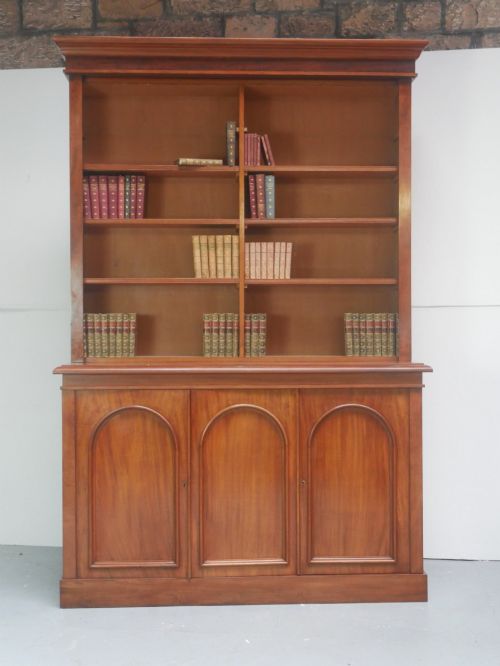
Victorian Mahogany Library Shelves
Victorian mahogany library shelves combine rich timber with practical storage, offering a traditional way to organise books and display items in a room.
Victorian Mahogany Library Shelves
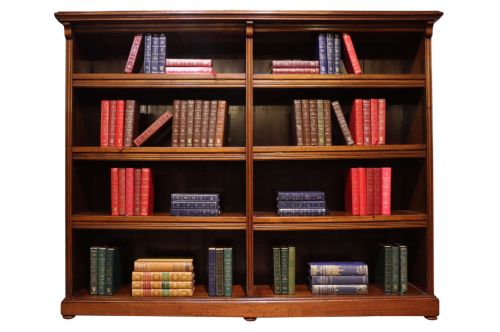
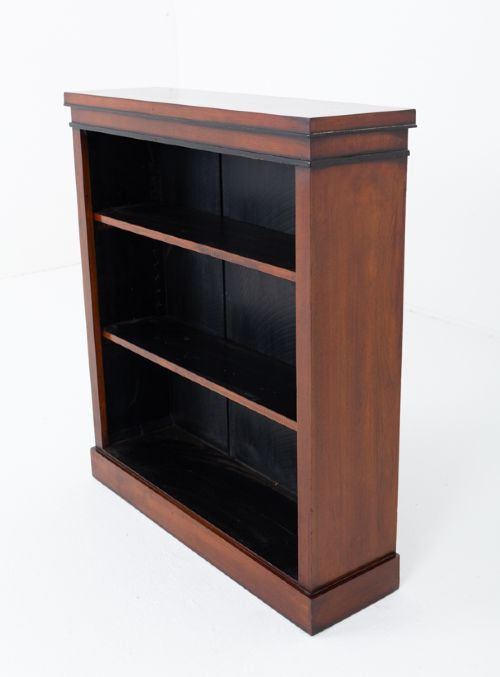
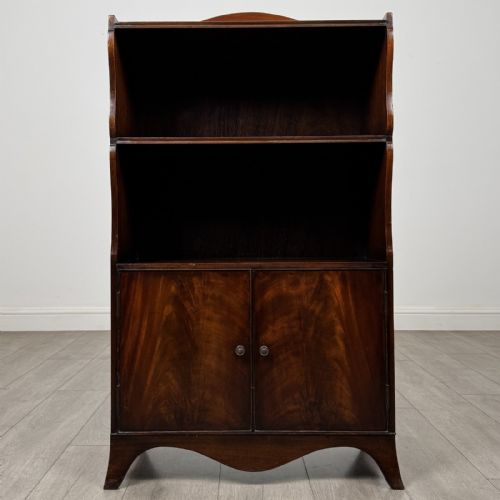
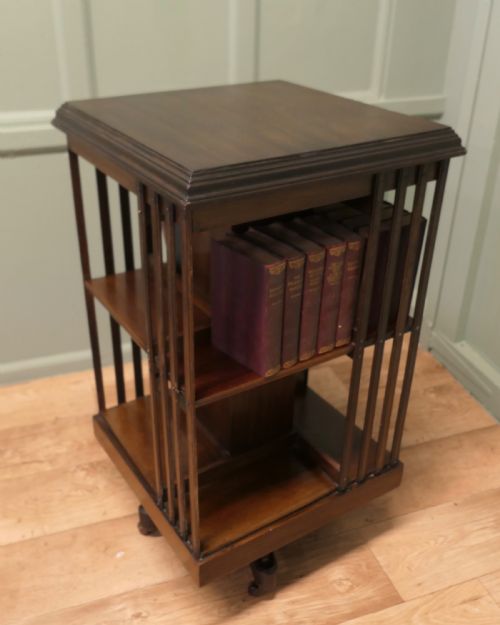
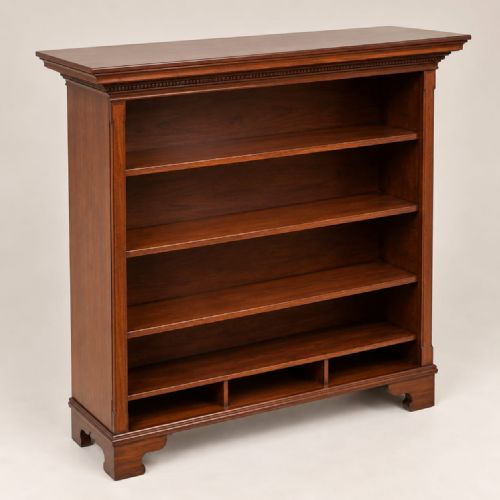
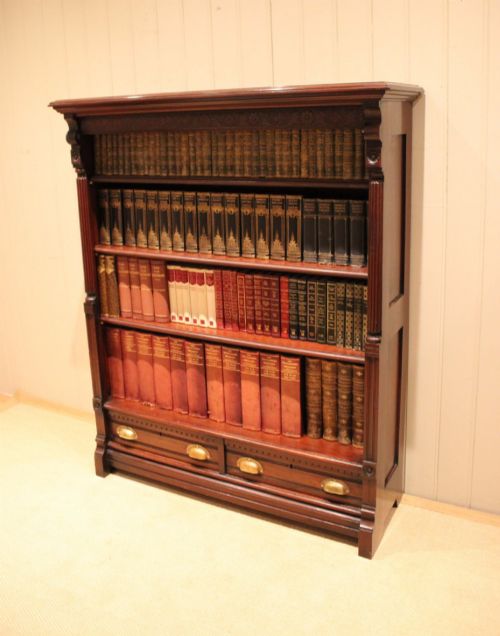
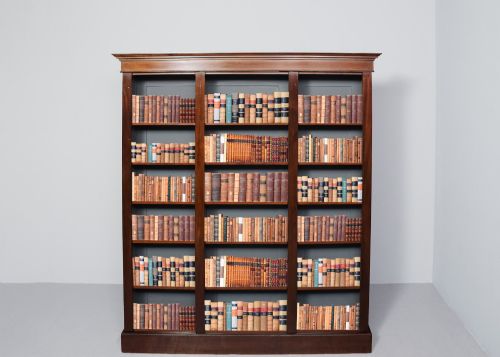
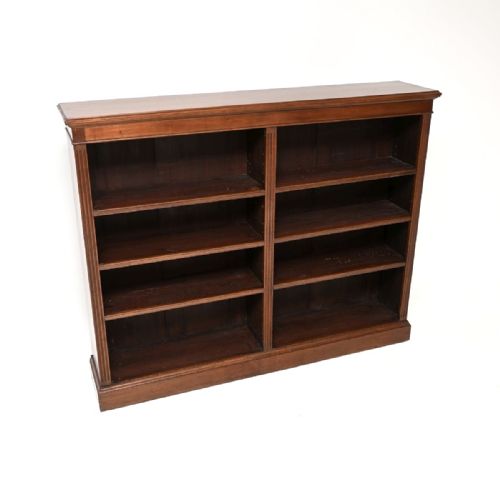
Victorian mahogany library shelves appear primarily as open bookcases, revolving bookcases, and waterfall bookcases designed for domestic studies and libraries. You will frequently encounter tall open versions featuring adjustable shelves, alongside cabinet variants that pair open upper tiers with enclosed lower storage.
The pieces span the nineteenth century into the Edwardian era, with many examples originating from the late Victorian period. Makers adopted various regional styles, ranging from William IV proportions to Georgian revival aesthetics and breakfront forms.
Proportions vary considerably from diminutive cabinets to large breakfront library bookcases built to house extensive volumes. Architectural details such as brass castors, mirror backs, and inlaid decoration distinguish the more elaborate configurations.
How they were made
Cabinetmakers constructed these pieces predominantly from solid mahogany and flame mahogany veneer, often incorporating pine and softwood for secondary framing and internal elements. Timber selection dictated the visual depth of the grain across large flat surfaces and fielded panels.
Functional hardware played an essential structural role, utilising brass for shelf supports, castors, and hinges. Glass panels appeared in glazed upper doors, while specialist variations included leather-edged shelves and carved decorative mouldings.
Victorian Mahogany Library Shelves Retail Price Guide 2026
Typical asking prices for victorian mahogany library shelves among the pieces listed under this phrase on Sellingantiques today, from the lower quarter to the upper quarter. They describe what is for sale here now, not the wider market.
Listings feature mahogany, flame mahogany veneer, brass, glass, pine, and softwood across various 19th-century and Edwardian forms.
What varies in quality
The standard of timber preparation and veneer matching largely dictates the visual success of a piece, separating straightforward utilitarian items from finely figured examples. Cabinetmakers who selected choice flame mahogany created striking facades that elevate the overall presence of the furniture.
Construction details such as the integration of adjustable shelf mechanisms, solid brass castors, and precise carcase joinery reflect the original tier of production. Finer items exhibit careful proportioning and restrained carving rather than purely repetitive ornamentation.
Gillows·Robert Strahan·Goodhall, Lamb and Heighway of Manchester
The Victorian Mahogany Library Shelves Glossary
- Mahogany
- A durable tropical hardwood prized for its deep reddish-brown colour and stable grain. It served as the primary timber for high-quality nineteenth-century cabinet work.
- Flame mahogany veneer
- A thin slice of wood cut from the fork of the mahogany tree to create a distinctive flickering flame pattern. Cabinetmakers applied this over secondary timbers on prominent surfaces.
- Waterfall bookcase
- A graduated set of open shelves where each tier steps back from the one below. This form became popular during the nineteenth century for display purposes.
- Breakfront
- A cabinet design where the central section projects forward from the flanking wings. This architectural layout creates visual depth in larger library bookcases.
- Adjustable shelves
- Shelves supported by movable pins or tracks that allow the vertical spacing to be altered. This practical feature accommodated books of varying heights.
Victorian Mahogany Library Shelves: Frequently Asked Questions
How do I adjust the shelves?
Most nineteenth-century library pieces utilise wooden rack strips or brass side pins fitted into the interior walls. These systems allow you to lift each shelf free and reposition the supports by hand.
Take care when shifting heavy mahogany boards to avoid marking the interior veneer. Ensure the pins are fully seated before placing books back onto the timber.
Where should I place a revolving bookcase?
Revolving designs work best freestanding near a seating area or desk where you need immediate access to reference volumes. Their rotating mechanism allows four-sided storage within a compact footprint.
Keep them away from direct heat sources and strong sunlight to protect the polish and prevent the mechanism from binding over time.
How do I clean mahogany surfaces?
Dust the timber regularly with a soft, dry cloth to prevent particle buildup in the grain and carved mouldings. Avoid silicone-based sprays that can penetrate the aged finish and attract grime.
Apply a traditional beeswax polish occasionally to nourish the wood and maintain a soft sheen. Buff the surface gently after application with a clean cotton cloth.
Are these shelves suitable for heavy books?
Solid mahogany construction provides robust support for substantial volumes, particularly on fixed-shelf units. Adjustable shelves require stable uprights and sound support pins to bear heavy loads without sagging.
Distribute large folios evenly across the lower tiers to maintain structural balance. Check that the support brackets remain firmly seated in their slots when loading heavy texts.