
Victorian Mahogany Library Bookcase
A victorian mahogany library bookcase brings grand scale and rich timber grain to a room, offering sturdy shelving and enclosed storage for substantial volumes.
Victorian Mahogany Library Bookcase
A victorian mahogany library bookcase is a substantial piece of furniture designed for heavy volumes, combining upper shelving with lower enclosed cupboards or drawers. These pieces emerge predominantly from the nineteenth century, reflecting the domestic ambition and reading habits of the era.
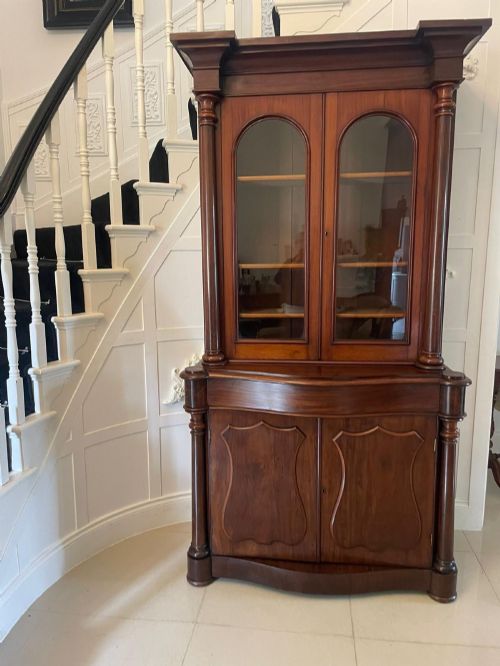
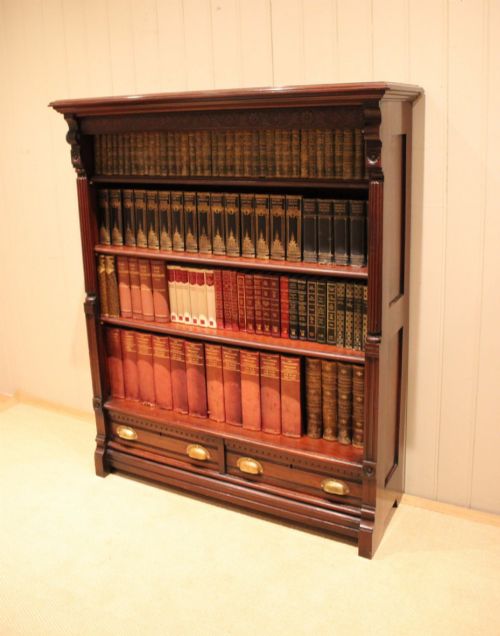
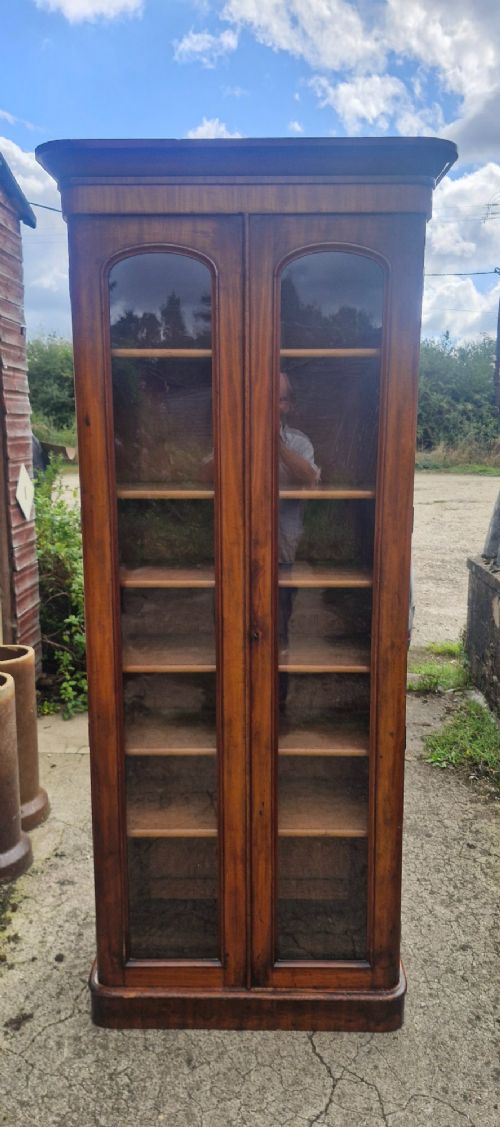
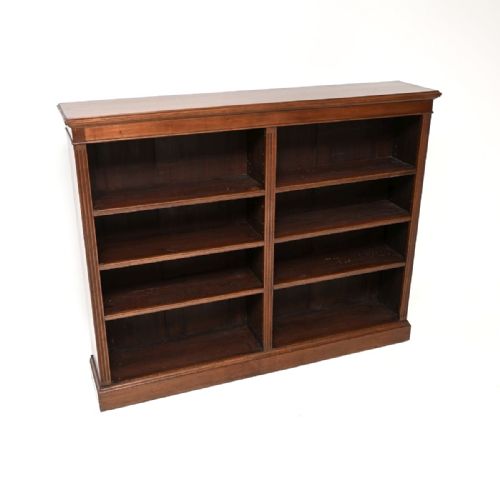
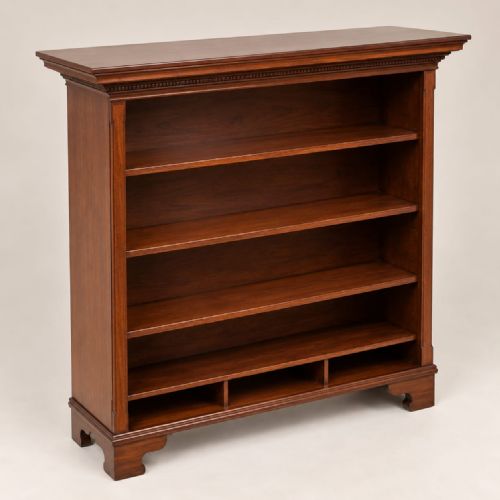
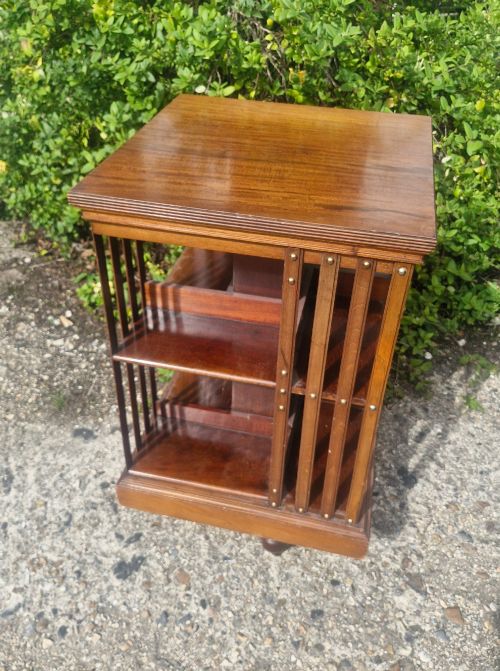
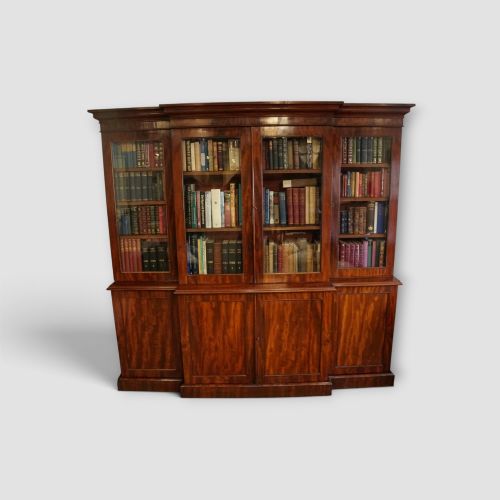
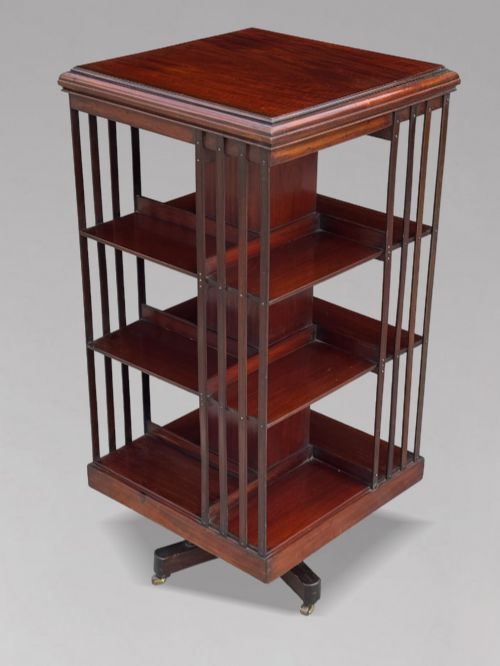
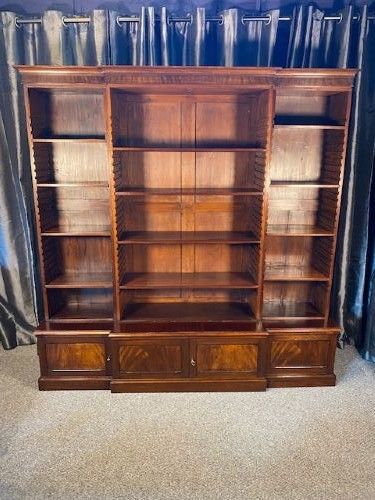
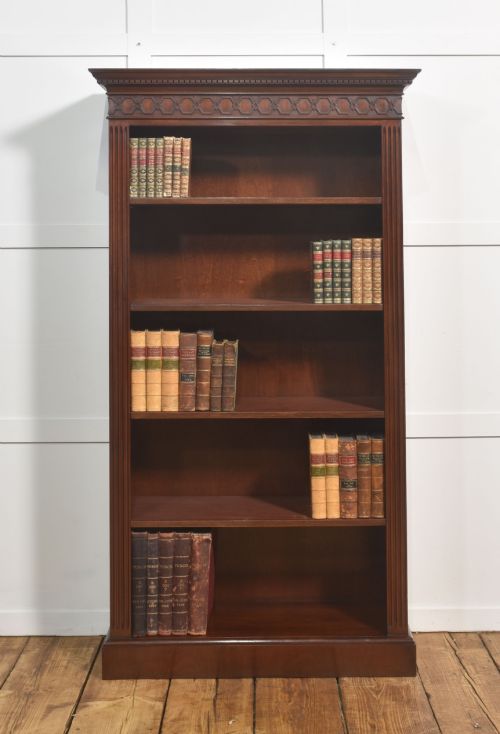
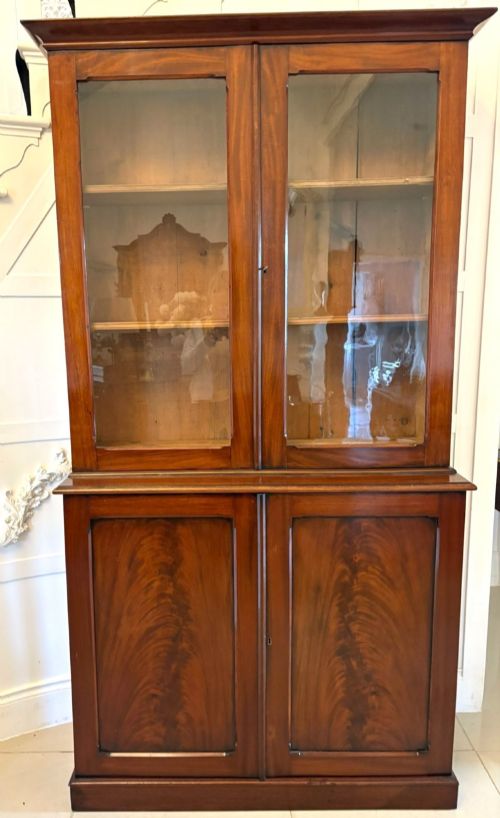
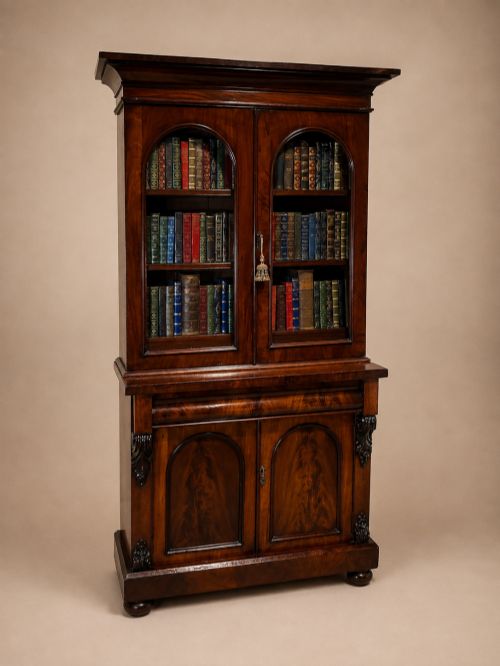
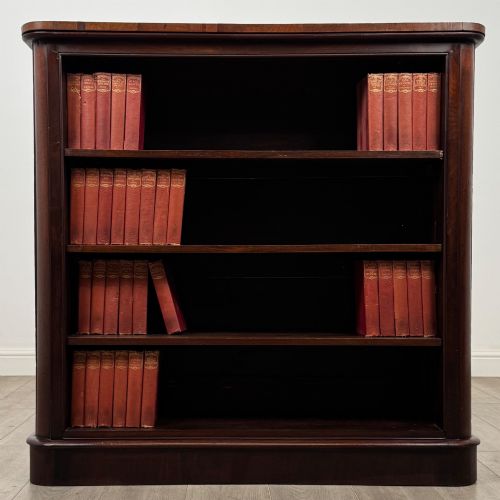
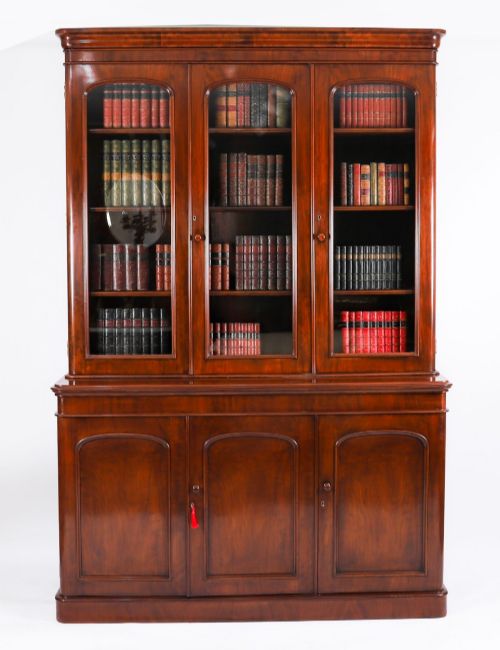
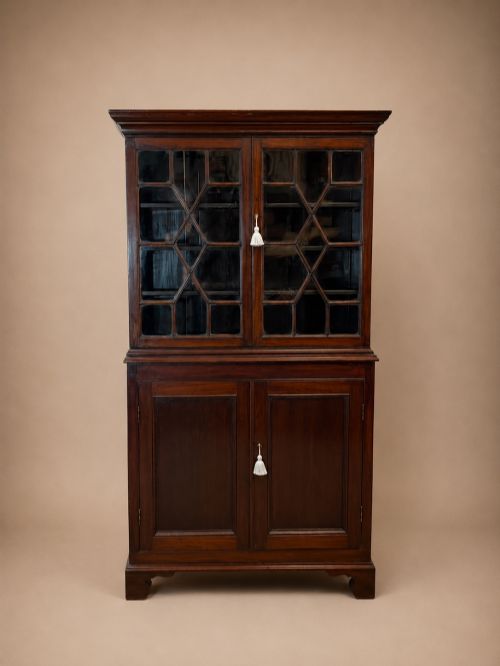
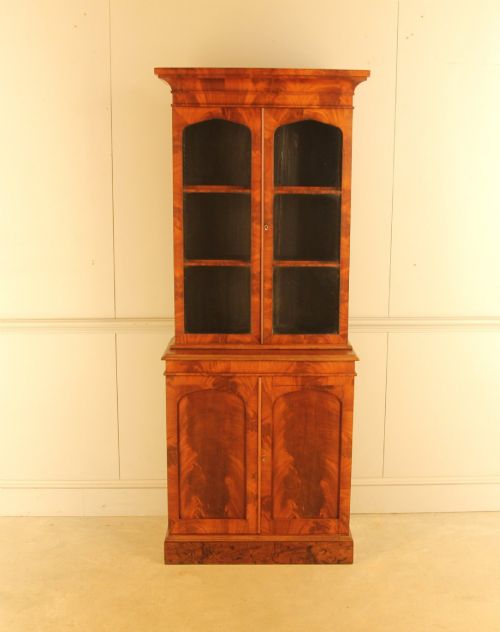
The most frequent form encountered on this page is the two-part architectural bookcase, often featuring glazed upper doors with timber astragals. Open bookcase variants and large breakfront formats also appear regularly, alongside compact revolving designs from the late nineteenth and early twentieth centuries.
Materials and construction methods
Cabinet makers utilised dense, resilient mahogany timber as the primary structural material, frequently selecting figured or flame mahogany veneer for the principal display surfaces to create deep, rippling visual patterns. Solid mahogany frames house adjustable shelving supported by wooden ratchets or brass pins.
Glazing relies on delicate timber astragal bars dividing the glass panes into geometric patterns, while brass hardware, including handles, hinges, and castors, provides functional contrast. Heavier architectural examples often employ internal pine carcass construction beneath the mahogany exterior.
Listings span the nineteenth century through to the Edwardian period, uniting solid mahogany, flame veneer, brass, and glass.
Distinctions in craftsmanship
Quality rests on the selection of the timber grain and the precision of the cabinet work, where symmetrical flame mahogany veneers and tight joinery separate superior examples from plain utility pieces. The harmony of proportions, particularly in large breakfront and multi-door formats, dictates visual success.
Interior refinements such as smoothly operating adjustable shelf mechanisms, original glazed panes without distortion, and well-executed decorative carvings in revival styles elevate a piece from standard workshop production to high-status library furniture.
The Victorian Mahogany Library Bookcase Glossary
- Breakfront
- A cabinet design where the central section projects forward from the flanking wings, creating strong architectural depth.
- Astragal
- A small moulded timber strip used to divide and hold individual panes of glass within a glazed cabinet door.
- Flame mahogany
- A distinct timber veneer cut from the fork of the mahogany tree, producing a dramatic, flickering flame-like pattern.
- Secretaire
- A fitted writing drawer containing a drop-front desk surface alongside small pigeonholes and stationary drawers.
- Gothic revival
- A nineteenth-century architectural and decorative style incorporating pointed arches, trefoils, and medieval motifs.
Victorian Mahogany Library Bookcase: Frequently Asked Questions
How do I adjust the shelves?
Most nineteenth-century examples utilise either a system of vertical wooden ratchets with notched supporting arms or rows of drilled holes fitted with brass pins.
You simply lift the shelf slightly, reposition the supports into your chosen slots, and lower the timber back into place.
Are these pieces usually in two parts?
Larger formats are typically constructed as two separate sections, featuring a heavy lower cupboard base and a detachable upper bookcase.
This bipartite construction was essential for transporting massive architectural furniture into domestic nineteenth-century rooms.
How do I care for mahogany?
Mahogany responds best to consistent indoor humidity and protection from direct sunlight, which can bleach the warm reddish-brown timber tones over time.
Applying a traditional beeswax polish occasionally maintains the lustre of the finish without building up heavy chemical residues.
How do I date these pieces?
Dating relies on observing construction methods, timber thickness, hardware styles, and stylistic indicators such as Gothic or Regency revival motifs.
Earlier nineteenth-century examples often display heavier architectural proportions, whilst later Victorian and Edwardian pieces frequently include revolving formats and lighter frames.