

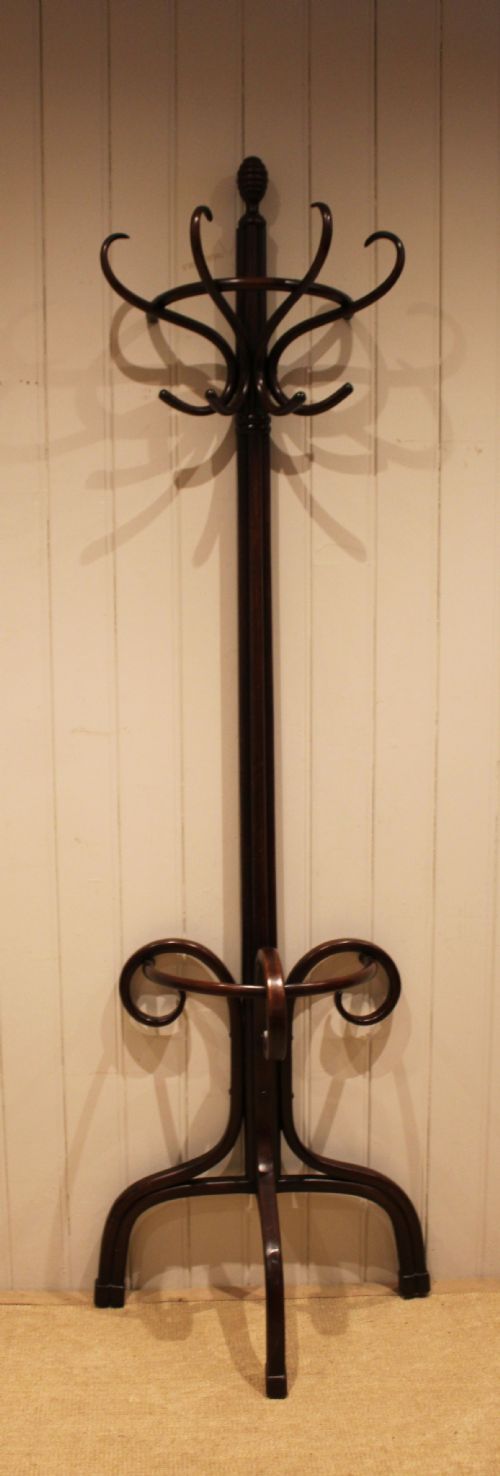


Victorian Mahogany Hat Tree
These Victorian mahogany hat tree examples are practical hallway furniture designed for hanging coats and hats, built to last from solid timber.
Victorian Mahogany Hat Tree
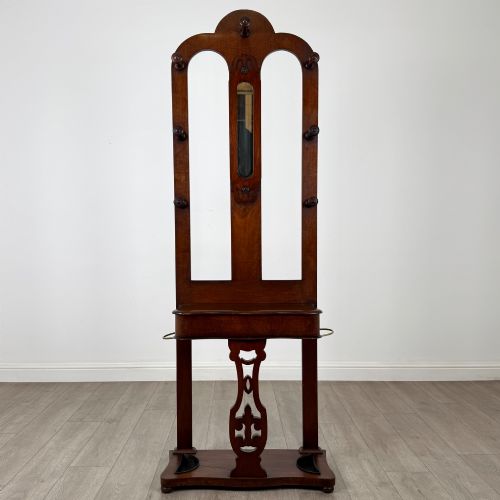
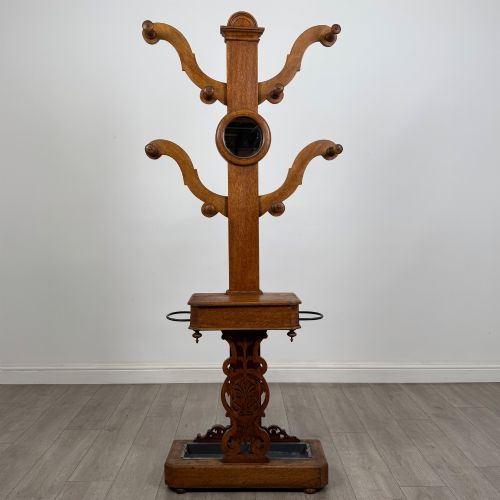
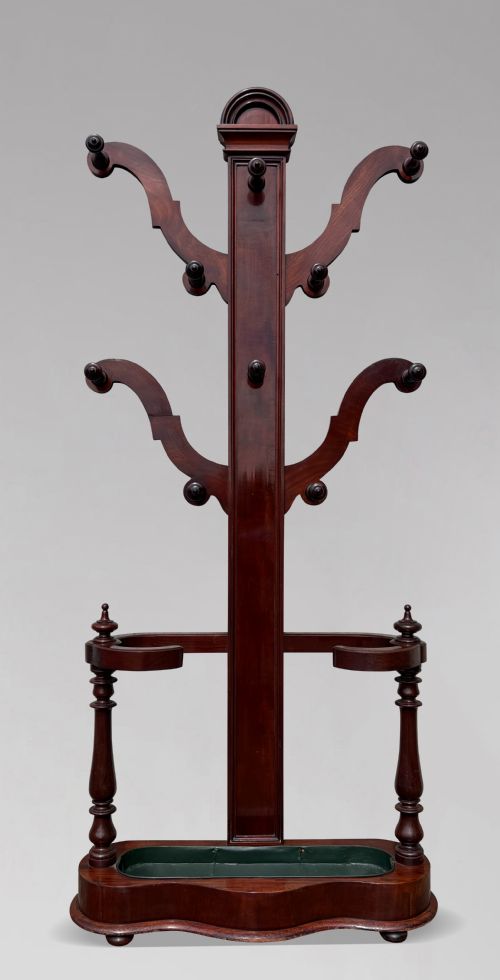
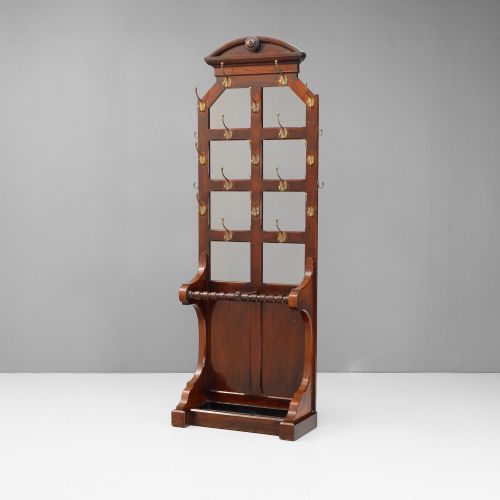
A victorian mahogany hat tree serves as a functional piece of hallway furniture designed to hold coats, hats, and umbrellas. The pieces listed on this page encompass various forms including hall stands, coat stands, hallstands, and coat racks.
Most examples originate from the Victorian and 19th Century periods, alongside Edwardian and Regency pieces. These items often integrate mirrors, marble shelves, and brass or metal hooks for everyday utility.
Makers and designers produced these stands using robust materials to withstand heavy daily use in entrance halls. Buyers frequently encounter large structures featuring umbrella compartments and key boxes alongside simpler hanging racks.
Distinctions in quality
Quality differences stem from the scale of the timber used and the complexity of the carved decoration. Large stands incorporating fitted marble shelves, mirrors, and brass fittings sit at a different level from simple hanging racks.
The integrity of the mahogany and the original condition of integrated elements such as cast iron umbrella trays dictate the overall standard. Superior examples exhibit refined turning on columns and substantial structural framing.
Materials documented in these listings include mahogany, brass, glass, metal, marble, cast iron, iron, and ceramic.
The Victorian Mahogany Hat Tree Glossary
- Hall Stand
- A piece of hallway furniture incorporating coat hooks, a mirror, and a tray for umbrellas. These items formed a central feature in Victorian entrance halls.
- Mahogany
- A durable tropical hardwood valued for its rich reddish-brown colour and strength. It served as the primary material for high-quality 19th-century furniture.
- Bentwood
- Wood softened by steam and bent into curved shapes. This technique defines the Viennese bentwood style found in later coat racks.
- Marble
- A hard metamorphic rock utilised for shelves and counter surfaces on hall stands. It provided a durable, wipe-clean area for keys and small items.
- Cast Iron
- A robust metal alloy used for the weighted bases and umbrella retainers of hall stands. It provided necessary stability to prevent tipping under heavy coats.
Victorian Mahogany Hat Tree: Frequently Asked Questions
Where should I place a hall stand?
These pieces suit entrance halls and corridors where guests remove outerwear. Their tall profile requires adequate wall space and clearance for hanging garments.
Ensure the location allows easy access to umbrella trays and hooks without blocking doorways.
How do I clean mahogany furniture?
Dust the timber regularly with a soft, dry cloth to prevent dirt accumulation. Avoid harsh chemical sprays that can damage the polish.
Apply natural beeswax occasionally to nourish the wood and maintain its deep lustre.
Did Victorians use these daily?
Households utilised these stands constantly for storing wet umbrellas, heavy overcoats, and everyday hats. They kept hallways tidy and protected garments from dust.
The inclusion of key boxes and mirror panels added convenience for departing residents.
How do I identify the period?
Examine the construction methods, wood types, and decorative motifs present on the piece. Victorian examples frequently display rich mahogany and detailed carving.
Later Edwardian or 19th-century pieces may show stylistic shifts towards simpler forms or bentwood construction.