
Victorian Mahogany Display Stand
A victorian mahogany display stand brings timber warmth and multi-tiered structure to a room, holding ornaments and books on open shelves or behind glass.
Victorian Mahogany Display Stand
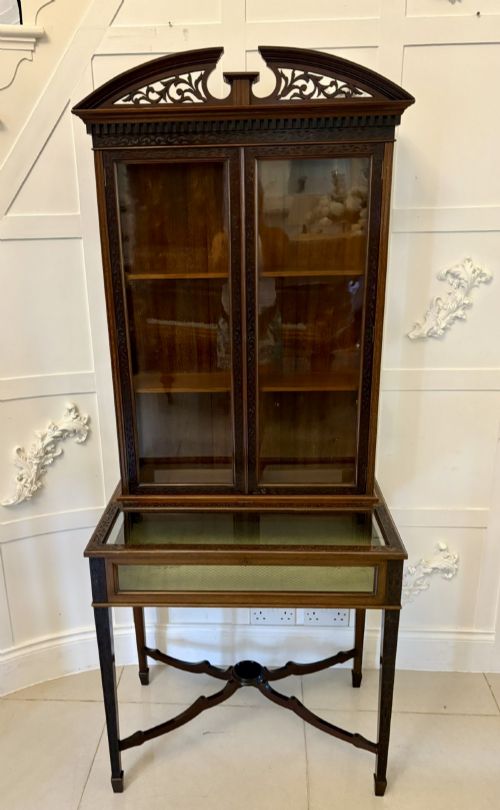
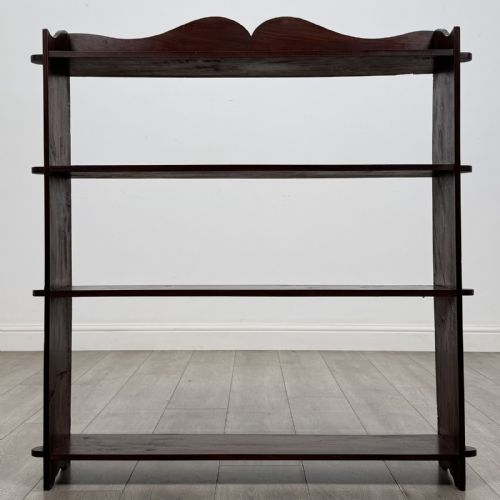
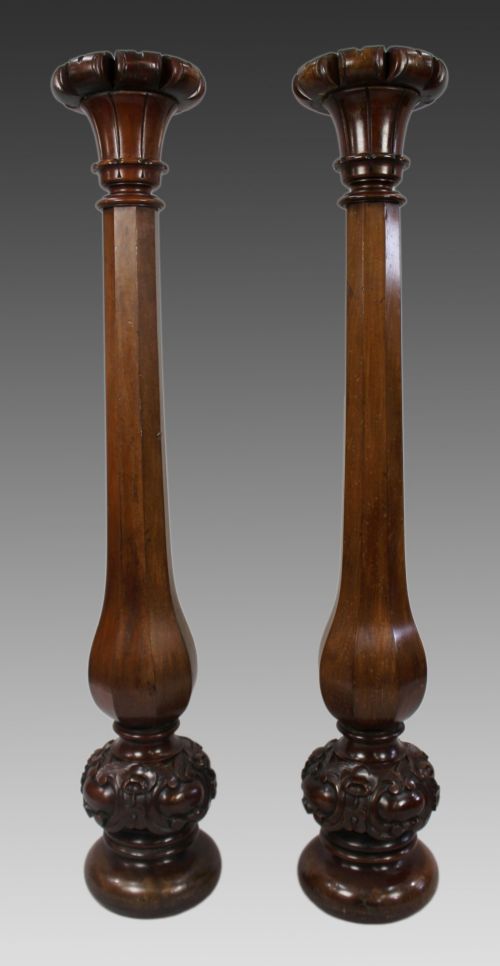
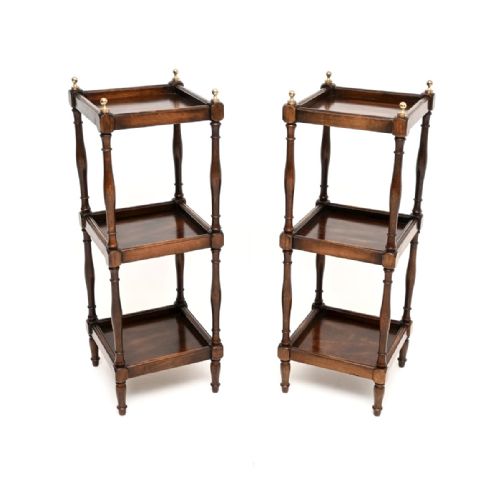
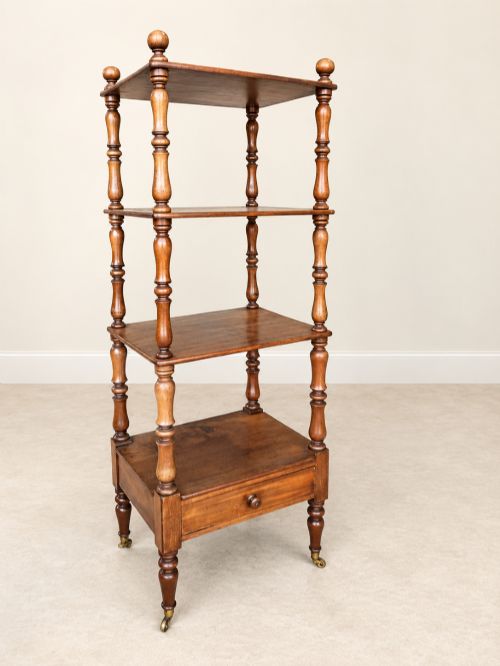
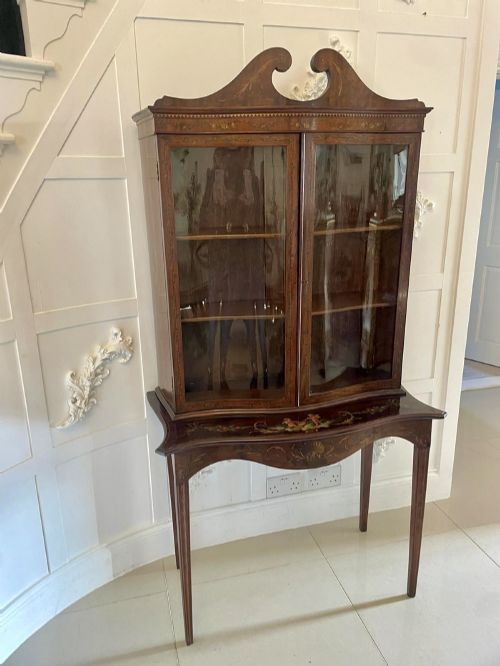
A victorian mahogany display stand encompasses a broad family of multi-tiered furniture built to exhibit objects, ranging from open whatnots and etageres to glazed cabinets and tall torcheres.
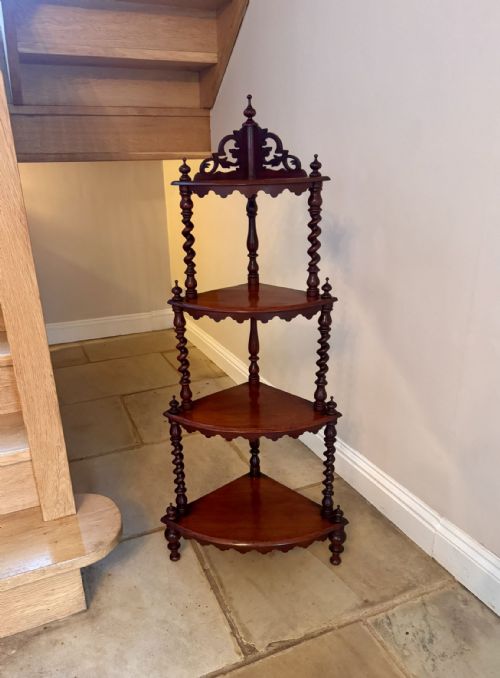
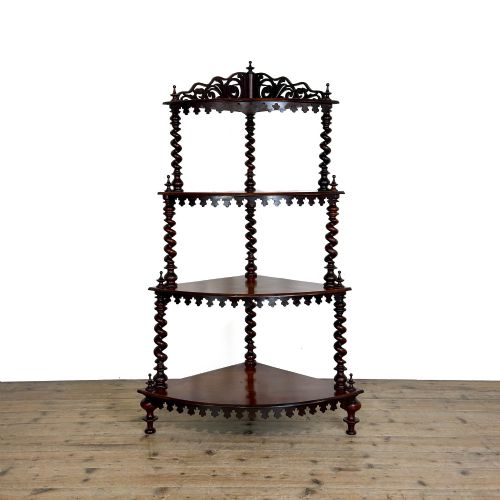
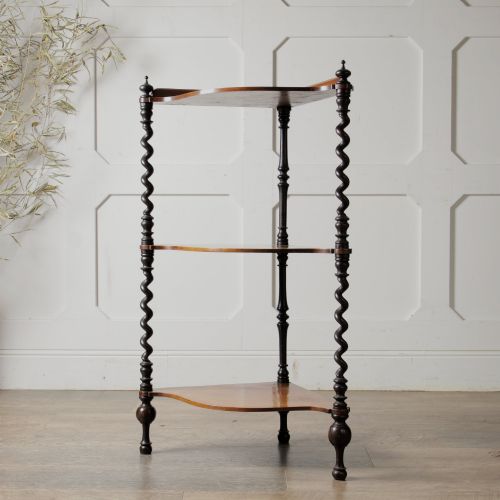
The version most commonly met on this page is the tiered whatnot or corner stand from the nineteenth century, designed with stacked platforms supported by turned or barley twist columns.
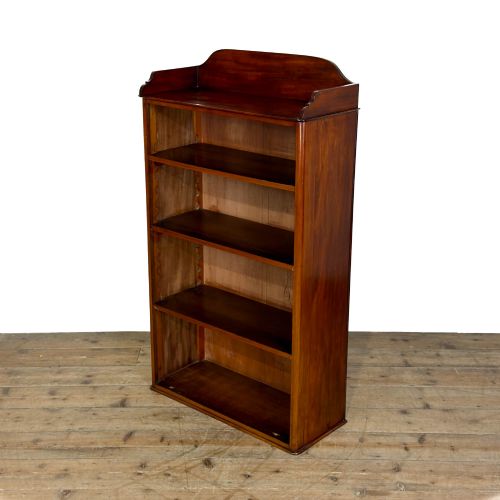
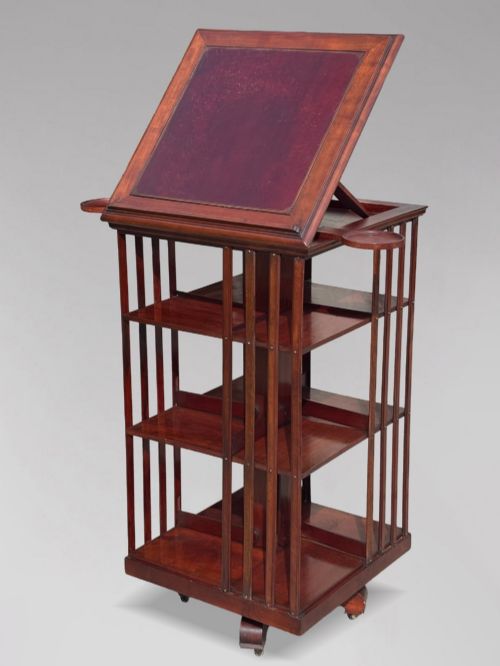
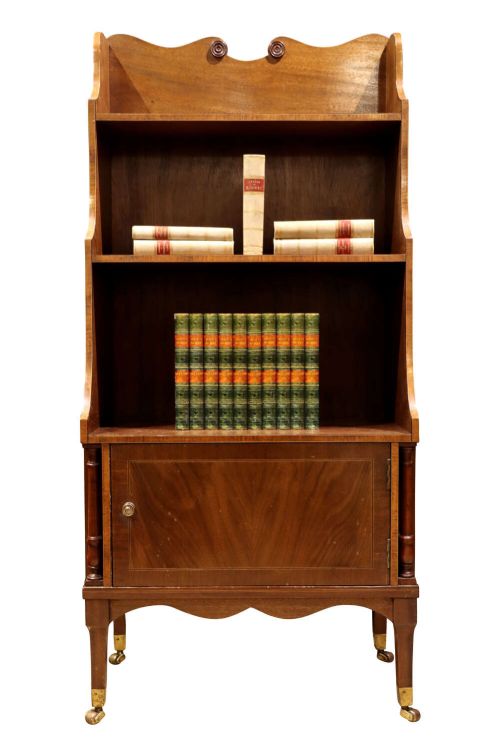
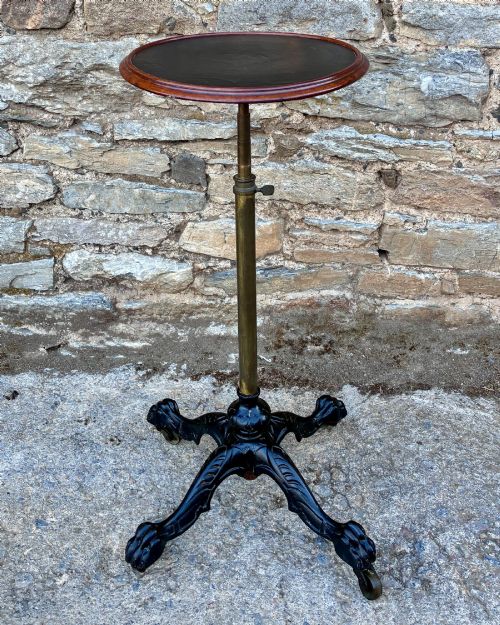
Makers also produced specialised forms like waterfall bookcases, shop fitting display trees, and studio easels, all sharing a reliance on dense tropical timber.
How they were made
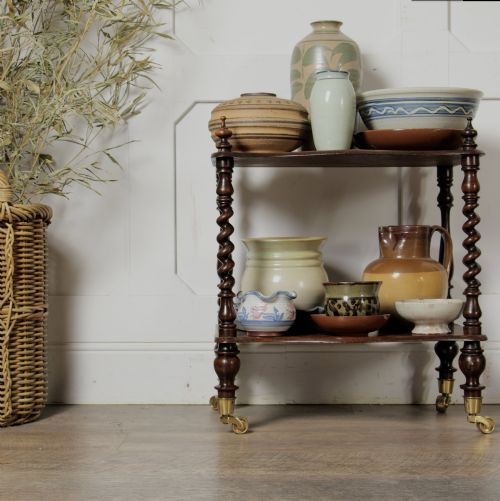
Cabinet makers relied primarily on solid and veneered mahogany, often pairing the deep brown grain with contrasting satinwood inlay, brass castors, or painted decoration.
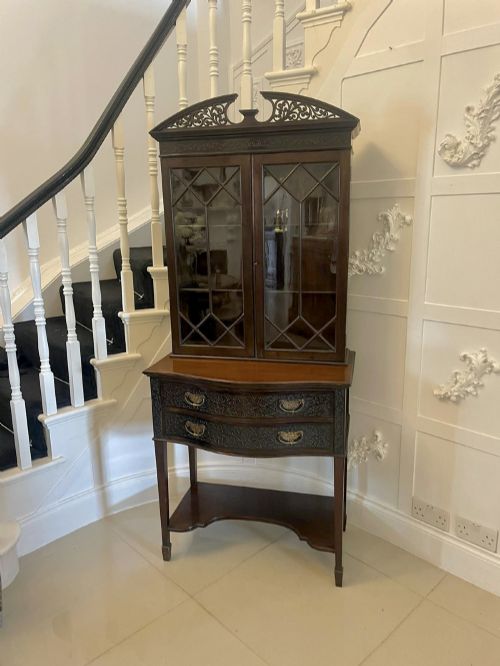
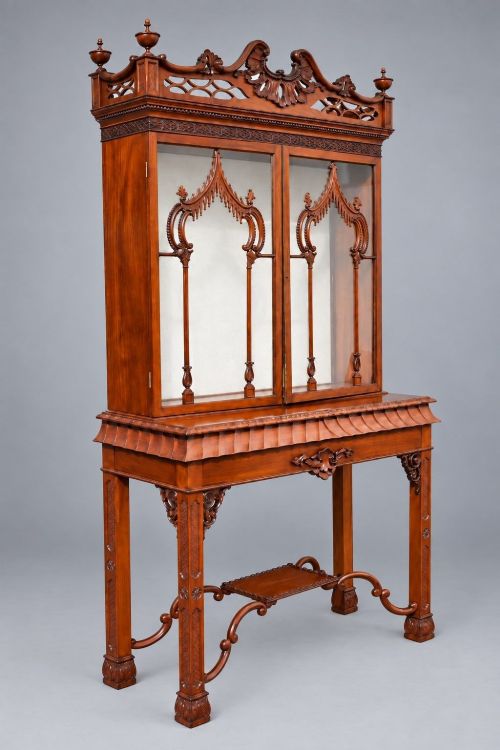
Structural support relied on turned uprights, barley twist columns, or carved pedestals, while enclosed pieces incorporated glazed doors with astragal bars and mirrored backs.
Listings feature nineteen distinct object types, including corner cupboards, studio easels, plant stands, and revolving display trees.
What varies in quality
Quality separates pieces through the crispness of carved details like acanthus leaves, the tightness of timber joints, and the sophistication of secondary woods and inlay.
The presence of signed maker stamps, original brass hardware, and intact glass or painted decoration elevates a piece from standard utility furniture to fine workshop production.
Edwards and Roberts·James Winter and Sons
The Victorian Mahogany Display Stand Glossary
- Whatnot
- An open multi-tiered piece of furniture with shelves supported by small pillars or columns, used for displaying ornaments or books.
- Etagere
- A piece of furniture consisting of a number of open shelves for displaying small objects, similar in function to a whatnot.
- Torchere
- A tall stand or pedestal designed to support a plant, vase, or lamp, often featuring a carved column and round top.
- Astragal
- A small moulding used to hold the panes of glass within a cabinet door, defining the glazed grid pattern.
- Castor
- A small wheel fitted to the legs of furniture to allow easy movement across floor surfaces.
Victorian Mahogany Display Stand: Frequently Asked Questions
What is the difference between a whatnot and a display cabinet?
A whatnot relies on open tiers held up by upright pillars, allowing items to be viewed from all sides without physical barriers.
In contrast, a display cabinet encloses the contents behind glazed doors, protecting delicate objects from dust and handling.
How do I place a corner display stand in a room?
Corner stands fit snugly into unused wall junctions, turning dead architectural space into functional exhibition areas for small ceramics and books.
They work best where floor space is limited, drawing the eye upward without blocking natural walkways.
What is a barley twist leg?
A barley twist is a decorative turning technique shaped like a spiral helix, resembling the stalk of barley grain.
Cabinet makers utilised this style on the vertical support columns of mid to late nineteenth-century pieces to add visual texture.
Can these stands support heavy books?
Open shelf units and etageres were primarily built to display lighter decorative objects, ceramics, and occasional volumes rather than heavy reference libraries.
Sturdier bookcase variations with fixed framing handle heavier loads, while tiered stands suit lighter ornaments.