
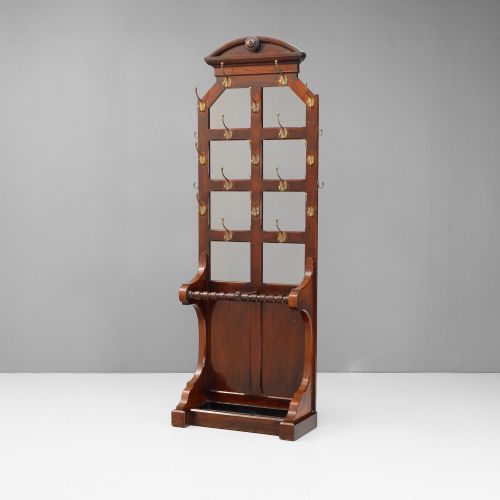

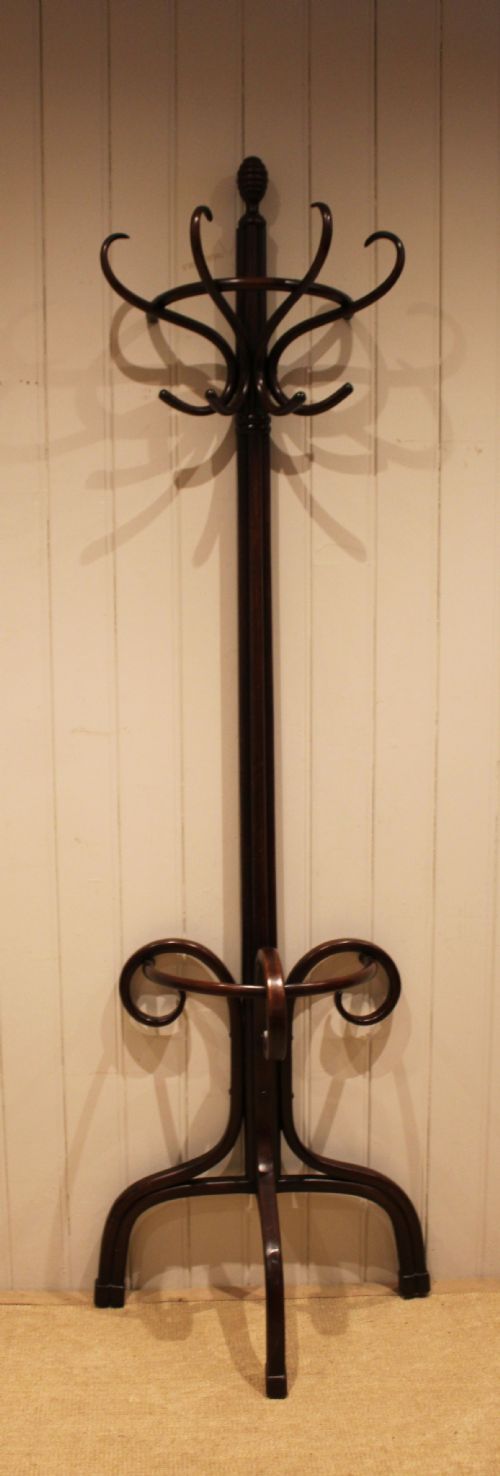


Victorian Mahogany Coat Stand
These Victorian mahogany coat stand pieces are solid timber hall furniture designed to hold outerwear and umbrellas, offering immediate utility and period presence.
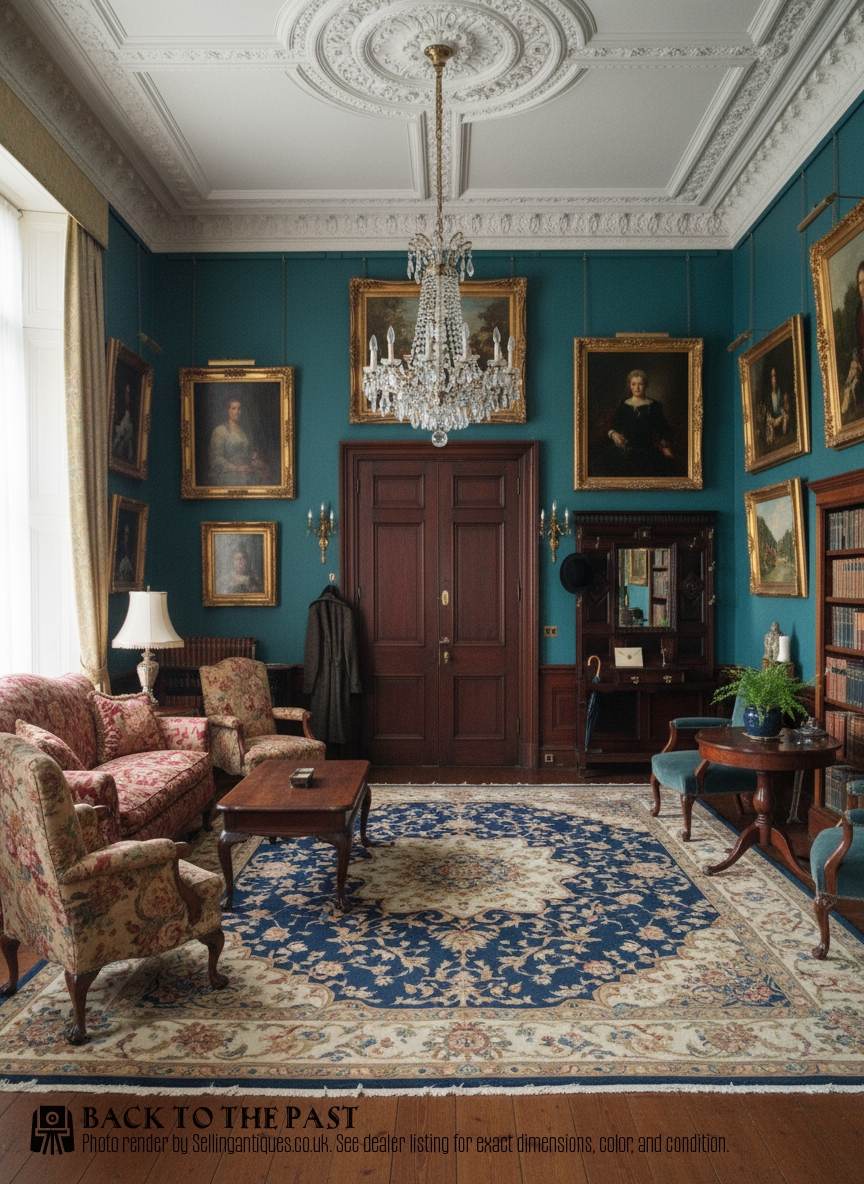
Victorian Mahogany Coat Stand
A victorian mahogany coat stand serves as a functional entrance piece designed to organise hats, coats, sticks and umbrellas in a domestic hall. These items appear primarily in Victorian forms, alongside examples from the Edwardian, Regency, and Arts and Crafts periods.
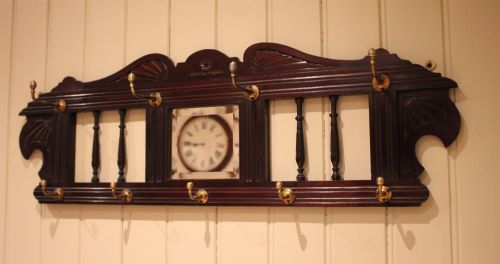
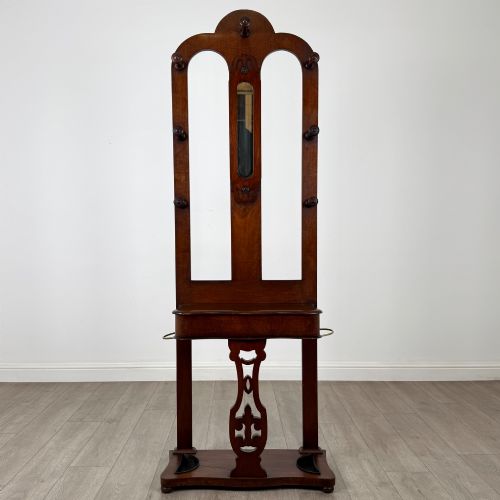
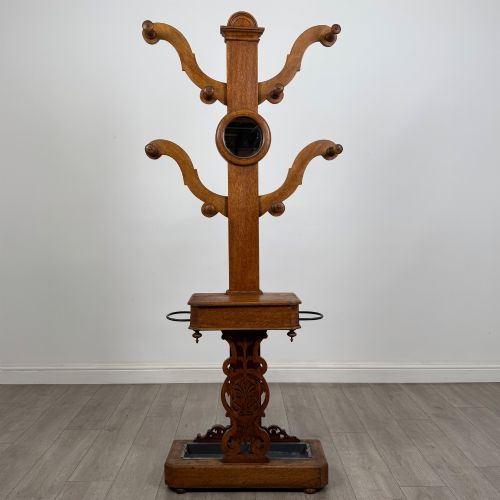
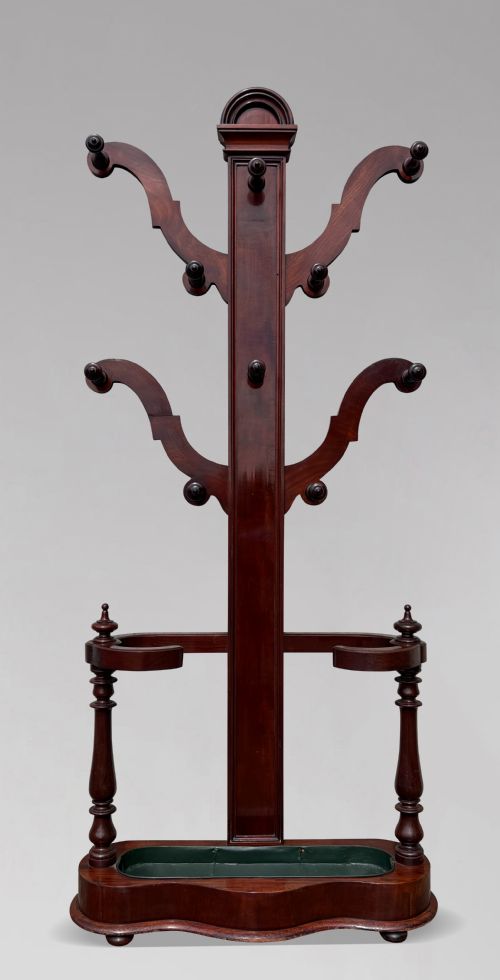
The objects take several shapes, including freestanding hall trees, mounted coat racks, column stands, and complex hall stands incorporating mirrors, marble shelves, and boot racks. Buyers find variations ranging from simple revolving designs to large pieces fitted with brass hooks and tile panels.
Origin points span English workshops as well as colonial interpretations, such as Anglo Indian pieces, providing a consistent timber identity across varied regional carpentry traditions.
Materials and construction
Makers utilised solid mahogany as the primary structural timber, often combined with secondary elements like beech, cast iron, and brass for internal framing and hardware. Metal components appear as heavy hooks, rails, and structural brackets.
Many hall stands incorporate inset bevelled glass mirrors and marble shelves or backing slabs to resist moisture from damp umbrellas. Advanced examples feature glazed ceramic tiles or revolving turning mechanisms.
Victorian Mahogany Coat Stand Retail Price Guide 2026
Typical asking prices for victorian mahogany coat stand among the pieces listed under this phrase on Sellingantiques today, from the lower quarter to the upper quarter. They describe what is for sale here now, not the wider market.
Listings feature mahogany combined with marble, brass, cast iron, and glass across Victorian, Edwardian, and Regency periods.
Standards of execution
The distinction between standard examples and superior pieces rests on the depth of carved detail, timber selection, and the integration of auxiliary materials like marble and brass. Master carvers shaped structural cornices and panels by hand.
Structural stability dictates value, visible in the rigidity of column joints and the original mounting of heavy mirrors and iron drip pans. Pieces retaining intact original hardware and unblemished marble surfaces represent the upper tier of the range.
Ellen E. Houghton of Minton
The Victorian Mahogany Coat Stand Glossary
- Hall stand
- A large freestanding entrance unit combining a mirror, coat hooks, umbrella wells, and often a small shelf or compartment. These pieces anchor the hallway and organise outerwear.
- Hall tree
- A vertical freestanding timber post fitted with branching arms for hats and coats. They utilise a stable weighted base or splayed legs to support hanging weight.
- Bevelled plate
- A mirror glass with an angled or sloped edge ground down around the perimeter. This treatment adds a decorative finish to the glass inset within hall furniture.
- Bentwood
- Timber softened through steam application and bent into curved structural forms. This technique appears in lighter hall and hat racks.
- Drip pan
- A metal or ceramic tray placed at the base of a stand to catch water from wet umbrellas. These trays protect the lower mahogany frame from moisture damage.
Victorian Mahogany Coat Stand: Frequently Asked Questions
What is a hall stand?
A hall stand is a tall piece of entrance furniture designed to hold coats, hats, and walking sticks. Many incorporate mirrors and umbrella compartments.
They stood in Victorian hallways to receive guests and store outdoor garments immediately upon entry.
How do I use one today?
These stands function in modern hallways just as they did originally, holding coats, scarves, and umbrellas. The integrated mirrors offer a final check before leaving the house.
Placement requires adequate wall clearance and a stable floor surface to support the vertical weight.
Are mirrors original?
Most surviving tall hall stands retain their original bevelled glass mirror plates. Deep bevels and slight surface foxing often indicate age.
Replacement glass typically shows modern cutting techniques and lacks the subtle distortions found in older plates.
What woods are used?
Mahogany is the dominant timber across these pieces, paired occasionally with secondary supports in beech or metal. The wood exhibits a dark reddish-brown grain.
Matching hardware generally includes brass hooks and cast iron frames for structural strength.