




Victorian Mahogany Coat Rack
A victorian mahogany coat rack organises an entrance hall with deep timber tones and sturdy metal hooks built for heavy daily use.
Victorian Mahogany Coat Rack
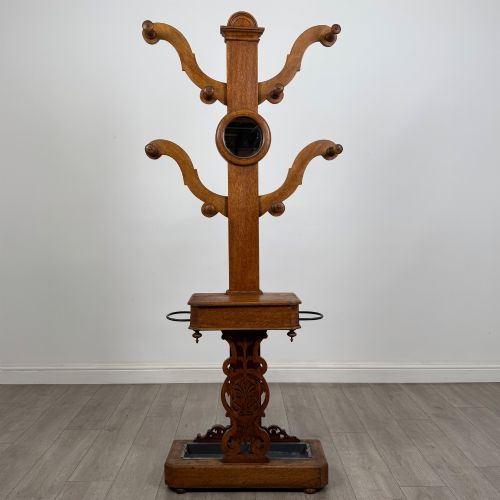
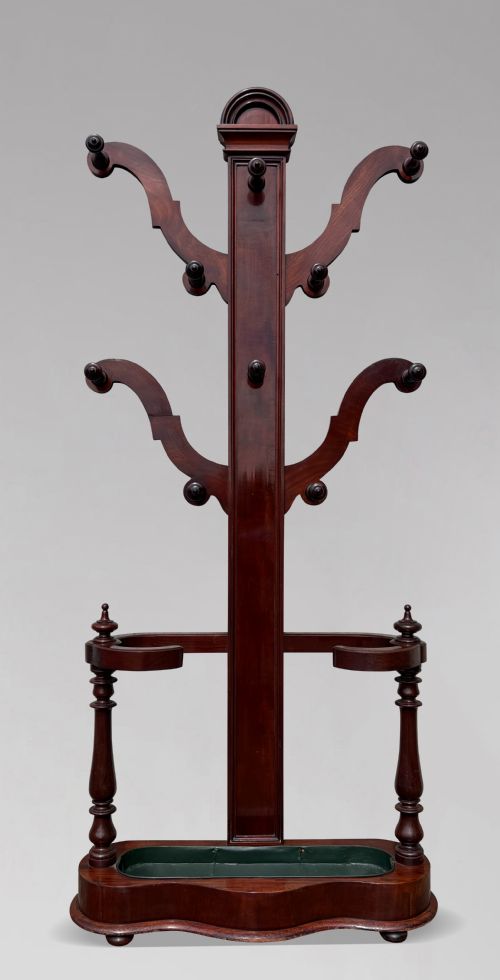
A victorian mahogany coat rack encompasses wall-mounted hook rails, freestanding floor stands, and comprehensive hall pieces designed for nineteenth-century reception rooms and cloakrooms. The pieces recorded here span the nineteenth and early twentieth centuries, drawing on Victorian, Edwardian, William IV, and Aesthetic Movement design traditions.
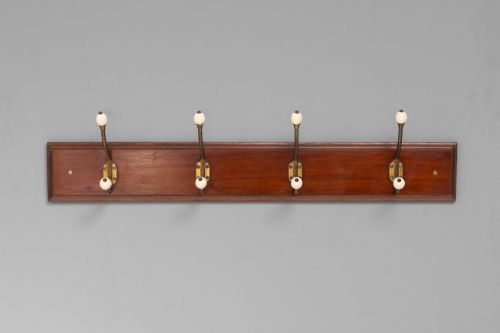
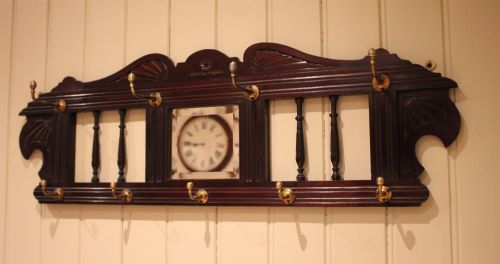
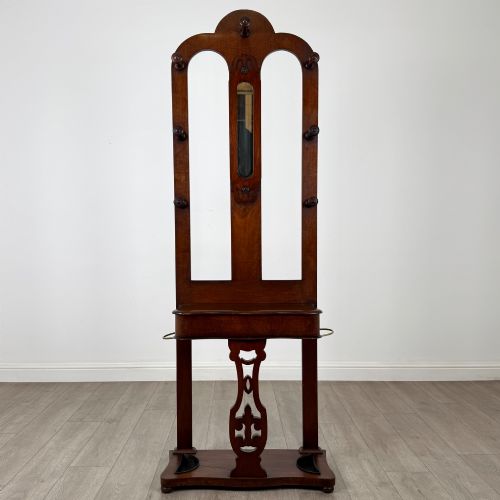
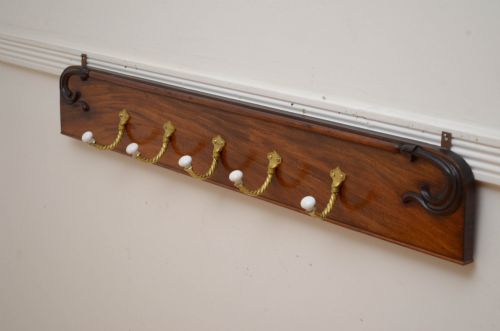
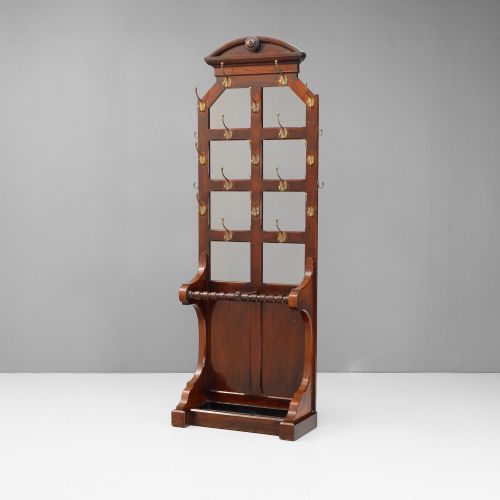
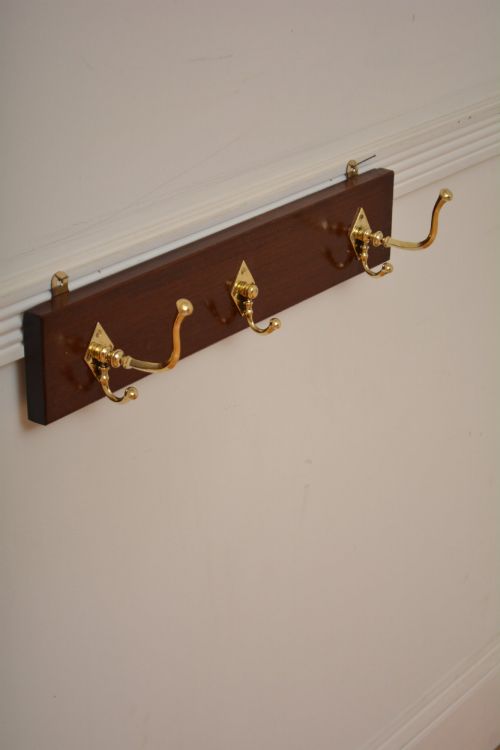
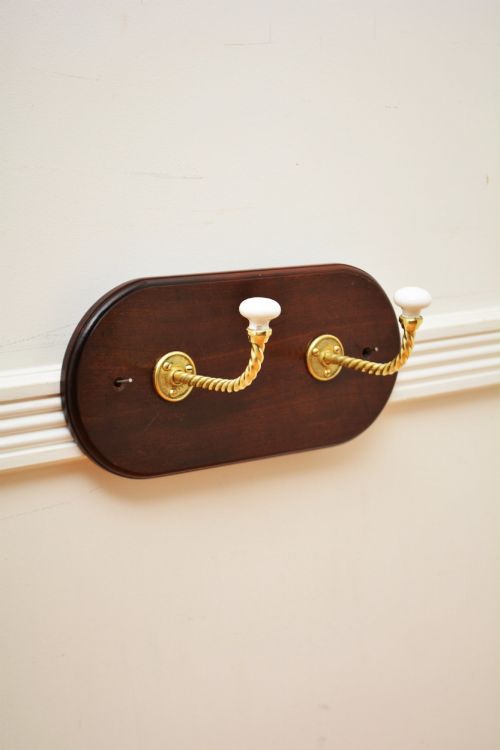
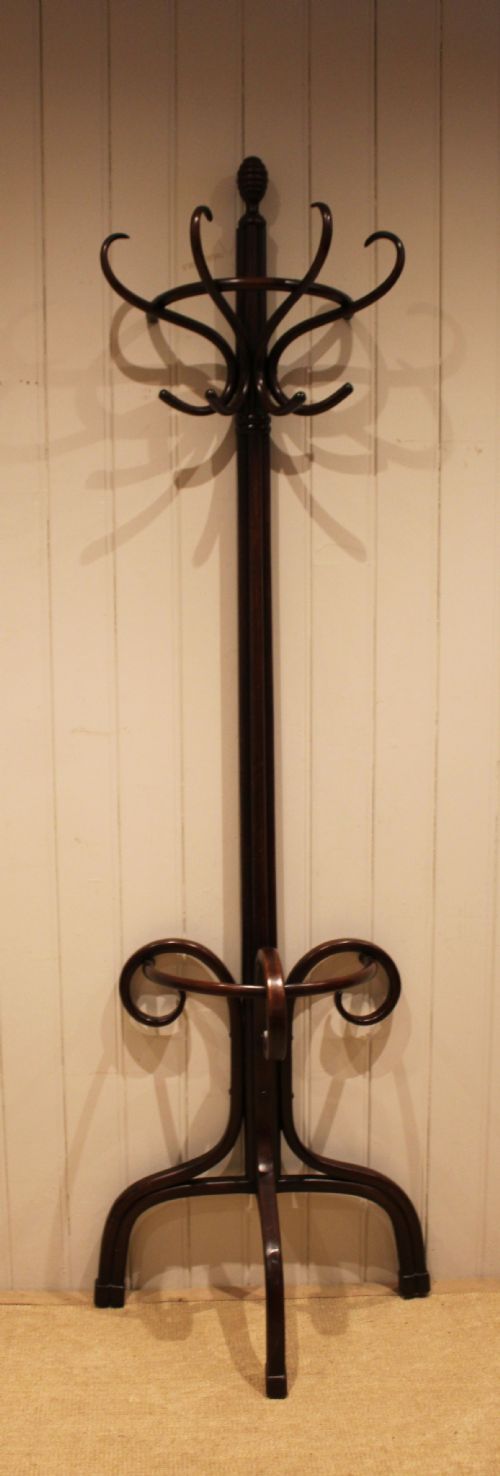
Wall-mounted examples generally feature a solid timber plank fitted with brass, iron, or ceramic hooks, while larger hall stands incorporate central mirrors, umbrella trays, and marble shelves. Buyers meet both modest wall rails and substantial column or tree forms shaped from rich brown timber.
Origins include English workshops and continental influences such as Viennese bentwood and French chateau styles. These variations reflect the diverse domestic requirements of period households, from simple cloakroom storage to grand hallway furniture.
Materials and Construction
Makers utilised dense, durable mahogany as the primary structural timber, valued for its deep grain and capacity to hold rigorous joints. This timber was frequently polished to a warm sheen, providing a robust foundation for daily household use.
Hardware consists of cast brass, iron, and occasionally glass or ceramic elements screwed directly into the timber backplates. Many examples integrate bevelled mirror plates, marble insert shelves, and cast iron umbrella wells that add weight and functional utility.
The documented examples span periods from the William IV era through Victorian designs to Edwardian hall furniture.
Craftsmanship and Proportion
Quality rests in the weight of the timber and the security of the hook mountings, which must endure the downward pull of heavy garments. Superior examples show crisp carving, well-cast brass or iron hooks, and substantial backboards rather than thin veneered panels.
The integration of secondary materials like veined marble shelves and bevelled mirror plates distinguishes finer hall stands from basic utilitarian rails. Proportion and stability also dictate value, with heavier column structures and substantial cornice mouldings showing greater ambition from the maker.
Ellen E. Houghton of Minton
The Victorian Mahogany Coat Rack Glossary
- Hall stand
- A large freestanding hall piece combining a coat rack, mirror, umbrella stand, and often a shelf or glove box. These units anchored the entrance of a period home.
- Mahogany
- A durable tropical hardwood known for its reddish-brown colour and fine grain. It served as the principal material for quality nineteenth-century furniture.
- Bentwood
- Wood softened by steam and bent into curved shapes, commonly seen in Austrian and French hat and coat racks. This technique created lighter, flowing frameworks.
- Aesthetic Movement
- A late nineteenth-century design style emphasising artistic visual qualities over ornate historical revival. Pieces from this movement often combine brass and dark timber.
- Bevelled plate
- Mirror glass with angled, polished edges set into the wooden frame. This detail added depth and light to entrance halls.
Victorian Mahogany Coat Rack: Frequently Asked Questions
How were these racks mounted?
Wall-mounted coat racks typically rely on recessed screw holes or brass mounting plates secured directly into the wooden backboard. These fixing points align with standard wall studs to support the substantial weight of heavy garments.
Freestanding hall stands use their own heavy bases and structural uprights for stability, often placing umbrella wells and marble trays at the bottom to distribute weight evenly.
Where did these pieces stand?
These items belonged in the entrance hall, reception room, or cloakroom of a period home. They provided visitors and residents with a designated place to shed hats, coats, and wet umbrellas upon entry.
Larger hall stands doubled as decorative furniture pieces that created an immediate impression of order and status for guests arriving at the front door.
How do I care for mahogany?
Mahogany requires minimal maintenance, benefiting from occasional dusting with a dry, soft cloth to prevent particle buildup. Natural beeswax polish helps nourish the grain and preserve the rich brown tone without creating heavy buildup.
Keep these pieces away from direct heat sources and strong sunlight to prevent the timber from drying out or the polish from fading over time.
Are the hooks original?
Hooks on period coat racks can be either original brass and iron fixtures or later replacements fitted during the working life of the piece. Examining the screw heads and the indentation around the metal base often reveals whether the hardware has been changed.
Matching patination between the timber backplate and the metal hooks generally indicates a long-standing or original pairing.