
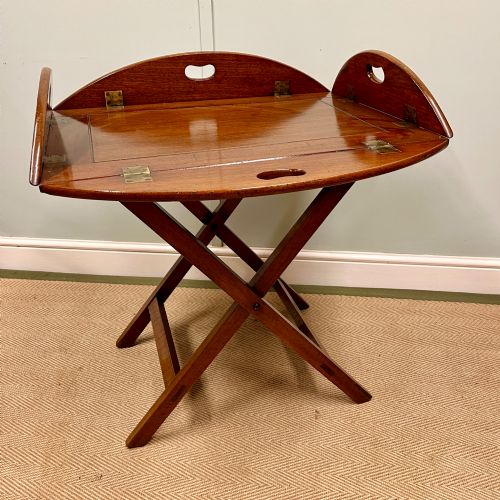
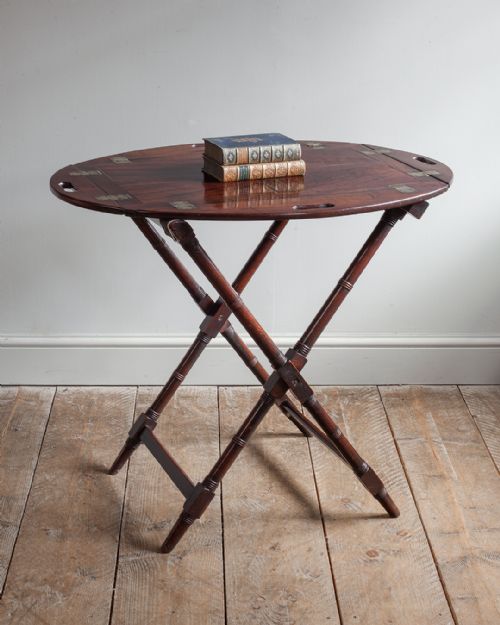
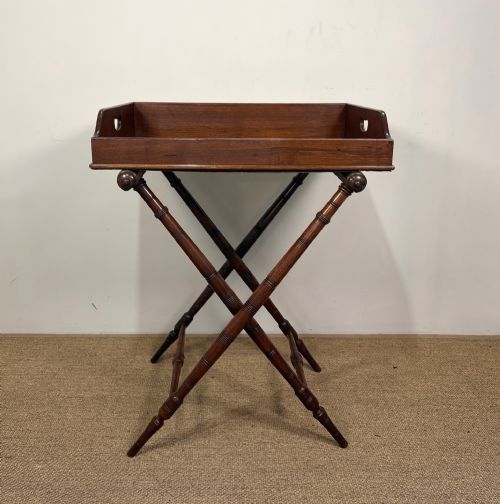
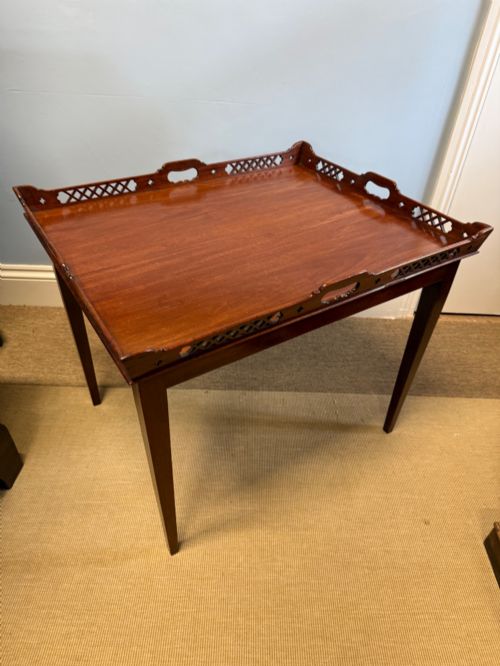
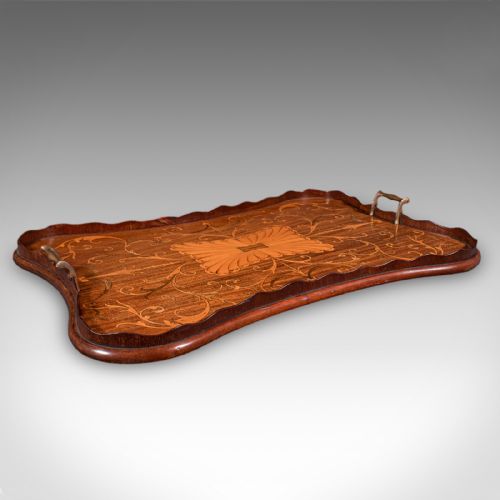


Victorian Mahogany Butler Tray
A victorian mahogany butler tray is a practical folding platform designed for domestic service, prized today for its warm timber grain and versatile surface.
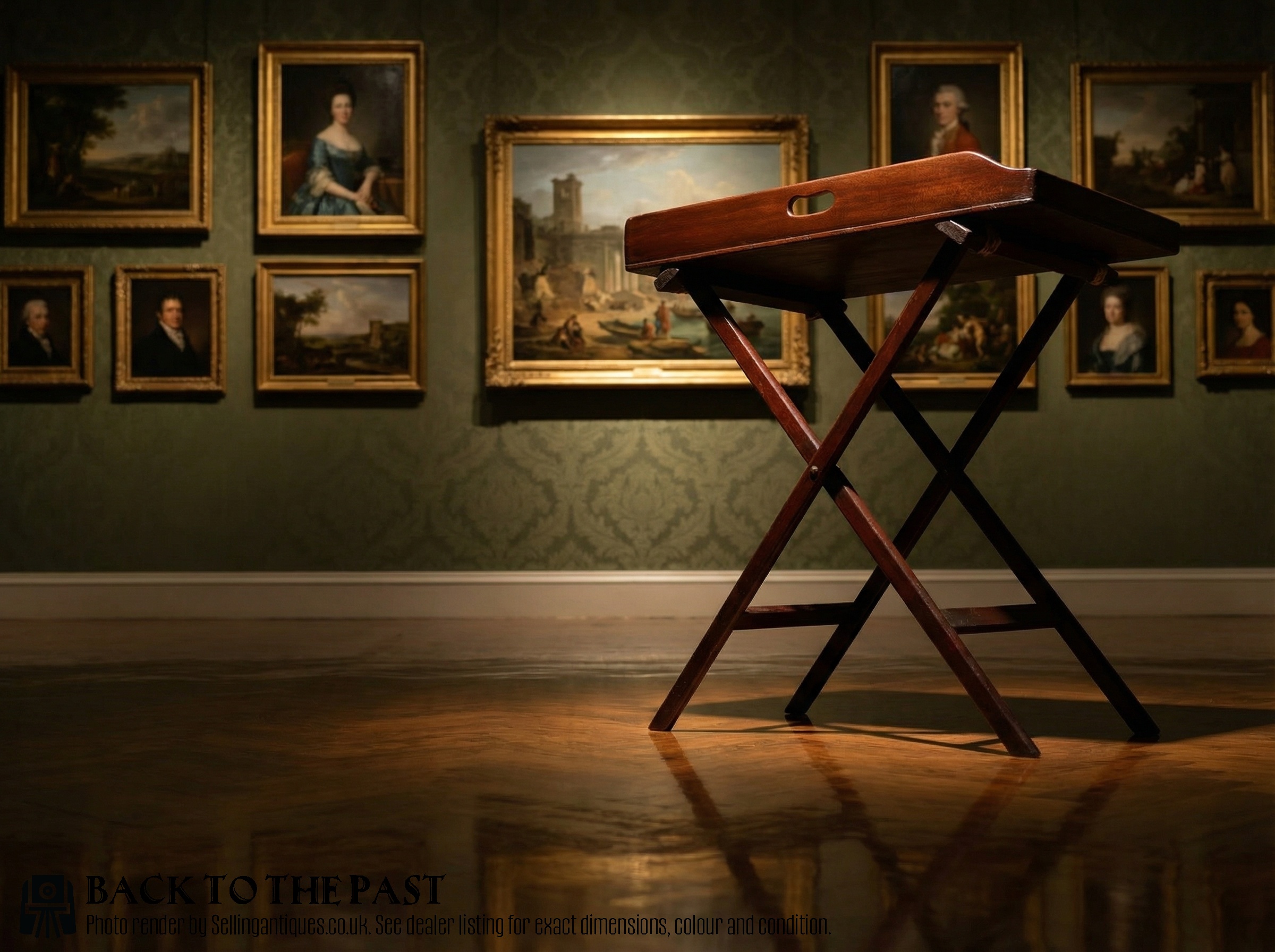
Victorian Mahogany Butler Tray
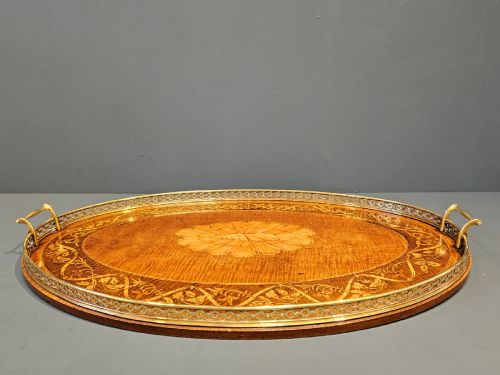
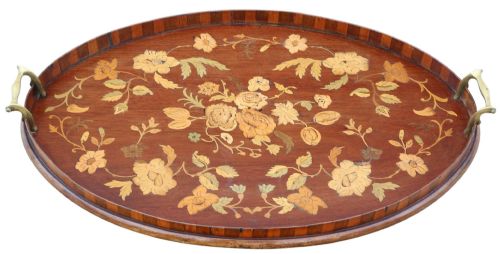
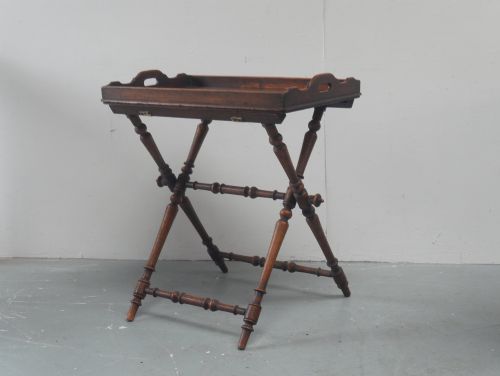
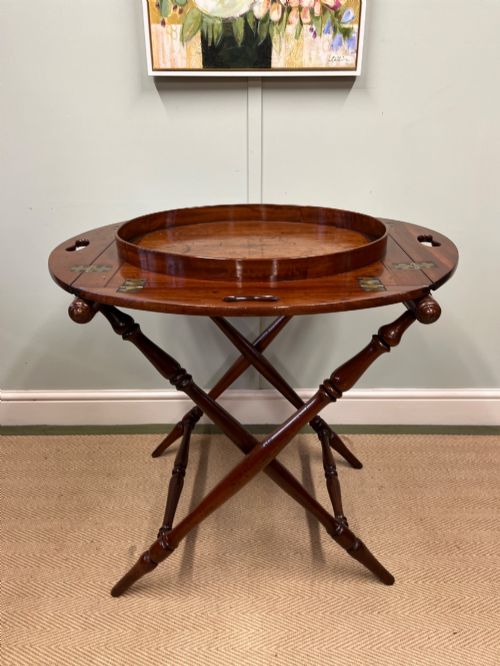
A victorian mahogany butler tray is a portable serving surface designed for domestic service, frequently paired with a folding stand to create a convenient table. These pieces range from simple rectangular trays with hinged sides to elaborate oval and kidney-shaped platters intended for afternoon tea or drinks.
The pieces seen here date primarily from the nineteenth century, spanning from the early decades through to eighteen hundred and ninety. They appear both as standalone trays and complete with their original folding stands, sometimes referred to as coaching tables or side tables.
Makers often shaped the edges with scalloped profiles or raised galleries to secure glassware and silver during transit. Variations include pieces incorporating oak, satinwood inlay, and brass handles, reflecting the diverse domestic requirements of English country houses.
How they were made
Cabinet makers utilised dense mahogany timber for the primary structure, selecting boards with deep grain patterns and rich natural colour. Secondary timbers such as oak occasionally appear in the construction of the folding stands and underlying framework.
Decoration often involved intricate satinwood inlay and marquetry work set into the mahogany surface, complemented by brass hinges, handles, and occasional silver plate mounts. Folding mechanisms relied on robust wooden or X-frame supports designed for compact storage when not in use.
Listings demonstrate forms spanning the nineteenth century, including oval trays, kidney-shaped platters, and rectangular folding versions with accompanying stands.
What varies in quality
Quality rests in the selection of the timber figure, the crispness of any satinwood inlay, and the retention of the original folding stand. Pieces featuring harmoniously matched mahogany boards and finely jointed gallery edges command greater interest from collectors.
The integrity of the brass hardware and the smoothness of the folding mechanism also distinguish finer examples from utilitarian ones. Surviving sets that retain their matching nineteenth-century stands demonstrate greater coherence than married pieces united at a later date.
The Victorian Mahogany Butler Tray Glossary
- Butler tray
- A portable wooden serving tray, often fitted with hinged sides that fold down to form a flat tabletop when placed on a stand.
- Coaching table
- A portable folding wooden stand designed to support a serving tray, historically utilised for travel or flexible entertaining.
- Gallery
- A raised wooden border surrounding the edge of a tray to prevent items from sliding off during transport.
- Marquetry
- Decorative woodwork where pieces of veneer are fitted into a ground material to form intricate pictorial or geometric patterns.
- Satinwood inlay
- Contrasting pale timber inserted into the darker mahogany surface to create decorative borders or central motifs.
Victorian Mahogany Butler Tray: Frequently Asked Questions
How were butler trays used?
These trays served primarily for carrying food, beverages, and afternoon tea from the kitchens to the dining rooms or drawing rooms of large houses.
Once positioned on their folding stands, they functioned as temporary side tables for drinks or serving platters before being folded away to save space.
Are the stands usually original?
Many examples survive complete with their original nineteenth-century folding stands, which were designed specifically to match the dimensions and timber of the tray.
Some pieces appear on replacement or later stands, making the presence of matching wear and construction details an important consideration for period accuracy.
How do I care for mahogany?
Mahogany benefits from occasional application of quality beeswax to nourish the timber and maintain a deep, natural lustre without building up heavy chemical residues.
Keep the wood away from direct sunlight and strong heat sources to prevent the timber from drying out or the polish from fading over time.
Can I use them as coffee tables?
Their convenient height and sturdy folding stands make them well suited for modern living spaces as compact coffee tables or side tables.
Using coasters and avoiding excessive moisture will protect the antique polished surface from ring marks while allowing daily domestic utility.