

Victorian Mahogany Bedside Tables
Victorian mahogany bedside tables provide a functional surface and enclosed storage beside a bed, combining deep wood tones with period craftsmanship.
Victorian Mahogany Bedside Tables
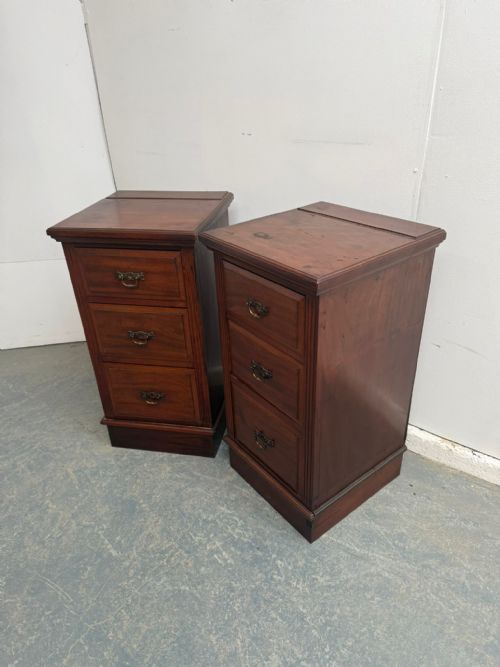
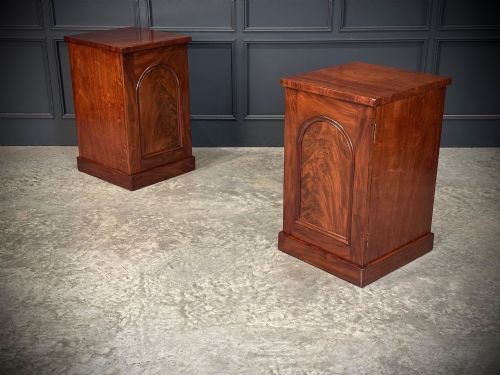
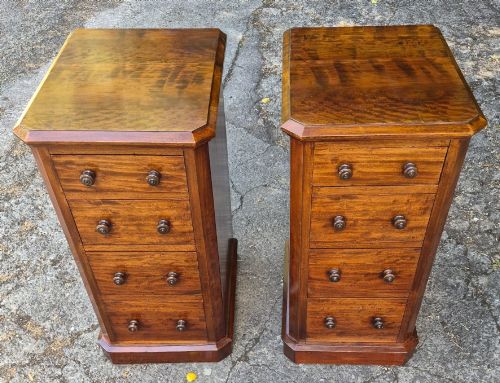
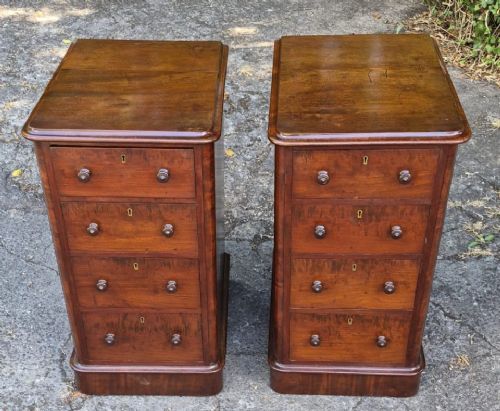
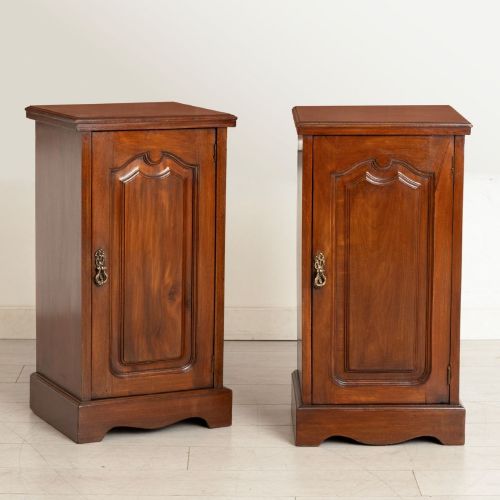
Victorian mahogany bedside tables encompass various practical forms designed for the bedroom, primarily appearing as compact chests of drawers, pot cupboards, and single-door cabinets. Buyers searching this phrase encounter pieces dating from the nineteenth century, including examples originating around eighteen fifty to nineteen hundred.
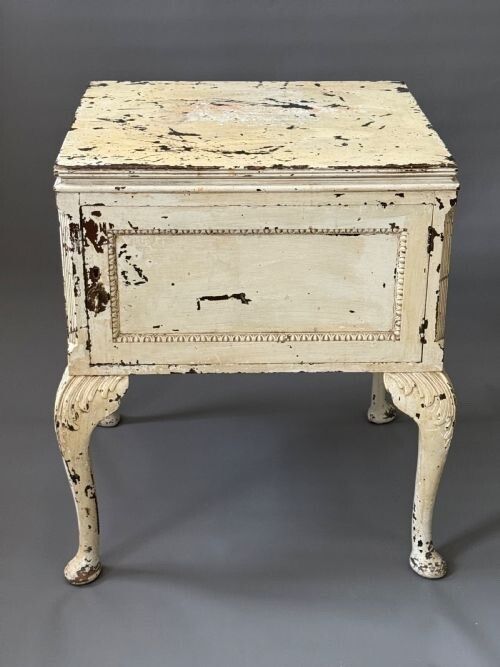
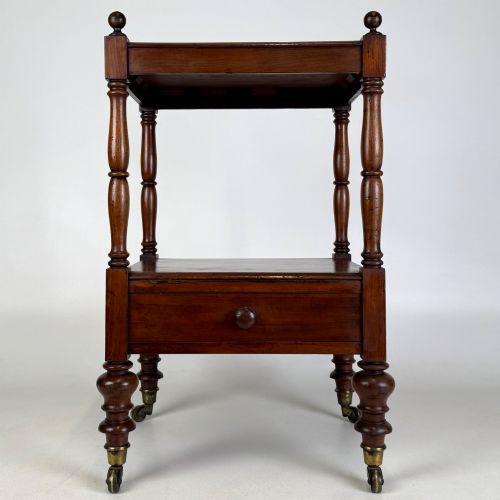
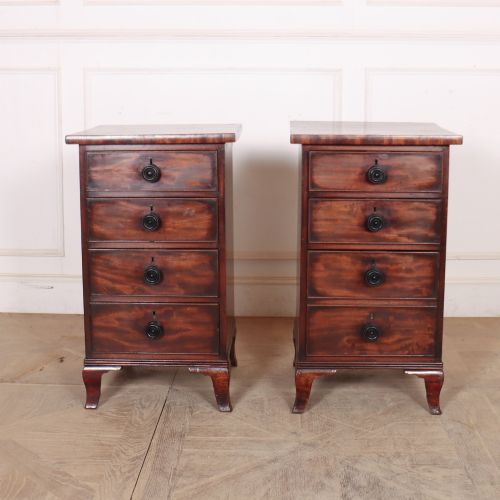
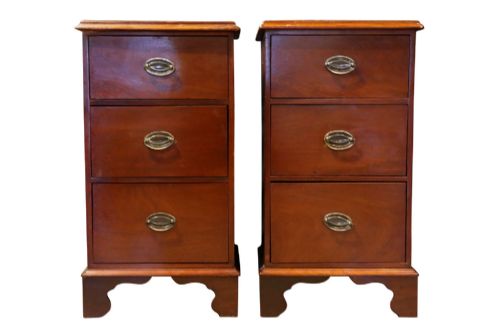
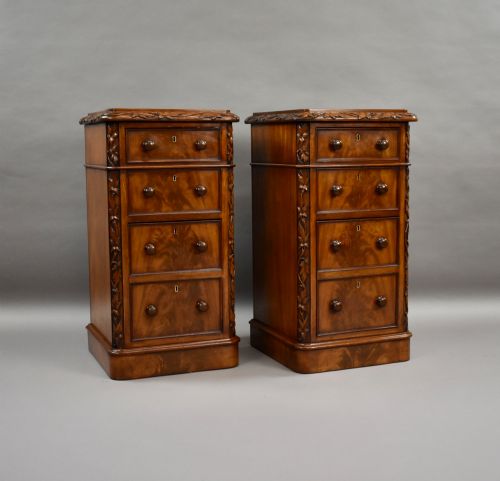
The selection frequently includes matched pairs, which are particularly sought after for symmetrical bedroom layouts. Single units also appear regularly, alongside adapted washstands and occasional tables fulfilling a bedside function.
Materials and construction
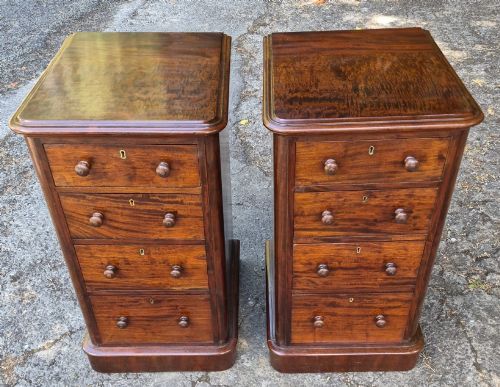
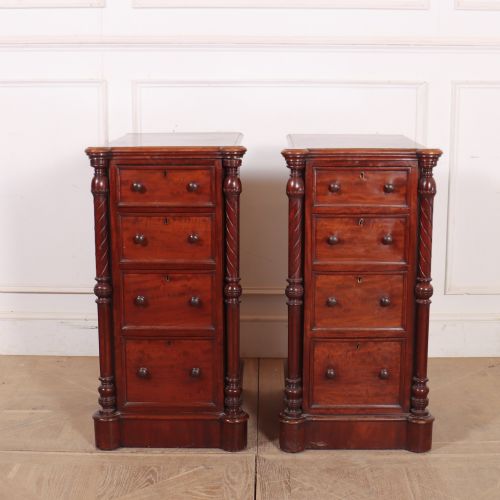
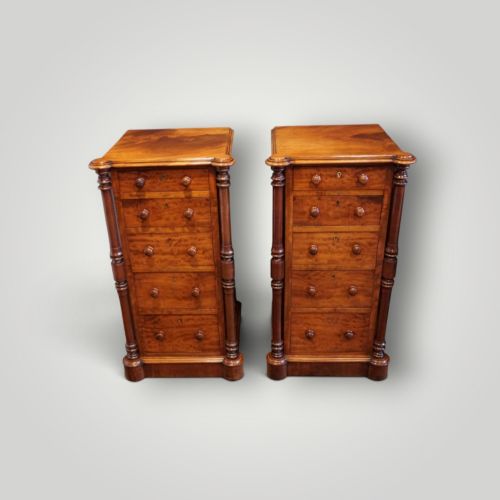
Cabinet makers utilised solid mahogany and applied veneers, often selecting figured or flame mahogany variants to create rich, varied grain patterns on drawer fronts and door panels. Secondary woods provided structural integrity within the carcase construction.
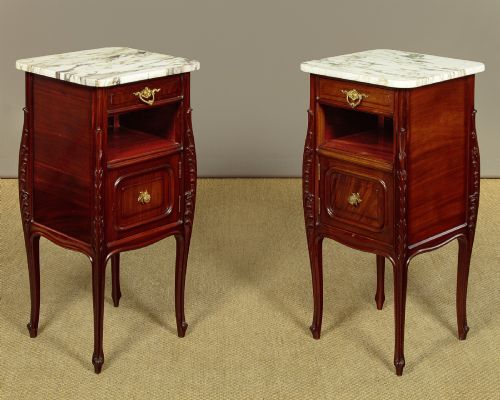
Hardware typically included brass handles, ceramic elements, and occasionally marble tops introduced on later nineteenth-century models for added durability and surface hygiene.
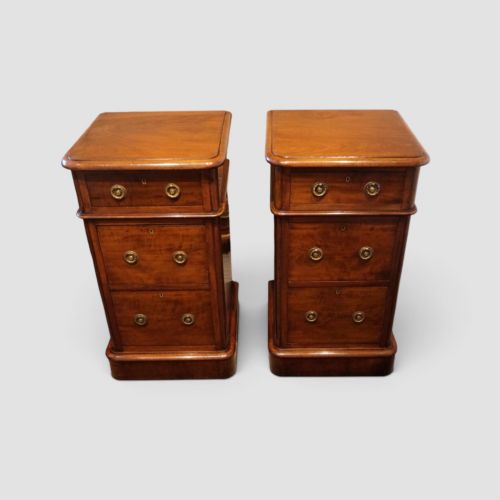
Listings demonstrate forms ranging from simple pot cupboards to three-drawer chests, spanning the Victorian period alongside occasional William IV and Georgian pieces.
Assessing quality and proportion
Quality rests significantly in timber selection, where deeply figured flame mahogany veneers exhibit superior visual depth compared to plain stock. The crispness of hand-cut joints and the integrity of the original polish distinguish finer workshops from standard production.
Proportion and scale also dictate the standing of a piece, with smaller, retention-focused dimensions commanding attention. Alterations or later adaptations, such as raised heights or converted washstands, alter the original character of the furniture.
Warings Liverpool·Howard And Sons
The Victorian Mahogany Bedside Tables Glossary
- Flame mahogany
- A veneer cut from the fork of the mahogany tree, producing a distinctive flame-like grain pattern. It was frequently applied to the principal surfaces of better-quality nineteenth-century cabinets.
- Pot cupboard
- A small enclosed bedside cabinet originally designed to house a chamber pot. These pieces usually feature a single door and sometimes include a small interior shelf.
- Bedside chest
- A miniature chest of drawers scaled for use beside a bed. They generally incorporate two to three small drawers constructed with traditional dovetail joints.
- Veneer
- A thin layer of superior wood applied over a secondary timber base. This technique allowed cabinet makers to display decorative grain patterns economically.
Victorian Mahogany Bedside Tables: Frequently Asked Questions
Are these tables usually found as pairs?
Many listings comprise matched pairs created for symmetrical placement on either side of a bed. Single pieces also appear frequently for standalone use.
Matching pairs from the nineteenth century require careful pairing of grain patterns and dimensions by the original maker.
What wood finishes appear on these tables?
The primary timber is mahogany, appearing in various tones from deep reddish-brown to lighter polished surfaces. Certain pieces utilise flame mahogany veneer to create dramatic grain figures.
Additional materials such as marble tops and ceramic handles occasionally complement the wood structure on later pieces.
How do I date a nineteenth-century bedside cabinet?
Dating relies on stylistic clues, construction methods, and materials recorded across the Victorian era. Earlier examples from the mid-nineteenth century often display simpler proportions, while late-Victorian variants may incorporate inlaid details or marble tops.
Specific decade attributions depend on architectural details and hardware conventions typical of the period.