


Victorian Luggage
Victorian luggage comprises sturdy leather, wood, and metal trunks, chests, and stands built for travel and household storage in the nineteenth century.
Victorian Luggage
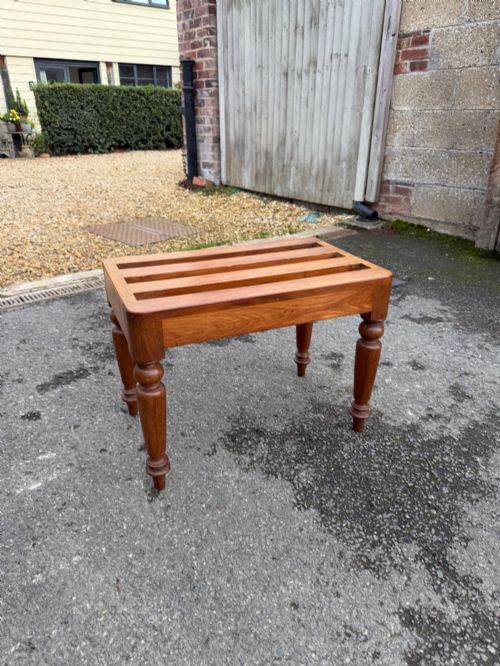
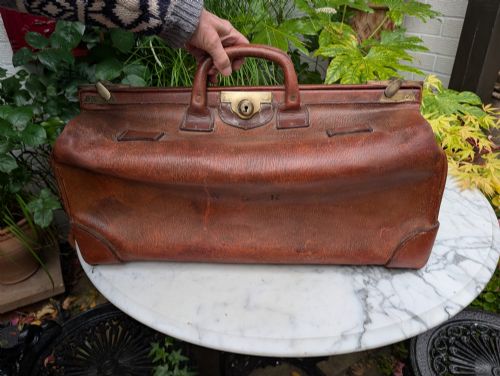
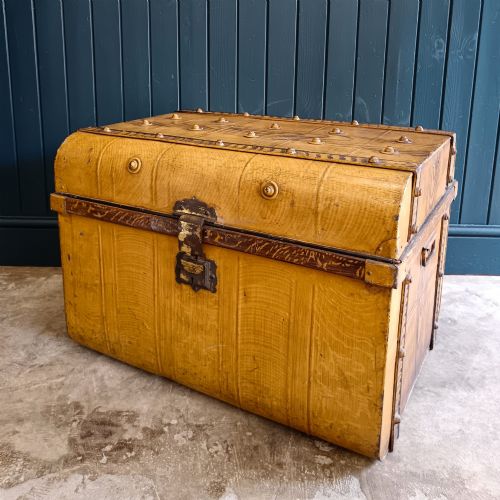
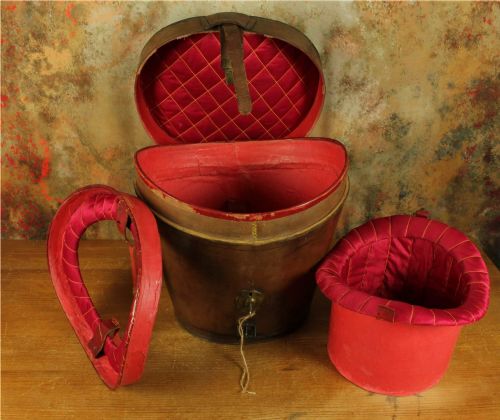
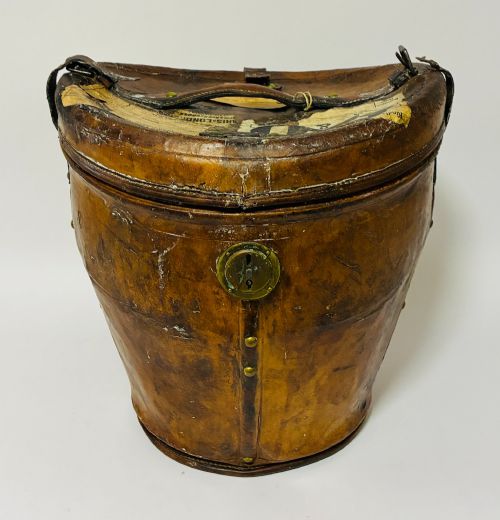
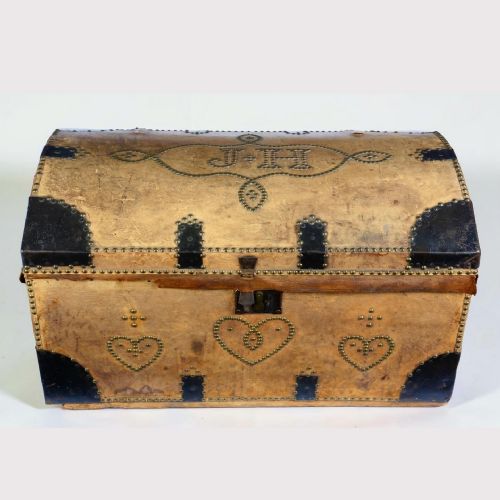
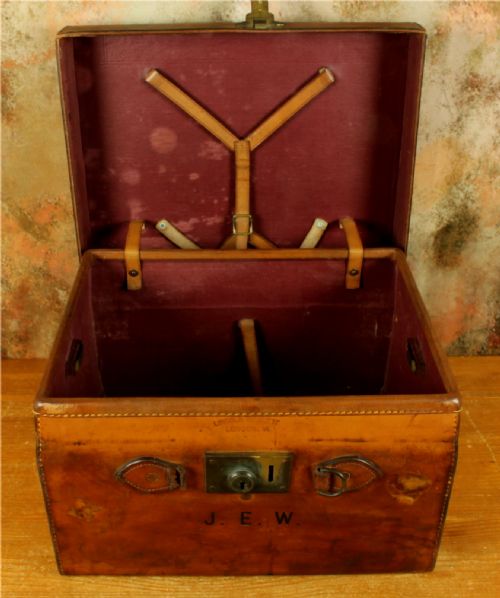
Victorian luggage encompasses a diverse array of travelling gear and functional household items designed for nineteenth-century transit. Pieces range from leather Gladstone bags and hat boxes to oak luggage stands and robust iron-bound trunks.
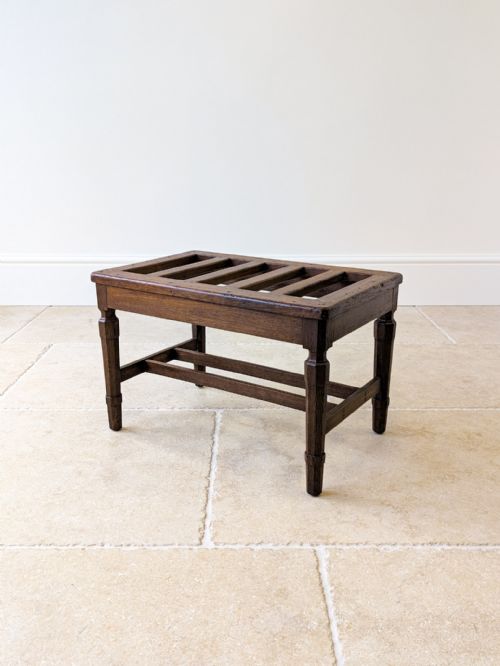
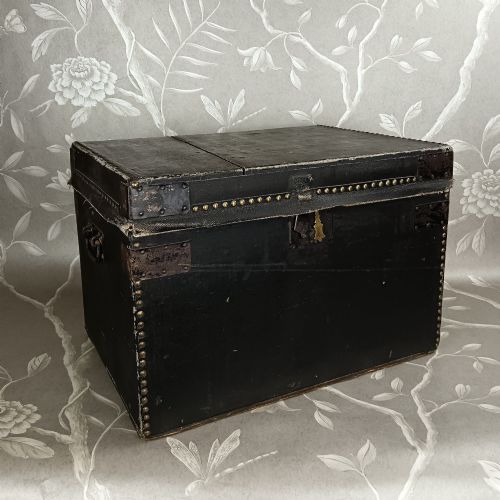
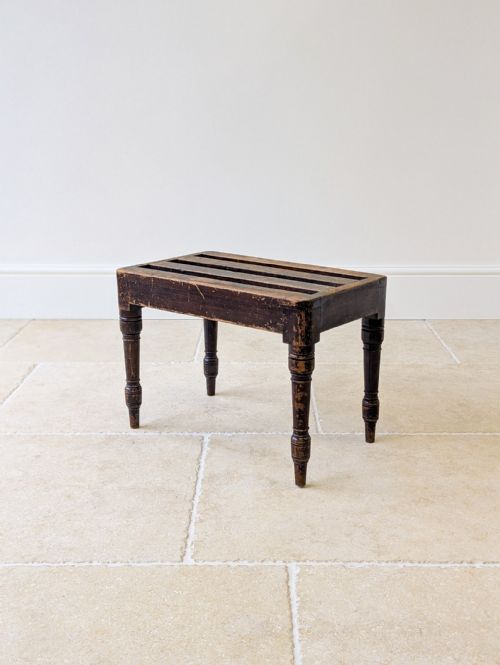
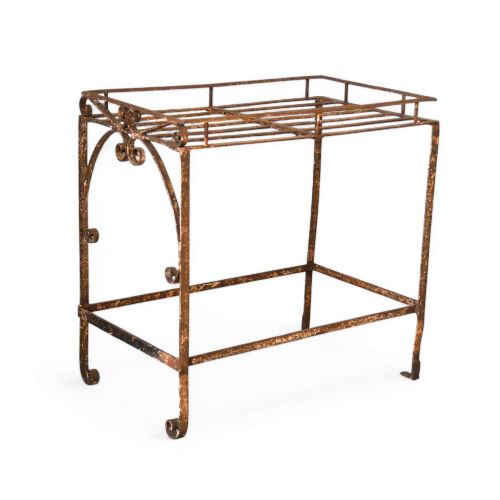
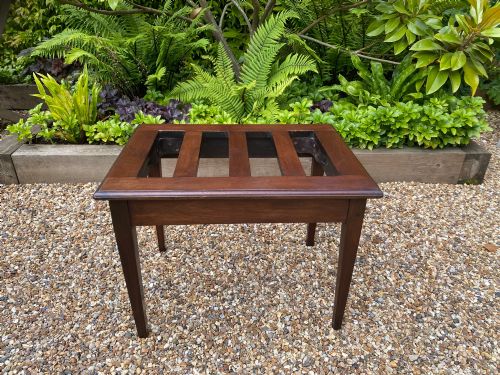
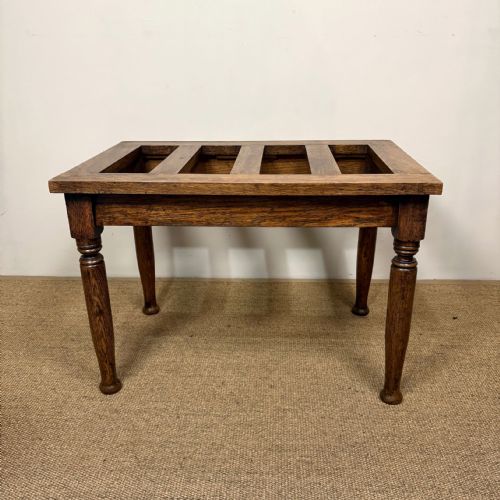
Buyers on this page most frequently encounter folding wooden luggage stands in mahogany, oak, or ash, alongside leather travel trunks and specialised cases. These items survive from an era when personal travel required dedicated containers and support furniture.
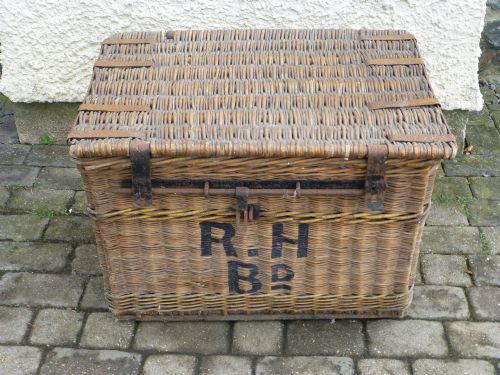
The category bridges utilitarian transit gear and domestic utility, including sturdy hat cases, railway carriers, and campaign chests. Each form reflects the specific demands of nineteenth-century movement by coach, rail, or ship.
Materials and construction
Makers utilised durable materials such as solid oak, mahogany, ash, and camphorwood, paired with heavy leather, canvas, and iron or brass hardware. Structural strength was paramount for items subjected to rigorous travel conditions.
Trunks and cases feature reinforced corners, brass studwork, and robust locks, while folding luggage stands rely on tight joinery and stable X-frame or four-leg designs. Metal elements like wrought iron and toleware tin provide weather resistance and structural integrity.
Victorian Luggage Retail Price Guide 2026
Typical asking prices for victorian luggage among the pieces listed under this phrase on Sellingantiques today, from the lower quarter to the upper quarter. They describe what is for sale here now, not the wider market.
Assessing quality and execution
Quality in Victorian luggage resides in the integrity of the materials and the precision of the construction. Superior pieces employ dense hardwoods, thick harness leather, and substantial brass or iron mountings rather than thin veneers or pressed sheet metal.
The refinement of hardware, such as cast mounting plates on racks and properly fitted interior compartments in hat boxes or Gladstone bags, distinguishes workshop execution. Maker attribution, through stamped signatures or brass plates, adds documented provenance to the physical build.
Brown & Lamont·Wm. Insall·Lincoln Bennett·Finnigan's Manchester·Arthur Wannop·JW Allen·Drew & Sons
The Victorian Luggage Glossary
- Luggage stand
- A folding or fixed wooden or metal frame designed to hold a suitcase or trunk at a convenient height in a bedroom. These typically feature open slatted tops and four legs.
- Gladstone bag
- A light, hinged travelling bag that opens wide into two equal compartments, named after the British statesman William Gladstone. It is usually constructed from thick leather with a rigid frame.
- Campaign trunk
- A portable storage chest made for military officers or travellers, often in camphorwood or mahogany with brass corners and recessed carrying handles. They split or open securely for transport.
- Toleware
- Enamelled and painted metalware, frequently used for durable storage boxes and hat cases during the nineteenth century. The painted surface mimics wood or provides a dark protective finish.
- Portmanteau
- A large leather travelling bag or trunk that opens into two distinct compartments. The term derives from French roots describing a case for carrying cloaks.
Victorian Luggage: Frequently Asked Questions
What are Victorian luggage stands used for today?
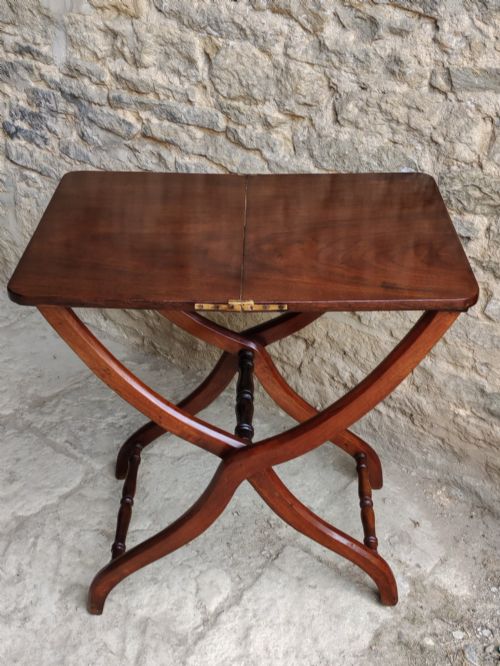
Victorian luggage stands serve well in modern guest bedrooms for holding suitcases or as compact occasional tables. Their folding designs allow for easy storage when not in use.
Their sturdy wood construction, often in mahogany or oak, brings practical surface space and period character to domestic interiors without taking up excessive floor area.
How do I care for antique leather trunks?
Leather trunks require gentle cleaning and periodic conditioning to keep the hide supple and prevent cracking. Avoid placing them in direct sunlight or near heat sources.
Applying a specialist leather balsam maintains the surface sheen and preserves the original hide and brass studwork found on nineteenth-century pieces.
Were steamer trunks waterproof?
Steamer trunks and canvas-bound chests were designed to withstand damp conditions in ship holds and railway luggage vans. Materials like painted metal, treated canvas, and brass bindings offered good weather resistance.
While largely water-resistant for travel purposes, original linings may still degrade if exposed to sustained moisture over time.
How do I identify campaign furniture?
Campaign pieces feature specific design elements intended for portability, such as recessed brass handles, flush corners, and collapsible or sectional frames. Woods like camphorwood were chosen for durability and insect resistance.
Many bear maker stamps or brass plaques from the retailers who outfitted officers and travellers during the nineteenth century.