

Victorian Louis XV Table
When you search for a victorian louis xv table, you are looking for ornate imported walnut and kingwood pieces designed for drawing rooms and boudoirs.
Victorian Louis XV Table
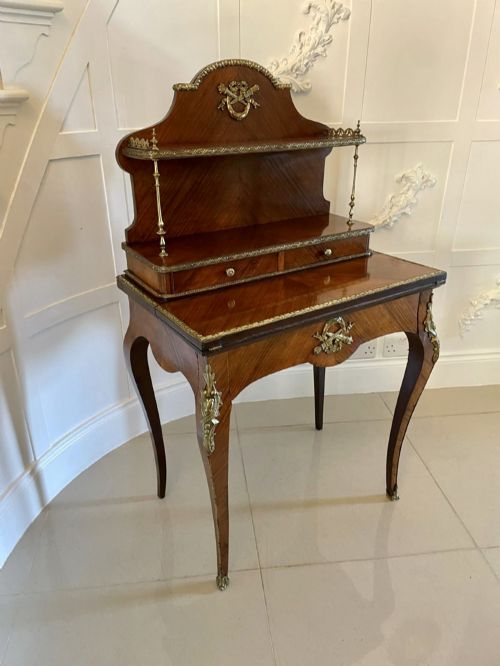
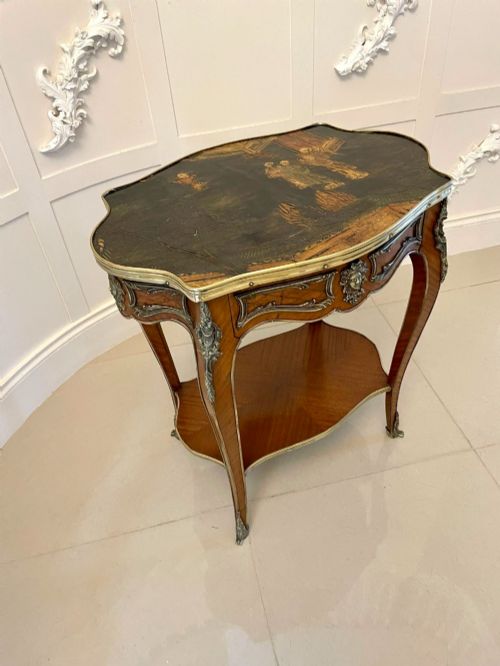
A victorian louis xv table brings Continental rococo taste into nineteenth-century British interiors through imported French designs and domestic interpretations. These items span various forms, with centre tables, card tables, writing desks, and occasional tables appearing most frequently.
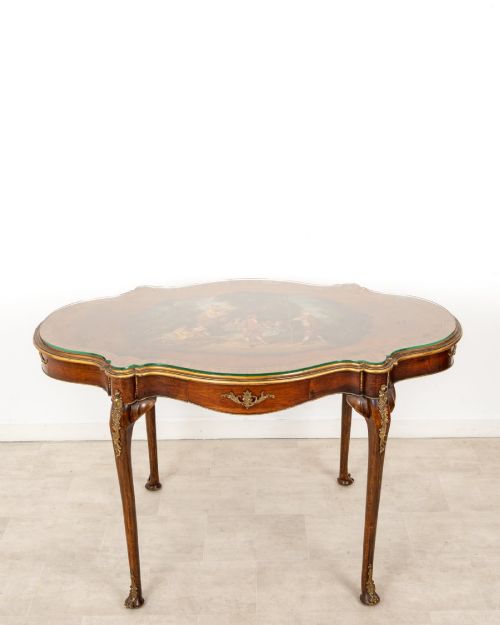
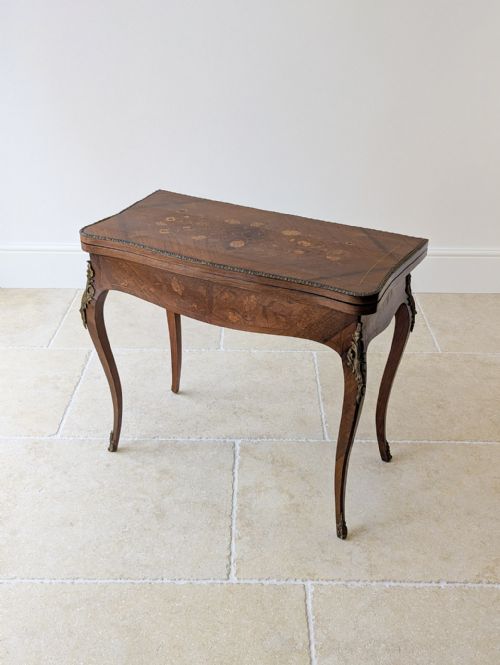
Makers working within the Victorian period adopted the sweeping cabriole legs and serpentine outlines associated with eighteenth-century French courts. You will encounter freestanding centre tables intended to sit prominently in a room alongside folding card tables and fitted writing desks.
The aesthetic relies heavily on revivalism, blending French Louis XV style with Victorian manufacturing standards. Surviving examples demonstrate how cabinetmakers adapted continental motifs for British homes during the middle and late nineteenth century.
Materials and Construction Methods
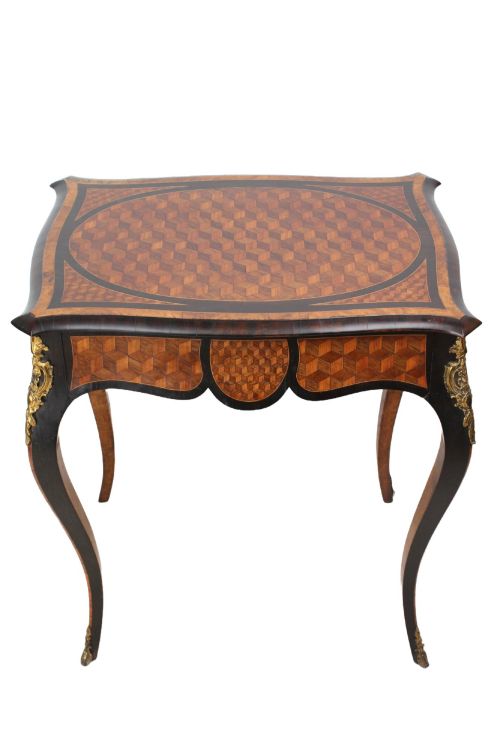
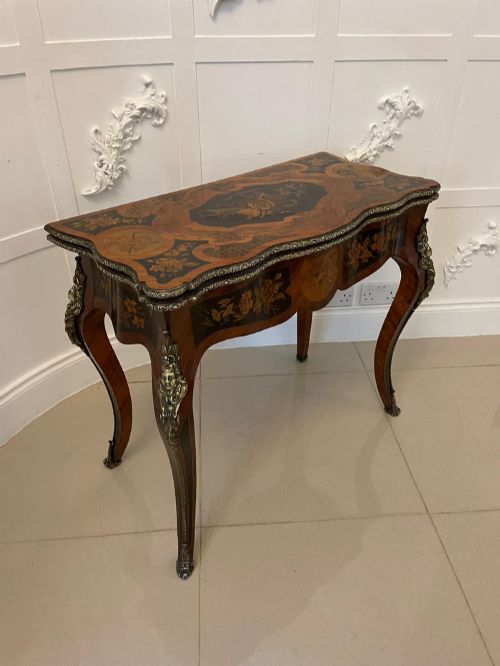
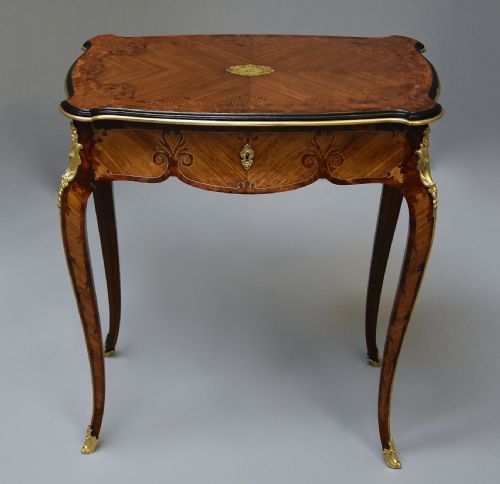
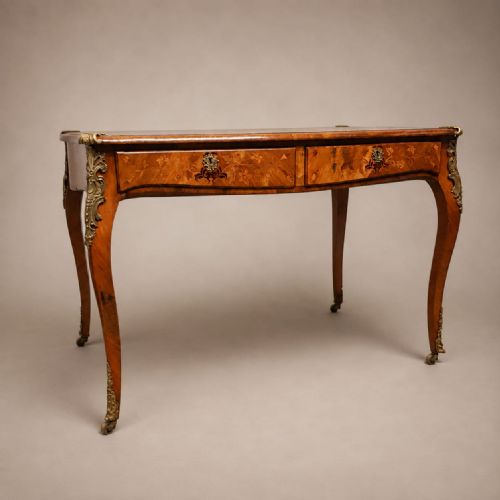
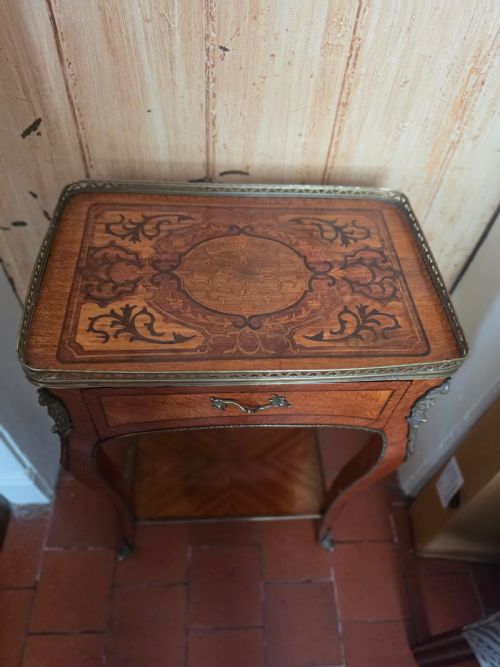
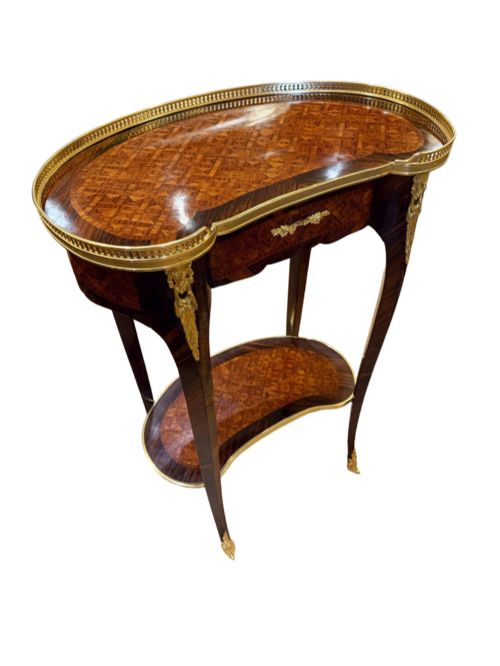
Construction relies upon dense timber carcases overlaid with decorative veneers including kingwood, walnut, burr walnut, and satinwood. Parquetry and marquetry patterns form geometric or floral designs across the surface tops.
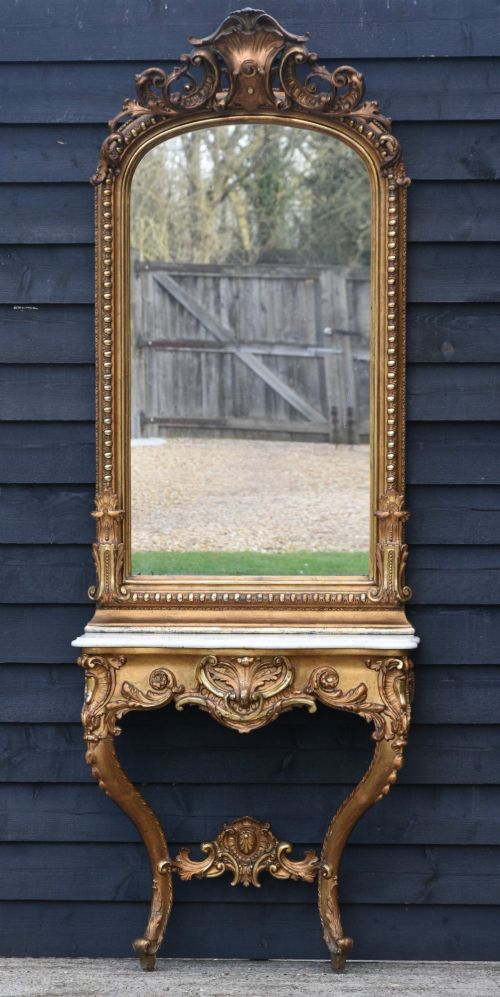
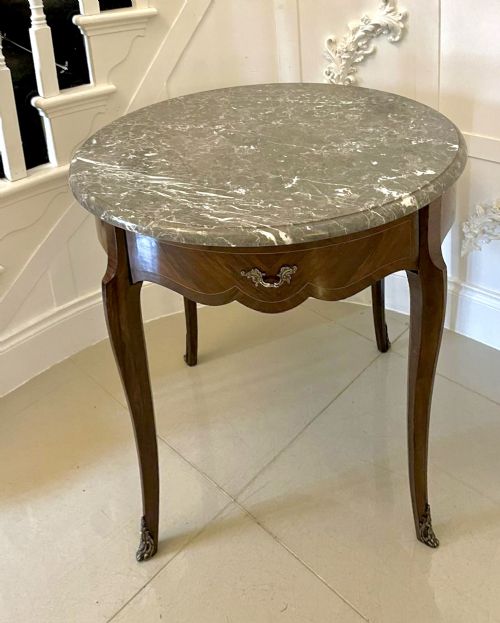
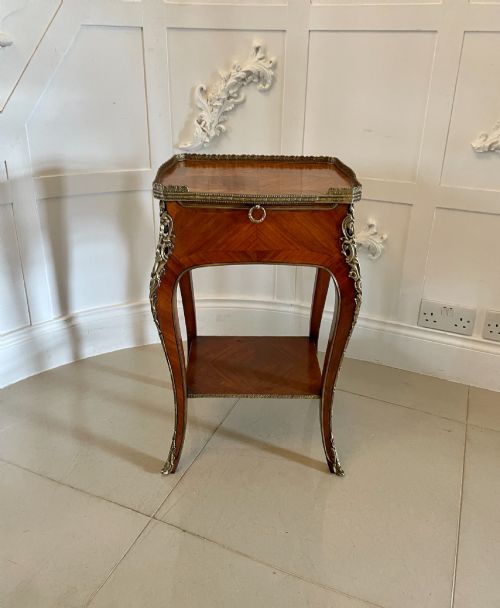
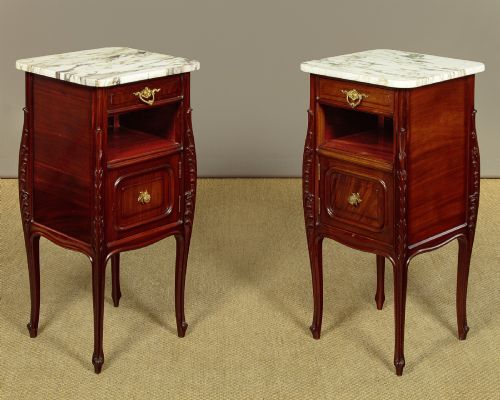
Cast gilt bronze and ormolu mounts accentuate the curves of the framework, protecting vulnerable corners and framing aprons. Marble tops appear frequently on console and centre tables, fitted flush to shaped wooden rims.
Joinery incorporates sophisticated internal mechanisms for folding card tables and writing surfaces. Cabriole legs terminate in sabots, linking the structural woodwork to cast metal decorative feet.
Some card tables conceal hidden wells beneath their folding tops designed specifically for storing bone gaming counters.
Factors Affecting Quality
The distinction between standard production and top-tier workshop output lies in the crispness of the bronze mounts and the intricacy of the veneer work. Master makers employed finely chased ormolu rather than simple cast brass, giving the metalwork sharper relief and deeper lustre.
Timber selection dictates the visual depth of the piece, with choice burr walnut and figured kingwood displaying superior grain movement across expansive surfaces. Hand-cut marquetry shows precise alignment without visible filler between individual wood segments.
Structural integrity depends on the internal secondary timbers and the precision of the joints supporting heavy marble slabs or folding leaves. Superior examples maintain rigid stability across complex serpentine forms without movement in the veneer.
JAS Shoolbred·G T Morant, London·Durand·Leroy Paris
The Victorian Louis XV Table Glossary
- Ormolu
- Gilded bronze used for decorative mounts and accents on furniture. It provides a bright metallic finish that contrasts with dark woods.
- Kingwood
- A dense South American timber prized for its rich brown colour and contrasting pale streaks. It serves as a primary veneer in high-end nineteenth-century cabinetmaking.
- Cabriole leg
- A furniture leg featuring a double curve that swells outward at the knee and tapers inward to the foot. This form derives directly from eighteenth-century French design.
- Marquetry
- Decorative veneer work arranged in pictorial or floral patterns using various coloured woods. Craftsmen assemble these patterns by hand before applying them to the carcase.
- Bureau plat
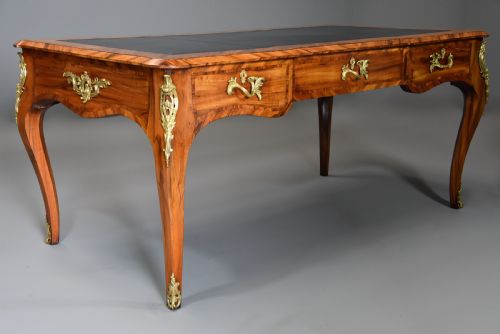
- A flat-topped writing desk fitted with drawers along the frieze. These freestanding desks feature finished backs for display in the middle of a room.
Victorian Louis XV Table: Frequently Asked Questions
Where should a centre table go?
Freestanding centre tables suit large entrance halls or principal reception rooms where visitors can walk entirely around them. Because the marquetry and ormolu mounts extend to all four sides, positioning them away from walls displays the craftsmanship properly.
Ensure adequate clearance around the edges so the curved cabriole legs remain visible and unobstructed by surrounding seating.
How do I care for marble tops?
Marble surfaces require regular dusting with a soft dry cloth to prevent grit accumulation from scratching the polished stone. Avoid placing acidic liquids directly on the marble, as spills can etch the polished surface permanently.
Use protective coasters for glasses and warm dishes to preserve the natural gloss of the stone top.
Can card tables still fold?
Most surviving card tables retain their operational folding mechanisms, which swing open to reveal baize-lined playing surfaces. Internal wooden pivots and hinges support the pivoting top when extended.
Test the mechanism gently without forcing the wood if seasonal humidity has caused the timber to swell slightly.
What defines the French style?
The French style relies on asymmetry, flowing botanical scrolls, and pronounced serpentine curves across every visible surface. Ormolu mounts follow the natural contours of the aprons and frame the corners to enhance the sculptural silhouette.
This aesthetic rejects rigid straight lines in favour of organic movement inspired by rococo design principles.