


Victorian Livestock Artwork
Victorian livestock artwork captures pastoral subjects in oil and watercolour, offering a direct view into nineteenth-century agrarian life that collectors prize.
Victorian Livestock Artwork
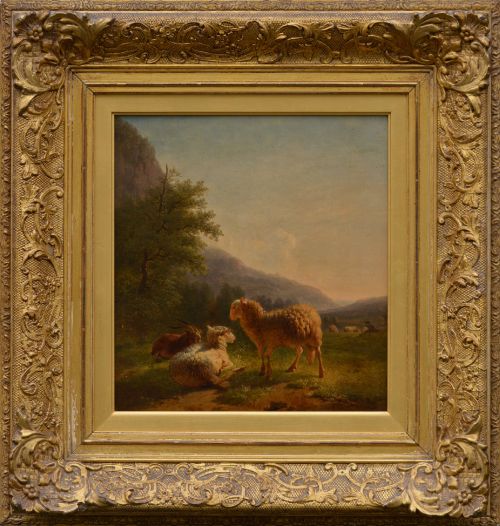
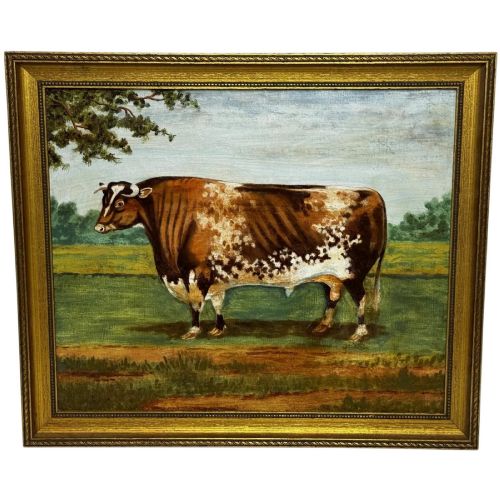
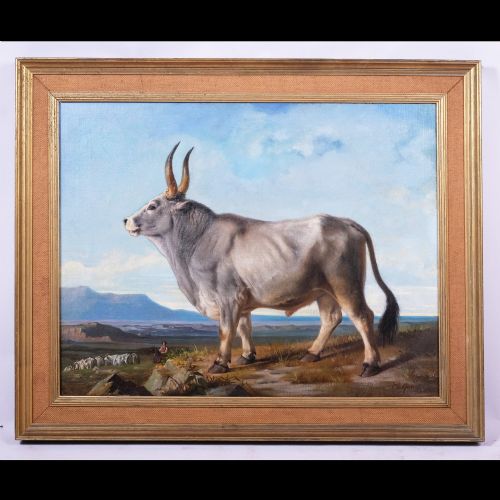
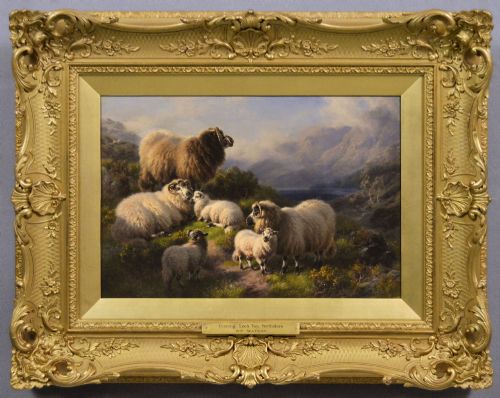
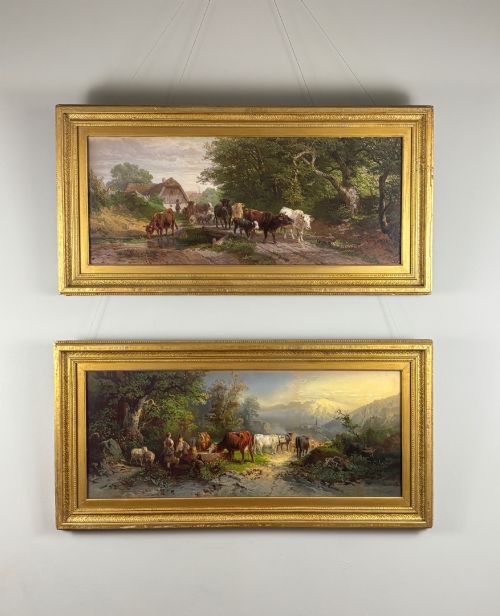
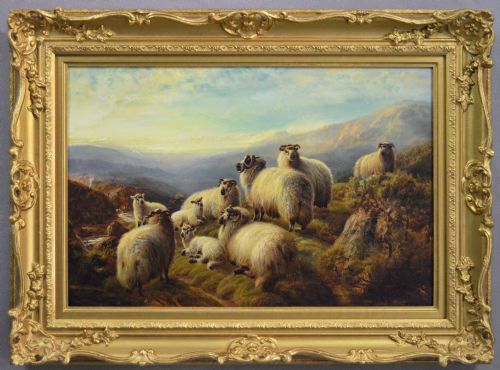
Victorian livestock artwork depicts farm animals, particularly cattle, sheep and horses, set within rural landscapes or farmyards. These pieces emerge predominantly from the nineteenth century, encompassing styles from 19th Century Realism to Victorian Pastoral.
Buyers encounter oil paintings on canvas alongside watercolours on paper, frequently housed in giltwood frames with gesso ornamentation. The subjects range from individual portraiture of prized shorthorn bulls to broader pastoral scenes featuring Highland cattle and resting sheep.
Materials and methods
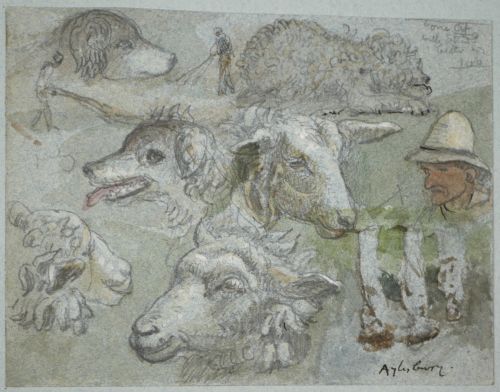
Artists relied primarily on oil paint applied to stretched canvas or watercolour pigments on paper to render animal coats and rural lighting. Canvases frequently sit within wooden frames embellished with moulded gesso and finished with gold leaf.
The application of paint moves from careful brushwork on the animal subjects to looser washes in the surrounding landscapes. This technique builds texture in fleece and hide while keeping the focus on the livestock.
Several canvases manage to capture cows standing placidly in the snow, proving British livestock possess genuine winter resilience.
Quality factors
Anatomy and character definition separate skilled animalier painting from more formulaic workshop production. The handling of light on an animal's coat and the convincing integration of livestock into the landscape reveal the artist's capability.
The condition of the original canvas, the preservation of the paint surface, and the presence of period giltwood framing influence the integrity of the piece. Works bearing clear signatures or documented provenance hold distinct positioning.
Eugène Verboeckhoven·James Smetham·William Watson Jnr·Johann Friedrich Voltz·Robert Watson·A M Gauci·William Henry Mander·Thomas Sidney Cooper·Franz van Severdonck·Andre de Moller·Arthur Charles Dodd·Claude Cardon·John W Morris·Frederick Richard Lee·Henry Brittan Willis·Edgar Hunt·Henry Cheadle·William Sidney Cooper·W A Clark·William Huggins·A Davis·Aster Richard Chilton Corbould
The Victorian Livestock Artwork Glossary
- Animalier
- Art focusing on the realistic portrayal of animals. This genre gained significant prominence during the nineteenth century across British and European studios.
- Gesso
- A plaster-like mixture applied to wooden frame mouldings before gilding. It provides a smooth base for intricate decorative details.
- Oil on Canvas
- Pigment mixed with drying oil applied to a woven fabric support. This medium allowed artists to achieve rich colour depth and varied textures.
- Pastoral
- A style or genre depicting rural life and landscapes. These scenes romanticise agricultural settings and farm animals.
- Watercolour
- Pigments suspended in a water-based solution applied to paper. The technique creates translucent washes suited to atmospheric landscape backgrounds.
Victorian Livestock Artwork: Frequently Asked Questions
What animals appear in these artworks?
Paintings commonly feature cattle such as Shorthorns and Highlanders, alongside sheep, goats, horses and farmyard poultry.
Artists placed these animals within specific regional landscapes, from Scottish glens to Kentish pastures and farmyard stables.
How do I identify the period?
Examination of the canvas prep, stretcher construction, and framing materials often indicates nineteenth-century production.
Stylistic markers such as Victorian Realism and signatures from recorded period artists help confirm the date of execution.
Were these painted outdoors?
Painters typically made preliminary drawings and watercolour sketches from life in the fields or farmyards.
Finished oil paintings were subsequently completed in the studio using these observational studies for anatomical accuracy.
How should I frame these pieces?
Period giltwood and gesso frames complement the traditional palette and subject matter of nineteenth-century pastoral art.
Selecting appropriate period mouldings preserves the historic context of the artwork without overpowering the canvas.