

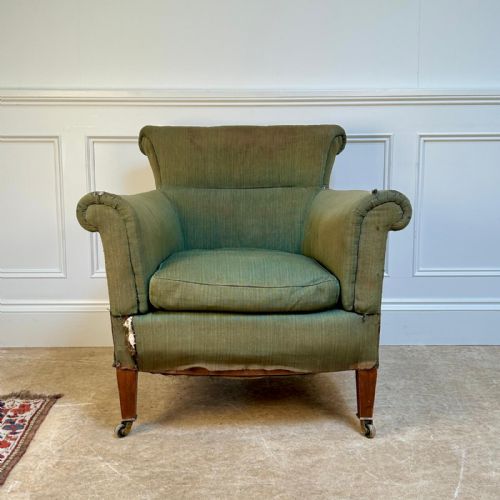
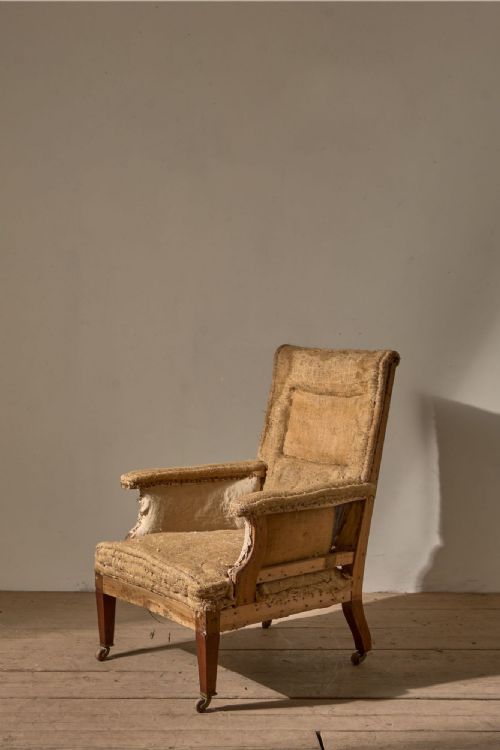
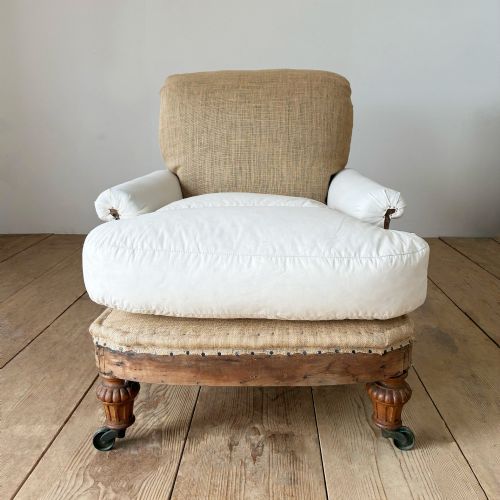


Victorian Library Chair Frame
A victorian library chair frame provides the essential skeletal structure for a sturdy reading seat built to endure daily study.
Victorian Library Chair Frame
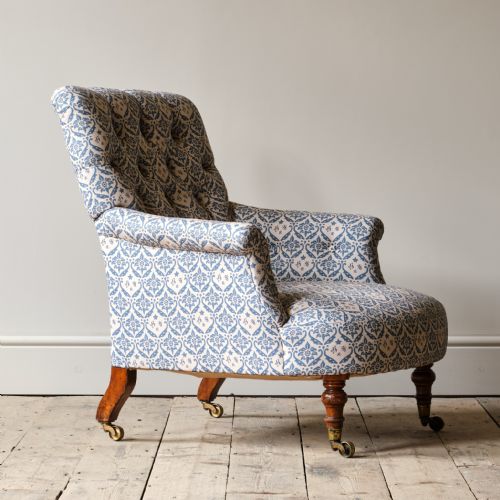
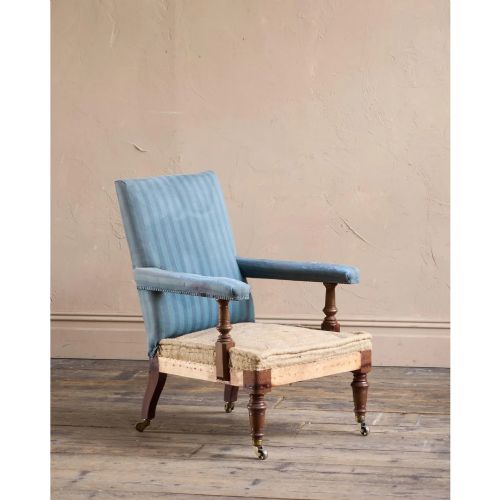
A victorian library chair frame is the naked structural skeleton of a nineteenth-century reading seat, stripped down for total restoration or left bare to expose the craftsmanship. These pieces appear mostly as armchairs and desk chairs designed for heavy study spaces.
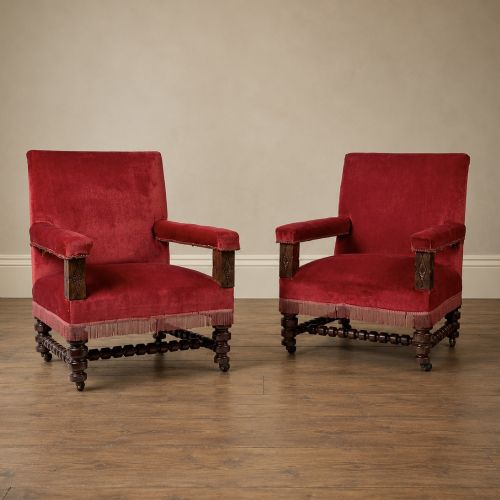
The timber frames emerge predominantly from Victorian periods alongside mid-nineteenth-century examples, utilising robust hardwoods like oak, mahogany, and walnut. Buyers encounter open armchairs, wingback shapes, and horseshoe designs waiting for proper webbing and padding.
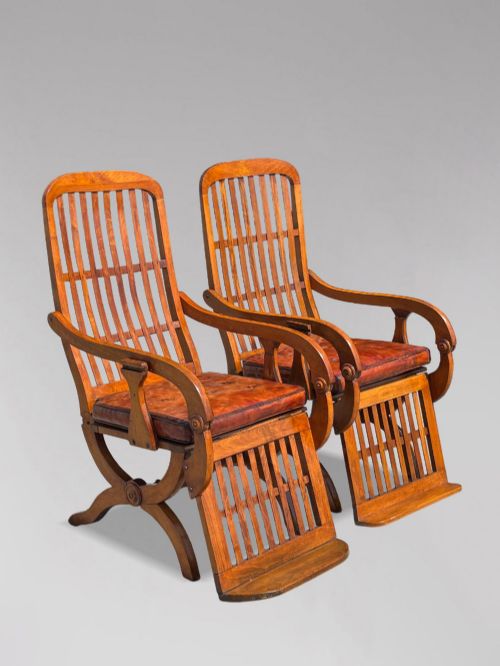
Makers shaped these solid frames for endurance in private libraries and grand country houses, creating enduring silhouettes that easily accommodate modern upholstery techniques. Each piece carries the distinct joinery of the era, from standard armchairs to specialised reclining mechanisms.
How They Were Made
Cabinet makers constructed these robust frames using dense timbers like mahogany, oak, and walnut, employing traditional mortise and tenon joinery to ensure long-term stability under heavy use. Structural integrity depended entirely on the thickness of the show wood and the precision of the joints.
Makers occasionally incorporated brass fittings for castors or reclining mechanisms, adding mechanical function to heavy wooden armatures. Hessian and calico frequently served as the underlying foundation for the original stuffing before final leather or velvet coverings were applied.
Some nineteenth-century frames hid ingenious mechanical ratchets, letting studious readers recline instantly after hours spent poring over heavy leather ledgers.
What Varies in Quality
The caliber of a victorian library chair frame rests in the weight of the timber and the depth of the carved detail on the show wood. Superior examples display dense, well-figured walnut or mahogany with crisp, hand-carved ornamentation rather than shallow machine profiling.
Structural heft and honest proportions dictate the hierarchy, where heavier oak and mahogany frames provide superior rigidity compared to lighter domestic seating. The integrity of the original joints and the absence of dry rot or excessive timber shrinkage separate museum-grade examples from ordinary workshop stock.
Howard & Sons·Morison and Co·Gillows·J Foot & Son·J.Mills
The Victorian Library Chair Frame Glossary
- Show frame
- The exposed wooden skeleton of an armchair where the polished timber forms a visible border around the upholstered sections. This structural element defines the aesthetic outline of nineteenth-century seating.
- Hessian
- A coarse woven fabric made from jute fibres, traditionally stretched across the wooden webbing to support the internal stuffing. It forms the breathable base beneath the leather or velvet top layer.
- Wingback
- An armchair design featuring protective side panels attached to the backrest to shield the occupant from drafts. These prominent extensions frame the upper torso of the sitter.
- Calico
- A plain-woven cotton fabric used as an initial lining layer over the webbing and stuffing before the final decorative textile is applied. It keeps the internal horsehair or wool securely contained within the frame.
Victorian Library Chair Frame: Frequently Asked Questions
Can I sit in an un-upholstered frame?
Sitting directly on a bare wooden frame lacks proper ergonomic support and can strain antique joinery not intended for raw usage. These skeletons require webbing, springs, and padding to function comfortably as chairs.
Restorers typically rebuild the internal stuffing from scratch, using the exposed wooden contours as the strict physical guide for the final shape.
How do I choose the right leather?
Selecting leather for a historic frame involves matching the weight of the hide to the proportions of the wooden structure. Heavy mahogany and oak frameworks demand thick, vegetable-tanned hides that develop a rich patina over decades of service.
Traditional buttoning requires pliable leather that stretches securely over deep interior padding without tearing at the tufts.
Are these frames suitable for modern desks?
Many nineteenth-century desk chairs and elbow chairs possess ergonomic proportions that fit contemporary workspaces quite well. Their lower seat heights and supportive armrests were originally engineered for long hours of administrative work.
Checking the clearance beneath the desk surface ensures the wooden arms will slide inward without catching on drawers or rails.
How do I date a bare wooden frame?
Dating relies heavily on the choice of timber, the joinery methods visible at stress points, and the stylistic vocabulary carved into the wood. Mid-nineteenth-century examples frequently feature rich mahogany or walnut with restrained curves, while later decades embraced revival styles like Jacobean or Chippendale.
Tool marks left by hand saws and chisels inside the frame offer definitive clues regarding the manufacturing decade.