

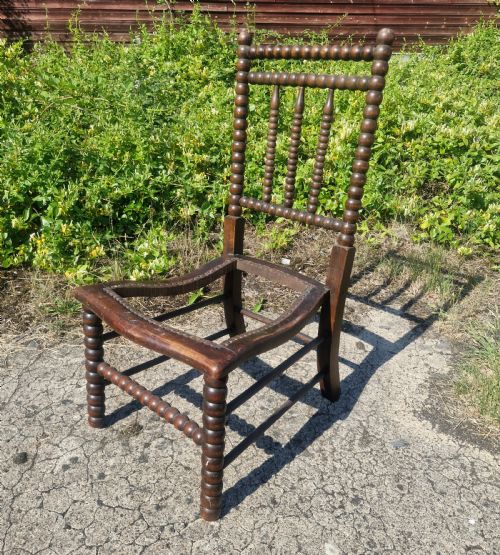


Brown Wooden Chair Frame
A brown wooden chair frame offers the structural bones of a period seat, ranging from Victorian oak to Edwardian mahogany.
Brown Wooden Chair Frame
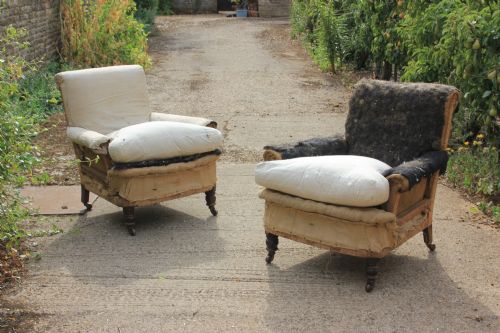
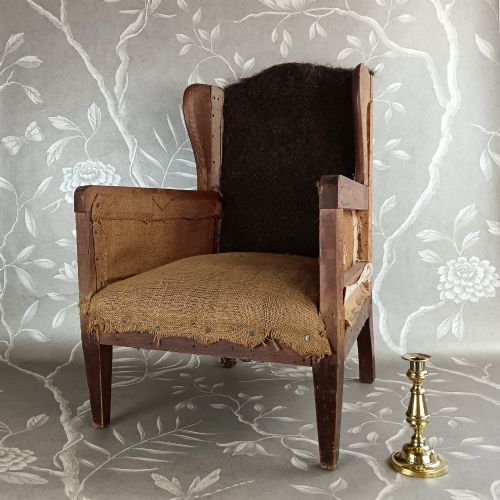
A brown wooden chair frame provides the essential skeletal framework of historical seating before final upholstery or webbing takes place. When you search for a brown wooden chair frame, you encounter structural timber supports stripped to their bare form or retaining original textile elements.
The pieces listed on this page span the nineteenth century, the Victorian era, the Edwardian period, and into the nineteen-thirties. You meet armchairs, carver chairs, rocking chairs, and folding chairs constructed from timber.
Originating from English, French, and Anglo-Indian workshops, these frames demonstrate diverse styles including Gothic Revival, Queen Anne Revival, and Art Deco. Oak, walnut, mahogany, and pitch pine dominate the structural timber choices.
How they were made
Cabinet makers utilised dense hardwoods such as oak, mahogany, walnut, and pitch pine to ensure structural integrity for chair frames. Timber components were joined using traditional woodworking joints, occasionally augmented by brass hardware or turned bobbin framing.
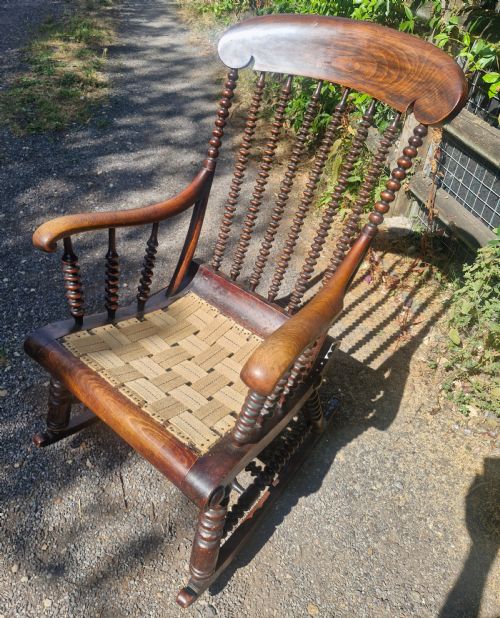
Decorative detailing on these wooden frames involved hand carving, inlay work, and barley twist turnings. Certain regional or colonial examples incorporated intricate brass inlay into hardwood structures.
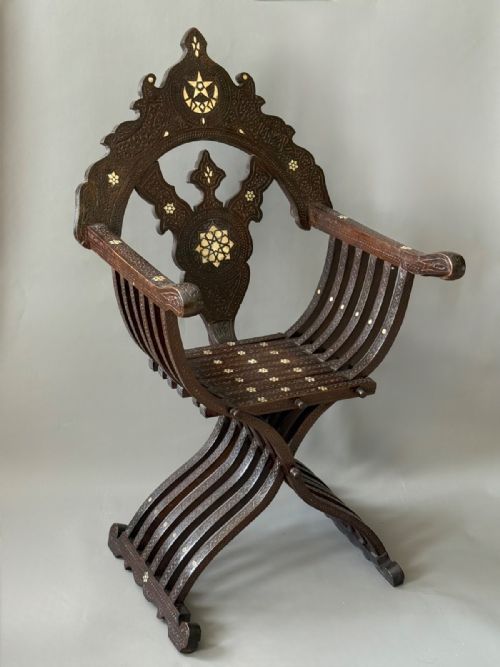
Textile elements such as hessian webbing, petit point upholstery, and leather padding were applied directly to the wooden skeletons. Folding mechanisms relied on hinged wooden X-frames or Savonarola structures.
Brown Wooden Chair Frame Retail Price Guide 2026
Typical asking prices for brown wooden chair frame among the pieces listed under this phrase on Sellingantiques today, from the lower quarter to the upper quarter. They describe what is for sale here now, not the wider market.
What varies in quality
The choice of timber dictates the foundational grade of the frame, with dense walnut and figured mahogany representing higher tier cabinet work compared to standard utility timbers. Timber selection influences the crispness of hand-carved details and structural longevity.
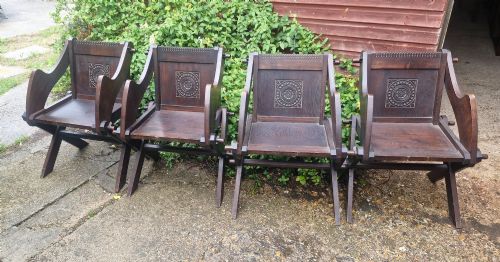
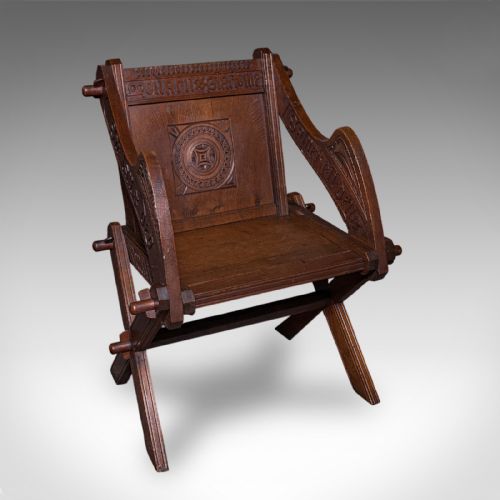
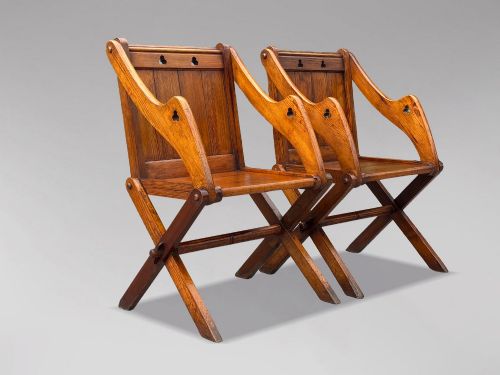
Joinery execution distinguishes robust workshop production from simpler country manufacturing. Superior frames maintain tight structural joints and balanced proportions across complex forms like Glastonbury armchairs and bobbin frames.
The Brown Wooden Chair Frame Glossary
- Glastonbury chair
- A type of medieval revival armchair with X-frame supports and a sloping back, frequently constructed in oak or pitch pine during the Victorian period.
- Bobbin framing
- Structural woodwork turned on a lathe to resemble a succession of bobbins or spools, popular in nineteenth-century seating.
- Savonarola style
- A folding chair design formed from multiple intersecting curved wooden slats, creating a scissors-like X-frame structure.
- Carver chair
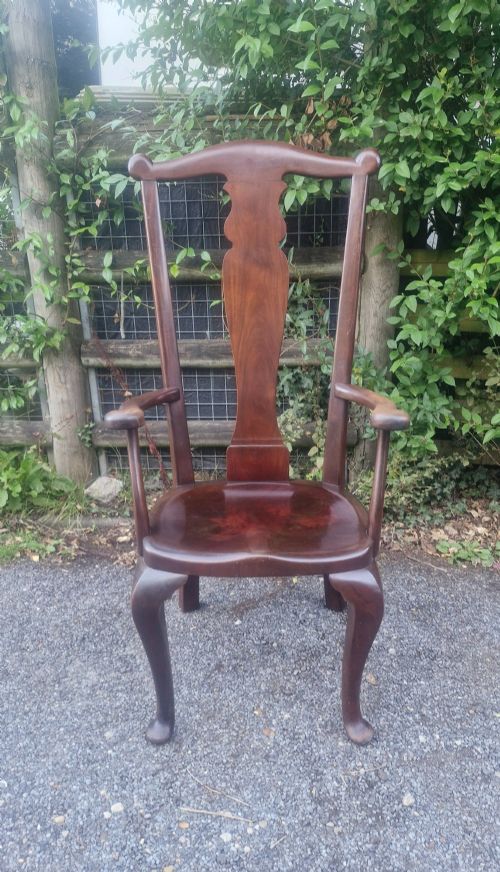
- An armchair traditionally placed at the head of a dining table, sharing stylistic traits with the matching dining chairs.
- Pitch pine
- A durable resinous softwood utilised for nineteenth-century furniture framing and Gothic revival seating.
Brown Wooden Chair Frame: Frequently Asked Questions
What is a brown wooden chair frame?
A brown wooden chair frame consists of the exposed timber structure of a historic seat, often stripped of worn upholstery or preserved in its original skeletal state.
These pieces showcase the foundational carpentry and joinery of periods ranging from the Victorian era through the early twentieth century.
How do I identify the period of a chair frame?
Period identification relies on observing the timber species, turning styles, and stylistic influences such as Gothic Revival or Art Deco.
Victorian and Edwardian examples often feature distinct carved motifs, bobbin turnings, or specific X-frame configurations recorded in nineteenth-century cabinet making.
Can I use an antique chair frame daily?
Many sturdy oak, walnut, and mahogany frames remain entirely suitable for daily seating once structural joints are checked and secured.
Lighter folding chairs or delicate occasional frames require more careful placement to preserve their historical timber integrity.
What woods were used for these frames?
Cabinet makers utilised domestic and imported hardwoods including oak, walnut, mahogany, elm, ash, and pitch pine.
Selected timbers depended on the regional origin and the specific structural demands of the armchair, rocking chair, or settee design.