


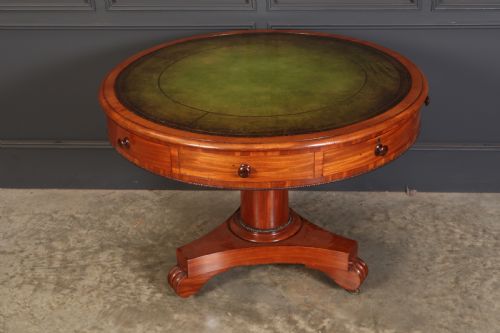

Victorian Leather Inset Desk
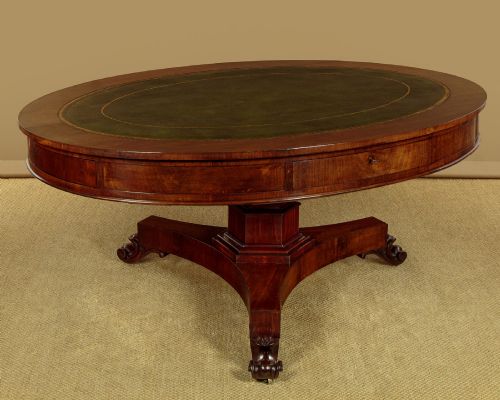
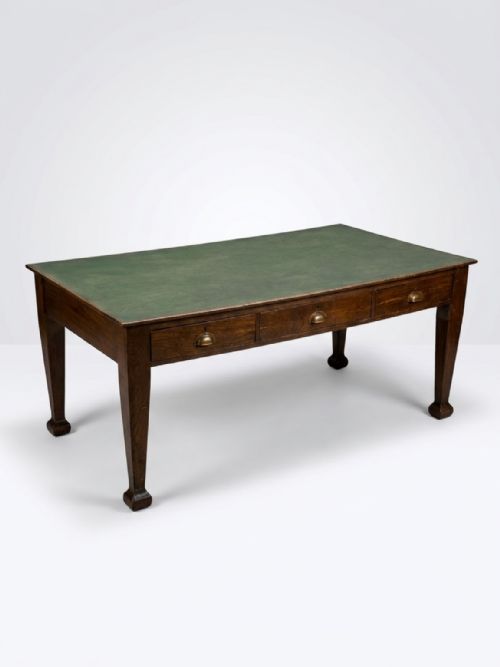
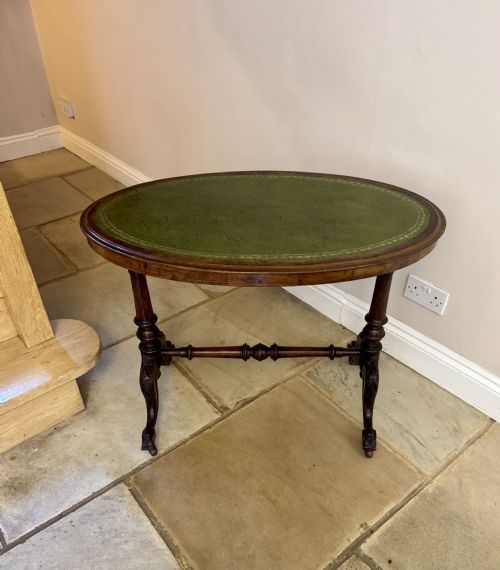
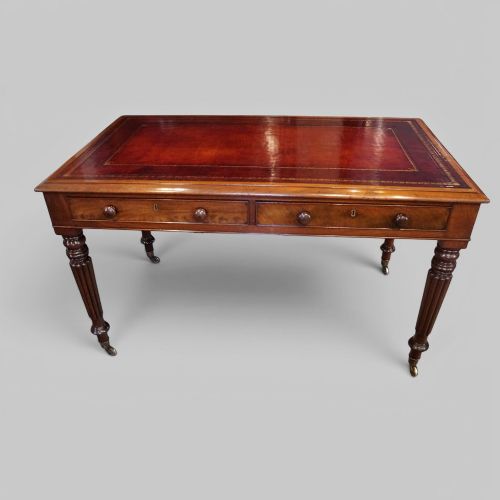
A victorian leather inset desk brings functional writing surfaces and period timber into a room, combining rich hides with polished mahogany, oak, or walnut.
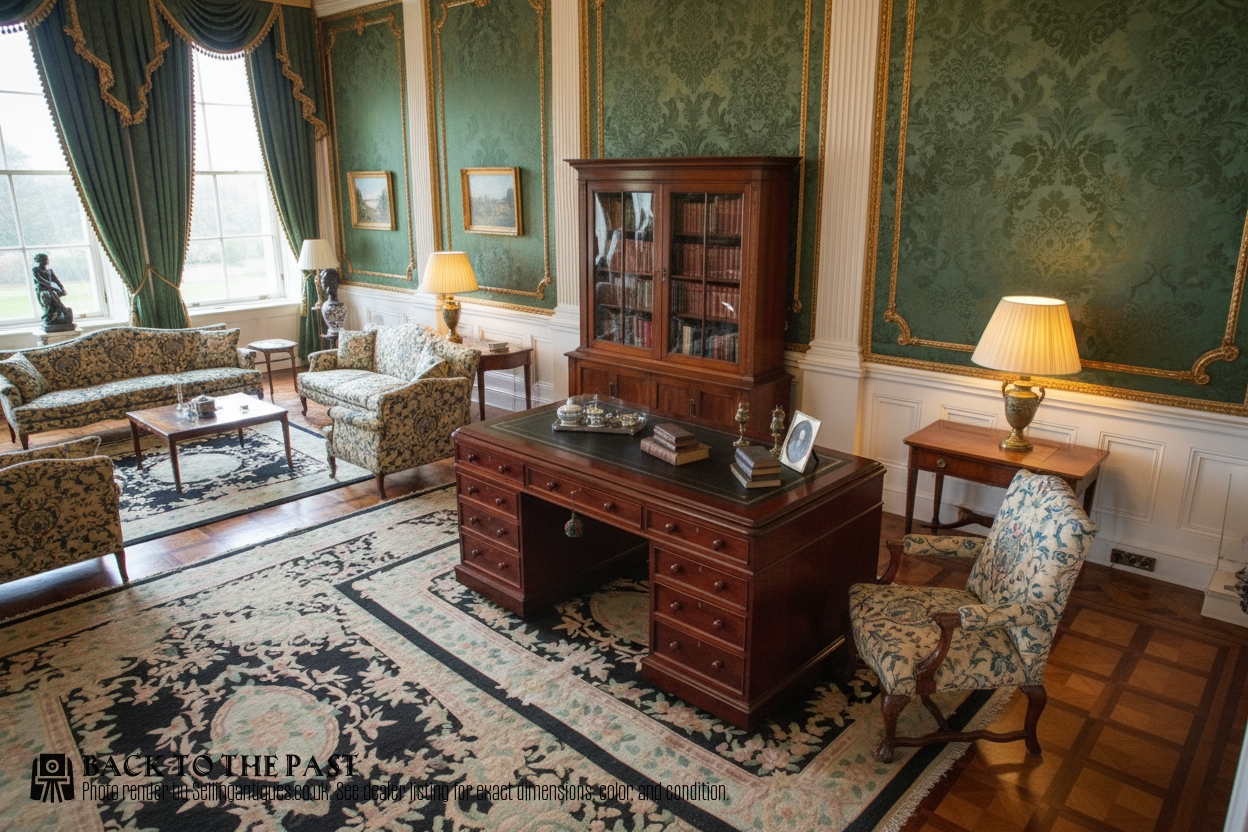
Victorian Leather Inset Desk
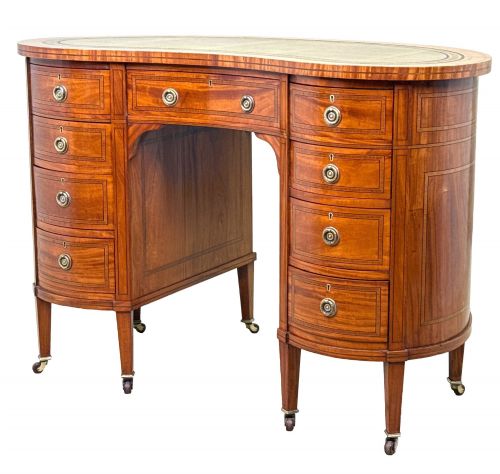
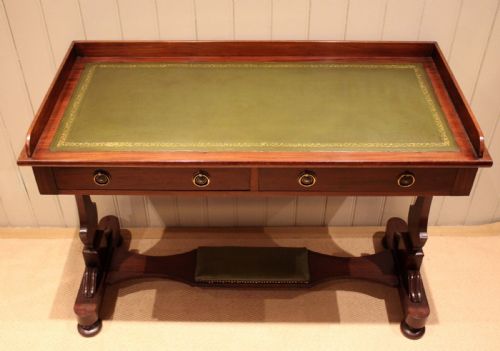
When you search for a victorian leather inset desk, you encounter nineteenth-century writing furniture designed for libraries, studies, and partners. These pieces emerge predominantly from the Victorian era and the wider nineteenth century, spanning pedestal forms, twin-drawer writing tables, and shaped kidney desks.
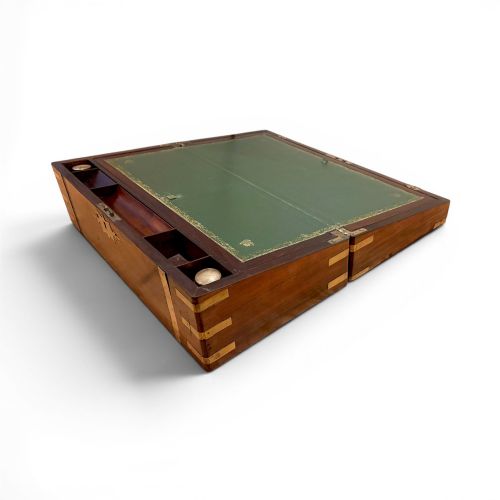
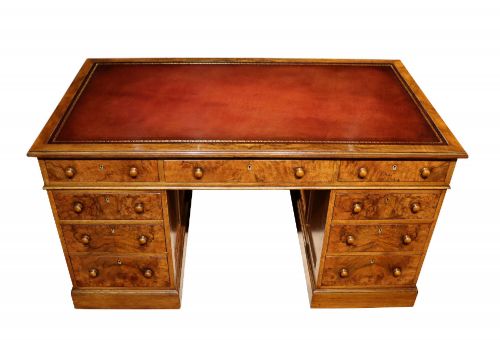
Pedestal desks and writing tables form the core of the selection on this page. Pieces appear in various woods, including mahogany, burr walnut, and oak, alongside library tables and campaign writing slopes featuring leather panels.
The styles range from early Victorian and William IV models to later Victorian, Arts and Crafts, and Sheraton Revival interpretations. Makers such as Johnstone & Jeanes, Howard & Son's, and James Shoolbred occasionally mark these pieces, reflecting professional cabinet-making standards.
Materials and construction
Cabinet-makers constructed these desks using solid timbers and decorative veneers such as mahogany, oak, burr walnut, and rosewood. Drawer linings typically utilise secondary woods, while brass handles, escutcheons, and campaign mounts provide functional hardware.
Writing surfaces incorporate inset leather panels, often tooled with gold leaf decoration around the borders. Joinery methods involve traditional dovetailing for drawers and robust framing for twin pedestals and freestanding writing tables.
One robust oak specimen carries the history of a ship's chair with an inset leather seat.
Quality and proportion
The standard of a desk rests on the selection of timber veneers and the crispness of the cabinet-making. Fine examples display carefully matched grain patterns in burr walnut or mahogany, balanced proportions, and well-executed joinery.
Surface treatment and hardware integrity distinguish better examples. Original brass furniture, well-preserved tooled leather inserts, and secondary timber quality separate standard utility pieces from exhibition-grade library tables.
Johnstone & Jeanes·Howard & Son's·James Shoolbred·Rumney & Love
The Victorian Leather Inset Desk Glossary
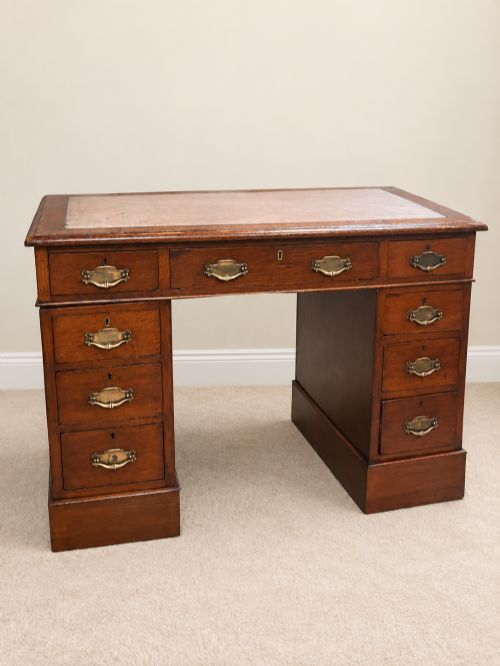
- Pedestal desk
- A form comprising two banks of drawers supporting a top, often arranged as a twin pedestal with a central recess.
- Partners desk
- A large desk designed to be used from both sides simultaneously, featuring drawers or cupboards on opposing faces.
- Campaign desk
- Portable military furniture designed to dismantle or fold, constructed with brass corners, inset handles, and durable timbers.
- Library table
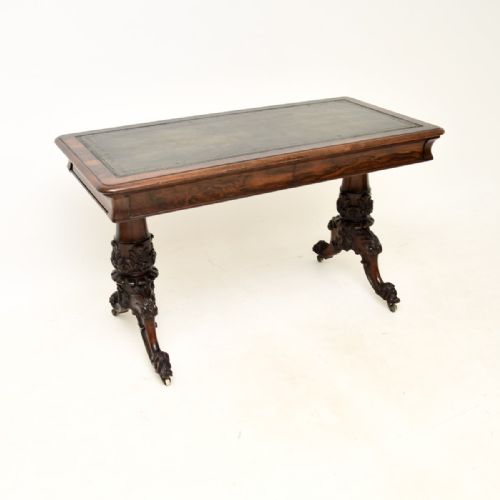
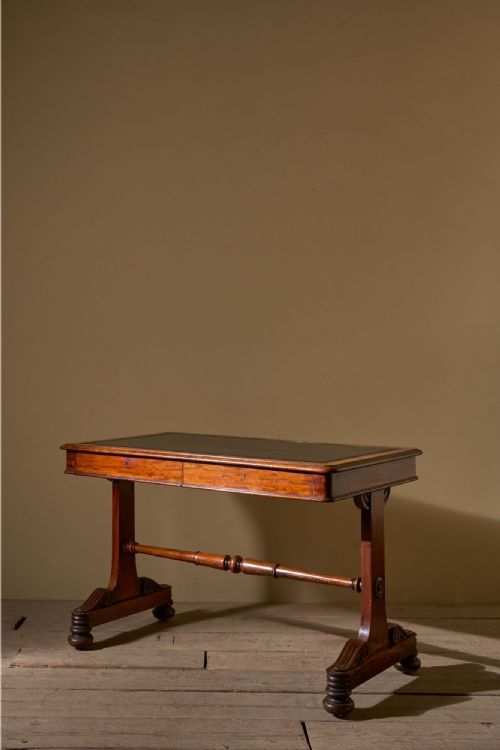
- A freestanding table used in studies or libraries, frequently fitted with inset leather writing surfaces and multiple drawers.
- Davenport
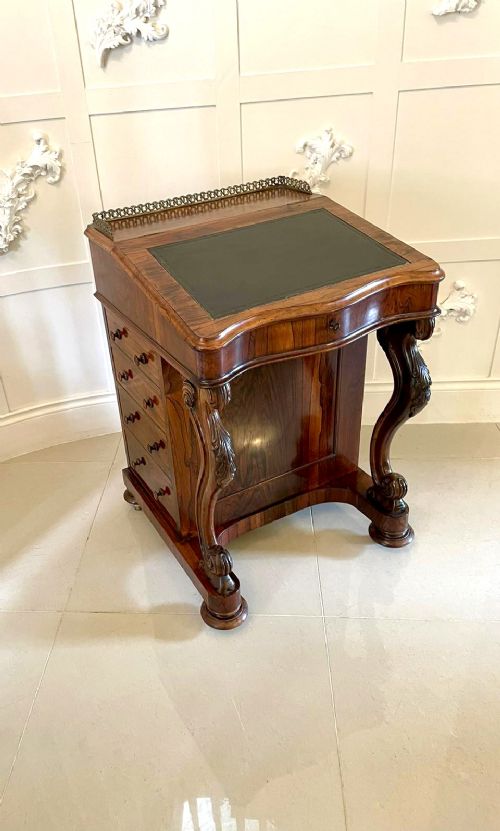
- A compact writing desk featuring a sloped, hinged writing surface above a set of side drawers.
Victorian Leather Inset Desk: Frequently Asked Questions
What is a victorian leather inset desk?
A nineteenth-century writing table or pedestal desk featuring a flat writing surface inset with leather, typically tooled with gilt borders.
These pieces were utilised in studies, libraries, and offices for correspondence and administrative work.
How do I identify a partners desk?
Partners desks feature drawers and cupboards on both longitudinal sides, allowing two people to sit opposite each other.
They generally measure larger than standard single-sided pedestal desks and occupy a central position in a room.
Are campaign desks different?
Campaign desks were built for military officers on active service, featuring sturdy construction, brass corner braces, and flush handles.
Many examples separate into modular sections to facilitate transport during the nineteenth century.
What woods were used?
Mahogany and oak form the structural foundation for the majority of these desks, providing durability and strength.
Cabinet-makers also applied decorative veneers including burr walnut, rosewood, and satinwood to external visible surfaces.