


Victorian Leather Footstool
A victorian leather footstool brings tactile comfort and domestic history to a room, offering sturdy support through buttoned hides and turned timber frames.

Victorian Leather Footstool
A victorian leather footstool spans compact low rests designed for firesides alongside expansive country house ottomans and window seats built for shared rooms. The pieces appear in walnut, mahogany, oak, and rosewood, frequently carrying the deep buttoning characteristic of the period.
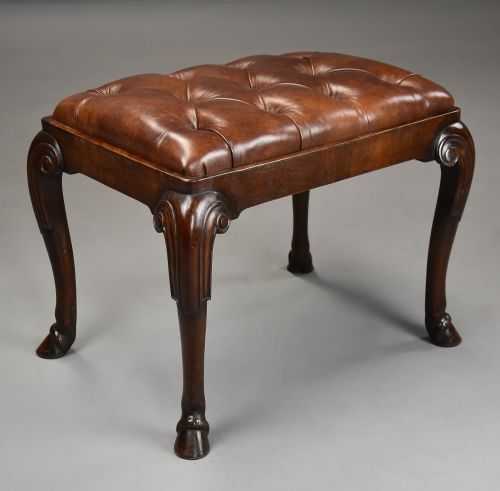
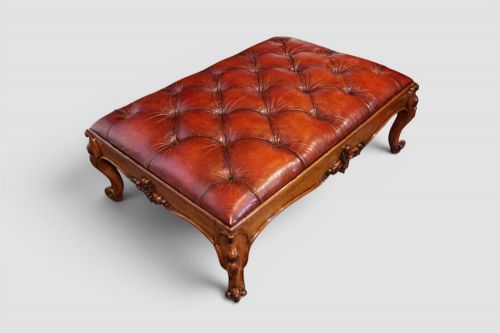
The version most commonly met on this page is the walnut or mahogany footstool with cabriole legs and a leather top, alongside larger rectangular ottomans designed to double as coffee tables.
Materials and construction
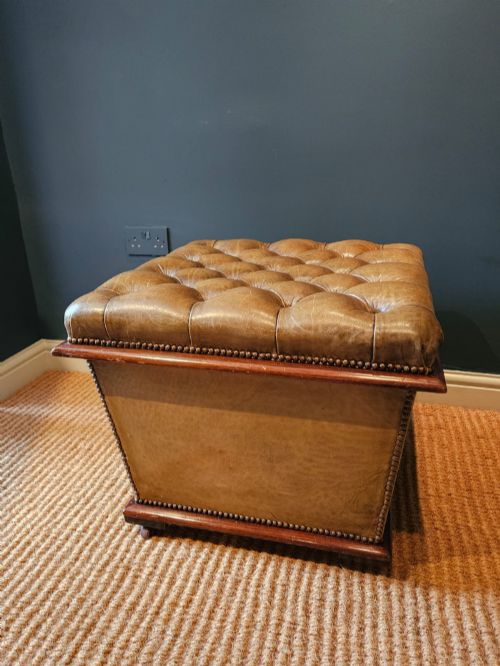
Carpenters formed the structural frames from dense hardwoods including mahogany, walnut, oak, and rosewood, employing turned or carved legs in styles ranging from cabriole to Regency and Queen Anne revival. Upholsterers stretched leather over stuffed pads, securing the edges with brass studs and often applying deep buttoning to distribute tension across the surface.
Specialised variations incorporate mechanical elements, such as the adjustable ratchets found on metamorphic gout stools and reclining reading footstools.
Victorian Leather Footstool Retail Price Guide 2026
Typical asking prices for victorian leather footstool among the pieces listed under this phrase on Sellingantiques today, from the lower quarter to the upper quarter. They describe what is for sale here now, not the wider market.
Moorish influences appear alongside traditional English country house styles, offering an unexpected global turn in Victorian seating.
Distinctions in quality
The standing of a piece rests upon the calibre of its timber framing and the integrity of the upholstery work. Heavier, densely grained hardwoods and substantial hand-dyed leathers distinguish superior examples from lighter utility items.
Finishing details dictate distinction, from the crispness of carved cabriole legs to the precise placement of brass studwork and the depth achieved in buttoned upholstery.
Liberty·James Shoolbred
The Victorian Leather Footstool Glossary
- Buttoned
- An upholstery technique where twine is pulled tight through padding and secured with buttons to create a diamond pattern. This method holds the internal stuffing firmly in place over decades of use.
- Cabriole leg
- A furniture leg that curves out and then in, resembling the leg of an animal. This shape became popular in revival styles referencing earlier centuries.
- Gout stool
- An adjustable footrest designed to support legs affected by illness. These pieces often feature pivoting mechanisms to alter the angle of the rest.
- Ottoman
- A low, upholstered seat or footstool without a back or arms. Larger examples serve dual purposes as central coffee tables in country house interiors.
- Metamorphic
- Describing furniture that transforms from one form into another through hinges or ratchets. These clever designs were popular for specialised library and medical use.
Victorian Leather Footstool: Frequently Asked Questions
What is a gout stool?
A gout stool is an adjustable footrest featuring an inclined platform designed to elevate and support sore joints.
These pieces often include mechanical ratchets so the user could alter the height and angle to suit their posture.
How do I use an ottoman?
Ottomans serve as flexible furniture pieces for seating, resting feet, or supporting trays as a table.
Their robust wooden frames and leather surfaces allow them to withstand daily domestic use in sitting rooms and libraries.
Are these stools comfortable?
The deep buttoning and traditional stuffed padding provide firm, supportive cushioning rather than soft sinking.
This construction method keeps the upholstery taut and comfortable for prolonged periods of sitting or resting.