
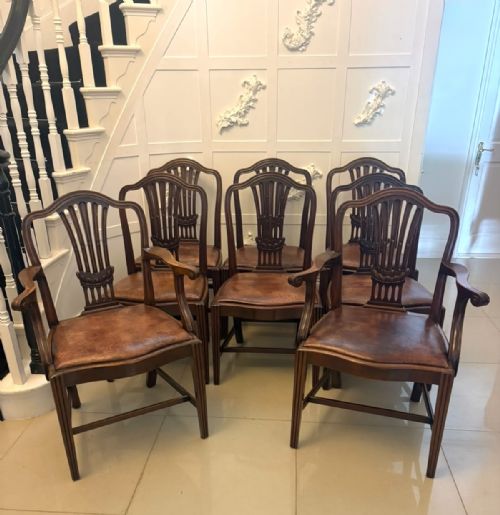
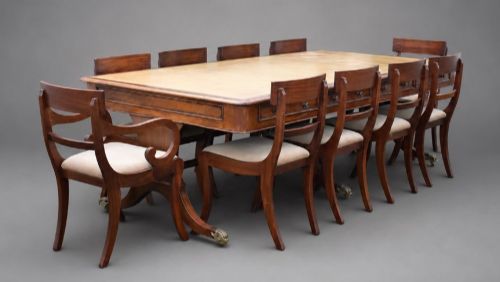
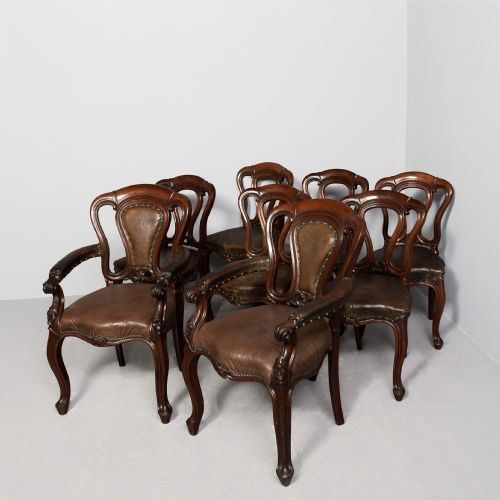
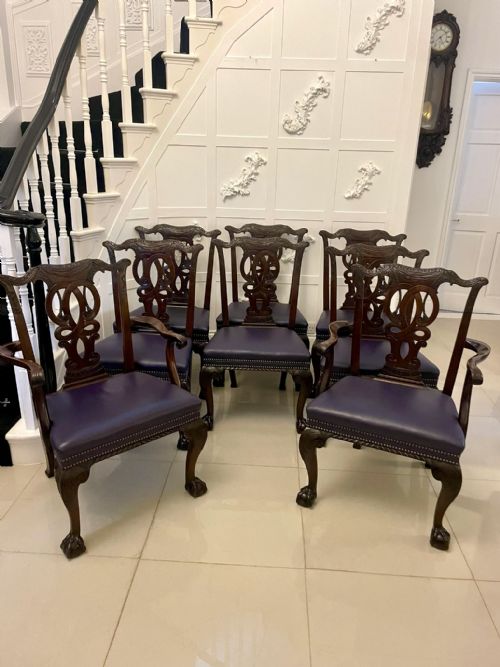
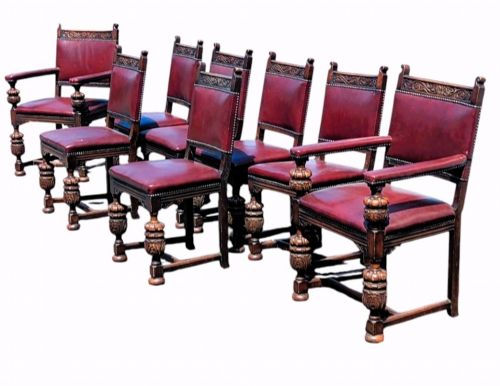

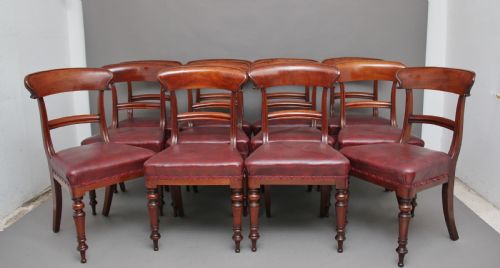

Victorian Leather Dining Set
A victorian leather dining set brings substantial nineteenth-century seating and presence to the dining room through durable timber frames and hard-wearing hides.
Victorian Leather Dining Set
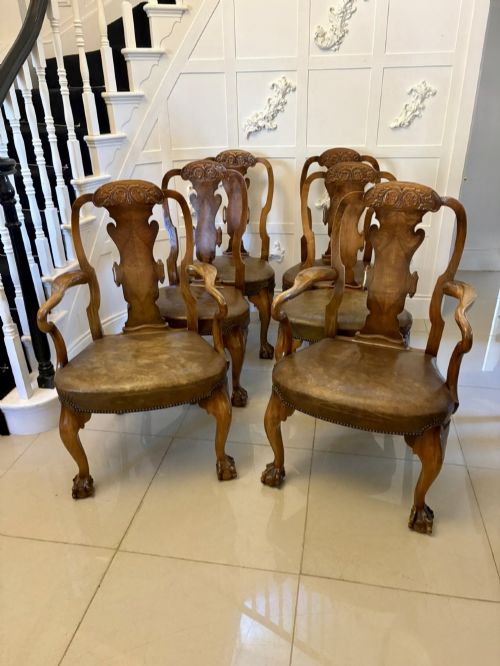
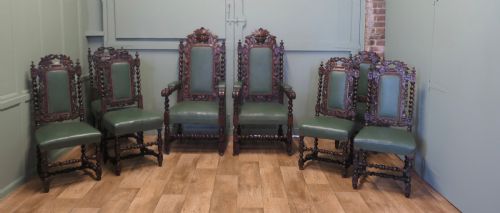
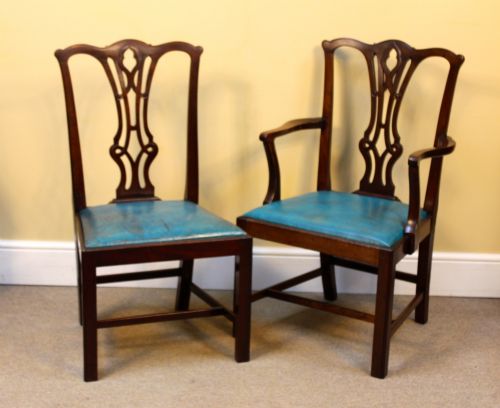
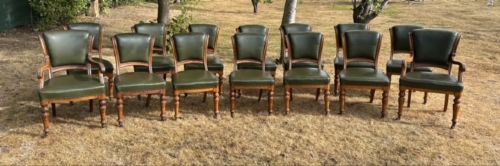
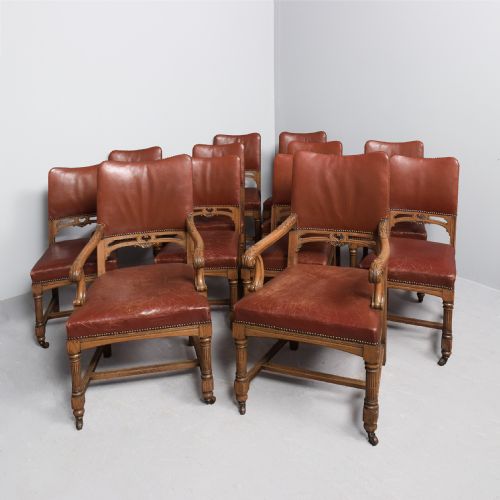
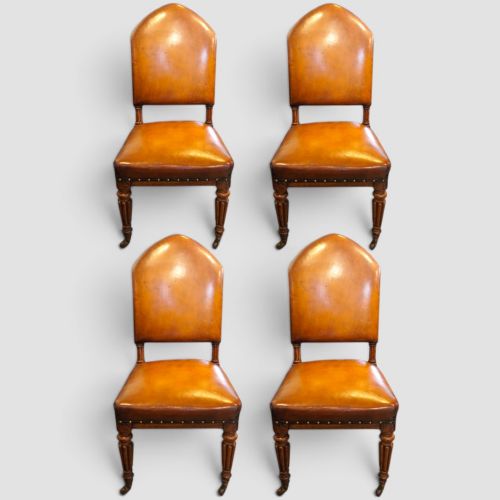
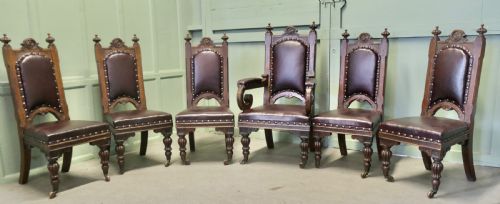
When searching for a victorian leather dining set, buyers encounter matched collections of chairs built primarily during the nineteenth century, often accompanied by large boardroom or dining tables. These groupings frequently range from four to twelve chairs, incorporating both single chairs and arm-carrying carvers designed for the ends of the table.
The prevailing timbers seen across these sets are mahogany and oak, alongside walnut and burr walnut. Many examples display regional British craftsmanship from workshops in major centres, utilising durable upholstery leathers in tones of tan, burgundy, and brown.
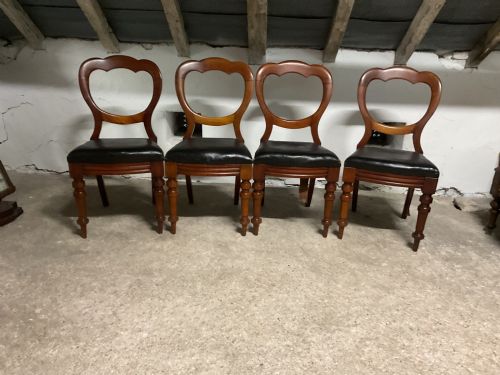
Sets appear in various revival idioms popular during the period, including Jacobean, Gothic, and Chippendale styles. Balloon back and shield back forms remain common among mahogany variations, while heavier carved oak frames dominate the Gothic and Jacobean groupings.
Materials and construction
Makers constructed frames using solid timbers such as mahogany, oak, and walnut, joined through traditional mortise and tenon methods to withstand daily dining use. Carved details on crest rails and legs relied on hand chiselling rather than mechanical moulding.
Upholstery involved stretching durable leather over stuffed seats, secured using brass head tacks or decorative studding along the wooden frame edges. Buttoned leather backs appeared on select luxury variations, adding deep tufting for structural support and comfort.
Listings feature oak, mahogany, walnut, and burr walnut timber frames paired with traditional leather upholstery.
Variations in quality
The tier of a set is determined by the depth and crispness of the timber carving, particularly on the crest rails, splats, and front legs. Sets produced by documented cabinet-makers exhibit superior timber selection, perfectly matched grain patterns across the chairs, and heavier framing timbers.
The integrity of the original leather and the retention of matching upholstery methods dictate the upper echelon of surviving sets. Lesser examples show mismatched replacements or lower-grade secondary woods hidden beneath the seat frames.
John Taylor & Son·Lamb Of Manchester·William Walker & Sons·Holland & Son's·C Hindley & Sons
The Victorian Leather Dining Set Glossary
- Carver
- An armchair designed with elbow rests, traditionally placed at the head and foot of a dining table. These match the single chairs in a larger set.
- Balloon back
- An oval or rounded chair back profile resembling an inflated balloon, widely favored in mid-nineteenth-century mahogany seating. This shape provides ergonomic back support.
- Splat
- The vertical central strip of wood within a chair back connecting the crest rail to the seat. Finer sets feature pierced or elaborately carved splats.
- Buttoning
- An upholstery technique where leather is pulled inward with twine secured by buttons, creating a quilted pattern. This secures the internal stuffing against shifting.
Victorian Leather Dining Set: Frequently Asked Questions
How many chairs came in a standard set?
Victorian dining sets typically ranged from four to twelve chairs, often including two carvers for the table ends.
Larger configurations of ten or twelve pieces were built for substantial dining rooms and boardrooms.
Are the leather seats original?
Many surviving sets retain their original cattle leather, showing natural patination and wear from decades of use.
Later replacements are common and are usually noted when the hide appears notably fresh or smooth compared to the timber frame.
How do I care for antique leather?
Leather upholstery benefits from periodic application of appropriate conservation leather dressings to prevent drying and cracking.
Keeping chairs away from direct sunlight and strong heat sources preserves the natural hide.
What wood types are most common?
Mahogany and oak dominate the surviving inventory, with walnut and burr walnut appearing in more decorative iterations.
Oak frames generally align with Gothic or Jacobean revival styles, while mahogany suits balloon back and Chippendale designs.