

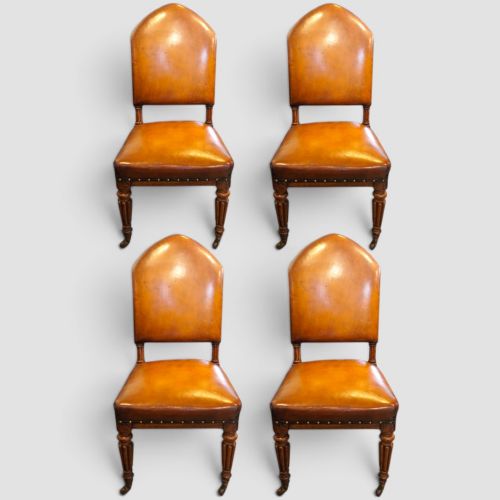
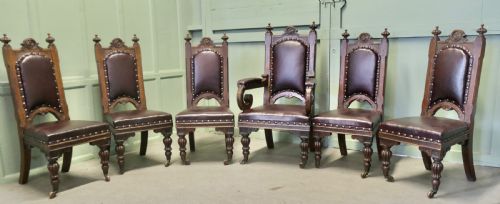
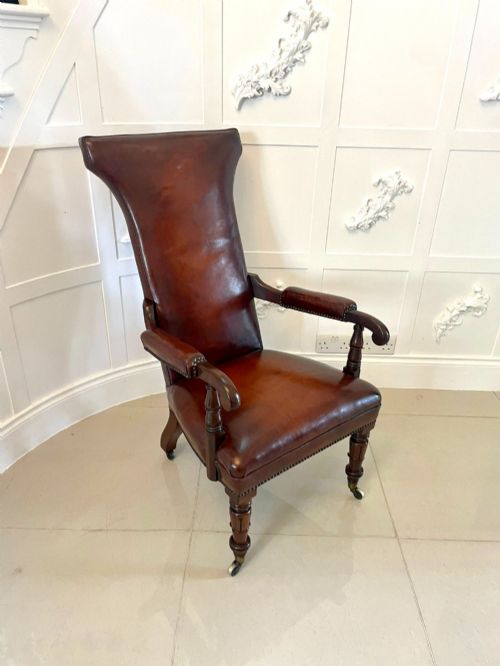
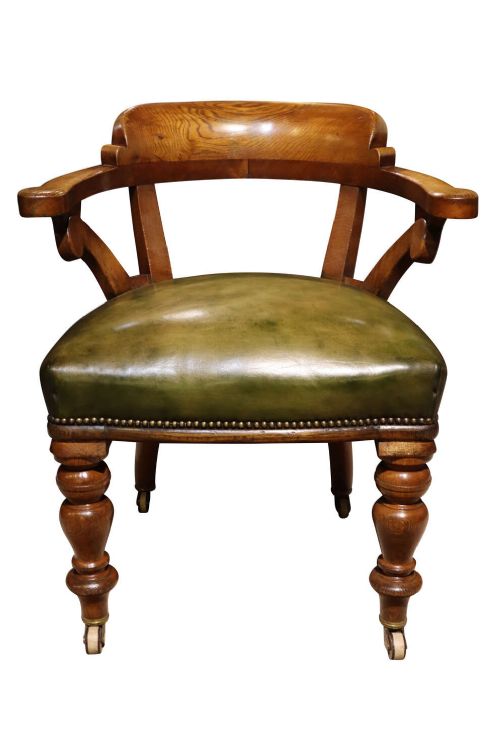

Victorian Leather Desk Chair
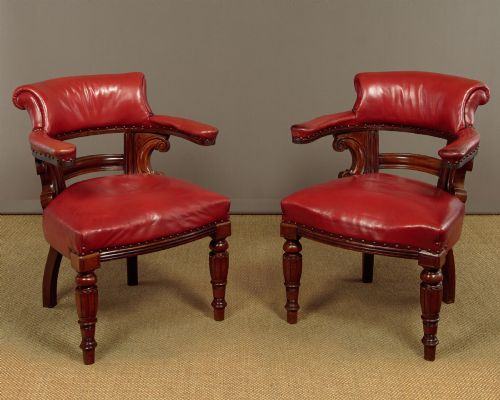
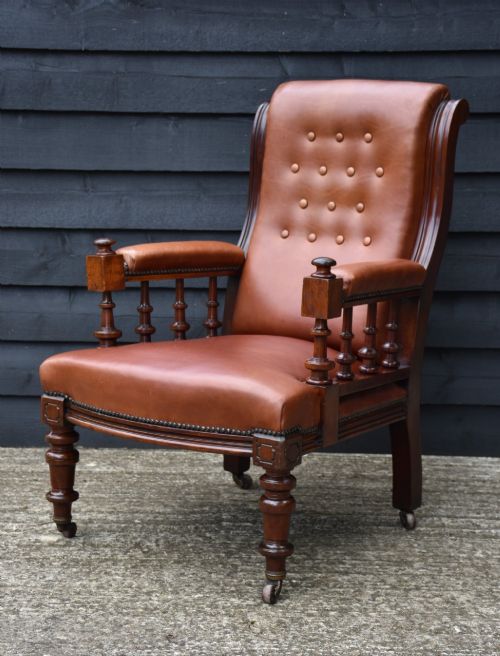
A victorian leather desk chair brings solidity to a study through heavy timber framing and padded hide upholstery.
Identifying a victorian leather desk chair
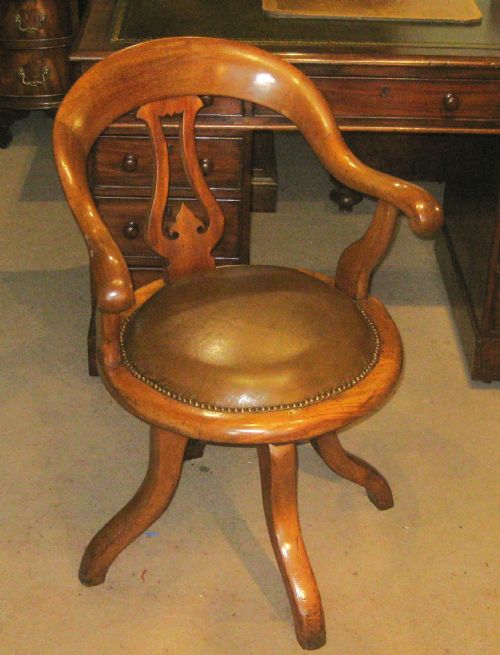
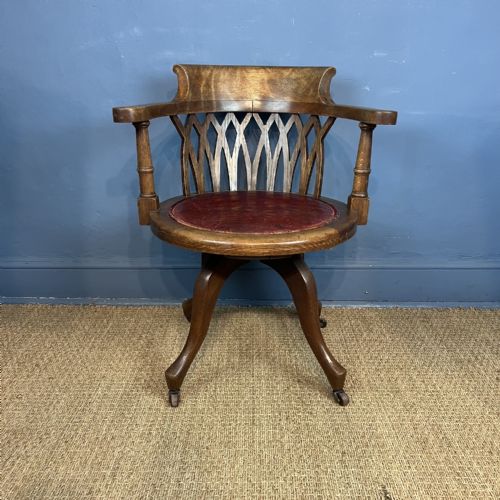
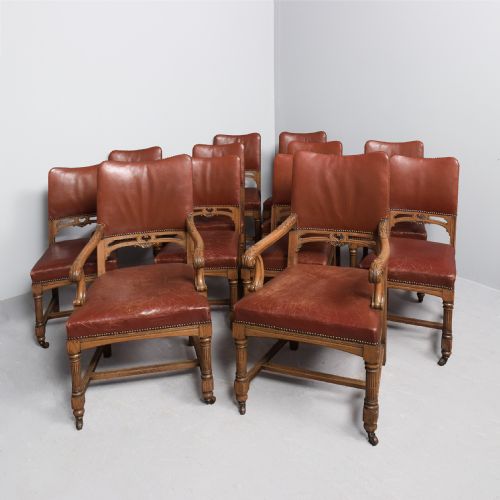
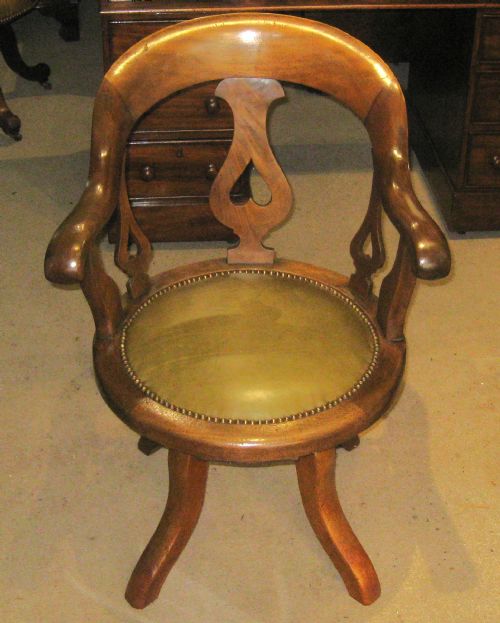
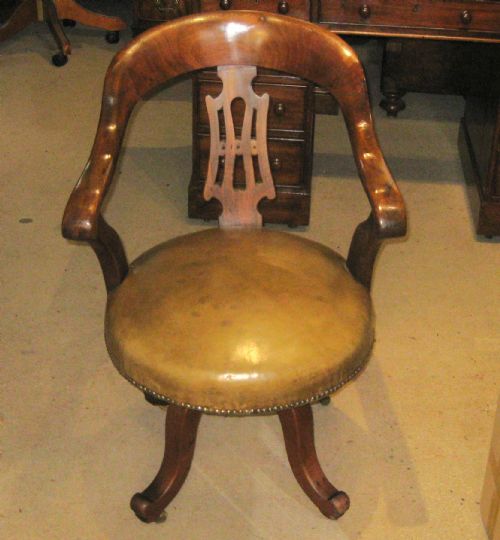
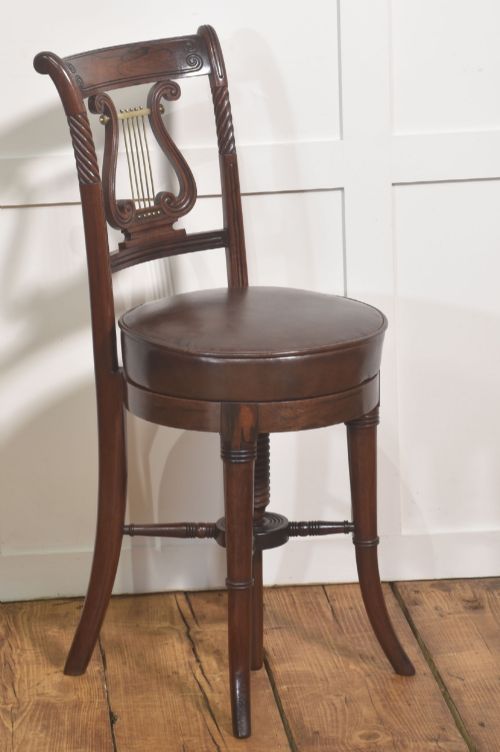
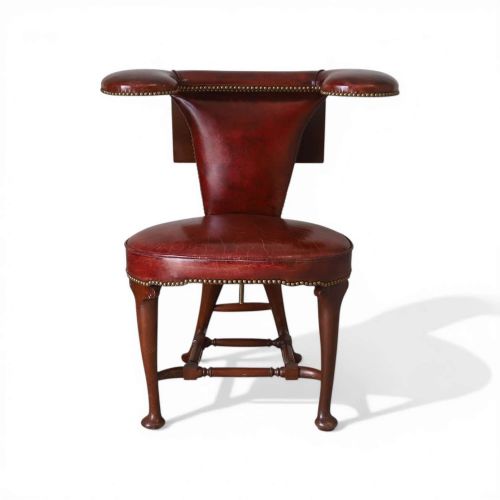
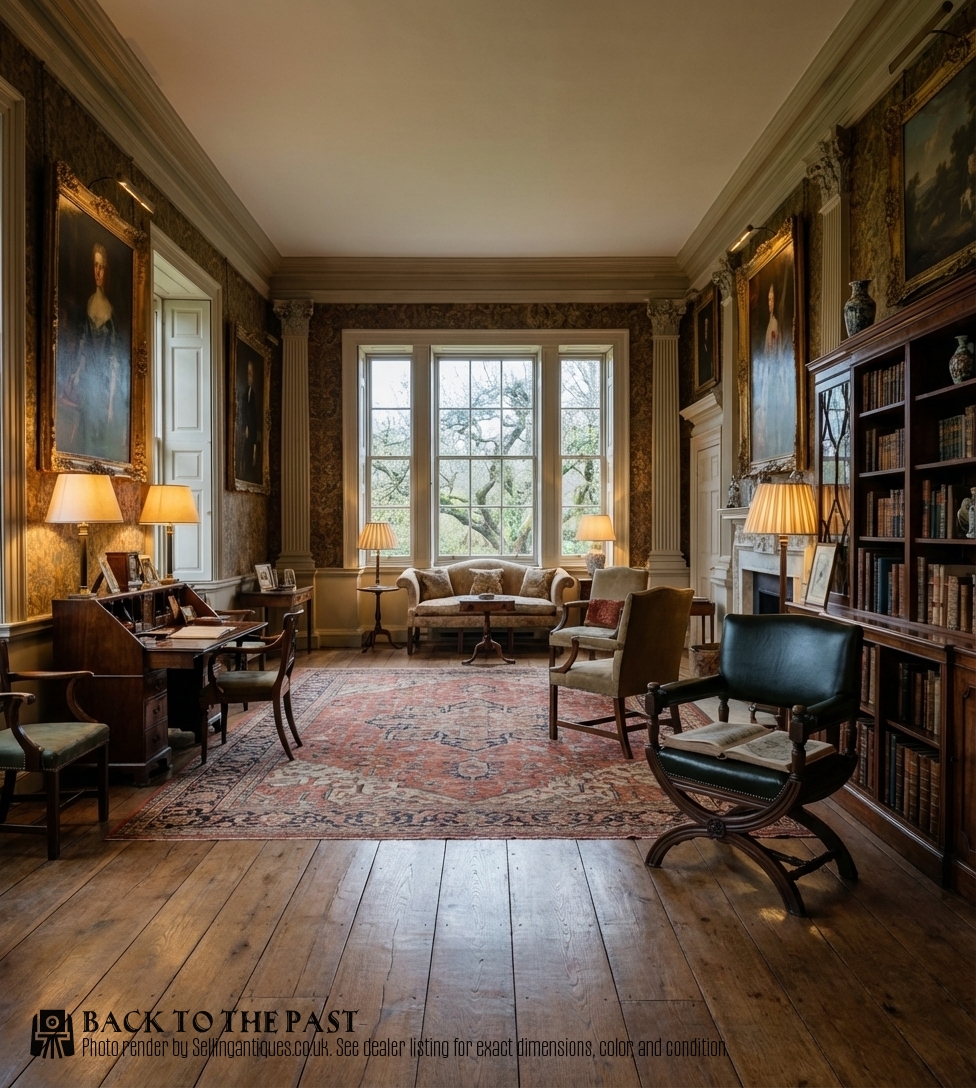
A victorian leather desk chair is a sturdy seating option designed for libraries, offices, and studies during the nineteenth century. These pieces appear in forms such as revolving office chairs, swivel captain's chairs, and open library armchairs.
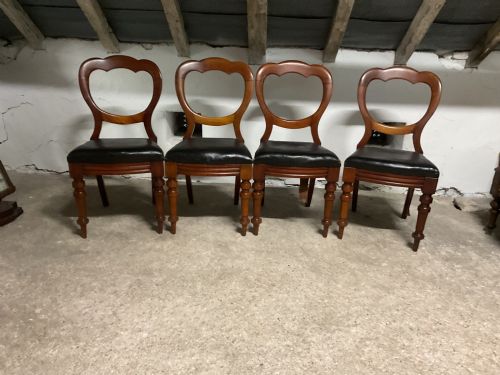
Mahogany and oak form the backbone of the selections found here, often paired with green, red, or black leather upholstery. Buyers frequently encounter revolving mechanisms, deep buttoning, and X-framed or tub structures across the nineteenth-century examples.
The inventory ranges from stationary library armchairs to pivoting office seats fitted with brass hardware. Each variant serves the practical demand for durable seating at a writing table.
Materials and construction methods
Cabinetmakers utilised hardwoods such as mahogany, oak, walnut, and chestnut to build robust frames capable of enduring daily use. These timbers are joined with traditional methods to support pivoting mechanisms and heavy upholstery.
Upholstery departments applied leather, sometimes embossed, over padding and secured the edges with brass tacks. Swivel variants incorporate iron or brass spindles and castors to allow smooth rotation.
Retail Price Guide 2026
Typical UK retail prices for victorian leather desk chair, calculated from the Sellingantiques database of over a million retail prices indexed since 2003. This retail price guide relies exclusively on Sellingantiques data; no external sources or auction records are used, so the figures do not describe the wider market.
Some nineteenth-century desk chairs feature crinoline stretchers, proving that even office furniture occasionally needed a bit of architectural corsetry.
Distinctions in construction and finish
The refinement of the timber carving and the grade of the leather distinguish standard utilitarian seating from finer library pieces. Superior examples display carefully turned wooden components, substantial brass swivel fittings, and neatly executed deep buttoning.
The integration of the revolving mechanism within the wooden undercarriage dictates the mechanical success of a swivel chair. Stronger joinery in the arms and back ensures longevity under regular pivoting and weight.
The Victorian Leather Desk Chair Glossary
- Revolving desk chair
- A seat fitted with a central spindle allowing the upper portion to turn full circle. This mechanism often includes a wooden or iron spider base with castors.
- Library armchair
- A wide, supportive seat designed for reading rooms, typically featuring upholstered arms and a padded backrest. These pieces rely on fixed wooden frames rather than swivel bases.
- Deep buttoning
- An upholstery technique where twine is pulled through the padding and secured to create a patterned diamond effect with recessed buttons. This method keeps the internal stuffing firmly in place.
- Crinoline stretcher
- An arched wooden brace connecting the legs of a chair near the base to provide additional structural rigidity. It appears on specific nineteenth-century seating designs.
- Tub chair
- An armchair featuring a continuous curved back and arms that form a single enclosing shape. These upholstered forms offer compact, enveloping support.
Frequently Asked Questions
What woods were used for these chairs?
Makers constructed these seats predominantly using mahogany and oak, alongside walnut, chestnut, and bentwood. The choice of timber often reflects the general aesthetic of the nineteenth-century period.
Mahogany examples frequently display a rich reddish-brown tone, while oak and walnut offer distinct grain patterns. These hardwoods provided the necessary strength for heavy daily use.
Are all these chairs swivel chairs?
Not all pieces in this category swivel; many are stationary library armchairs with fixed wooden frames. The inventory includes both pivoting desk seats and static open armchairs.
Buyers can identify stationary versions by their rigid four-leg or X-framed bases. Both fixed and revolving variants date from the nineteenth century.
How do I care for the leather?
Leather upholstery requires regular dusting and occasional conditioning to maintain its flexibility and prevent cracking. Avoid placing these seats near direct heat sources that dry out the hide.
Gentle cleaning preserves the original colour and texture of the material. Brass tacks and wooden frames should be wiped with a dry cloth.