


Victorian Leather Accent Chairs
These victorian leather accent chairs combine nineteenth-century seating forms with robust hides, offering both historical character and solid support for daily use.
Victorian Leather Accent Chairs
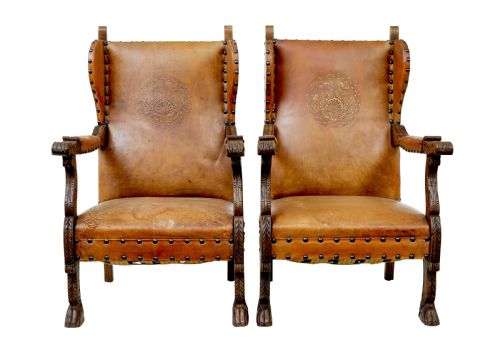
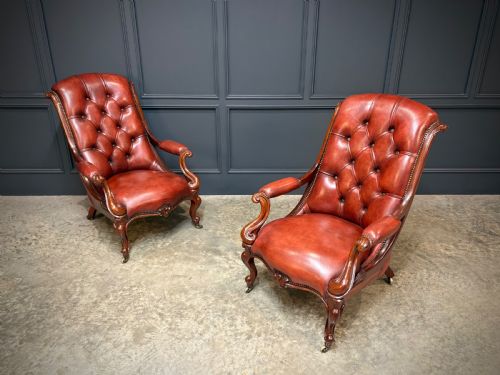
When searching for victorian leather accent chairs, collectors encounter a diverse selection of nineteenth-century forms ranging from library armchairs to smaller side and hall chairs. The pieces listed originate predominantly from the Victorian era and the broader nineteenth century, frequently incorporating styles such as Gothic Revival, Rococo Revival, and Renaissance Revival.
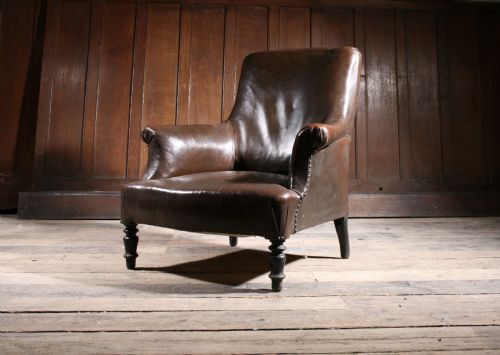
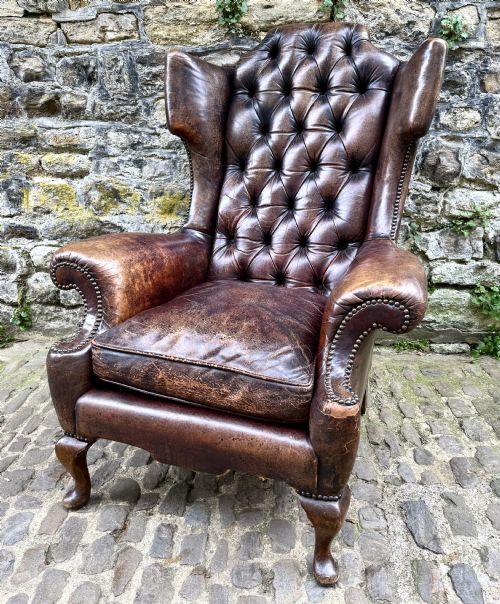
Armchairs, club chairs, and wing armchairs dominate the selections available, often featuring low or high backs designed for reading, study, or drawing room use. Alongside full-sized seating, variants include childs chairs, desk chairs, and corner chairs constructed for specific domestic settings.
Woods such as oak, mahogany, rosewood, and walnut form the structural frames, paired with brown, red, or black leather upholstery. These chairs reflect the robust manufacturing traditions of the period, utilising heavy timber framing and durable animal hides.
Materials and construction
Makers constructed the timber frames using seasoned hardwoods such as oak and mahogany, often shaping the wood through hand-carving, turning, or steam-bending. Structural elements frequently employ exposed grain and joinery characteristic of nineteenth-century cabinet making.
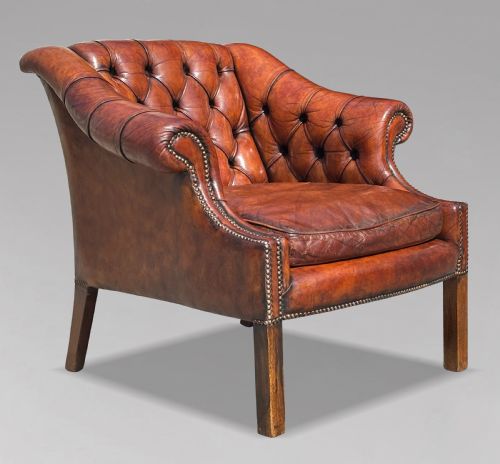
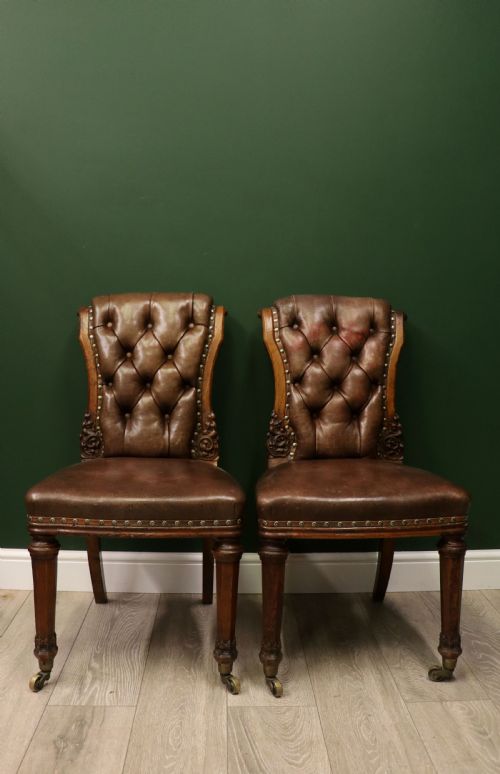
Upholstery techniques rely on fitted leather panels secured with brass nails, alongside button-tufting methods that create deep geometric patterns across the backrests. Hides are applied either smooth, embossed, or woven into the wooden support structure.
Secondary framing materials include rosewood, walnut, ash, and occasional metal accents, supporting the heavy leather pads and cushions used in library and club armchairs.
Listings feature oak, mahogany, rosewood, and walnut frames paired with leather upholstery across nineteenth-century seating forms.
Evaluating quality and execution
The degree of hand-carving and decorative detailing on the wooden framework largely differentiates standard utility seating from finer examples. Elaborate Gothic Revival motifs, deep relief carvings, and specialised turned elements indicate higher workshop ambition.
The condition and tanning quality of the leather heavily influence the overall character of a piece, with supple, well-preserved hides commanding stronger interest than heavily degraded surfaces. Button security and structural tightness within the frame determine daily resilience.
A. W. N. Pugin
The Victorian Leather Accent Chairs Glossary
- Gothic Revival
- A nineteenth-century architectural and decorative style utilising pointed arches, tracery, and heavy carved woodwork. This aesthetic appears frequently on nineteenth-century oak armchairs and hall seating.
- Buttoned leather
- Upholstery technique where leather is pulled tight with indented tufts, often secured by buttons. It creates a padded, textured surface seen on library armchairs.
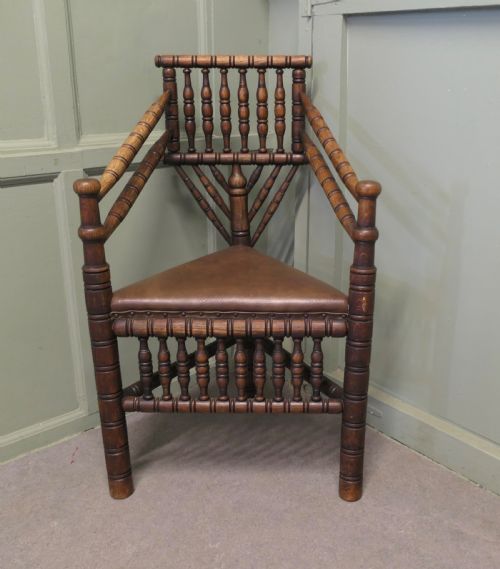
- Turners chair
- A heavy wooden chair constructed entirely from turned spindles and posts. These pieces typically date to the mid-nineteenth century and rely on geometric symmetry.
- Wing armchair
- A high-backed seat featuring upholstered side panels designed to shield the occupant from drafts. Victorian iterations pair this form with leather upholstery and deep wooden framing.
- Library chair
- A sturdy, comfortable armchair intended for reading rooms and studies. They frequently incorporate generous proportions and durable leather panels.
Victorian Leather Accent Chairs: Frequently Asked Questions
What rooms suit victorian leather accent chairs?
These chairs fit well in studies, libraries, and living rooms where sturdy seating is practical. Their dark wood frames and heavy leather upholstery anchor traditional and eclectic interior spaces.
Smaller side chairs and childs chairs work effectively in hallways or bedrooms as decorative yet functional accents. Their compact footprints allow them to sit comfortably in corners or beside desks.
How do I care for antique leather?
Maintain antique leather by keeping it away from direct sunlight and heat sources that dry out the hide. Regular dusting and occasional application of suitable leather conditioner preserve the material.
Avoid using modern chemical cleaners or excessive water when cleaning nineteenth-century upholstery. Gentle treatment helps retain the natural patina developed over decades of use.
How do I identify Gothic Revival chairs?
Gothic Revival chairs display architectural motifs such as pointed arches, quatrefoils, and heavy carved tracery. These design elements reflect a nineteenth-century fascination with medieval aesthetics.
The framework is almost exclusively solid oak, often featuring dark finishes and stern, upright proportions designed to mimic ecclesiastical furniture.
Were these chairs used for dining?
Dining chairs from this period were generally lighter side chairs without arms, allowing guests to sit comfortably around a table. They utilised carved wooden backs and smaller leather seat pads.
Larger armchairs and club chairs were reserved for libraries, drawing rooms, and studies rather than formal dining settings.