
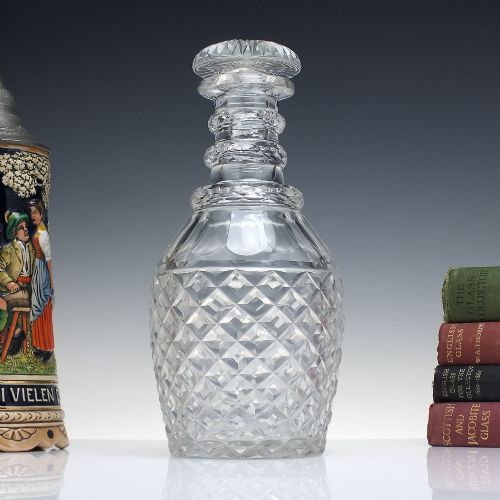


Victorian Lead Crystal Bottle
These Victorian lead crystal bottle pieces bring heavy cut glass brilliance and period weight to your drinks cabinet or dressing table.
Victorian Lead Crystal Bottle
When you search for a victorian lead crystal bottle, you are looking at heavy glassware designed for the dining table, sideboard or dressing room. The listings show a strong selection of Victorian decanters alongside perfume and scent bottles.
Most examples date from the Victorian era and the broader nineteenth century, with specific decades like eighteen eighty appearing frequently. You will also encounter pieces described simply as cut glass carafes or spirit decanters.
Forms range from tall barware intended for whisky and wine to small heart-shaped perfume containers. These vessels combine functional utility with the decorative brilliance characteristic of the period.
How they were made
The pieces listed here rely on heavy lead crystal and clear cut glass, shaped by blowing and subsequent wheel-cutting. This high lead content gives the glass its notable weight and high refractive index.
Craftsmen applied deep facets and linear cuts to the exterior surface to catch the light. Certain perfume and scent bottles also feature delicate hand engraving alongside the structural cutting.
Mounts and hardware introduce supplementary materials such as silver plate and base metal, particularly on scent bottles and specific decanter necks. These metals provide secure closures and decorative contrast.
Listings for this phrase span the eighteenth century through to nineteen hundred, with a strong concentration in the Victorian period.
What varies in quality
Quality in these glass items rests primarily on the crispness of the cutting and the weight of the metal content. Deeper, sharper facets create a brighter refraction of light compared to soft or shallow grinding.
The clarity of the material itself distinguishes standard vessels from finer examples. Superior pieces maintain a brilliant, clear matrix free of cloudiness, while mountings of silver plate add structural refinement where present.
The Victorian Lead Crystal Bottle Glossary
- Lead crystal
- Glass containing a significant proportion of lead oxide, which increases weight, clarity and brilliance. This material allows for deeper and sharper cutting than standard glass.
- Cut glass
- Glass decorated by holding the vessel against a rotating abrasive wheel to carve patterns into the surface. The resulting facets scatter light across the room.
- Decanter
- A stoppered glass vessel used for holding and serving wine or spirits. Victorian examples often feature heavy geometric cutting and matching stoppers.
- Scent bottle
- A small container designed to hold perfume, frequently fitted with a metal or silver plate cap. These often take decorative forms such as hearts.
- Carafe
- An open-topped glass container used for serving water or wine at the table. Unlike decanters, they generally lack stoppers.
Victorian Lead Crystal Bottle: Frequently Asked Questions
How do I clean a cloudy decanter?
Cloudiness inside old bottles usually results from mineral deposits or liquid residue over decades. Gentle washing with warm water and specialised cleaning beads helps clear the interior.
Avoid sudden temperature changes to prevent thermal shock and cracking. Allow the piece to dry thoroughly upside down before storing.
Are these bottles safe for daily use?
Most nineteenth-century decanters and carafes remain structurally sound for serving beverages today. Inspect the interior and rim carefully before putting liquids inside.
Keep in mind that high lead content glass should not store acidic liquids for extended periods. Hand washing protects both the glass and any attached silver plate.
How can I tell if glass is lead crystal?
Lead crystal is noticeably heavier than standard soda-lime glass of the same size. The material also produces a clear, ringing tone when gently tapped.
Visual inspection reveals greater dispersion of light into spectral colours through the cut facets. The glass itself appears brighter and clearer.
Did these decanters originally come in pairs?
Dining customs of the nineteenth century frequently involved serving multiple wines or spirits simultaneously. Matching pairs allowed hosts to present different beverages in uniform glassware.
Single bottles were equally common for everyday household use. The current listings show both individual pieces and matched pairs.