
Victorian Landscape Painting Art
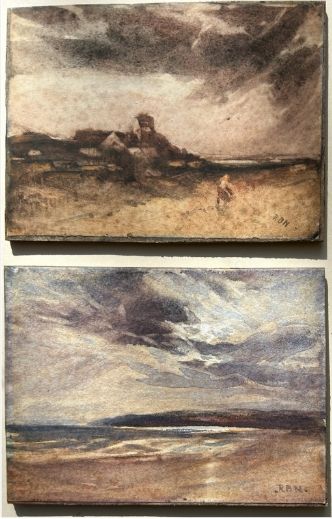
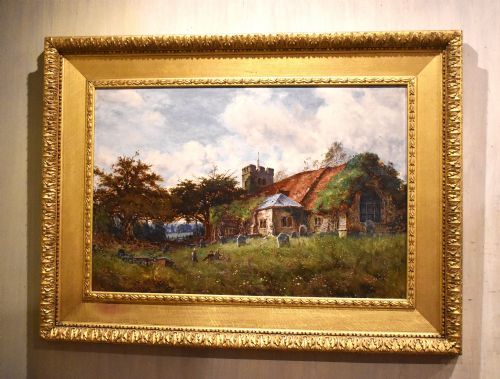
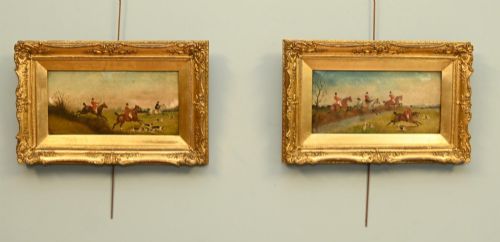
Victorian landscape painting art encompasses framed works on canvas and paper depicting pastoral, marine, and classical scenes from the nineteenth century onwards.
Victorian Landscape Painting Art
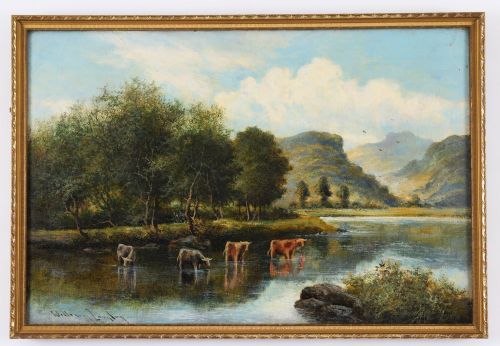
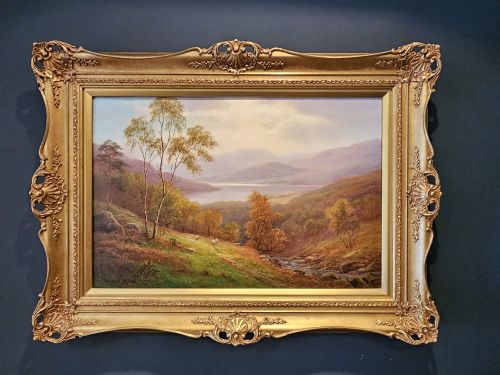
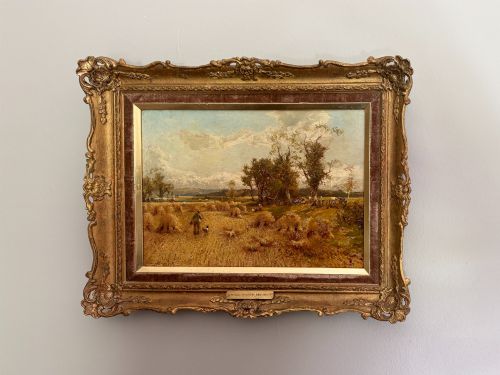
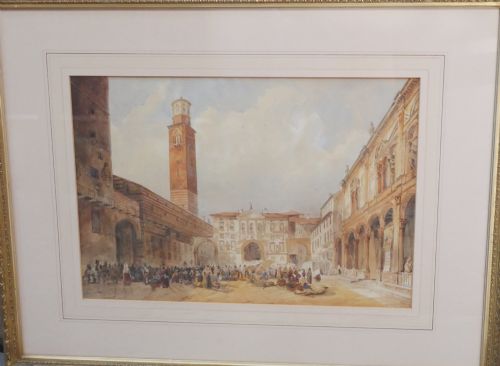
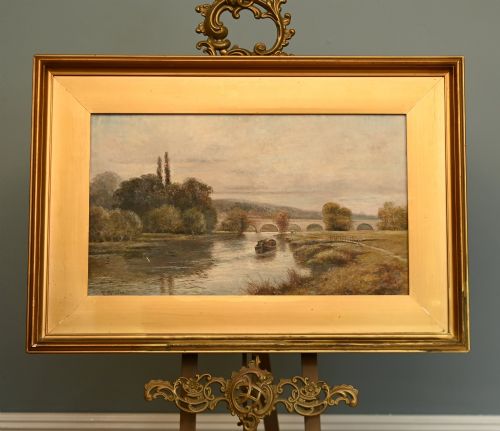
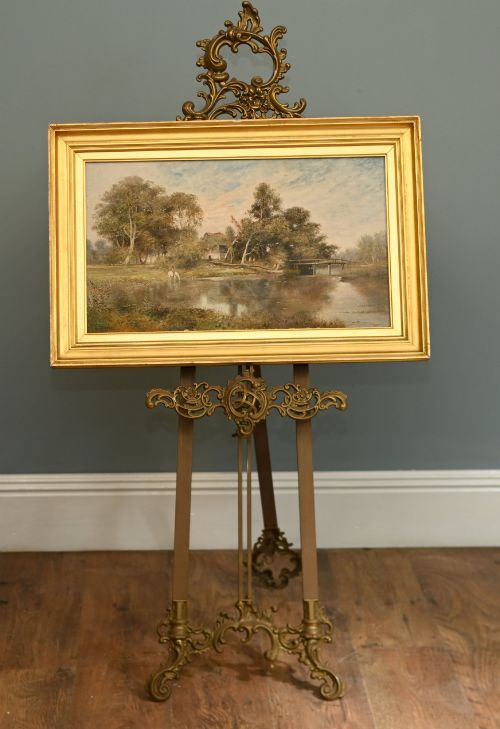
Victorian landscape painting art captures the topography, rural life, and coastal views of Britain and Europe during the nineteenth and early twentieth centuries. These works range from intimate watercolours of Scottish lochs and Thames valley rivers to large oil paintings on canvas depicting harvest fields, woodland paths, and Venetian canals.
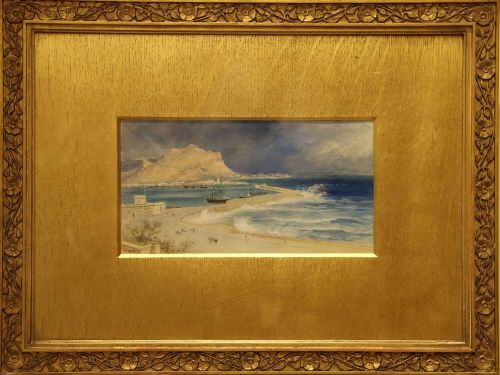
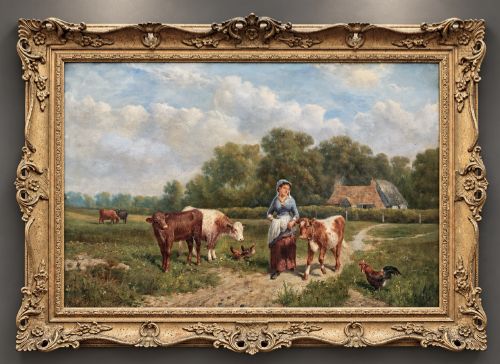
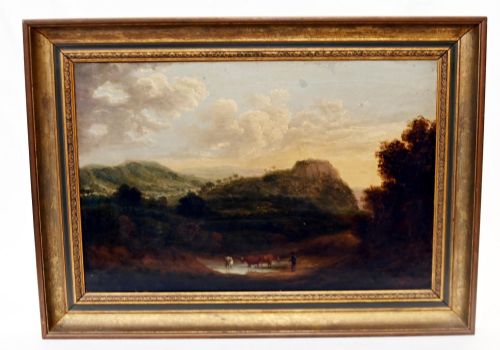
Subjects stretch beyond purely rural vistas into marine scenes featuring fishing boats at St Ives or Brighton, townscapes along the Thames, and pastoral views populated by figures, sheep, and cattle.
How they were made
Pigments were applied as oil on canvas, panel, and board, or as watercolour on paper, capturing varied atmospheric conditions from sunset woodlands to hazy coastal harbours. Canvases and wooden panels provide the sturdy ground necessary for large, heavily worked oil compositions, while paper supports delicate, translucent washes in watercolour works.
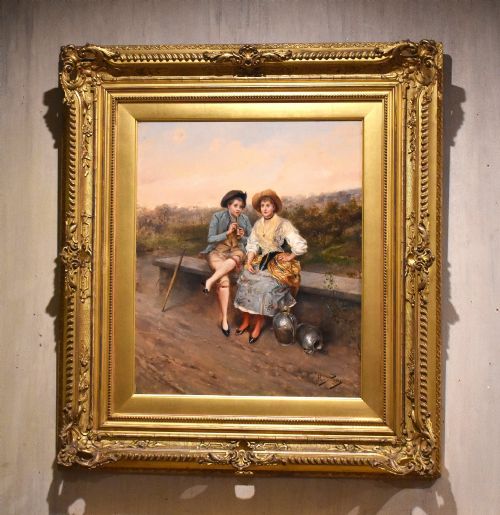
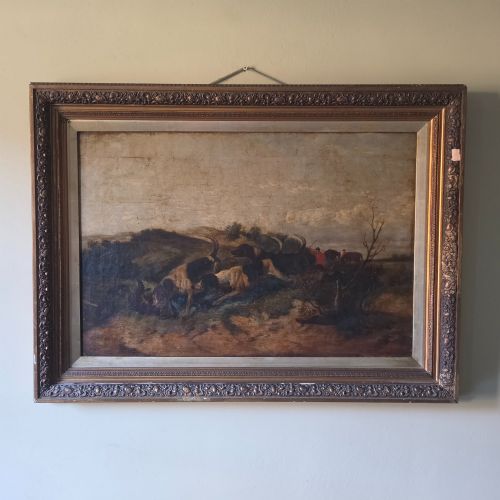
Frames play an integral structural and aesthetic role, frequently utilising carved gilt wood, original plaster gilt moulding, or simple wood surrounds to protect and complement the artwork.
The inventory spans the nineteenth and twentieth centuries, encompassing works created in 1860, 1890, 1900, and the Edwardian era.
What varies in quality
Technical proficiency in handling light, perspective, and atmosphere distinguishes exceptional works from standard decorative pieces. The most accomplished compositions display confident brushwork or precise watercolour washes that convey depth, movement, and distinct topographical character rather than formulaic repetition.
The retention of original framing, clear artist signatures, and well-documented provenance elevate certain works. Condition of the pigment layer, stability of the canvas or paper support, and minimal surface intervention also influence the standing of an individual piece.
Eugène Verboeckhoven·Richard Sebastian Bond·William Beattie-Brown·George Fotherly Hargitt·Thomas Miles Richardson Jnr·James Orrock·William Henry Earp·Richard Principal Leitch·John R Prentice·Alfred Young Nutt·William Howard Hardy·Frederick Marriott·Arthur Wardle·John Horace Hooper·John McDougal·Alfred Fontville de Breanski Jr·EJ Letheren·Edward Mills·William Banks Fortescue·Thomas W Lascelles·Robert A Nottingham·David Bates·Robert John Hammond·Alfred Pollentine·Walter Heath Williams
The Victorian Landscape Painting Art Glossary
- Oil on Canvas
- A painting medium where pigments are suspended in drying oil, typically linseed, applied to a stretched fabric support. This combination allows for rich colour blending and textured impasto work.
- Watercolour
- A painting method where paint is made of pigments suspended in a water-soluble vehicle, traditionally applied to paper. It yields transparent washes of colour that rely on the reflective quality of the underlying paper.
- Giltwood
- Wood, often carved, that has been coated with a thin layer of gold leaf or metallic gilt powder. It forms the decorative surface of traditional picture frames from the period.
- Pastoral
- A genre of art depicting the rural countryside, farms, and rustic life in an idealized or tranquil manner. These scenes often feature shepherds, livestock, and rolling fields.
- Provenance
- The chronological history of the ownership and custody of a work of art. Documented provenance helps establish authenticity and historical context.
Victorian Landscape Painting Art: Frequently Asked Questions
What subjects appear in these paintings?
The works depict a broad spectrum of nineteenth-century life and geography, including Scottish lochs, Welsh mountains, English harvest fields, and coastal harbours with fishing boats. Urban scenes along the river Thames and Venetian waterways also feature prominently among the rural vistas.
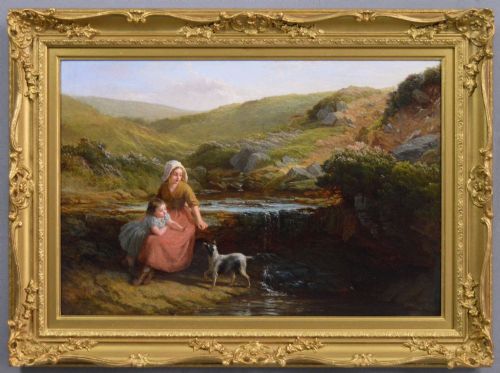
Human figures and livestock frequently animate the landscapes, ranging from solitary shepherds with sheep to bustling seaside gatherings and harvest workers.
How do I distinguish watercolours from oil paintings?
Waterworks are executed on paper supports, often protected beneath glass, displaying translucent washes and the visible texture of the paper beneath the pigment. They tend to have a lighter, more immediate feel suited to topographical recording.
Oil paintings utilise canvas, panel, or board as a ground, carrying thicker layers of pigment that can hold visible brushstrokes and impasto texture. They are typically displayed unglazed in substantial gilt wood frames.
Where were these artists active?
The creators of these works operated primarily within British and European artistic circles, exhibiting at institutions such as the Royal Academy. Many travelled extensively across the British Isles to capture specific regional scenery in Scotland, Wales, and various English counties.
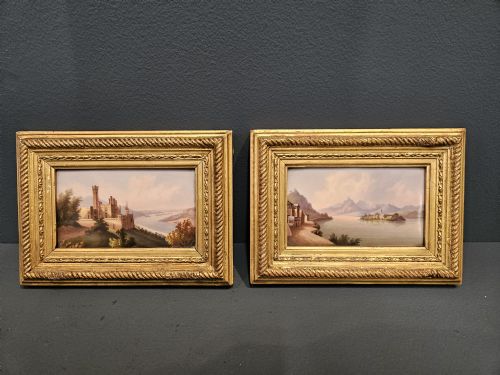
Others ventured to continental locations like Italy and France, recording Italianate ruins, Venetian canals, and European coastal scenes.
How should I care for a Victorian painting?
Protect the artwork from direct sunlight and dramatic fluctuations in temperature and humidity, which can cause canvas to slacken, wood panels to warp, or paper to discolour. Display environments should remain stable to preserve both the support and the pigment layer.
Dust wooden and gilt frames gently with a dry, soft cloth, avoiding liquid cleaners or harsh chemicals near the painted surface.