
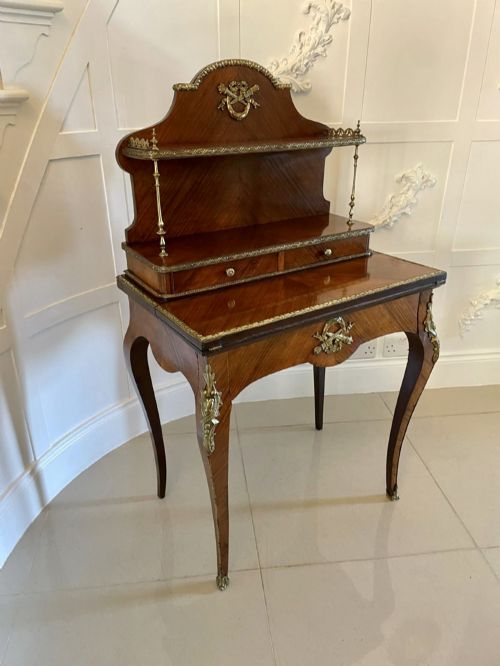
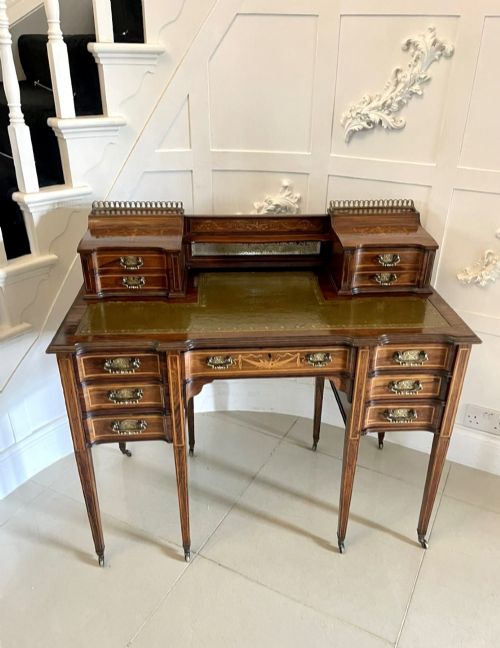
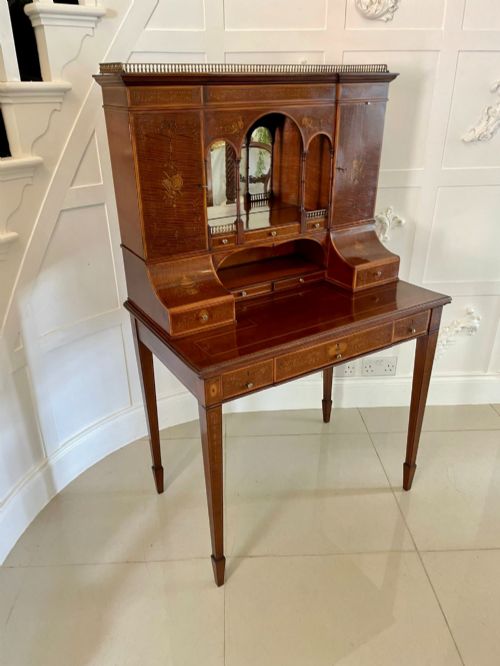
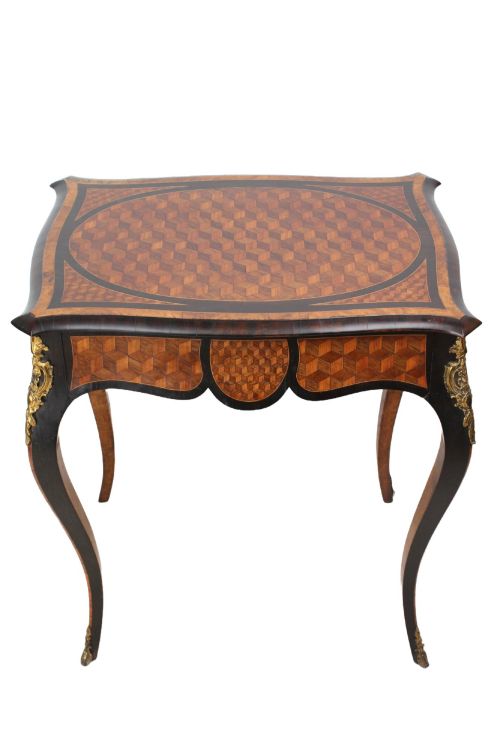
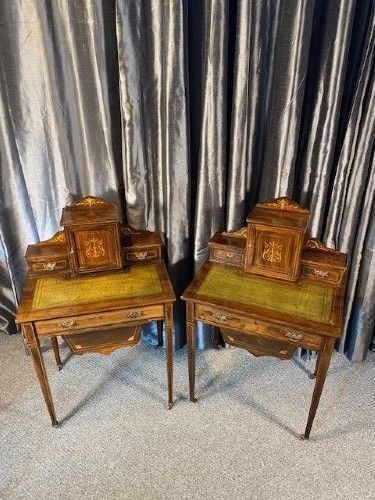
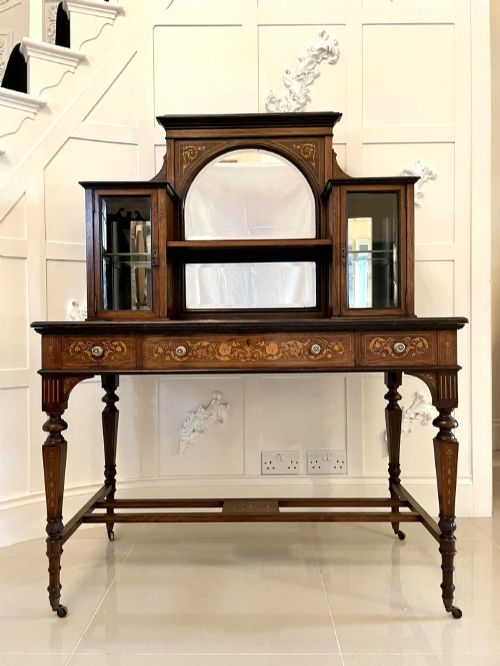

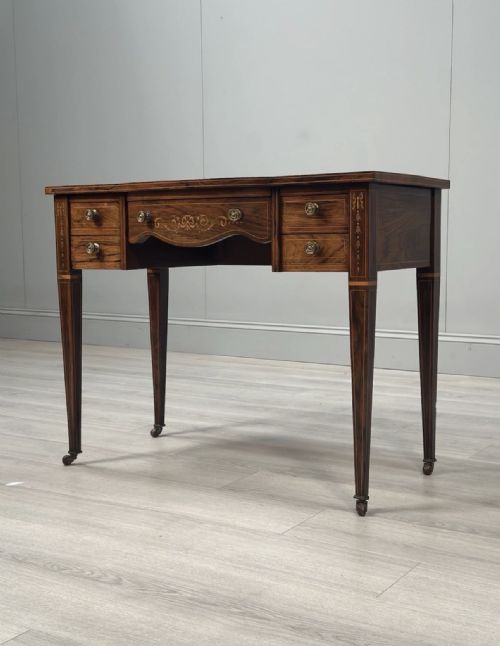
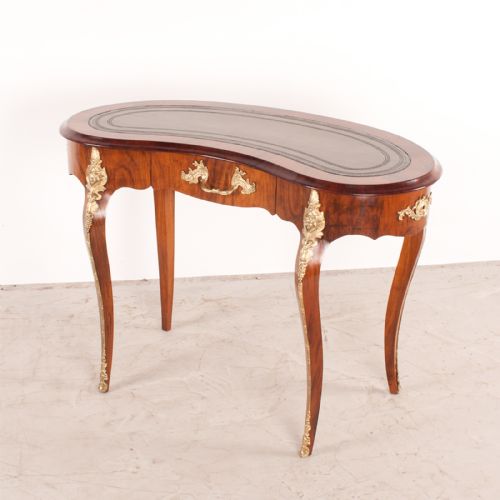

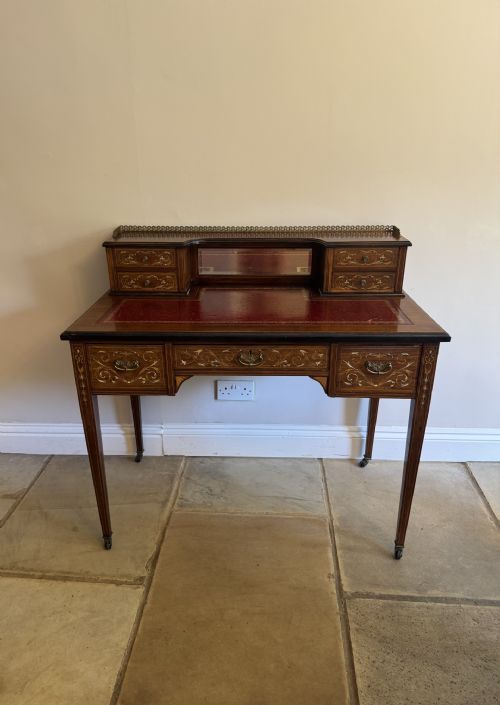
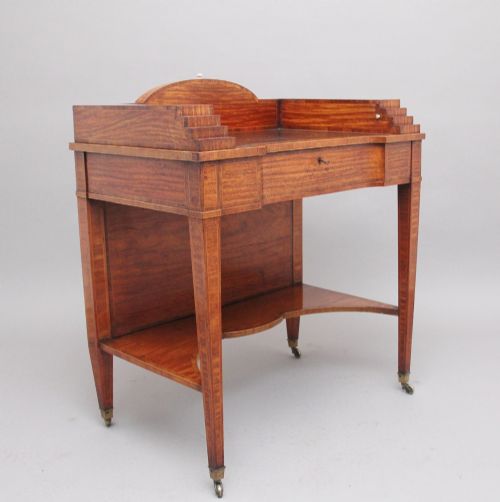
Victorian Ladies Writing Table
A victorian ladies writing table is a refined compact desk designed for correspondence, combining fine cabinet-making with domestic elegance.
Victorian Ladies Writing Table
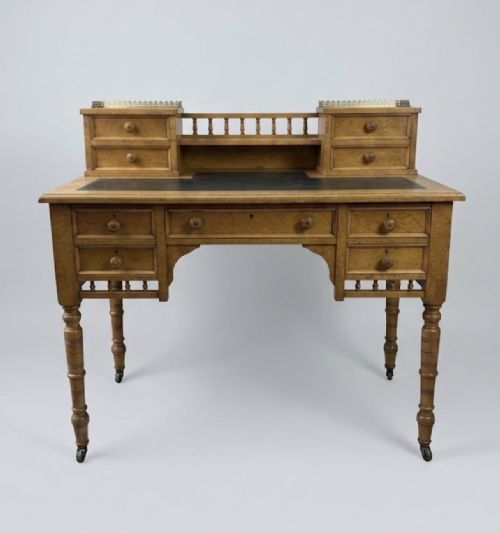
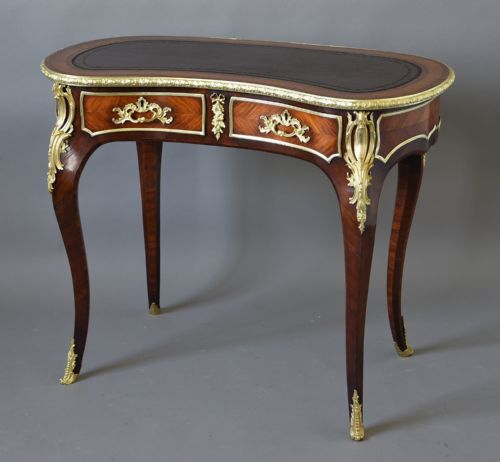
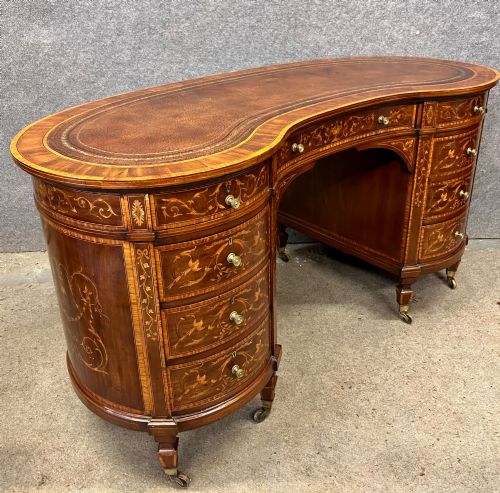
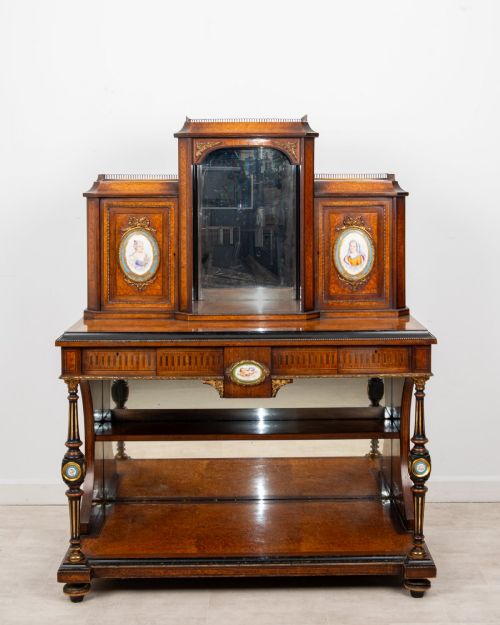
When searching for a victorian ladies writing table, buyers encounter a variety of compact forms including freestanding desks, kidney-shaped tables, and multi-tiered bonheur du jour pieces. These items originate predominantly from the nineteenth century, spanning periods from the eighteen-fifties through to the Edwardian era.
Makers utilised graceful proportions to create pieces suitable for drawing rooms and private boudoirs rather than grand libraries. The surviving examples demonstrate how nineteenth-century cabinet-makers adapted writing furniture for domestic comfort.
How They Were Made
Craftsmen built these desks using sturdy foundational timbers such as mahogany, walnut, and rosewood, often applying decorative veneers of satinwood, kingwood, amboyna, and burr walnut. Surfaces frequently display intricate marquetry and parquetry inlays alongside delicate stringing.
Many examples incorporate cast brass or ormolu mounts, ceramic plaques, and inset tooled leather writing surfaces. Superstructures rely on pigeonholes and lockable drawers fitted with miniature brass hardware.
Listings demonstrate that burr walnut and rosewood form the majority of nineteenth-century writing desk structures.
What Varies in Quality
The standard of a victorian ladies writing table depends upon the selection of timber veneers and the precision of the marquetry inlay. Pieces featuring figured timbers, balanced grain patterns, and hand-cut floral or geometric motifs demonstrate superior workshop execution.
Construction details such as dovetailed drawer linings, original brass locks, and finely cast ormolu mounts separate standard production from master craftsmanship. The integration of decorative elements like porcelain plaques or curved kidney-shaped structures indicates higher ambition in the design.
Maple and Co·JAS Shoolbred·Edwards and Roberts
The Victorian Ladies Writing Table Glossary
- Bonheur du jour
- A small lady's writing desk featuring a tiered superstructure with drawers, shelves, or a cabinet above the main writing surface. This French form became highly popular in English Victorian cabinet-making.
- Marquetry
- Decorative veneer work formed by fitting together small pieces of tinted wood, shell, or ivory to create pictorial or geometric designs. Craftsmen applied these patterns across desk lids and drawer fronts.
- Ormolu
- Gilded bronze mounts and decorative fittings applied to furniture edges and legs. This technique appeared frequently on pieces influenced by French styling.
- Kidney-shaped
- A curved desktop profile resembling a kidney bean, designed to wrap partially around the seated writer. These tables often stand freestanding in the centre of a room.
- Superstructure
- A set of small drawers, pigeonholes, or compartments built onto the top surface of a desk. It provided storage for writing paper and inkwells without enlarging the footprint of the table.
Victorian Ladies Writing Table: Frequently Asked Questions
What is a bonheur du jour?
A bonheur du jour is a small decorative writing desk featuring an upper cabinet or tier of drawers above the main writing surface. These pieces were designed for ladies to manage correspondence in private rooms.
They often incorporate fine marquetry, leather-lined writing surfaces, and delicate cabriole or turned legs. The style reflects French influence on nineteenth-century English furniture production.
Where were these desks used?
These tables were designed primarily for domestic spaces such as drawing rooms, boudoirs, and private dressing rooms. Their compact proportions allowed them to sit comfortably against walls or freestanding in smaller rooms.
Unlike heavy library partners desks, they served personal correspondence rather than business administration. Their decorative appearance ensured they complemented high-status interior decoration.
How do I care for leather desk tops?
Leather writing surfaces require gentle cleaning with a slightly damp cloth followed by a suitable leather dressing or wax to prevent cracking. Avoid using harsh chemical cleaners or excessive water.
Preserving the leather maintains the visual contrast against polished wood veneers and gilt-tooled borders. Regular light maintenance protects the material from drying out.
How do I identify a Sheraton Revival piece?
Sheraton Revival furniture borrows classical eighteenth-century motifs such as satinwood veneers, painted floral swags, and tapered legs. These pieces date from the late nineteenth or early twentieth century.
They replicate the lighter proportions and geometric stringing associated with Thomas Sheraton's original designs. Cabinet-makers used these neoclassical elements to appeal to contemporary buyers seeking historical elegance.