


Victorian Lacquer Box
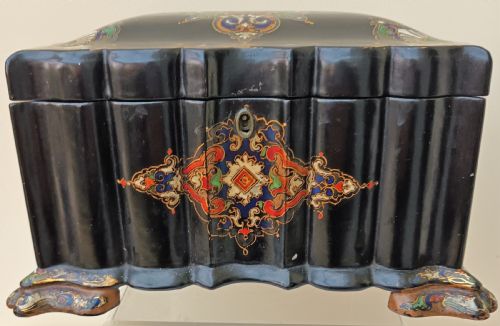
A victorian lacquer box brings hand-painted scenes and lustrous dark surfaces together to hold personal treasures.
Victorian Lacquer Box
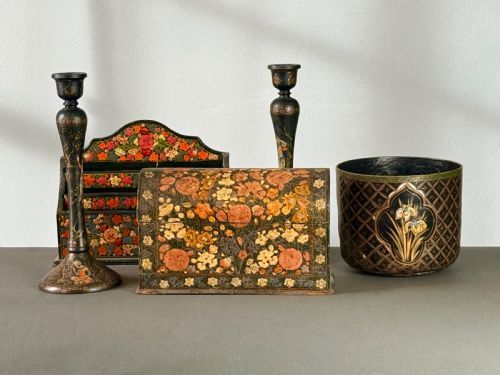
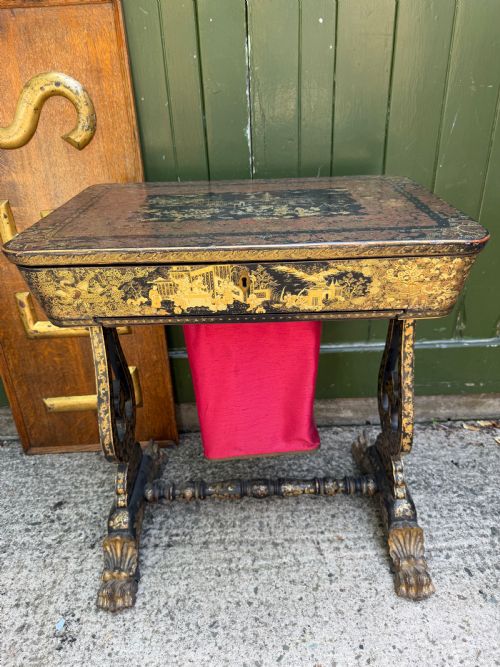
A victorian lacquer box encompasses small personal caskets, tea caddies, writing cabinets, and jewellery boxes created during the nineteenth century. These items emerge from various traditions including English papier-mâché production, Chinese export workshops, Japanese Meiji period craft, and Anglo-Indian design.
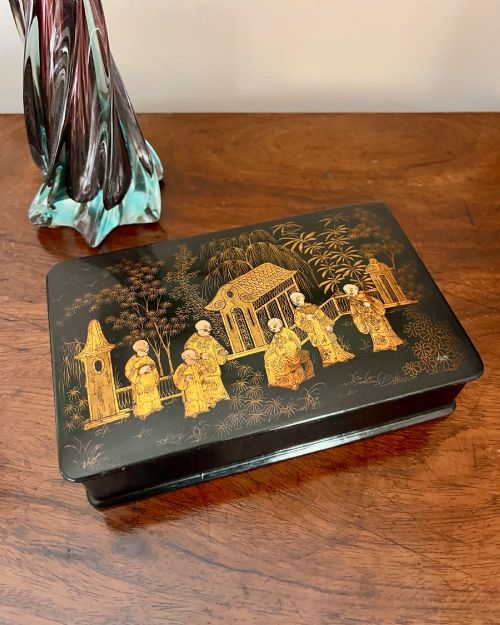
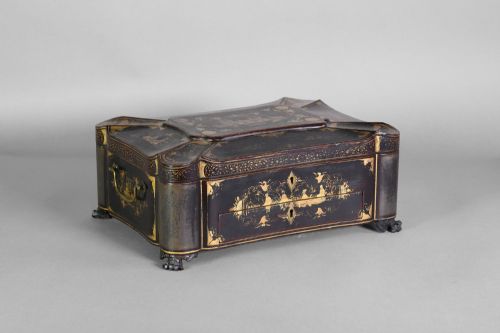
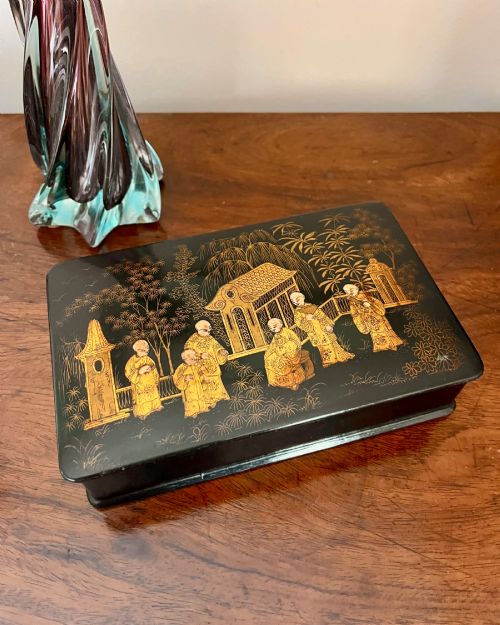
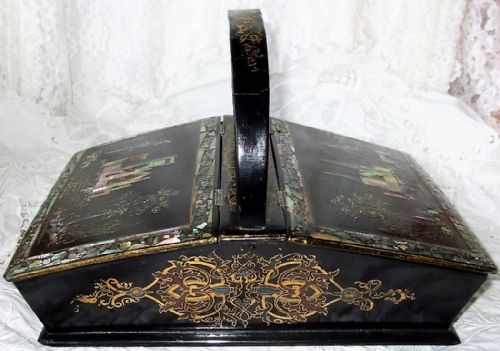
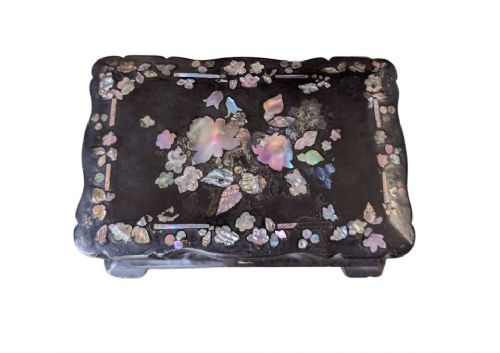
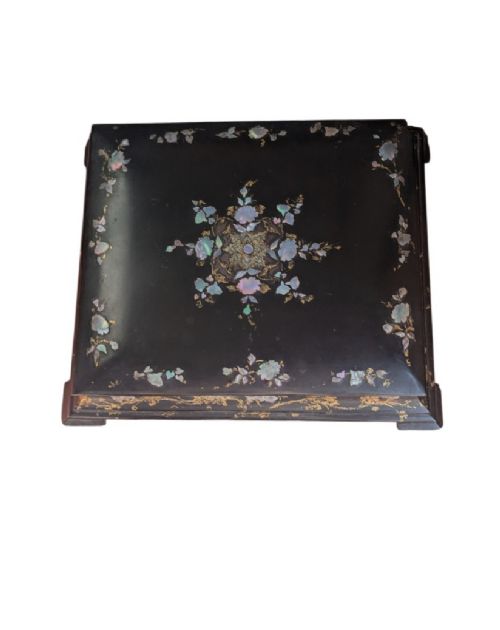
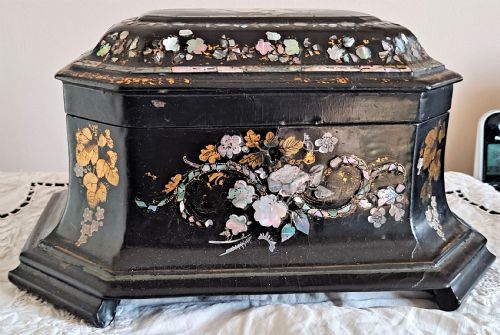
Papier-mâché examples formed in England often feature domed lids, mother-of-pearl inlay, and gilded Chinoiserie decoration suited for holding stationery or needlework. Boxes originating from Asian workshops bring intricate hand-painted motifs on wooden foundations intended for travelling or presentation.
Materials and Technique
Makers constructed these pieces using papier-mâché or timber substrates coated in multiple layers of dark lacquer to achieve a smooth finish. Artisans applied gold leaf, hand-painted pigments, and inlaid mother-of-pearl to ornament the surfaces with botanical or figural scenes.
Interior compartments frequently incorporate fitted wooden trays, silk linings, or brass hardware designed to secure writing instruments, tea, or jewellery. Structural integrity relied on rigid papier-mâché pressing or sturdy woods such as oak.
Listings feature items from the nineteenth century, including specific dates from 1850 to 1880 alongside general Victorian and Meiji periods.
Craftsmanship and Detail
The distinction between standard production and superior examples lies in the execution of the surface decoration and the precision of internal fittings. Hand-painted details with depth and carefully secured mother-of-pearl inlay separate finer pieces from simpler decorative items.
Preservation of the original lacquer coating and the presence of complete interior trays or working locks influence the standing of an object. Superior items maintain crisp gilding and stable papier-mâché or wooden carcasses without extensive restoration.
Jennens & Bettridge
The Victorian Lacquer Box Glossary
- Papier-mâché
- A composite material made from paper pulp or layers of paper bound with glue, pressed into moulds, and dried to form a rigid base for lacquering. This technique allowed English makers to shape smooth boxes and tables.
- Chinoiserie
- European interpretations of Chinese and East Asian artistic styles, frequently applied in gold paint on black lacquer surfaces. It depicts traditional landscapes, figures, and pavilions.
- Mother-of-pearl
- The iridescent internal layer of mollusc shells, shaped into thin pieces and embedded into lacquer surfaces to catch the light. This inlay creates shimmering highlights on floral and geometric designs.
- Tea caddy
- A container originally built to store dry tea leaves, often featuring internal lidded compartments and foil linings. These boxes were key social objects in nineteenth-century drawing rooms.
- Meiji period
- The era in Japanese history spanning from 1868 to 1912, known for export lacquerware sent to Western markets. Pieces from this era display precise craftsmanship and distinct decorative motifs.
Victorian Lacquer Box: Frequently Asked Questions
What were victorian lacquer boxes used for?
These boxes served specialised domestic functions including storing loose tea leaves, holding writing stationery, and keeping jewellery secure. Interiors often featured removable trays and compartments tailored to these exact pastimes.
Larger versions functioned as sewing tables or desktop cabinets while smaller caskets sat on dressing tables for personal trinkets. Their decorative exteriors allowed them to remain on display in nineteenth-century reception rooms.
How do I care for lacquer boxes?
Keep these items away from direct sunlight and sources of heat to prevent the lacquer from cracking or warping. Dust the surfaces gently with a dry, soft cloth without applying modern liquid polishes.
Maintain a stable room humidity because extreme changes can cause papier-mâché bases and mother-of-pearl inlay to lift. Handle lids and internal trays carefully to protect original hinges and fragile corners.
How are English and Japanese pieces different?
English examples commonly utilise pressed papier-mâché carcasses adorned with inlaid mother-of-pearl and painted Chinoiserie motifs. They frequently take the form of tea caddies, stationery boxes, and needlework caskets.
Japanese pieces from the Meiji period are typically built on wooden foundations with distinct lacquer techniques and pictorial styles. They often present as table boxes, vanity cases, and presentation pieces reflecting Eastern traditions.
What is papier-mâché?
Papier-mâché is a durable composite material formed from layers of paper mixed with glue and pressed into rigid moulds. Once dried, this substance provided a smooth, stable ground for dark lacquer finishes.
This technique enabled Victorian manufacturers to shape complex curved lids and bowls without relying solely on traditional carpentry. It formed the structural base for many decorative boxes and small tables.