
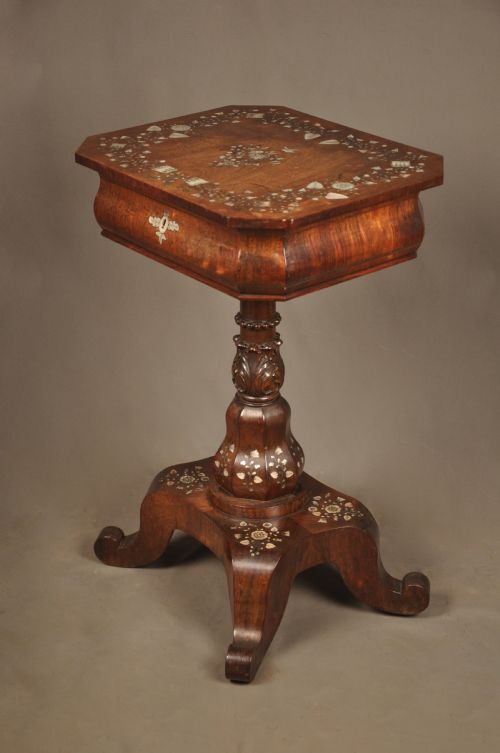
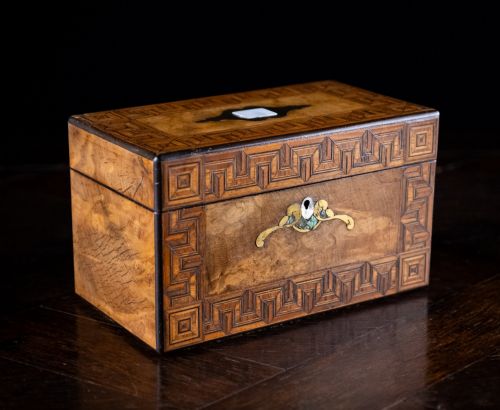
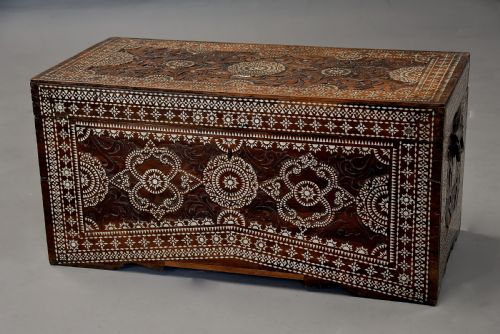
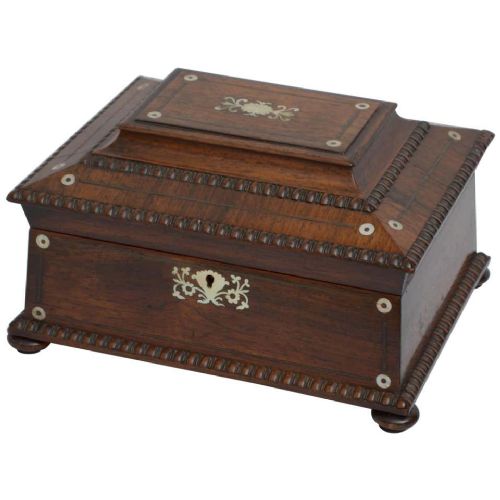


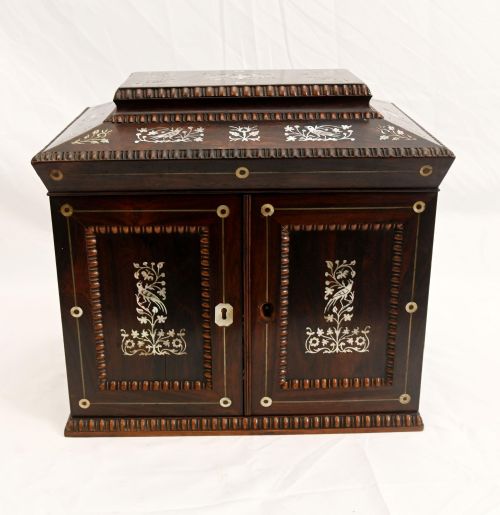

Inlaid Pearl Box
An inlaid pearl box combines lustrous marine shell with rich timbers to hold small treasures.
Inlaid Pearl Box
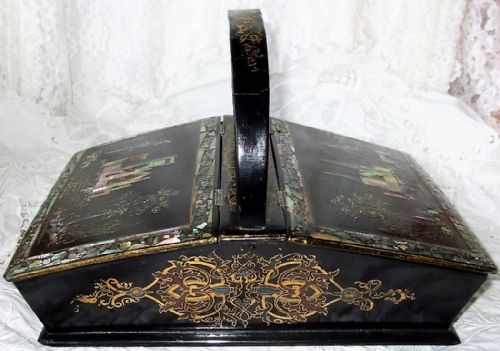
When you search for an inlaid pearl box, you encounter personal containers designed for correspondence, sewing, and jewellery. The selection includes writing slopes, tea caddies, card cases, and workboxes spanning the Regency, William IV, and Victorian eras.
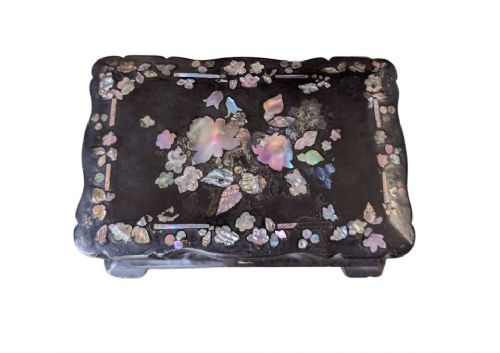
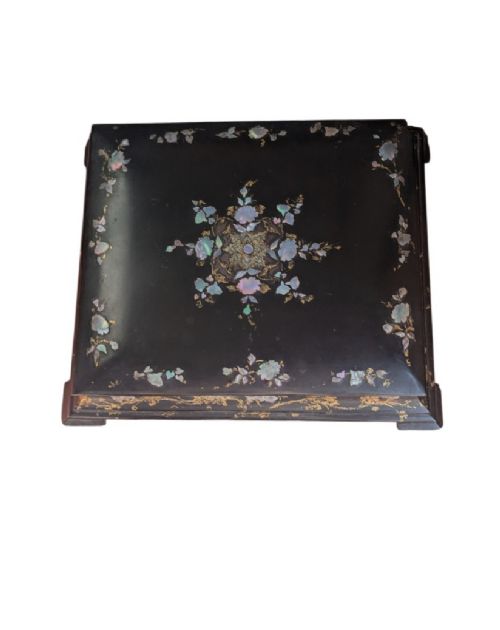
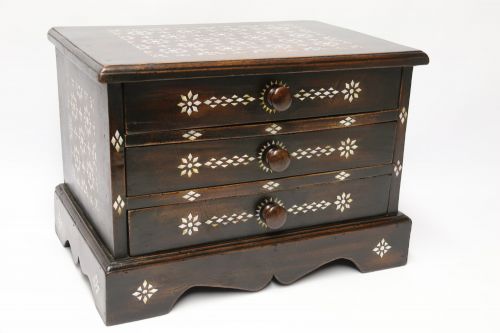
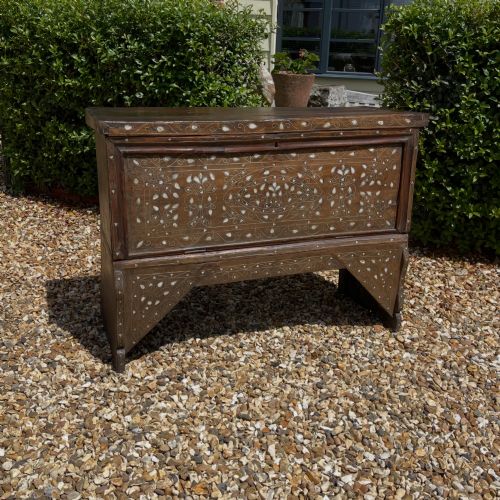
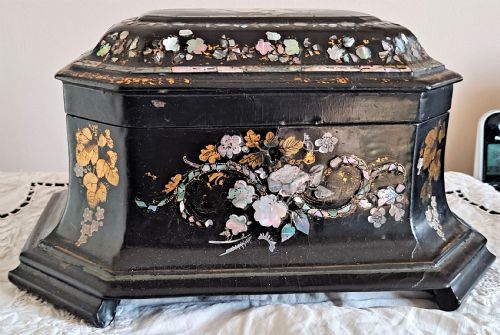
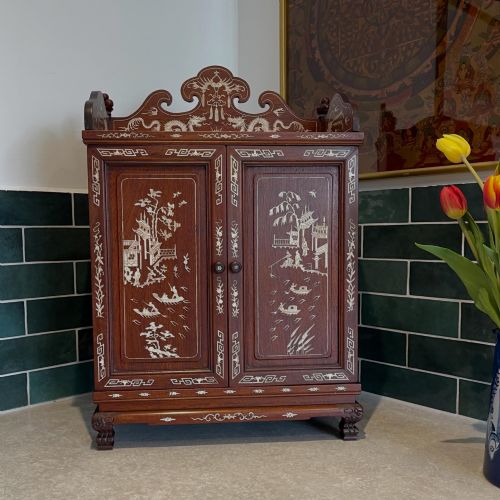
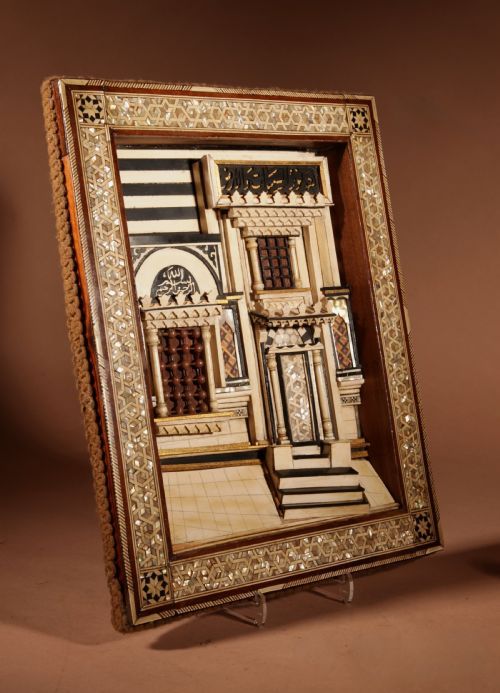
English examples typically pair rosewood, coromandel, or papier-mâché with geometric shell pieces. Alongside these appear Middle Eastern and Asian trunks, chests, and occasional tables featuring intricate mosaic work.
The majority of pieces hail from nineteenth-century workshops in Britain, supplemented by Syrian and Chinese productions. These range from small pocket receptacles to substantial fitted vanity chests.
Materials and Technique
Craftsmen inset thin plates of mother-of-pearl, abalone, and bone into routed channels within dense hardwoods like rosewood, walnut, and coromandel. Papier-mâché examples combine moulded paper pulp with lacquer and shell elements.
Engraved details often accent the shell components, while brass stringing, silver wire, and pewter inlay frequently accompany the pearl. Interiors typically feature velvet linings, fitted compartments, mirrors, and removable trays.
Some nineteenth-century letter boxes feature pivoting internal panels marked simply 'Answered' and 'Unanswered'.
Assessing Quality
The distinction between ordinary and exceptional pieces rests on the precision of the joinery and the complexity of the mosaic patterns. Finer items display tightly fitted shell segments with minimal filler and delicate hand-engraving across the surface.
Interior fittings strongly influence value, with complete, original velvet trays, working locks with keys, and matching glass inkwells marking superior examples. The structural stability of the timber carcase and the retention of every pearl fragment also dictate the standing of a piece.
George Austin, Dublin·Julius Sebert·Tahan, Paris·J. Newman
The Inlaid Pearl Box Glossary
- Writing slope
- A portable desk with a hinged, slanted lid that opens to reveal a writing surface, pen trays, and inkwells. These boxes often incorporate secret compartments beneath the stationery storage.
- Tea caddy
- A lidded container built to store tea leaves safely away from moisture and light. Many period versions feature interior wooden lids and lead-lined compartments.
- Papier-mâché
- A durable composite material made from paper pulp mixed with glue, resin, and binders, then pressed and lacquered. It provides a smooth dark ground that highlights iridescent shell inlays.
- Coromandel
- A dense, heavily figured tropical hardwood featuring dark brown colouring with dramatic black streaks. Cabinetmakers reserved this prized timber for luxury boxes and desk accessories.
- Abalone
- A marine mollusc shell known for its deep, swirling greens, blues, and purples. It appears alongside standard white mother-of-pearl to create contrasting tonal effects.
Inlaid Pearl Box: Frequently Asked Questions
What were writing slopes used for?
These portable desks provided a stable angled surface for writing letters before the widespread use of fitted household desks. They kept stationery, quills, and ink securely contained during travel.
Inside, compartments held stamps, sealing wax, and folded paper. Wealthy owners utilised them in bedrooms, drawing rooms, and carriages.
How do I care for my box?
Keep wooden and papier-mâché boxes away from direct sunlight and sudden temperature changes to prevent the timber from splitting. Dust gently with a dry, soft cloth and avoid chemical polishes.
Condition the mother-of-pearl and wood surfaces sparingly with appropriate microcrystalline wax if the material appears dry. Ensure the environment maintains stable humidity.
Are keys usually included?
Period keys are uncommon because locks were frequently misplaced over generations. Many boxes retain their original brass or steel locks even when the operating key is missing.
A specialist can sometimes source a replacement key or adjust the internal mechanism if necessary.
How do I date an inlaid box?
Dating relies on timber choices, construction methods, interior hardware, and stylistic cues. Regency and William IV pieces often favour rosewood with delicate shell motifs, while later Victorian items introduce burr walnut and coromandel.
Paper linings, hinge types, and maker signatures stamped on velvet or locks also offer reliable chronological markers.