



Victorian Knopped Candlesticks
Victorian knopped candlesticks bring weight and steady form to a room, cast in heavy metals and shaped with distinct swollen joints along the stem.
Victorian Knopped Candlesticks
Victorian knopped candlesticks are lighting items produced during the nineteenth century and the early twentieth century, characterised by decorative projections known as knops positioned along the shaft. The examples found here span several decades, reaching from the middle Victorian years through the Edwardian period and into the nineteen thirties.
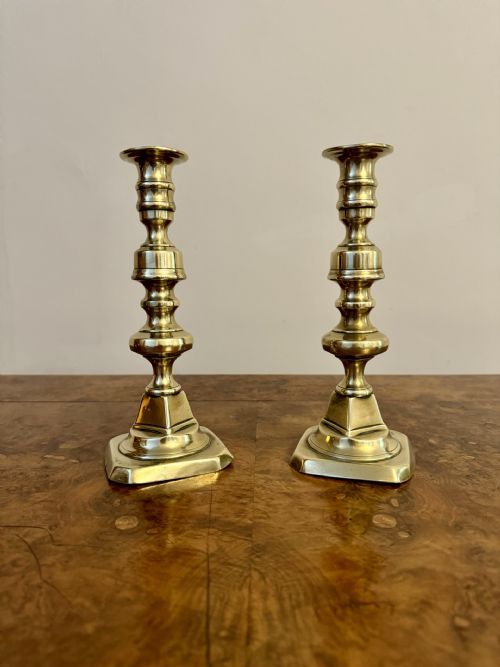
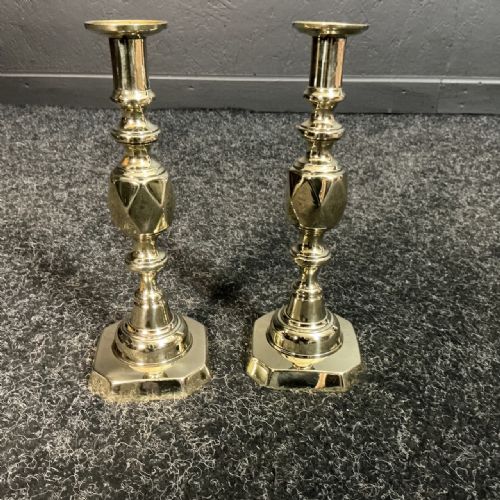
Most pieces on this page are formed from brass, often appearing as matched pairs with baluster or shaped columns. Specific named pattern types such as the King of Diamonds, Queen of Diamonds, Ace of Diamonds, and Beehive dominate the selection, alongside ecclesiastical and Arts and Crafts variants.
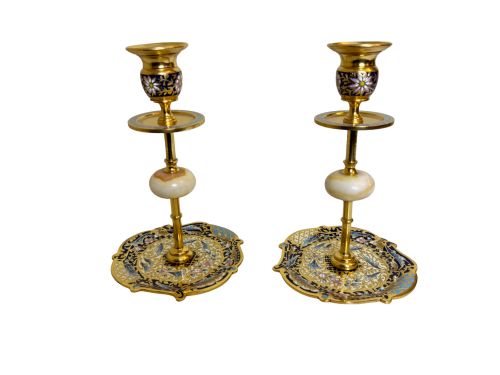
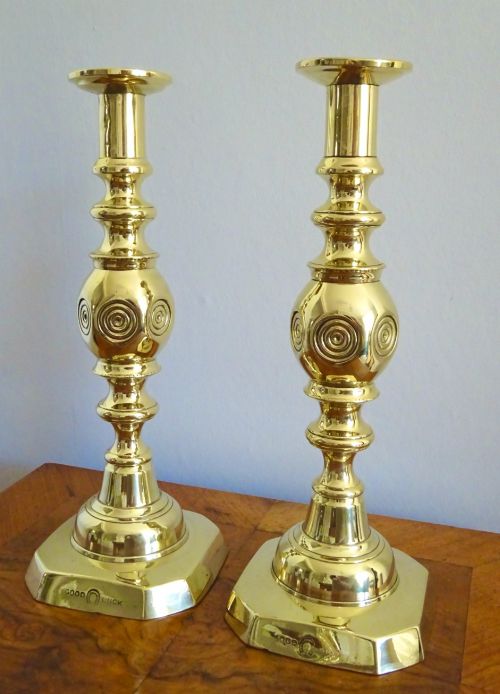
Makers such as James Clews contributed stamped examples, while others carry descriptive names like the good luck design. Collectors encounter both simple domestic brass pairs and more elaborate French Second Empire or Gothic Revival creations incorporating onyx, gilt bronze, and champleve enamel.
Distinctions in quality
Quality rests in the crispness of the casting and the heft of the metal used in the shaft and base. Plain domestic pairs rely on solid proportions, whereas finer examples display detailed champleve enamel work or combination materials like onyx and gilt bronze.
The presence of maker stamps, such as those by James Clews, or specific named patterns like the Beehive and card suits add distinction. Proportion and scale also divide standard production items from large, tall pairs designed for church altars or grand reception rooms.
Victorian Knopped Candlesticks Retail Price Guide 2026
Typical asking prices for victorian knopped candlesticks among the pieces listed under this phrase on Sellingantiques today, from the lower quarter to the upper quarter. They describe what is for sale here now, not the wider market.
Listings span from eighteen-fifty through nineteen-thirty, with brass as the dominant material alongside champleve enamel, onyx, and gilt bronze.
James Clews
The Victorian Knopped Candlesticks Glossary
- Knop
- A rounded knob or swelling on the stem of a candlestick. This decorative protuberance breaks up the vertical line and provides a secure grip.
- Baluster
- A moulded column shape that swells near the base and tapers toward the top. It forms the classic silhouette for nineteenth-century metal candlesticks.
- Champleve enamel
- A technique where troughs are dug into a metal surface and filled with vitreous enamel powder before firing. The resulting coloured panels decorate the body of the piece.
- Ecclesiastical
- Design style associated with churches and religious spaces. These candlesticks tend to be taller and heavier than domestic variants.
- Gilt bronze
- Bronze coated with a thin layer of gold through fire gilding or electroplating. This finish gives a rich, golden sheen to decorative metalwork.
Victorian Knopped Candlesticks: Frequently Asked Questions
What are Victorian knopped candlesticks?
Victorian knopped candlesticks are nineteenth-century metal lighting stands featuring one or more swollen joints, or knops, along the central column. They were produced primarily in brass for domestic use, though variations include gilt bronze and enamel.
Most items seen here are paired objects, often bearing specific Victorian pattern names like the Beehive or card suits. They reflect the diverse manufacturing styles of the period, ranging from plain domestic forms to ornate Gothic Revival designs.
How do I identify a Beehive candlestick?
Beehive candlesticks are recognised by the series of stacked, rounded rings on the stem that resemble the traditional skep beehive shape. They date predominantly to the late nineteenth century and stand taller than standard domestic pairs.
The stacked rings serve as the primary knops on the shaft, creating a distinctive ribbed silhouette in polished brass.
Were these candlesticks used for lighting?
Yes, these items served as practical light sources in homes and churches before the widespread adoption of electric lighting. The sockets at the top were sized to hold tallow candles or beeswax tapers securely.
Heavier pairs were placed on dining tables and mantelpieces, while ecclesiastical versions stood on altars to provide ceremonial illumination during services.
How do I clean antique brass candlesticks?
Cleaning antique brass requires a gentle approach to preserve the aged patina that accumulates over generations. Harsh chemical polishes can strip away the authentic surface character developed since the Victorian era.
Warm soapy water and a soft cloth are generally sufficient to remove dust and surface grime without altering the metal.
What is the difference between domestic and ecclesiastical candlesticks?
Domestic candlesticks are proportioned for home use on tables and sideboards, featuring standard brass or card suit designs. Ecclesiastical candlesticks are typically larger and heavier, designed for church altars and often incorporating gilt brass or Gothic Revival details.
Ecclesiastical pairs are built to be visible from a distance within a large room or hall.