

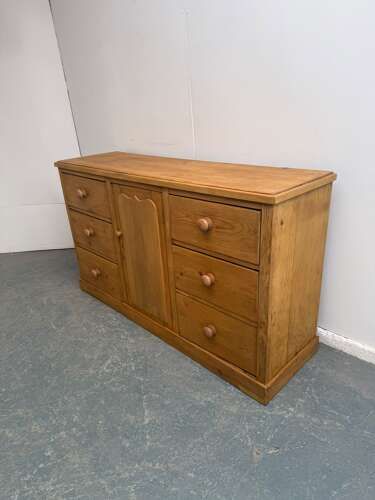
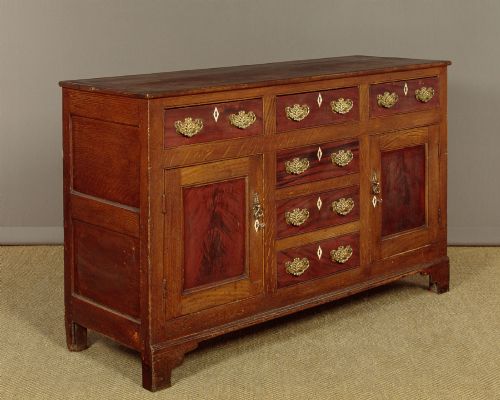
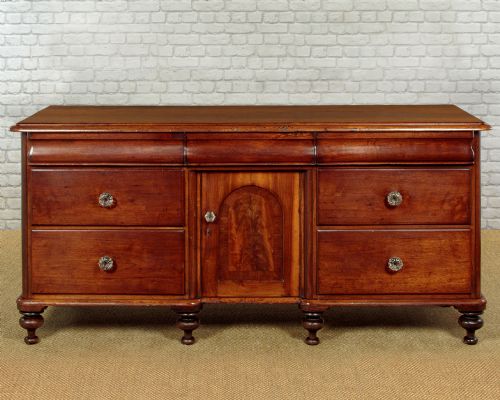
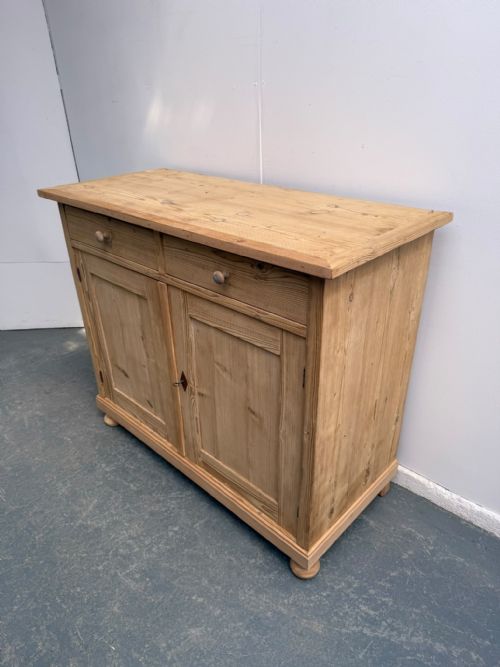



Victorian Kitchen Server
A victorian kitchen server is a sturdy utilitarian base built for heavy food preparation, offering enduring storage for domestic spaces.
Victorian Kitchen Server
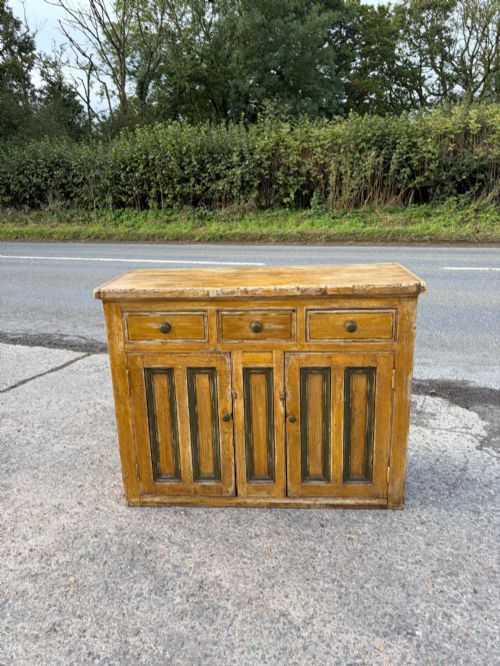
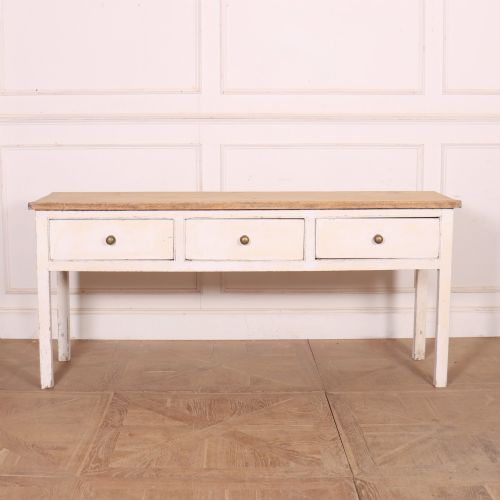
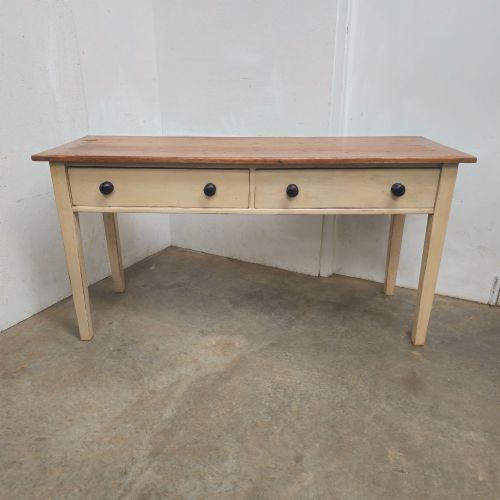
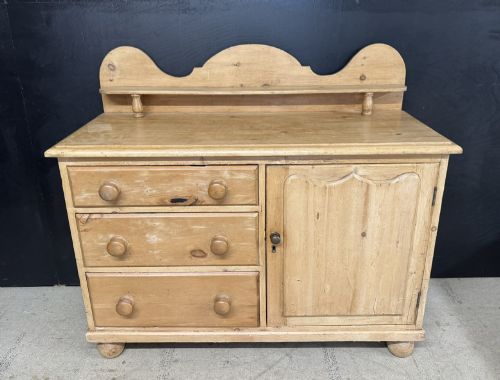
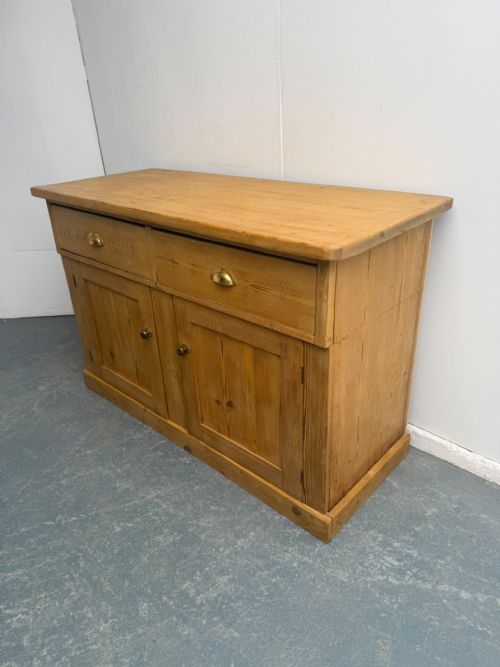
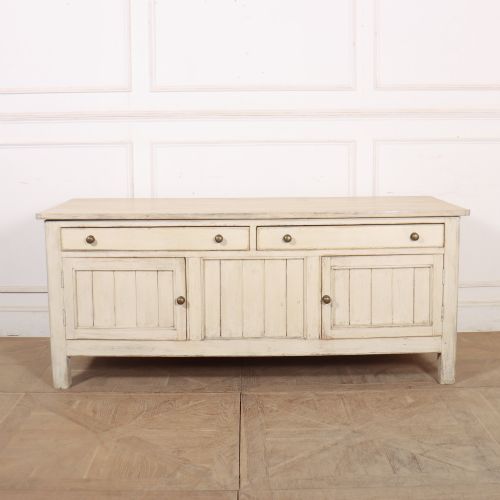
When buyers search for a victorian kitchen server, they encounter robust domestic furniture designed for busy food preparation and storage. The pieces on this page are predominantly nineteenth-century pine dresser bases, sideboards, and work tables originating from English country houses and farmhouses.
Most examples feature a combination of drawers and cupboards beneath a thick wooden top, occasionally accompanied by a lower pot shelf. Variations range from unpainted waxed timber to surfaces retaining traces of original paint or traditional scumbling.
Alongside standard pine constructions, forms span smaller side tables, bread prep surfaces, and occasional oak or mahogany variants. These items bring functional surface area and historic character directly into modern cooking and dining spaces.
Materials and construction methods
Makers relied heavily on solid pine, pitch pine, and occasional hardwoods like oak, walnut, and mahogany for structural resilience. Timber was frequently joined with traditional methods to withstand the daily pressures of domestic food preparation.
Surfaces were either left bare for waxing or finished with paint and protective coatings. Metal elements such as brass and iron appeared primarily on hinges, drawer pulls, and internal fixings.
Constructed by regional craftsmen and joiners, these bases prioritise utilitarian strength over ornate flourish. Carved details remain sparse, appearing occasionally on floral motifs or structural borders.
Victorian Kitchen Server Retail Price Guide 2026
Typical asking prices for victorian kitchen server among the pieces listed under this phrase on Sellingantiques today, from the lower quarter to the upper quarter. They describe what is for sale here now, not the wider market.
Several servers retain flour dust wedged deep inside nineteenth-century dovetail joints from decades of farmhouse baking.
Factors of distinction
The standard of a piece rests heavily on the integrity of its timber and the retention of original surface finishes. Retaining early or original paint layers elevates an item above standard stripped examples.
Proportion and scale dictate desirability, particularly where deep drawers, bread slides, or lower pot shelves remain intact. Alterations to height or replaced timber diminish the historic utility of the server.
The Victorian Kitchen Server Glossary
- Dresser base
- The lower portion of a kitchen dresser featuring cupboards and drawers beneath a flat top. It functions independently as a sideboard or preparation table.
- Pitch pine
- A dense, resinous softwood commonly utilised in nineteenth-century utilitarian furniture for its exceptional durability. It takes a hard-wearing waxed finish.
- Bread slide
- A pull-out wooden shelf integrated into the framework of a dresser base. It provided additional surface area for kneading or cooling baked goods.
- Scumbled
- A decorative paint technique mimicking the grain of more expensive timber or creating a mottled texture. It was frequently applied to Scottish and English country furniture.
- Chiffonier
- A compact sideboard featuring enclosed cupboards beneath a drawer. Examples from the nineteenth century offer versatile storage in tighter domestic layouts.
Victorian Kitchen Server: Frequently Asked Questions
What is a victorian kitchen server used for?
These pieces served as heavy-duty workbenches and storage units for food preparation in nineteenth-century domestic spaces. Cupboards and drawers held dry goods, utensils, and linens while the top surface accommodated food assembly.
Today, they function as kitchen islands, sideboards, or hallway consoles. Their sturdy timber tops easily handle modern cooking appliances and daily domestic use.
How do I tell if a piece is nineteenth century?
Examine the timber selection, construction joints, and overall wear patterns across the frame. Nineteenth-century pieces typically utilise solid pine, hand-cut dovetails in the drawers, and aged hardware.
Tool marks and natural timber shrinkage provide reliable indicators of age. Machine-cut components and modern adhesives generally point to later reproductions.
Where were these servers originally made?
The majority originate from rural English country houses, farmhouses, and regional workshops. Carpenters built them locally using accessible regional timbers like pine and oak.
Scottish and Hungarian variants also appear, showcasing distinct local painting techniques and regional joinery styles. Each piece reflects the specific domestic needs of its geographic origin.