



Honey Pine Server
A honey pine server is a practical surface for a dining room or kitchen, bringing warmth and utility from the nineteenth century straight into a modern home.
Honey Pine Server
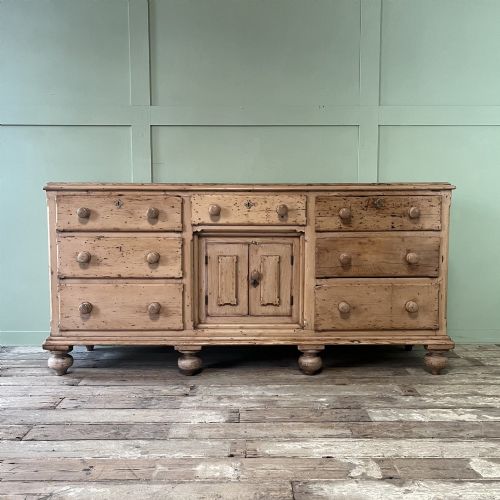
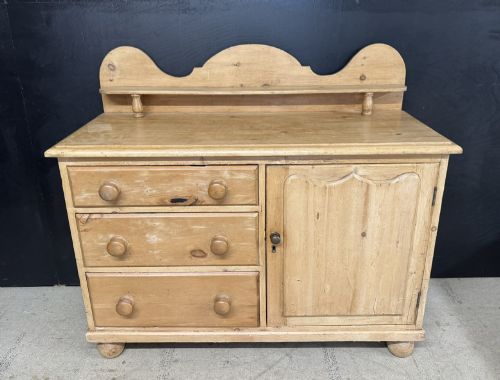
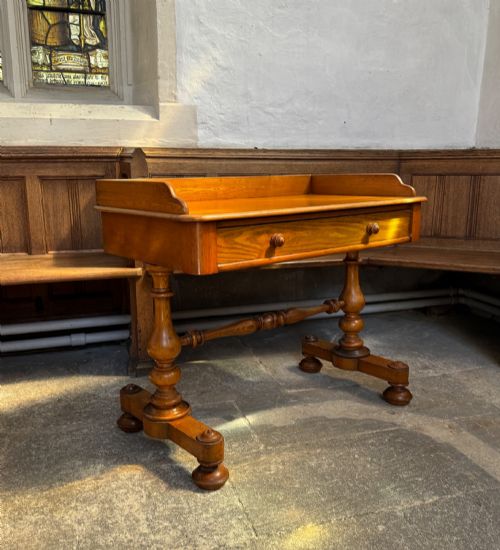
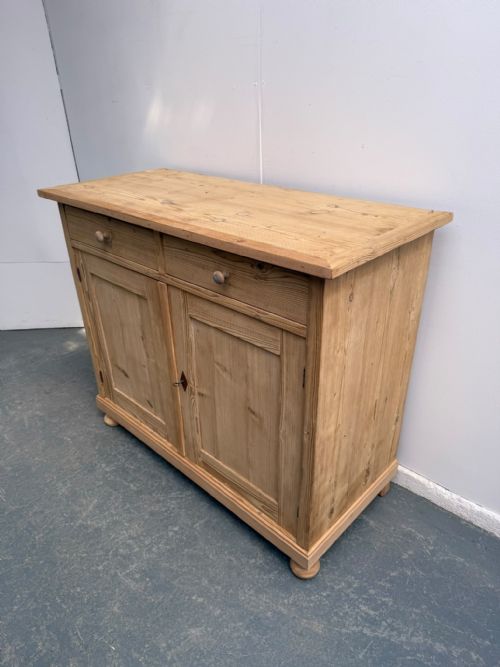
When you search for a honey pine server, you encounter robust storage furniture primarily from the Victorian era and the nineteenth century. These forms include dresser bases, sideboards, dairy tables, and console serving tables built for domestic service.
The most common examples on this page are Victorian pine dresser bases and farmhouse sideboards, often featuring useful drawers, cupboards, and pot shelves. Their honeyed tones come from aged timber that has acquired a rich patina over decades of use.
Origins span simple rustic farmhouse pieces to more structured Georgian bowfront designs and Gothic Revival serving tables. Each object served a functional role in food preparation, storage, or display before finding a place in contemporary interiors.
How they were made
Construction relies heavily on solid pine and pitch pine, selected for durability and worked with hand tools to create sturdy frames, panelled doors, and dovetailed drawers.
Hardware such as brass handles, ceramic pulls, and iron hinges provide functional accents that reflect the period of manufacture and the practical demands of daily use.
Finishes vary from bare scrubbed wood to traditional wax treatments or historic paint layers, allowing the natural grain and warm colour of the timber to remain prominent.
Honey Pine Server Retail Price Guide 2026
Typical asking prices for honey pine server among the pieces listed under this phrase on Sellingantiques today, from the lower quarter to the upper quarter. They describe what is for sale here now, not the wider market.
Listings span the Georgian and Victorian eras, incorporating standard pine, pitch pine, brass, ceramic, and iron across various sideboards and dressers.
What varies in quality
Quality rests in the integrity of the timber selection, where dense pitch pine or well-figured standard pine shows superior durability and a more pleasing grain pattern.
Joinery techniques define the better pieces, distinguished by hand-cut dovetails in drawers and sturdy frame construction that survives centuries of domestic service without losing stability.
Proportion and detail separate standard utility items from finer examples, such as those featuring Georgian bowfronts or Gothic Revival mouldings that require greater skill from the maker.
The Honey Pine Server Glossary
- Dresser base
- A low wooden storage unit featuring drawers and cupboards beneath a flat top surface, typically used in kitchens or dining rooms for food preparation and tableware storage.
- Pitch pine
- A dense, resinous softwood sourced from pine trees, known for its exceptional durability and prominent, decorative grain patterns often utilised in heavy furniture.
- Pot shelf
- A low, open lower shelf incorporated into the base of a sideboard or dresser, originally designed to hold heavy cooking pots and large kitchen utensils.
- Bowfront
- A curved convex front profile found on certain sideboards and cabinets, requiring specialist woodworking skill to shape the timber and drawers accurately.
Honey Pine Server: Frequently Asked Questions
What is a honey pine server used for?
These pieces function primarily as sideboards, serving tables, or storage consoles in kitchens and dining spaces. They provide a sturdy top surface for food preparation or serving alongside generous drawer and cupboard space.
Historically, they organised tableware, linens, and provisions in busy domestic settings. Today, they bring practical surface area and traditional storage to modern rooms.
How do I date a Victorian pine sideboard?
Dating relies on examining construction methods, timber types, and hardware fixtures. Hand-cut dovetails, timber shrinkage patterns, and original brass or ceramic handles offer reliable clues to the period.
Stylistic markers also help, as Georgian pieces display different proportions compared to Victorian Gothic Revival or later nineteenth century farmhouse designs.
Are these tables made from solid pine?
The listings consist entirely of solid timber construction, utilising pine and pitch pine rather than modern manufactured boards or veneers.
This solid construction allows the wood to be scrubbed, waxed, or painted over generations while maintaining structural integrity.
How do I care for antique pine furniture?
Maintaining antique pine involves regular dusting with a dry cloth and occasional application of traditional beeswax to nourish the timber and preserve the finish.
Keeping the furniture away from direct heat sources and strong sunlight prevents the wood from drying out or warping over time.