
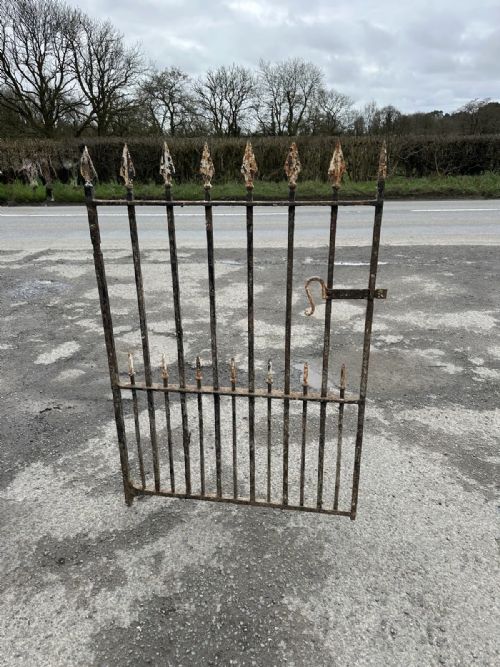


Victorian Iron Gate
These Victorian iron gate examples bring architectural strength and period character to boundaries, built from heavy metals designed to outlast their makers.
Victorian Iron Gate
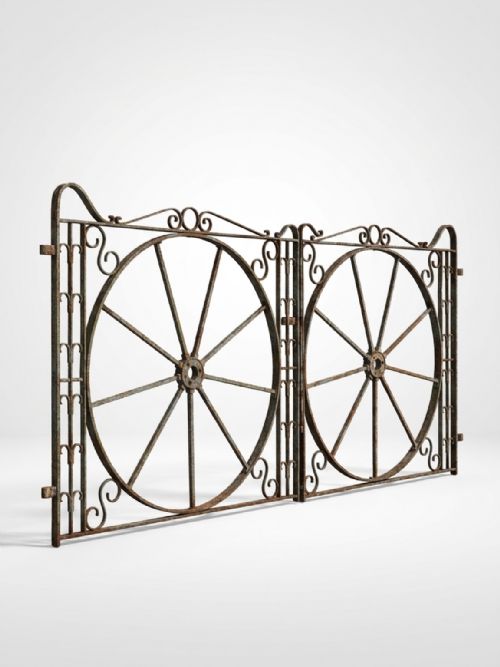
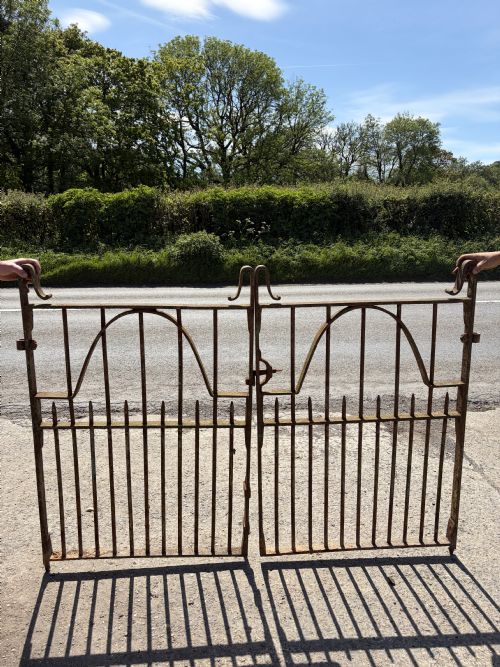
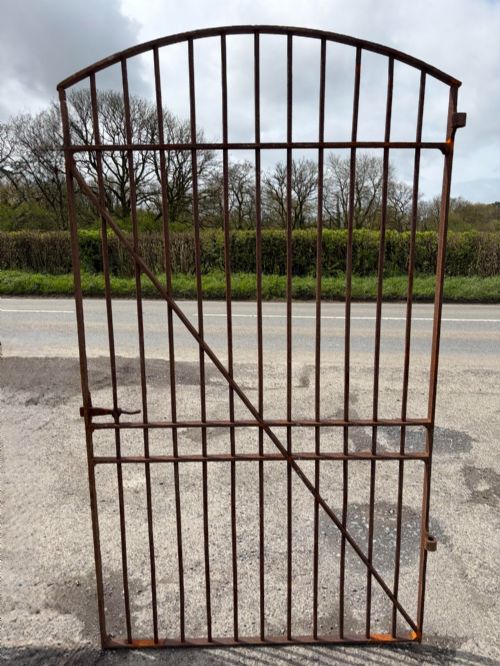
A victorian iron gate provides a substantial physical barrier for gardens, courtyards, and grand estate entrances. These architectural salvage pieces range from single pedestrian access points to monumental driveway pairs.
How they were made
Blacksmiths forged these structures primarily from wrought iron, valuing the metal for its fibrous strength and ability to be shaped while hot. Cast iron elements frequently provided decorative finials and rigid structural components.
Makers joined heavy iron bars using traditional riveting techniques and collars rather than modern welding. Protective layers of paint historically shielded the metal from the elements, often surviving in weathered states today.
The inventory records nineteenth century wrought iron alongside cast iron components, copper lanterns, and painted railway signage from the Edwardian era.
What varies in quality
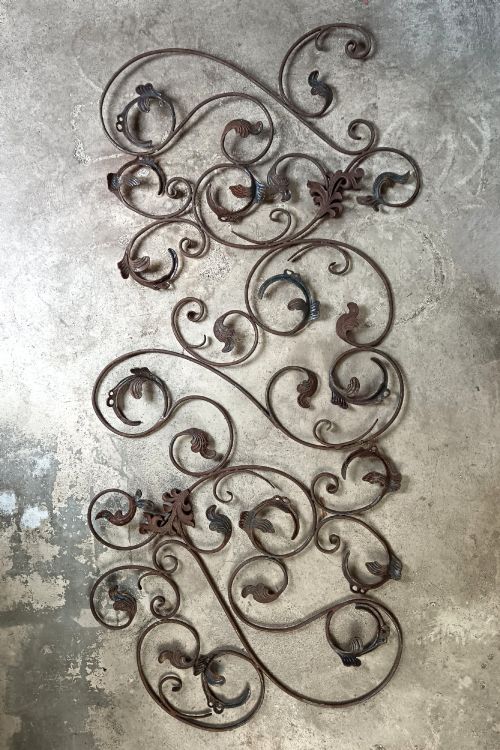
Subtlety of hand-forged scrollwork and the heft of the iron bar stock separate utilitarian boundaries from finer estate commissions. Blacksmith-made pieces demonstrate individual skill in the manipulation of hot metal.
The integrity of original hinges, latches, and cast finials dictates how completely a gate survives. Sympathetic weathering preserves character, while deep structural pitting changes the structural reality of the piece.
The Victorian Iron Gate Glossary
- Wrought iron
- A tough, malleable form of iron containing embedded slag fibres that resist corrosion and permit hot-forging. This material defines the structure of traditional estate boundaries.
- Cast iron
- Iron poured into a mould while molten to create rigid decorative elements like finials and signs. It offers high compressive strength but lacks the bending flexibility of forged metal.
- Strapwork
- Flat bands of iron riveted together to form geometric patterns and bracing across a gate frame. This technique provides both rigidity and visual rhythm.
- Kissing gate
- A compact pedestrian gate enclosed by a small pen that allows one person to pass at a time. It keeps livestock contained while permitting public access.
- Finial
- A decorative terminal ornament fixed to the top of vertical bars or posts. These details often take the form of cast iron points or fleurs-de-lys.
Victorian Iron Gate: Frequently Asked Questions
How do I hang a heavy iron gate?
Hanging these pieces requires substantial masonry or timber posts secured deeply into the ground to bear the considerable weight. Professional installation uses adjustable pin hinges fixed directly into stone piers.
Alignment must be checked carefully during hanging to ensure the latch engages smoothly without dragging across the ground.
Can original iron gates be automated?
Automating historical ironwork is possible with discreet underground or articulated arm operators fitted by specialists. The frame must be checked for structural rigidity before motors are attached.
Careful planning ensures modern mechanisms do not detract from the visual integrity of the forged metal.
How do I stop iron gates from rusting?
Active corrosion is managed by wire brushing loose scale and applying a stabilizing metal primer. Traditional oil-based paints provide a protective barrier against moisture.
Regular maintenance involves inspecting joints and touching up paint where weathering exposes bare metal.
What is the difference between pedestrian and estate gates?
Pedestrian gates are built narrower for single-person access along garden paths and pathways. Estate and driveway versions span wide openings to accommodate vehicles and livestock.
Larger estate examples incorporate heavy bottom rails and cross-bracing to prevent sagging over long spans.