
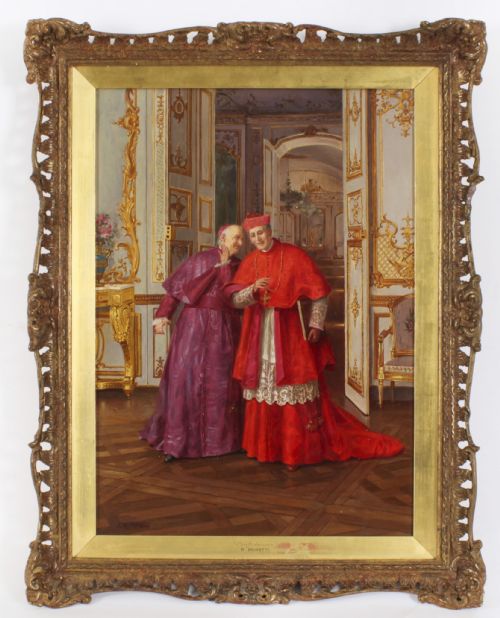
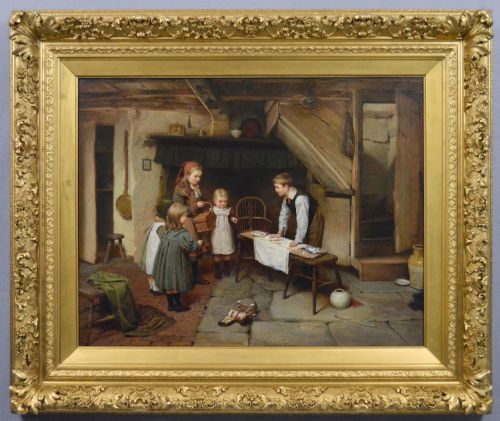


Victorian Interior Scene Picture
A victorian interior scene picture captures domestic life, drawing the eye into country houses, cottages, and quiet rooms.
Victorian Interior Scene Picture
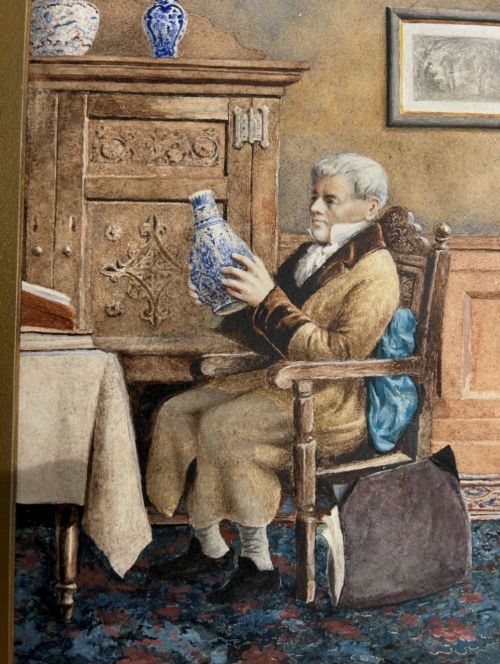
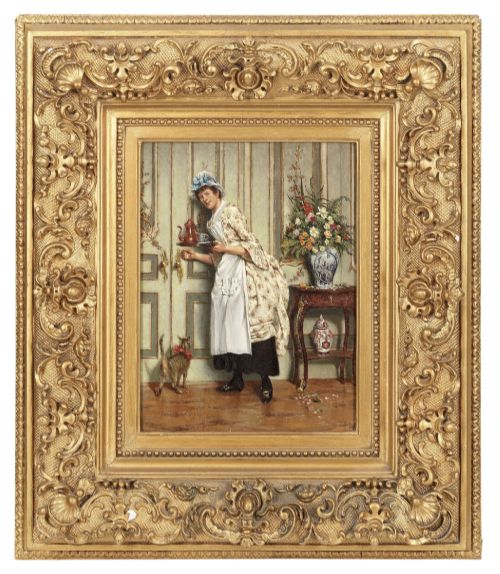
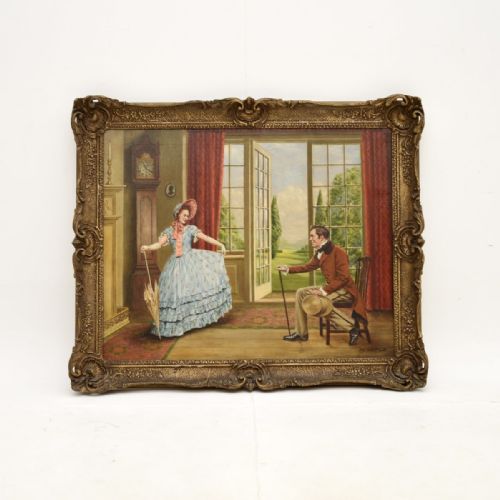
A victorian interior scene picture depicts figures gathered in domestic settings, from modest cottages to panelled country houses. These works record everyday domestic narratives, family moments, and quiet interactions between individuals in period rooms.
The versions most commonly met on this page are oil paintings and watercolours on canvas, board, or paper. Many retain their original frames, including giltwood, gesso, and Hogarth mouldings.
Originating largely from the nineteenth century, these pieces encompass British genre painting, academic realism, and continental works. Artists range from named masters of genre scenes to followers and followers' styles.
Judging quality
The calibre of a work rests upon the precision of brushwork and the handling of light within confined domestic spaces. Finer examples render facial expressions, textiles, and surrounding furnishings with distinct clarity.
Condition of the medium and the retention of the original frame influence the integrity of the piece. Works that preserve their contemporary mounting offer a more complete historical context.
Materials recorded across the selection include gold leaf, gesso, oil on tin, and traditional oil on canvas.
Henry Stacy Marks·Stephen Samuel Lewin·Alfred Lyndon Grace·Renato Moretti·Harry Brooker·George Goodwin Kilburne·John Arthur Lomax·Edwin Hughes·William Henry Knight·Henry Silkstone Hopwood·Francesco Bergamini·Charles Hunt Jnr·George Cattermole·George Harcourt Sephton
The Victorian Interior Scene Picture Glossary
- Genre painting
- Depiction of aspects of everyday life by portraying ordinary people engaged in common activities. These works provide visual records of domestic habits and social interactions.
- Chrystoleum
- A type of coloured print popular in the nineteenth century where a convex glass layer is applied over an albumen photograph. The image is then hand-painted from behind.
- Giltwood
- Wood carved and subsequently coated with gold leaf or gold paint. It is frequently found on period picture frames.
- Hogarth frame
- A dark, narrow wooden picture frame with a distinct profile, named after the eighteenth-century artist William Hogarth. These mouldings were frequently utilised in later periods for framing prints and paintings.
Victorian Interior Scene Picture: Frequently Asked Questions
What is a victorian interior scene picture?
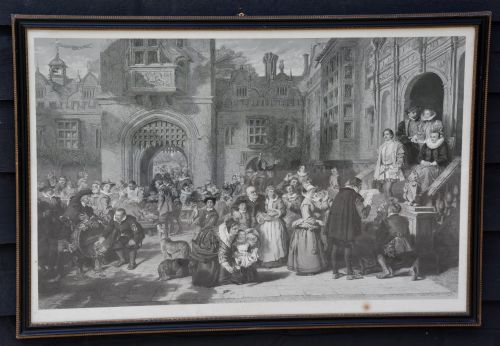
A victorian interior scene picture is a painted or printed artwork depicting people inside nineteenth-century homes, cottages, or galleries. These works capture domestic routines, social gatherings, and quiet personal moments.
Subjects range from family tea times and cottage scenes to cavaliers in long galleries. They offer a direct window into nineteenth-century domestic environments and social life.
How were these pictures originally displayed?
These artworks were typically hung in domestic reception rooms, parlours, and drawing rooms of period houses. Their frames were chosen to complement contemporary interior decoration.
Many retain original giltwood, gesso, or Hogarth frames designed to enhance the depth of the interior depicted. They functioned as conversation pieces and markers of cultivation.
How do I care for an antique painting?
Protect the artwork from direct sunlight and sudden shifts in room temperature or humidity. Keep the surface clean using a soft, dry brush to remove dust gently.
Avoid hanging pieces near active heat sources or in damp spaces. Preserving the original backing boards and frame helps maintain the overall stability of the object.
How do I identify the period of the artwork?
Examine the materials, painting style, and framing techniques used in the piece. Nineteenth-century works often employ specific pigments, canvas preparations, and framing profiles characteristic of the era.
Signatures, dates, and artist attributions inscribed on the canvas or board provide direct evidence of origin. Stylistic clues within the interior furnishings and costume also indicate the period.