
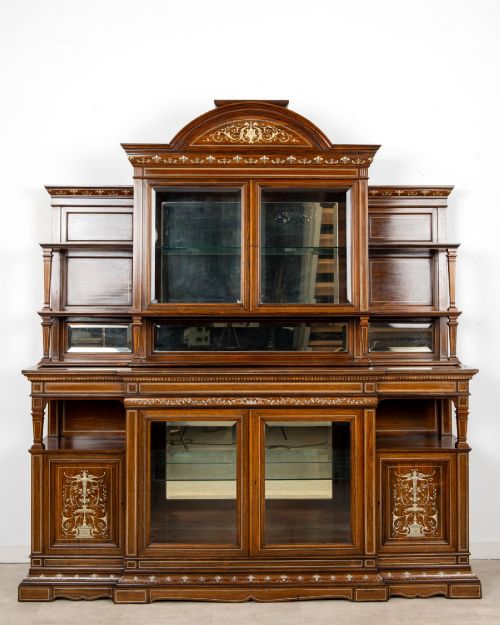
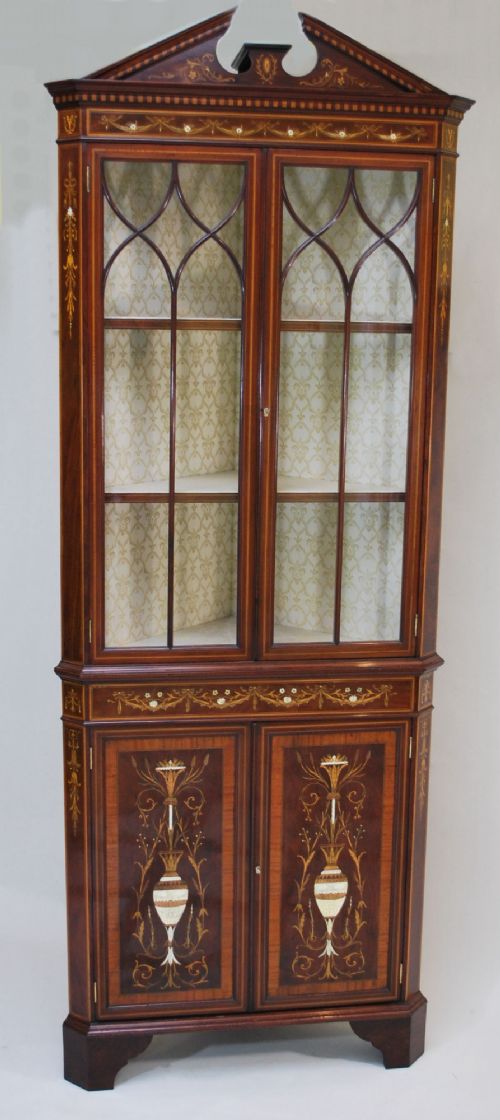
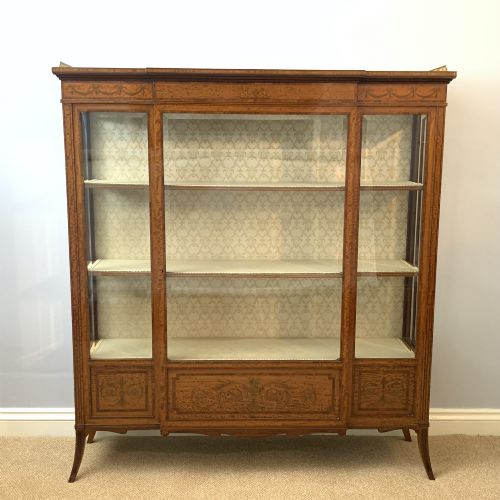
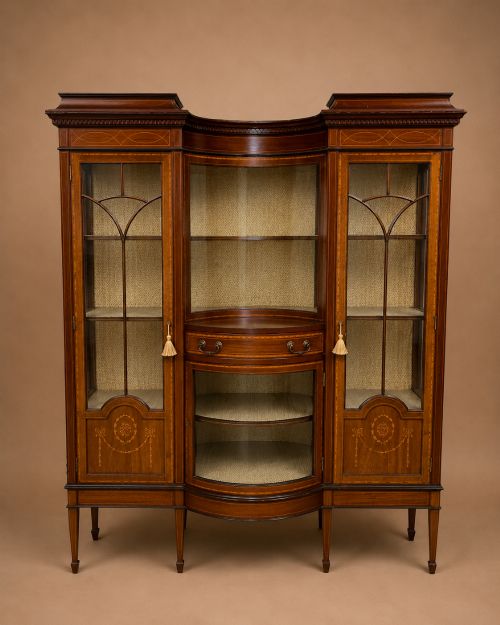
Victorian Inlay Bookcase
These pieces of furniture combine shelving with intricate marquetry, offering a practical way to store volumes while displaying precious objects.
Victorian Inlay Bookcase
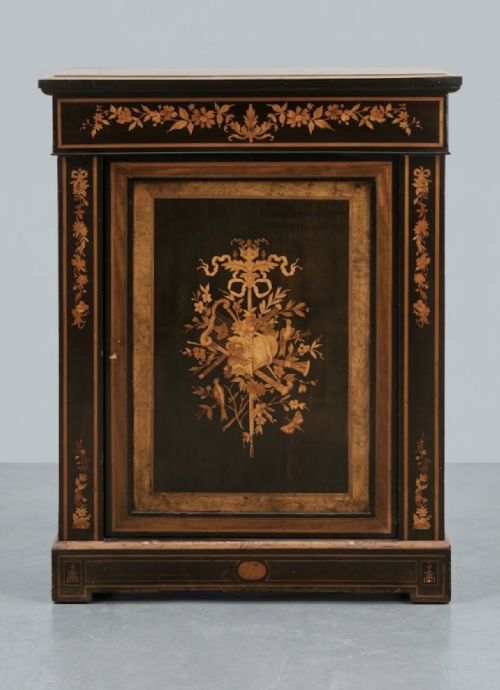
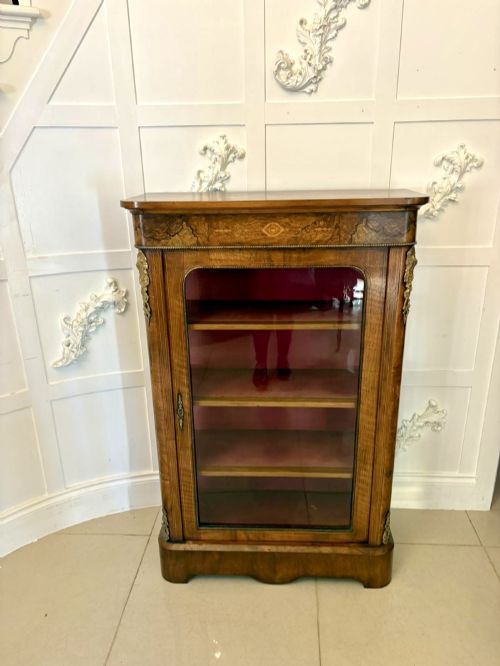
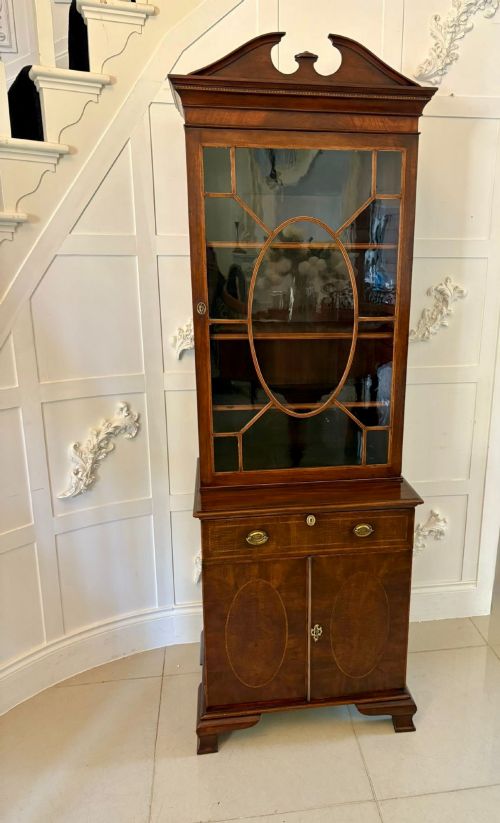
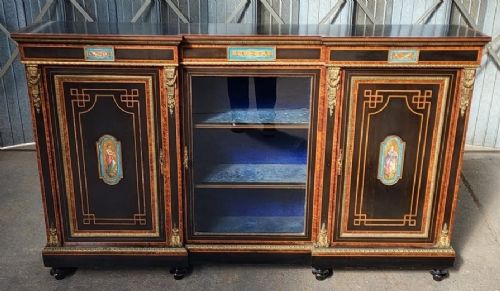
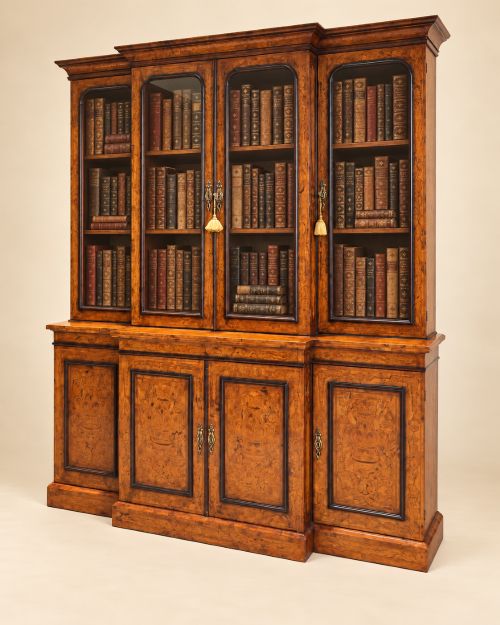
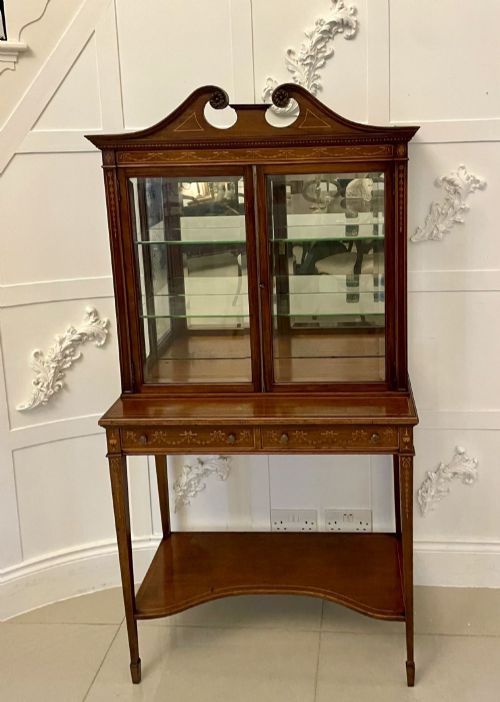
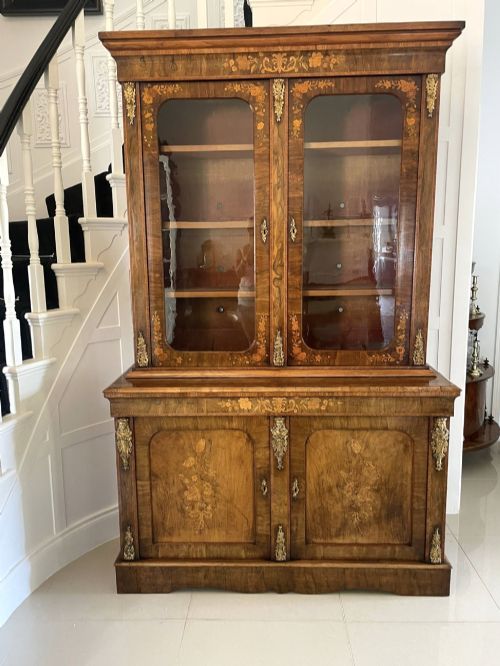
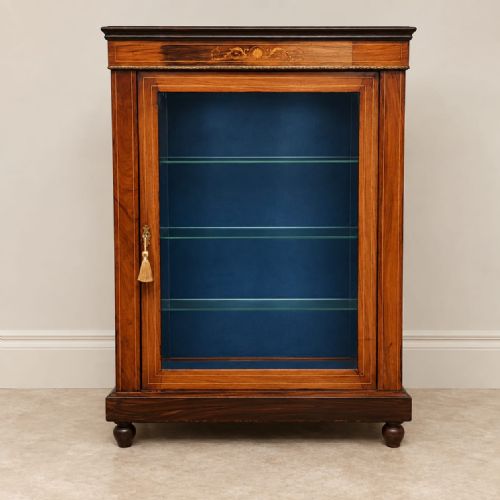
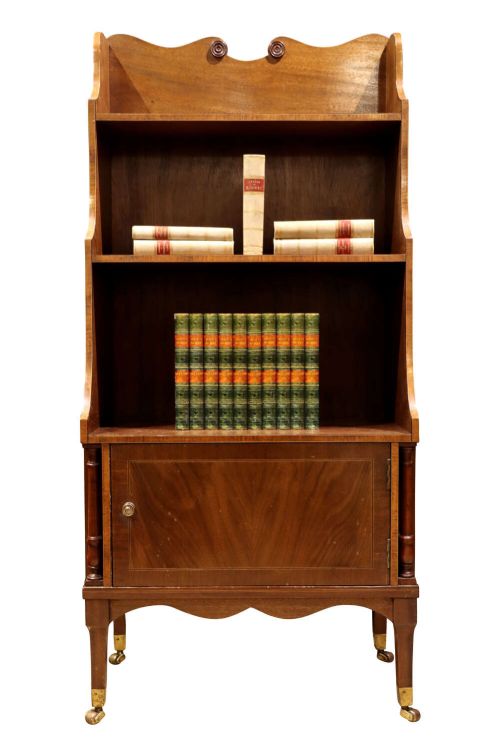
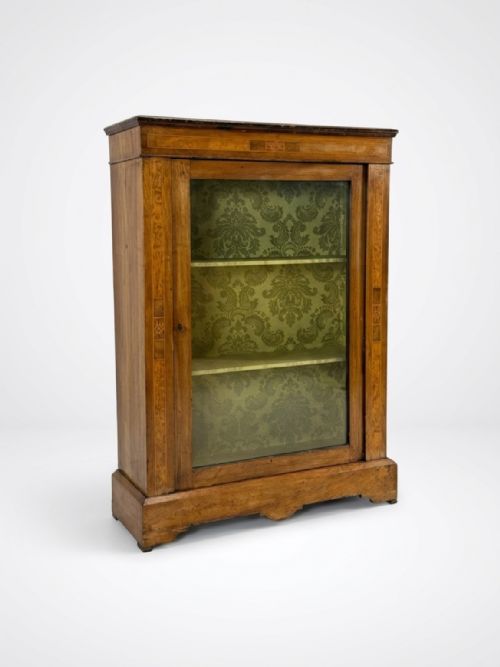
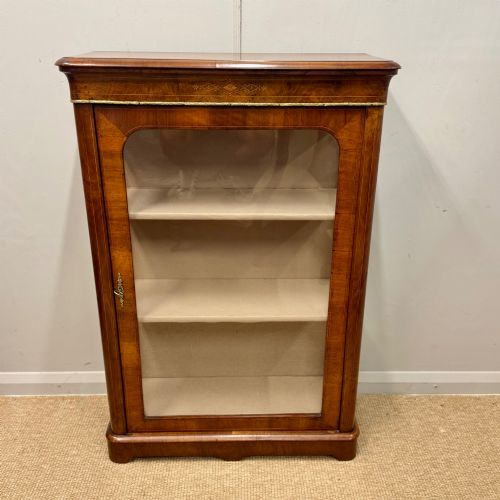
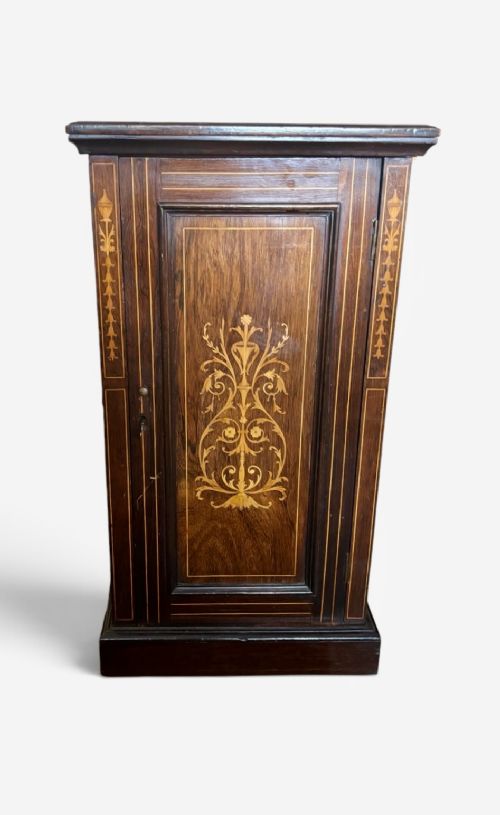
A victorian inlay bookcase takes many forms across this selection, appearing as tall breakfront libraries, compact pier cabinets, and glazed display furniture designed for the parlour. Walnut and mahogany serve as the primary timbers, frequently enriched with boxwood, satinwood, and ebony marquetry.
Most examples date from the nineteenth century, running from mid-period walnut pieces through to late Victorian and Edwardian satinwood variations. Alongside traditional bookcases, the inventory includes revolving designs, corner cabinets, and side cabinets with enclosed shelving.
Makers of the period applied diverse stylistic influences, incorporating Sheraton Revival motifs, Aesthetic Movement lines, and occasional French Second Empire or Japonisme details into the cabinetwork.
Qualities of the construction
Depth and precision of the marquetry define the upper tiers of cabinetmaking, where floral and geometric inlays fit flush into the surrounding timber without gaps. The choice of veneer also separates standard pieces from exceptional ones, with heavily figured burr walnut or fine satinwood commanding greater visual presence.
Hardware and secondary materials indicate workshop standards, distinguished by chased ormolu mounts, heavy brass castors, and finely glazed doors with original glass panes. Structural integrity, clean drawer linings, and well-fitted locking doors further separate ordinary utility items from top-tier workshop output.
Listings feature woods spanning mahogany, walnut, satinwood, amboyna, rosewood, and birds eye maple.
Collinson and Lock·Edwards and Roberts·Lamb of Manchester
The Victorian Inlay Bookcase Glossary
- Marquetry
- Decorative patterns formed by inserting pieces of wood, ivory, or shell into a veneered surface. This technique creates pictorial or geometric motifs across the doors and friezes.
- Ormolu
- Gilded bronze mounts applied to furniture for decorative effect. Makers cast and chased these metal elements to frame doors and corners.
- Breakfront
- A piece of furniture where the central section projects forward from the flanking wings. This architectural layout adds depth and shadow to large library cases.
- Pier cabinet
- A low cabinet designed to fit the wall space between windows. These glazed pieces typically display ceramics and small ornaments.
- Burr walnut
- Wood taken from the growth excrescences of walnut trees, yielding turbulent, highly figured grain patterns. Cabinetmakers prized this timber for high-status veneering.
Victorian Inlay Bookcase: Frequently Asked Questions
How do I date a bookcase?
Dating relies on timber choices, construction methods, and stylistic cues present in the marquetry. Mid-century examples frequently employ rich walnut veneers, whereas later decades lean towards satinwood and ebonised finishes.
Secondary woods inside drawers and backboards offer further clues. Oak and mahogany linings typically point to earlier nineteenth-century workshops.
What is a pier cabinet?
A pier cabinet is a shallow, single-door piece built specifically for the narrow wall space situated between two windows. These cabinets usually feature glass panels to showcase collected porcelain and decorative items.
Their compact footprints made them popular additions to formal nineteenth-century drawing rooms where floor space was at a premium.
How should I clean the inlay?
Maintenance requires gentle dusting with a soft, dry cloth to prevent dirt from lodging in the fine joints of the marquetry. Avoid harsh modern polishes that can seep into the grain and discolour the lighter boxwood or satinwood elements.
Applying a traditional beeswax sparingly helps nourish the timber and protect the delicate veneer without building up sticky residue.
Are shelves adjustable?
Most period bookcases feature fixed wooden shelving held by traditional housing joints rather than modern metal ratchets. Some larger library bookcases incorporate wooden support slips allowing limited height variation.
When altering internal layouts, handle the old timber carefully to avoid splitting the housing grooves cut into the interior walls.