

Victorian Inlaid Writing Table
When you search for a victorian inlaid writing table, you enter a world of finely figured timbers and precise craftsmanship designed for personal correspondence.

Victorian Inlaid Writing Table
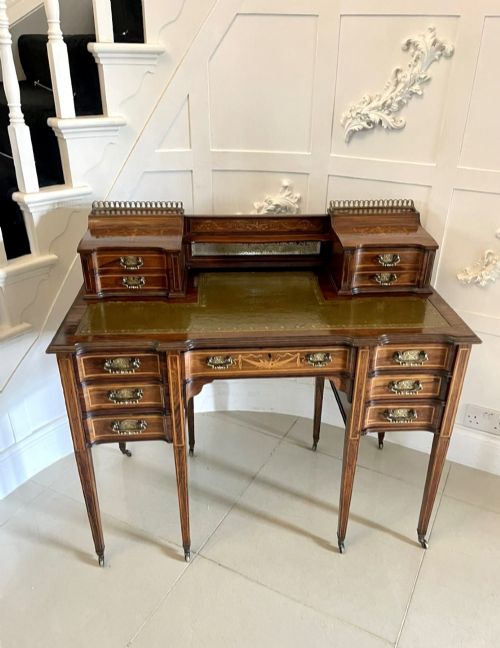
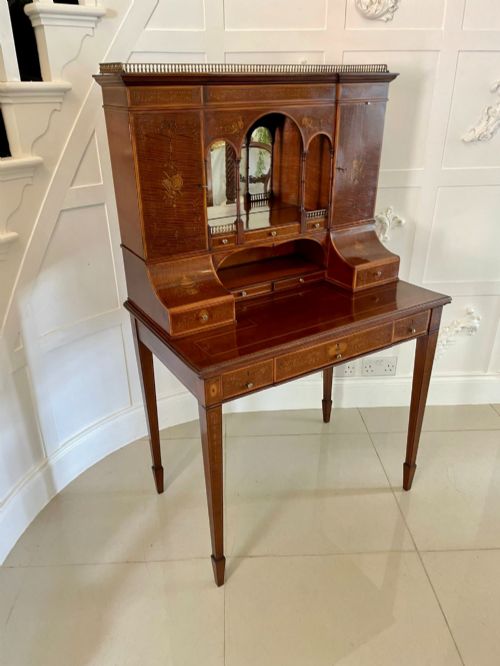
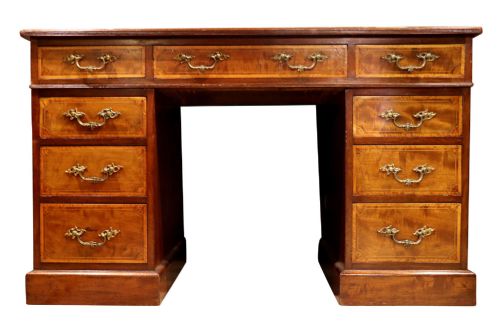
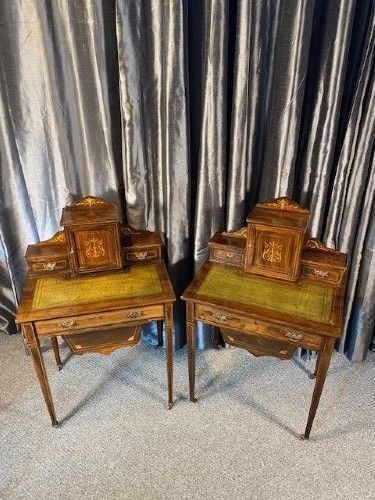
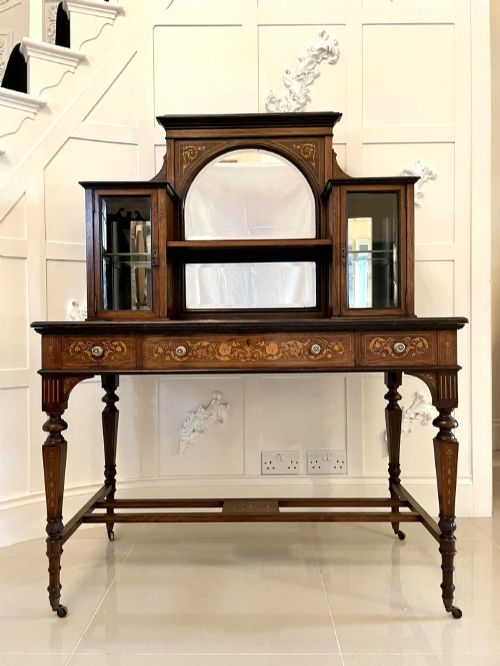
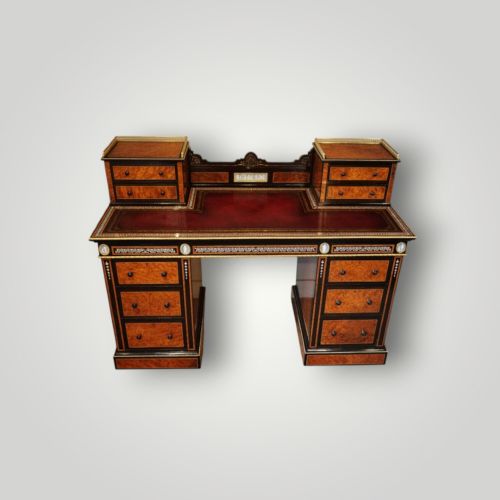
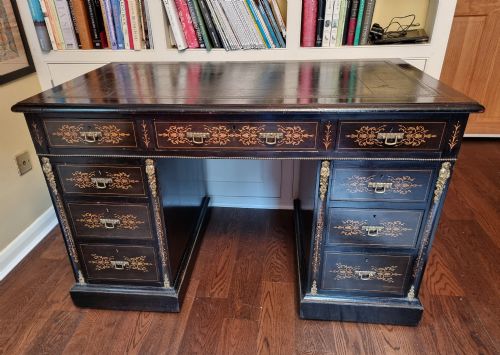
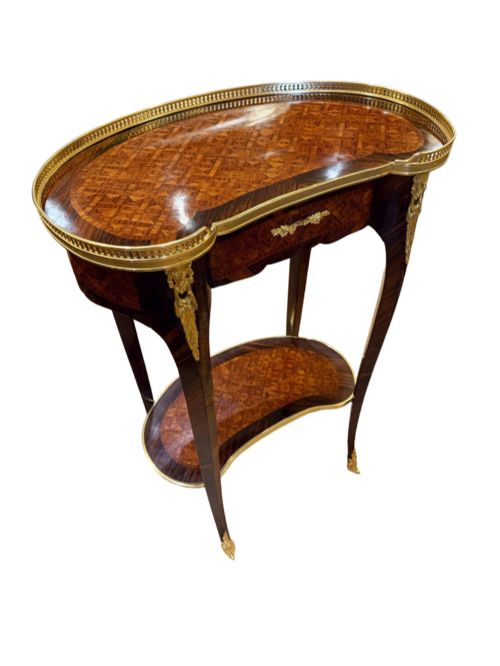
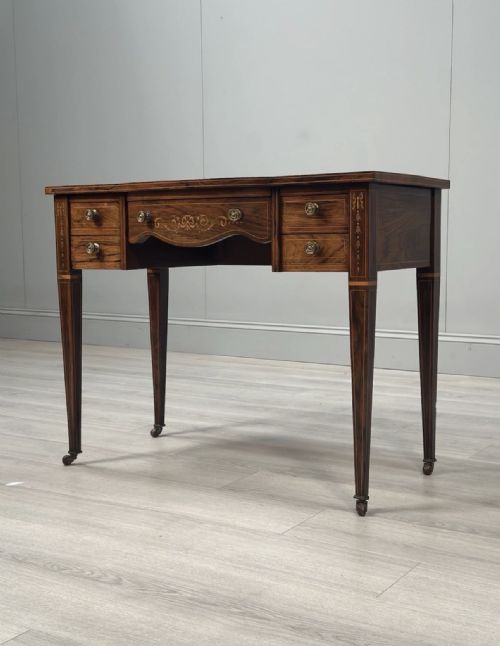
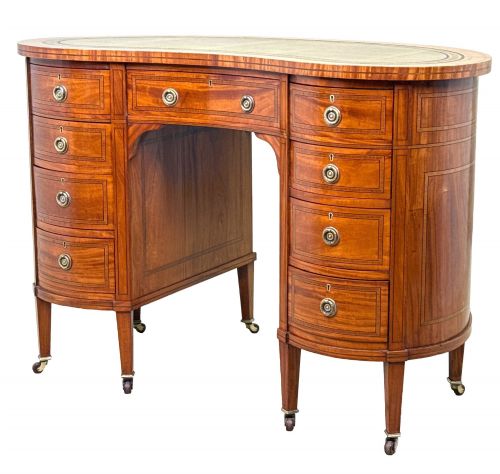
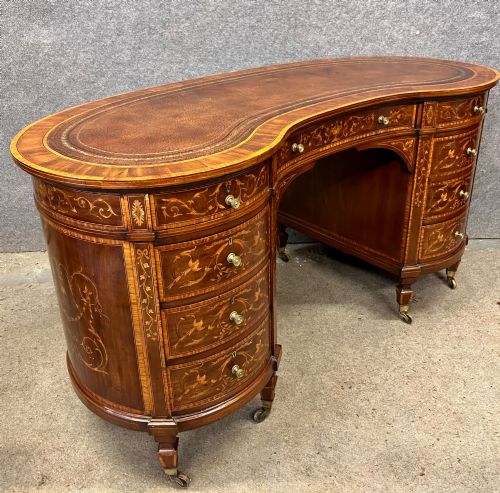
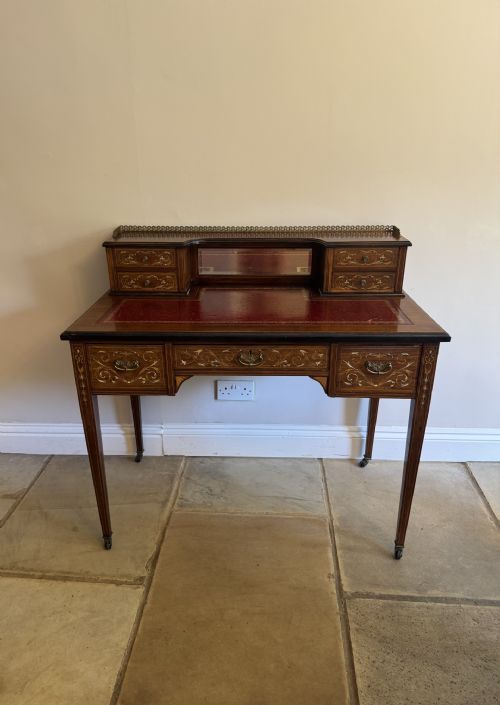
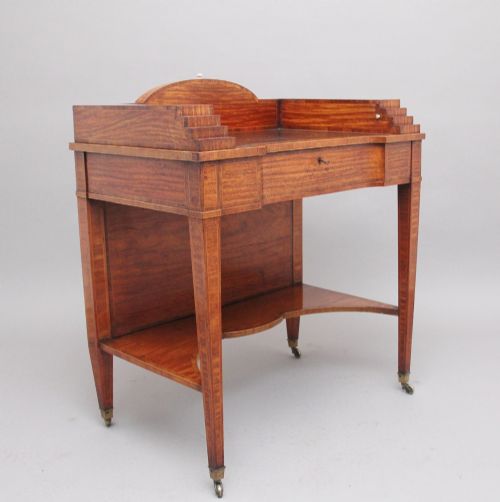
A victorian inlaid writing table bridges the gap between functional workspace and decorative furniture, appearing in formats ranging from pedestal desks to kidney-shaped tables and compact bonheur du jour units.
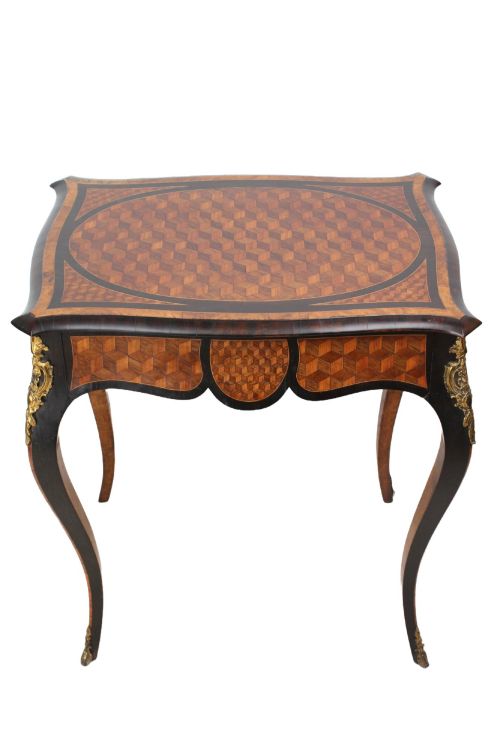
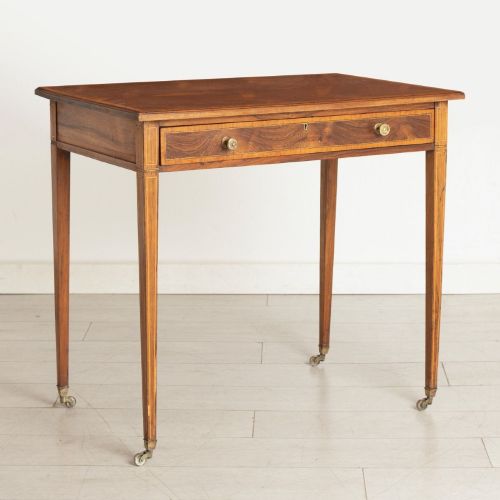
Makers of the period drew on Sheraton Revival and Louis XV Revival styles, incorporating delicate writing surfaces meant to sit centrally in a room rather than pushed against a wall.
The pieces reflect the domestic priorities of the nineteenth century, offering specialised compartments for stationery alongside spacious writing tops.
Materials and Techniques
Carpenters utilised dense tropical hardwoods such as mahogany, rosewood, satinwood, and burr walnut as foundational bases for elaborate surface decoration.
Craftspersons integrated contrasting veneers, brass stringing, and mother-of-pearl or ivory elements to form geometric and floral marquetry patterns across the tops and drawers.
Ormolu mounts and tooled leather inserts provided structural accents and durable writing surfaces that completed the construction.
Makers active in these designs include Edwards and Roberts, Maple and Co, and JAS Shoolbred.
Markers of Distinction
The distinction between ordinary and exceptional examples rests in the depth of the timber figure and the precision of the marquetry cuts.
Master workshops employed thicker veneers and richer secondary woods, ensuring that inlaid motifs remained flush and crisp across curved surfaces like kidney-shaped tops.
Signed drawer locks or stamped makers marks elevate specific pieces by linking them directly to documented Victorian cabinetmakers.
Maple and Co·JAS Shoolbred·Edwards and Roberts·Jackson and Graham·Wolfe and Hollander·Collinson and Lock
The Victorian Inlaid Writing Table Glossary
- Marquetry
- Decorative veneer work forming pictures or patterns by using small pieces of different woods or materials. This technique defines the visual appeal of many surfaces.
- Kidney shape
- A curved, asymmetrical desk profile popular during the nineteenth century. The design allows the user to sit closer to the central drawer bank.
- Bonheur du jour
- A light lady writing desk featuring a small cabinet or super-structure with shelves and drawers above the main writing surface. It translates from French as day-time happiness.
- Ormolu
- Gilded bronze mounts applied to furniture for decorative effect. These metal fittings add weight and visual contrast to walnut and satinwood frames.
- Parquetry
- Geometric mosaic woodwork arranged in patterns such as cubes or herringbones. It creates a structured contrast to flowing floral marquetry.
Victorian Inlaid Writing Table: Frequently Asked Questions
What is a bonheur du jour?
A bonheur du jour is a small ladies desk featuring an upper tier of compartments and drawers for stationery.
These pieces were designed for intimate drawing rooms and private sitting spaces during the nineteenth century.
Where should I place a freestanding writing table?
Freestanding writing tables were constructed to be viewed from all angles, making them ideal for the centre of a room.
Their finished backs allow them to float away from walls without losing decorative impact.
What woods were commonly used?
Cabinetmakers relied on burr walnut, mahogany, satinwood, and rosewood for their rich grain patterns.
These timbers provided stable surfaces for intricate brass and contrasting wood inlays.