

Victorian Inlaid Trinket Box
A victorian inlaid trinket box brings small-scale timber craft and meticulous surface decoration into daily domestic use.
Victorian Inlaid Trinket Box
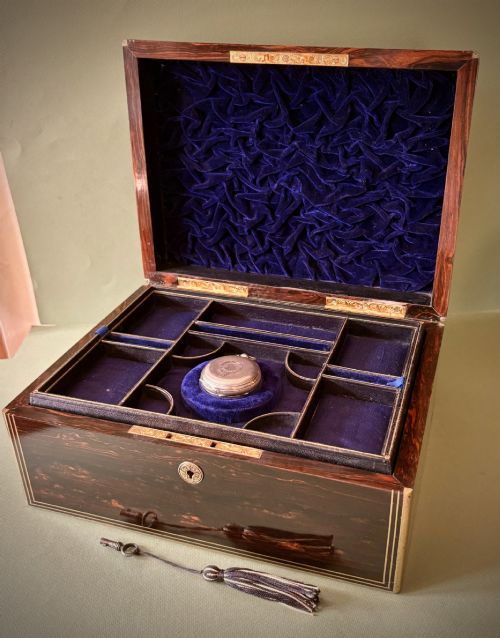
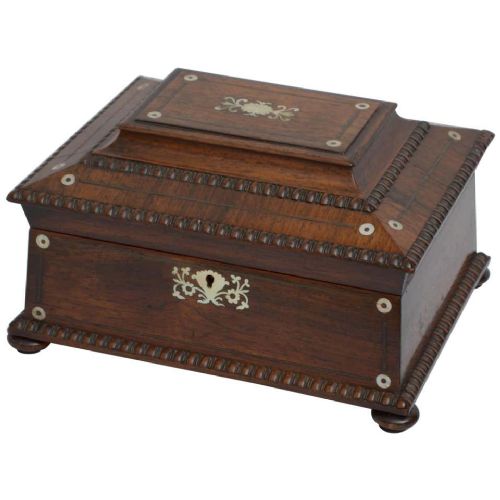
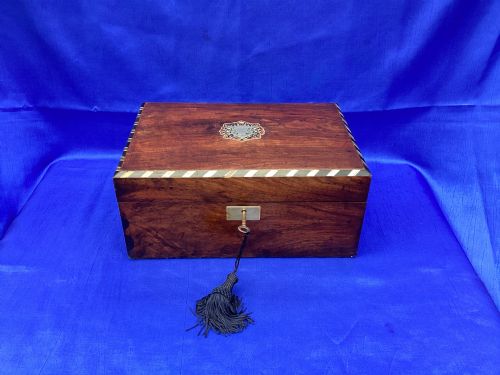
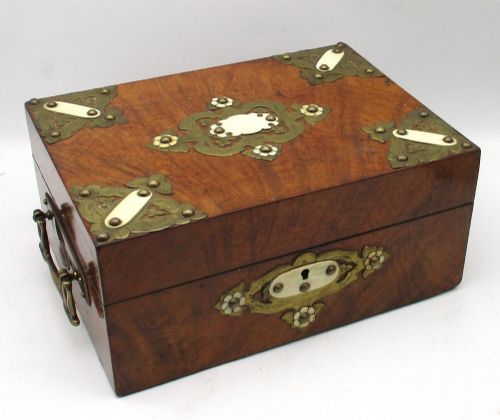
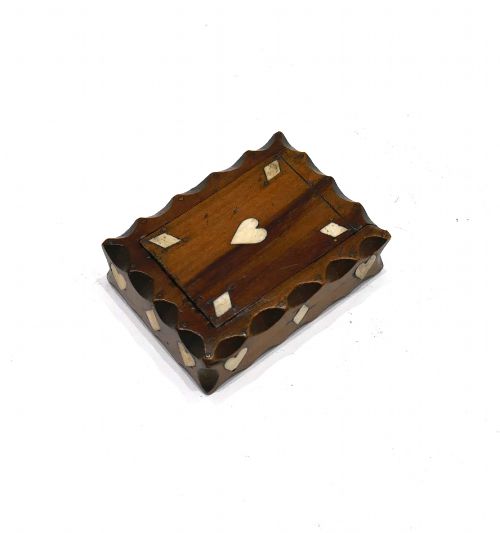
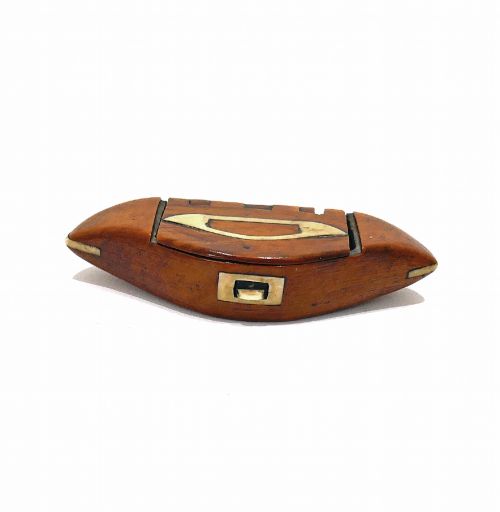
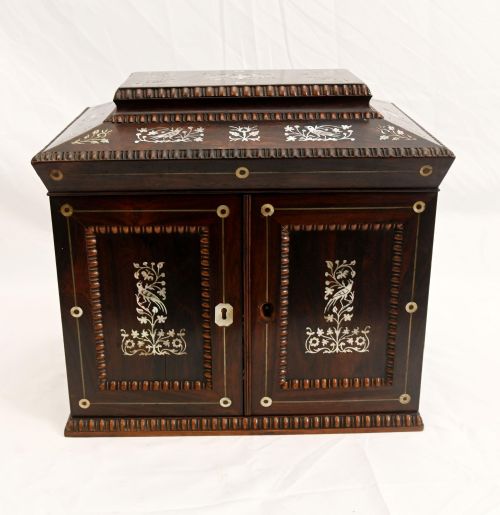
A victorian inlaid trinket box appears in various timber forms designed to hold small personal belongings, stationery, or jewellery. These range from fitted rosewood and burr walnut chests to smaller pocket snuff boxes and tea caddies.
The pieces on this page span the nineteenth century, taking in related William IV, Georgian, and Edwardian examples alongside standard Victorian production. Origin varies from English workshops and Tunbridge Wells to Italian Grand Tour centres and French makers.
Buyers encounter dedicated jewellery cabinets, lift-lid work boxes, and stationery cases featuring contrasting wood veneers. These containers served functional roles on dressing tables and writing desks across homes.
Materials and Technique
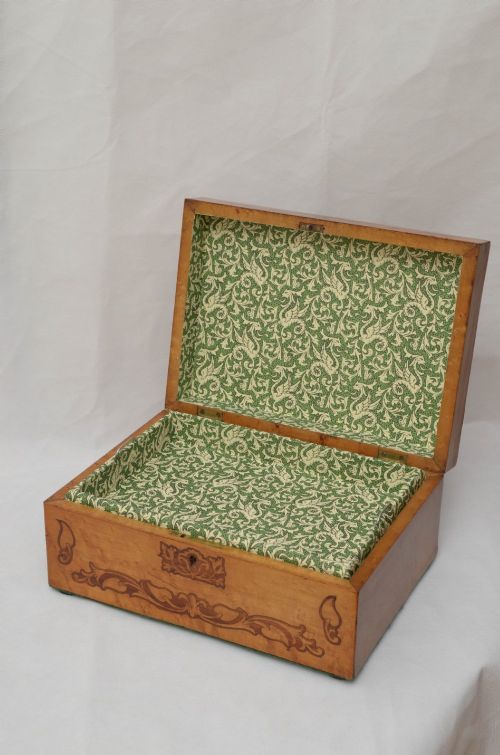
Construction relies heavily on dense timbers such as rosewood, walnut, and mahogany, often faced with exotic veneers like bird's-eye maple, coromandel, or amboyna. Makers reinforced carcass corners with dovetailed joints before applying surface decoration.
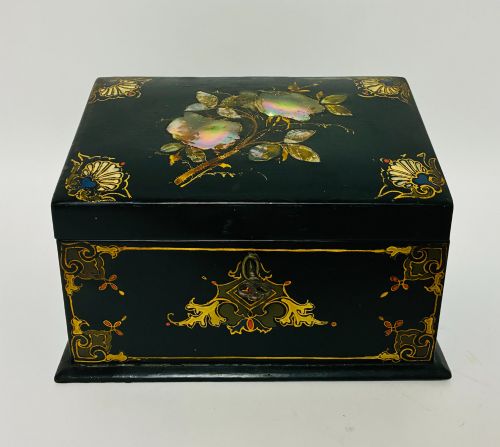
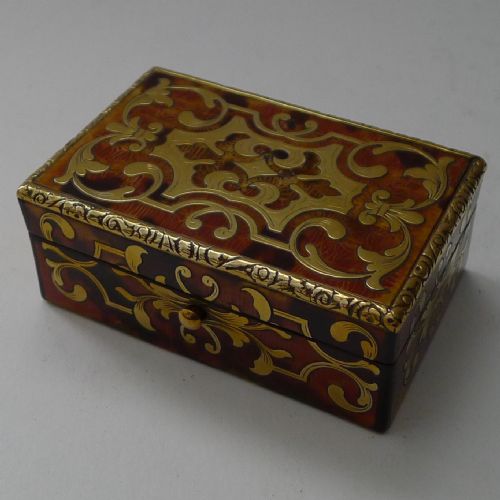
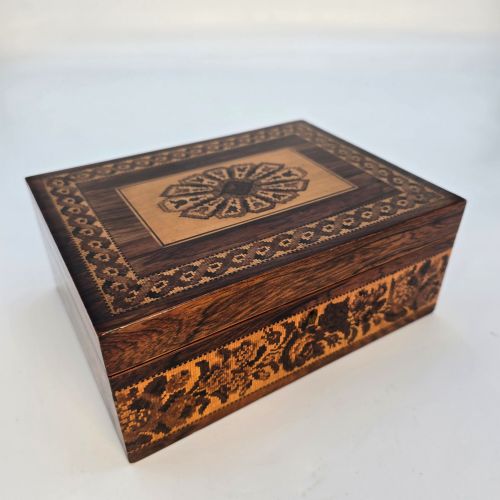
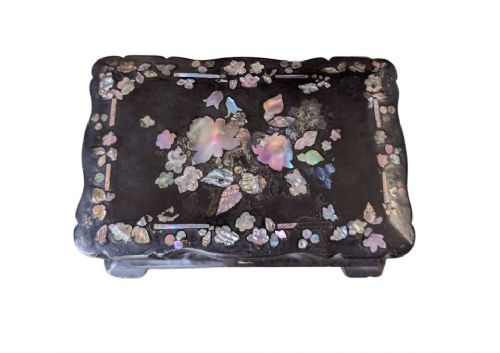
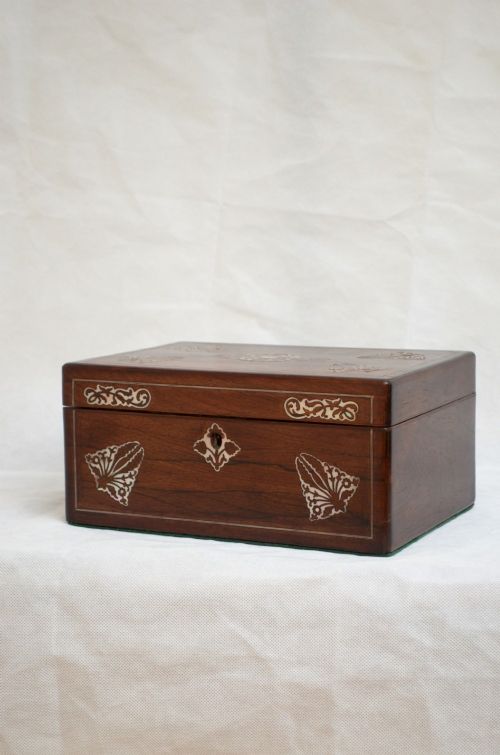
Inlay techniques include Tunbridge Ware mosaic woodwork, geometric parquetry, and botanical marquetry using diverse specimen woods. Artisans also set mother-of-pearl, bone, ivory, and tortoiseshell directly into the timber grounds.
Surface details frequently incorporate brass stringing, ormolu mounts, and painted papier-mâché panels. Interiors often feature velvet or silk linings, fitted compartments, and working brass or steel locks.
Entries feature regional British styles alongside French Boulle work and Italian Grand Tour Sorrento marquetry.
Craftsmanship and Design
Quality rests upon the precision of the inlay work and the selection of timber veneers. Tightly fitted mosaic tesserae and clean botanical marquetry separate superior examples from simpler production pieces.
Internal organisation dictates utility and value. Fully fitted interiors with matching trays, secret compartments, and original velvet or silk linings outrank plain empty carcasses.
The integrity of the structural carcass and the presence of original hardware, including escutcheons and keys, govern the standing of an individual piece.
Edmund Nye
The Victorian Inlaid Trinket Box Glossary
- Tunbridge Ware
- A form of woodwork originating in Kent involving small mosaic tiles assembled from natural coloured woods to depict micro-mosaics of flora and buildings.
- Marquetry
- The art of applying pieces of veneer to a structural structure to form decorative patterns, pictures, or ornamental designs.
- Parquetry
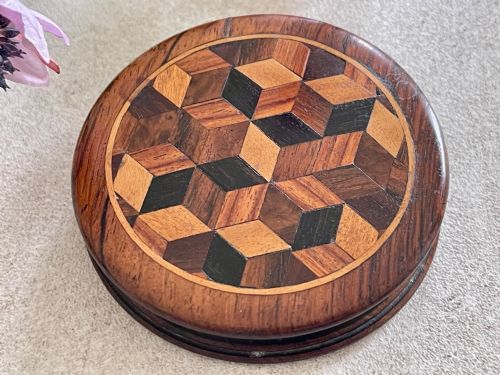
- Geometric mosaic woodwork arranged in repeating patterns such as cubes, diamonds, and chequers across the lid or sides of a box.
- Pietra Dura
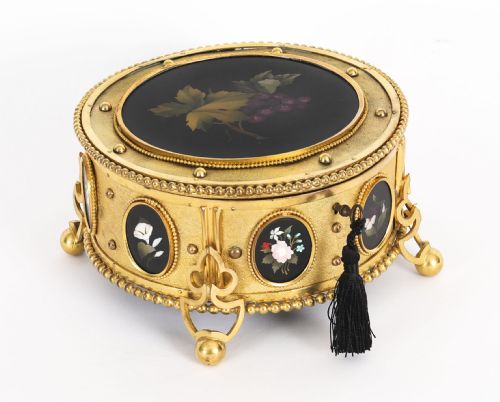
- An inlay technique using cut and fitted polished coloured stones to create pictorial designs, commonly found on Italian imported caskets.
- Treen
- Small handmade wooden household objects and utilitarian items produced by turning or carving domestic timbers.
Victorian Inlaid Trinket Box: Frequently Asked Questions
What did people store inside a victorian inlaid trinket box?
These containers held precious personal possessions including rings, brooches, loose coins, and calling cards. Deeper versions accommodated sewing tools, letters, or loose tobacco.
Interior trays and compartments kept smaller items organised on bedroom dressing tables and drawing-room side tables.
Are interior linings usually original?
Many surviving boxes retain their fitted paper, velvet, or silk linings, though fragile textiles frequently required replacement over time. Professional restoration often includes fresh fabric matched to the period style.
Original paper labels from retailers or makers occasionally survive inside the lid or base of the box.
What is the difference between marquetry and parquetry?
Marquetry employs varied wood veneers to create pictorial or flowing organic scenes such as flowers, foliage, and architectural views. Artisans cut these shapes together to fit snugly into a background veneer.
Parquetry relies strictly on geometric arrangements like cubes and zig-zags to form repeating mathematical patterns across the timber surface.
How should I care for antique rosewood and walnut?
Maintain timber boxes in stable room conditions away from direct sunlight and central heating sources to prevent wood splitting or veneer lifting. Gentle dusting with a dry lint-free cloth preserves the polished surface.
Avoid liquid furniture polishes and harsh modern cleaning agents which can damage fragile nineteenth-century French polish finishes.