



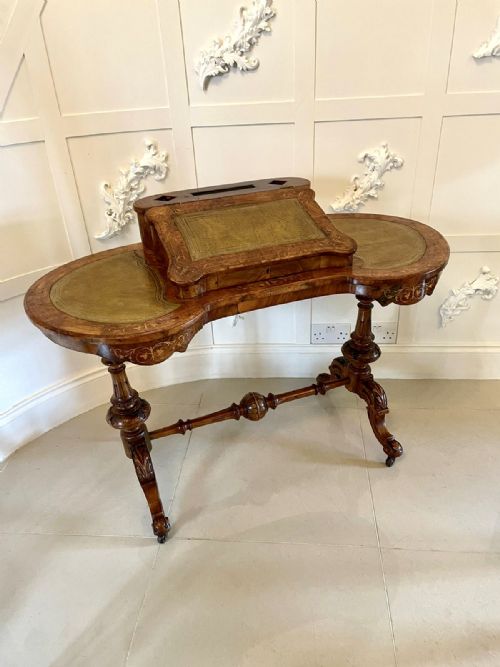

Victorian Inlaid Desk Slope
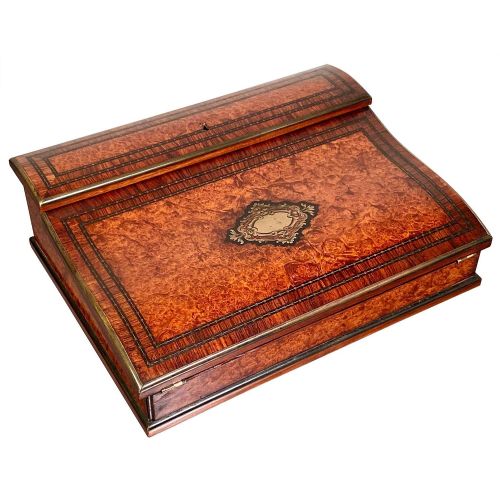
A victorian inlaid desk slope offers a portable workspace framed in figured timber and detailed with precise decorative banding.
Victorian Inlaid Desk Slope
A victorian inlaid desk slope brings together compact portable boxes and larger freestanding writing furniture designed for domestic correspondence. The items on this page span the Victorian period alongside earlier Regency examples and later Sheraton Revival interpretations.
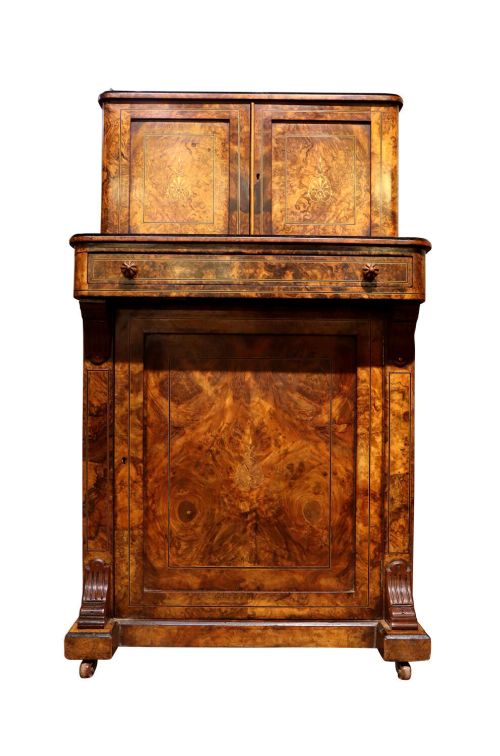
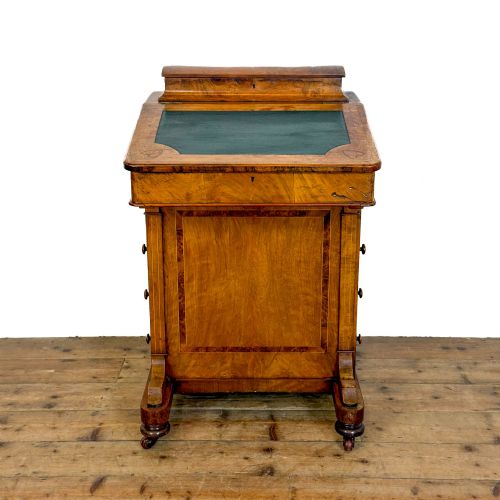
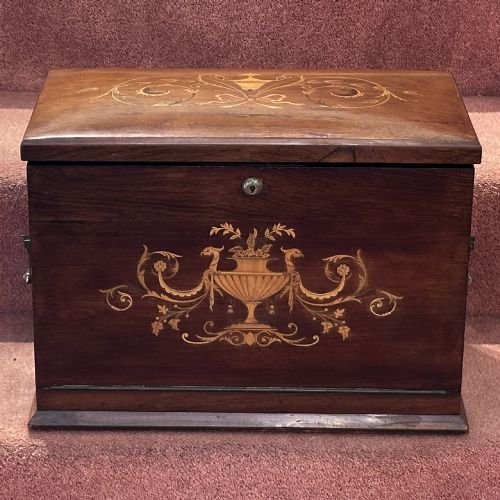
Buyers will encounter traditional lap slopes alongside Davenport desks, bonheur du jour forms, and stationery cabinets. Burr walnut, rosewood, and mahogany provide the primary carcases, detailed with boxwood, satinwood, and brass inlay.
The selection ranges from simple folding boxes with secret drawers to sophisticated fitted cabinets with ormolu mounts. Each variation reflects the nineteenth-century demand for private, organised writing quarters within the home.
Materials and construction methods
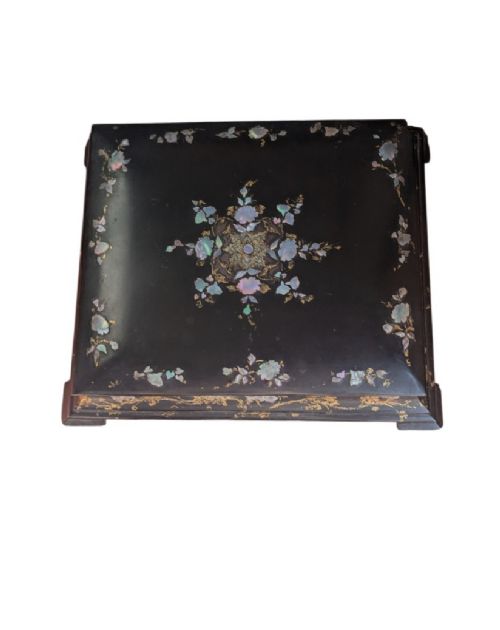
Cabinet makers utilised dense exotic hardwoods including rosewood, coromandel, and burr walnut, often applied as choice veneers over secondary carcase timbers. Surfaces received contrasting stringing and geometric motifs executed in boxwood, satinwood, and mother-of-pearl.
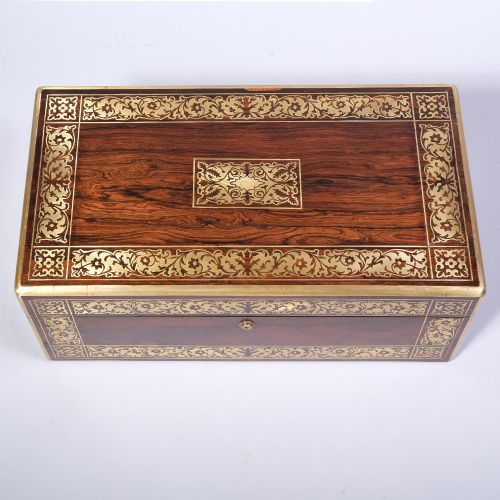
Brass featured heavily both as external corner binding and intricate inlay, reinforcing the structural joints of portable slopes intended for travel. Interior fittings incorporated secret drawers, leather writing surfaces, and specialised hardware such as Bramah locks.
The listings here feature pieces spanning the Regency era through to the late Victorian period, constructed primarily in burr walnut, rosewood, and mahogany.
Evaluating workmanship and condition
Quality rests upon the crispness of the timber selection and the precision of the inlay work. Finer examples display symmetrical burr walnut figuring matched across the lid and slopes without interruption.
Internal complexity dictates the tier of the piece, with integrated secret drawers, Bramah locks, and complete stationery compartments marking superior workshop production. The preservation of original polished surfaces and intact brass mounts further distinguishes the standard of execution.
The Victorian Inlaid Desk Slope Glossary
- Writing slope
- A portable box with a hinged slanted lid that opens to reveal a velvet or leather-lined writing surface and internal compartments for stationery. These boxes were designed to sit upon a table or lap during use.
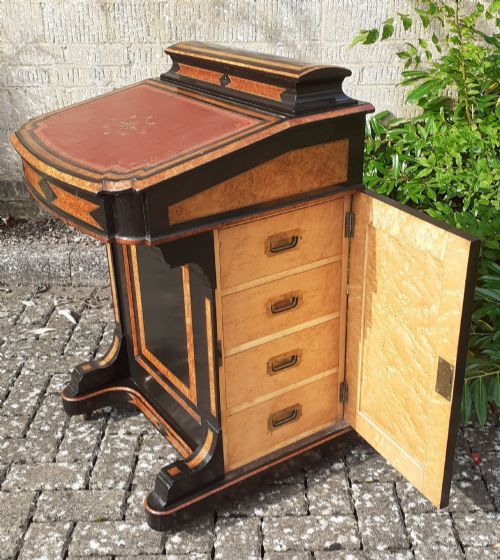
- Davenport desk
- A compact nineteenth-century writing desk featuring a sloping top above a pedestal of drawers. Side drawers often open to one side while false drawers balance the reverse.
- Tunbridge ware
- Woodware decorated with minute mosaic tiles formed from differently coloured woods arranged in geometric or pictorial patterns. This technique frequently embellished the lids of boxes and desks.
- Parquetry
- Geometric mosaic woodwork formed by small veneer pieces laid down in repeating patterns. It differs from marquetry by relying strictly on angular geometric shapes.
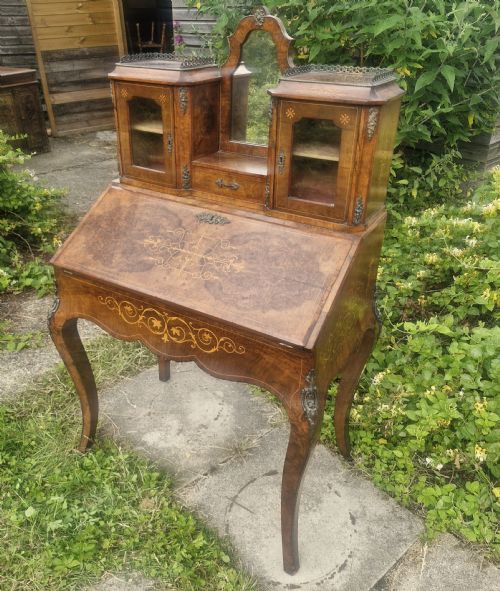
- Bonheur du jour
- A light lady's writing desk featuring a small cabinet or set of drawers superstructure above the main writing surface. The style gained popularity during the nineteenth century.
Victorian Inlaid Desk Slope: Frequently Asked Questions
How do I use a writing slope?
Place the box on a sturdy table and release any internal catches to drop the hinged flap toward you. The slanted surface supports paper while inkwells and pens rest in dedicated internal recesses.
Fold the writing surfaces flat and secure the lid with its key when correspondence concludes. Many boxes include secret compartments beneath the stationery divider for secure document storage.
What is the difference between a slope and a Davenport?
A writing slope is a portable box originally built for travel or tabletop use that requires placement on an existing table. A Davenport is a substantial freestanding piece of furniture incorporating a built-in pedestal base and drawers.
Davenports remain fixed in position within a room, whereas writing slopes can be moved easily between chambers.
How do I identify a Victorian piece?
Examine the secondary timbers, construction joints, and locking mechanisms typical of nineteenth-century British cabinet making. Walnut and rosewood veneers combined with brass stringing point directly to this era.
Patination on the interior leather and the presence of makers' stamps on locks provide further chronological markers.
How should I care for wood inlay?
Keep wooden surfaces away from direct sunlight and steady heat sources to prevent the exotic veneers and delicate stringing from drying out. Dust regularly with a dry, soft cloth and apply quality wax polish sparingly.
Maintain a stable room humidity to ensure the brass and boxwood inlay remains flush with the surrounding timber.