





Victorian Inlaid Chiffonier
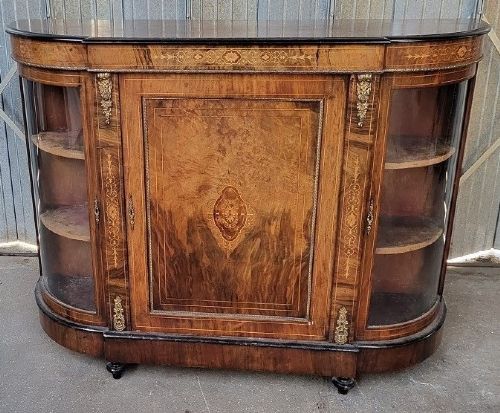
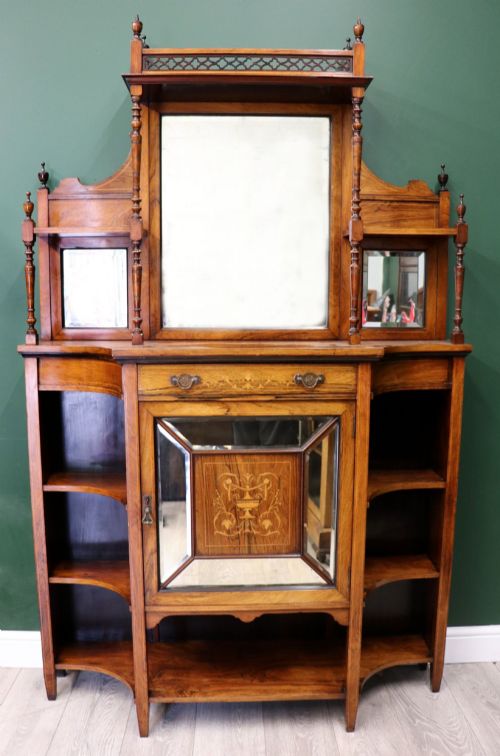
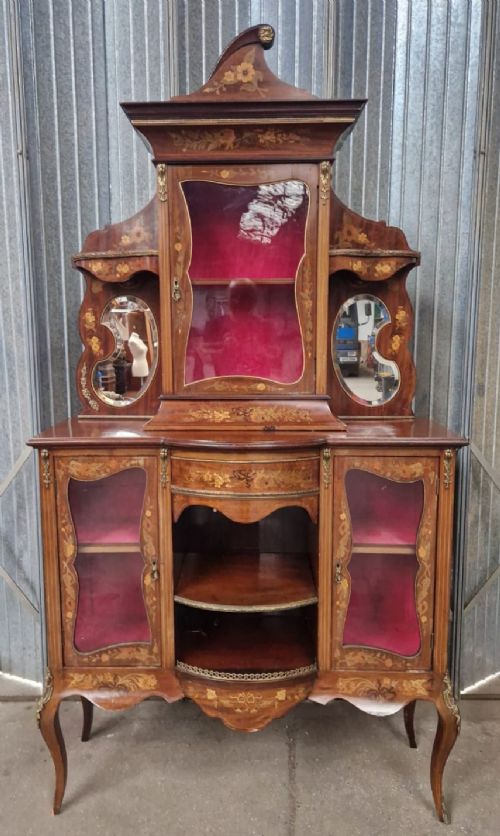
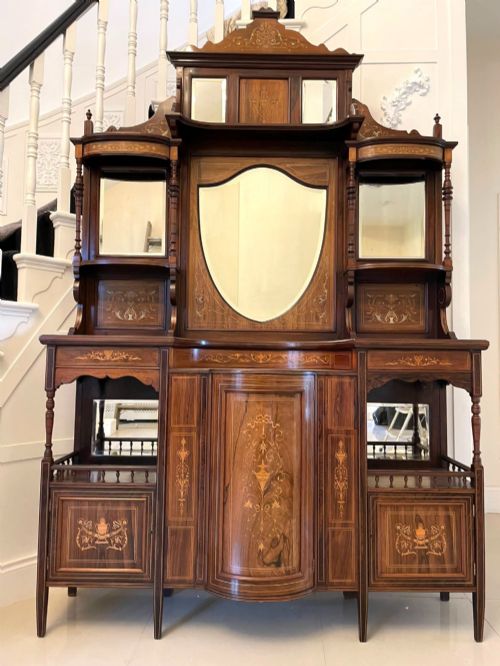
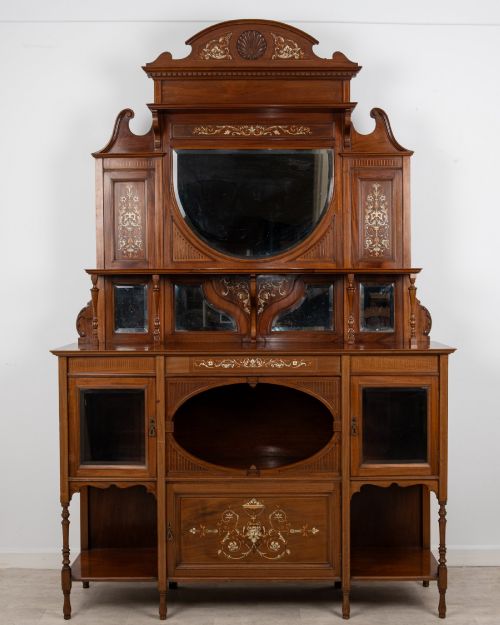
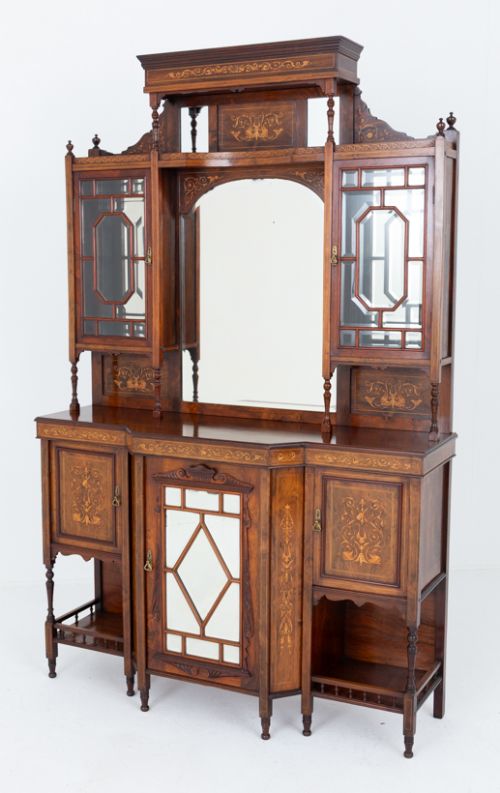
A victorian inlaid chiffonier brings rich timber surfaces and delicate contrasting details into a room, serving as a handsome focal point with practical storage.
Victorian Inlaid Chiffonier
A victorian inlaid chiffonier appears in various forms across the nineteenth century, merging the function of a low sideboard with display and storage compartments. Buyers searching this phrase encounter low timber cabinets designed for formal reception rooms, often incorporating glass doors or mirrored backs.
The pieces on this page span the Victorian era alongside the Edwardian period, with designs ranging from austere mahogany cupboards to profusely decorated rosewood and burr walnut furniture. Makers frequently adopted styles such as the Aesthetic Movement, Sheraton Revival, and Neoclassical vocabularies.
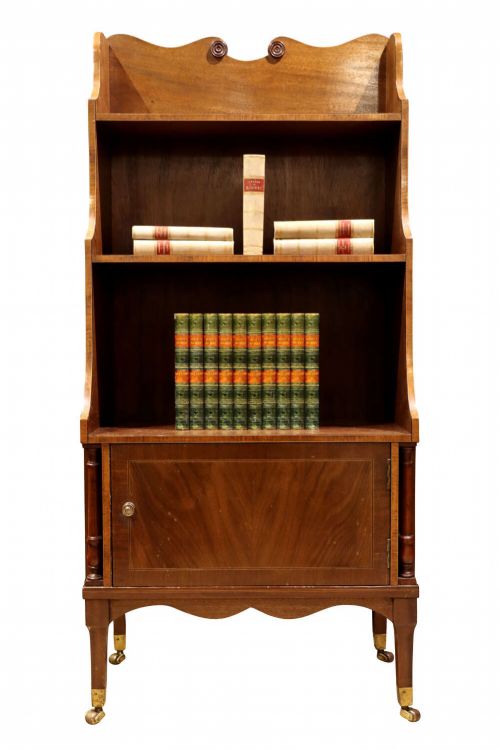
Beyond the standard chiffonier shape, the selection encompasses credenzas, side cabinets, and waterfall bookcases that share similar timber construction and delicate contrasting stringing. These low-profile storage items provided British households with a surface for display alongside enclosed space for books or tableware.
Materials and construction
Cabinet makers utilised dense hardwoods including rosewood, mahogany, walnut, and burr walnut as the primary carcasses for these pieces. These figured timbers provided deep, warm background tones that contrasted sharply against lighter decorative elements.
Decoration relied heavily on marquetry and boxwood or satinwood inlay, creating floral scrolls, classical urns, and geometric borders across doors and friezes. Brass mounts, castors, and mirrored glass panels were integrated to add functional utility and reflective light to the dark timber frames.
Victorian Inlaid Chiffonier Retail Price Guide 2026
Typical asking prices for victorian inlaid chiffonier among the pieces listed under this phrase on Sellingantiques today, from the lower quarter to the upper quarter. They describe what is for sale here now, not the wider market.
Listings feature rosewood, mahogany, and walnut cabinets spanning the Victorian era and the Edwardian Sheraton Revival style.
Distinctions in craftsmanship
The quality of a piece rests in the crispness of its marquetry cutting and the choice of timber veneer. Superior examples display dense, well-figured grains paired with finely detailed boxwood stringing that remains flush with the surrounding wood.
Structural integrity and hardware choices further differentiate the range, as workshops utilised solid brass castors, heavy lock mechanisms, and robust internal carcase construction. Pieces bearing recorded maker signatures demonstrate a higher tier of workshop execution and design ambition.
Collinson & Lock·Edwards & Roberts·Gillows·James Plunckett·Maple and Co·Stephen Webb
The Victorian Inlaid Chiffonier Glossary
- Chiffonier
- A low sideboard or cabinet featuring cupboards enclosed by doors, often surmounted by a shelf or mirror back. This form evolved during the nineteenth century to store china, linen, or books in the parlour.
- Marquetry
- The art of forming decorative patterns by fitting together thin slices of wood veneer of different colours and grains. It differs from inlay by assembling the entire design sheet before applying it to the carcase.
- Credenza
- A sideboard or buffet cabinet typically standing low to the floor, frequently associated with mid to late nineteenth-century formal dining and drawing rooms. These items often showcase extensive marquetry panels and curved glass doors.
- Stringing
- Thin lines of contrasting timber inlaid into shallow channels on the furniture surface to create geometric borders and panels. This technique highlights the structural outlines of drawers and cabinet doors.
- Burr walnut
- Timber taken from the gnarled growths on walnut trees, prized for its intricate, swirling grain patterns. Cabinet makers deployed it as a veneer on principal display surfaces.
Victorian Inlaid Chiffonier: Frequently Asked Questions
What is a chiffonier used for?
A chiffonier provides enclosed storage behind cabinet doors, alongside a top surface suitable for displaying ornaments, clocks, or lamps. Nineteenth-century households utilised them in reception rooms to keep everyday items close at hand yet out of sight.
In modern interiors, these cabinets serve similar functions in dining rooms, hallways, or living spaces. The internal shelves accommodate books, glassware, or table linen while maintaining a compact floor footprint.
How do I date a Victorian cabinet?
Dating relies on examining the timber choices, construction methods, and stylistic cues present in the design. Mid-century examples often feature rosewood and heavy classical proportions, whereas later pieces towards the turn of the century lean into satinwood and lighter Sheraton Revival forms.
Maker signatures, registration marks, or brass hardware stamps offer further chronological clues. Examining the secondary timbers inside drawers and carcase backs helps confirm the manufacturing period.
Where should I place a chiffonier?
These cabinets suit living rooms, dining rooms, or wide hallways where their low profile will not block natural light or movement. Placing them against a solid wall allows the timber grain and inlaid details to catch ambient light.
Avoid positioning antique timber furniture in direct sunlight or directly against active heat sources. Stable indoor temperatures protect the veneer and prevent the wood from drying out.
What is the difference between a chiffonier and a sideboard?
A chiffonier is typically smaller and more compact than a formal dining room sideboard, often incorporating a raised shelf, mirror, or gallery back. They originated as versatile multi-purpose cabinets for drawing rooms rather than dedicated dining furniture.
Sideboards generally focus on long serving surfaces and extensive bottle drawers. Chiffoniers prioritise decorative inlay and compact display capabilities suited to parlour use.