



Marquetry Buffet Display
These marquetry buffet display pieces combine deep walnut timbers with intricate floral inlays, offering a commanding focal point for any formal interior.
Marquetry Buffet Display
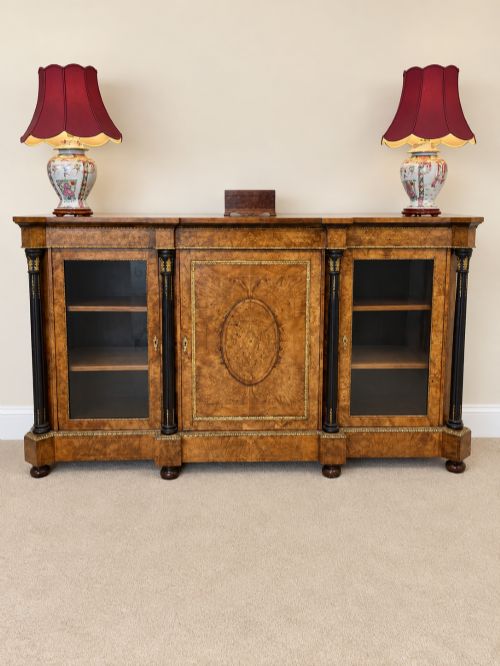
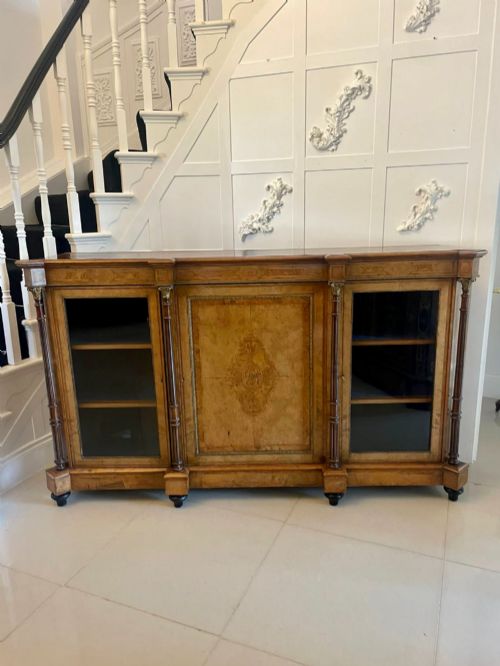
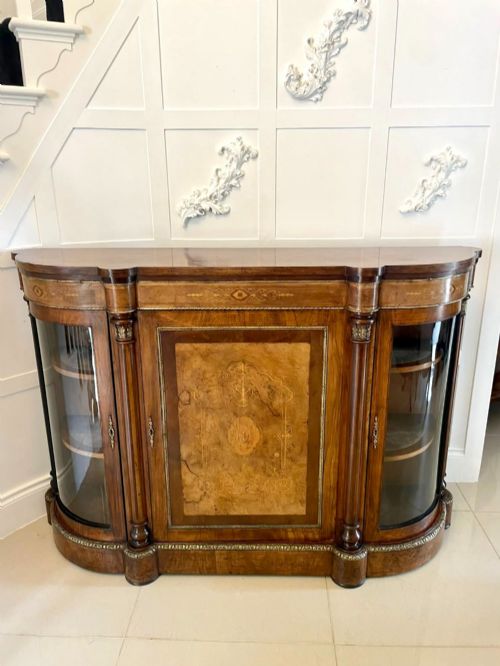
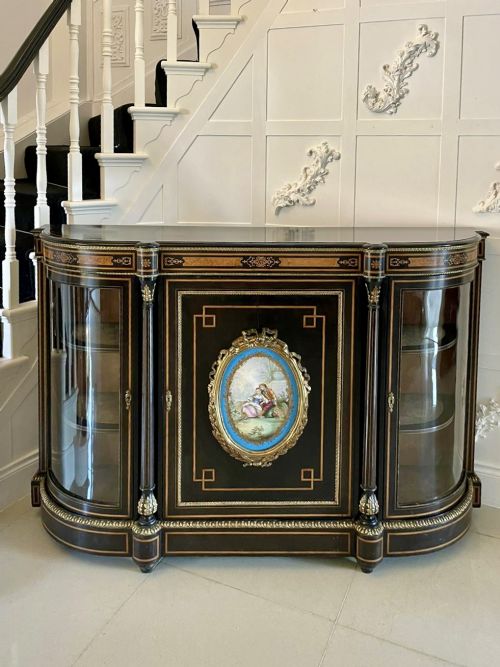
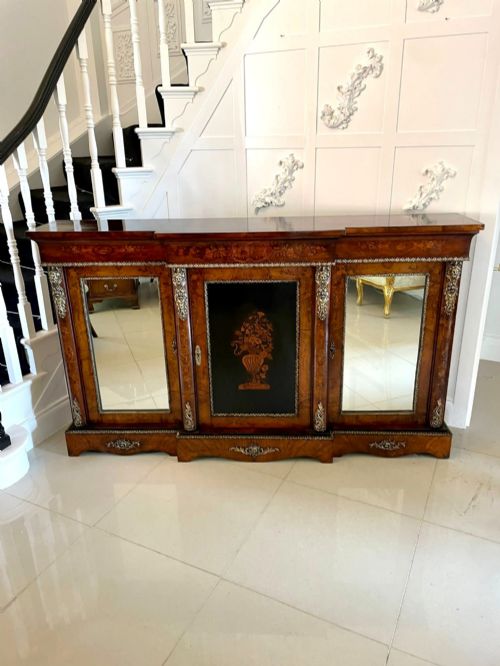
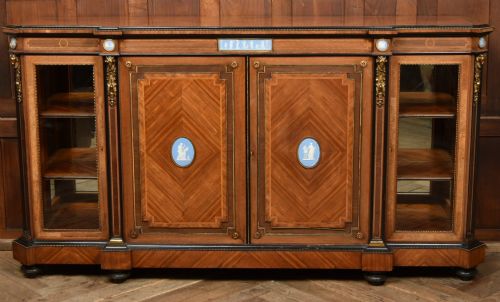
A marquetry buffet display typically manifests on this page through Victorian and nineteenth-century credenzas, sideboards, and side cabinets. These substantial forms serve as both storage units and display platforms, often incorporating glazed doors or central mirrored backs.
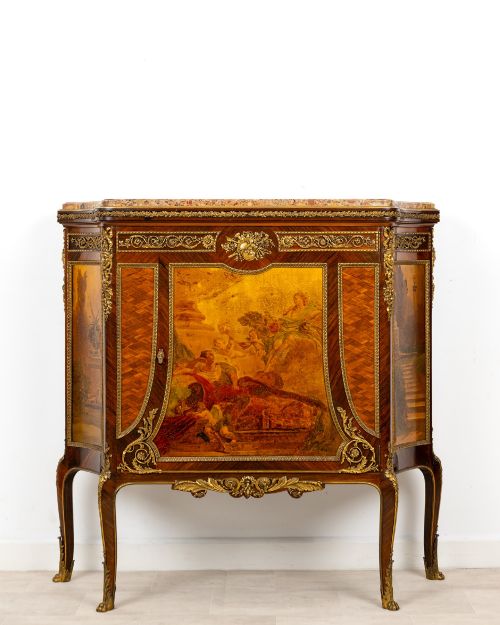
Burr walnut and rosewood dominate the construction, frequently accented with boxwood inlay and ormolu mounts. Makers utilised French and English revival styles, producing pieces that range from serpentine fronts to traditional bow-fronted configurations.
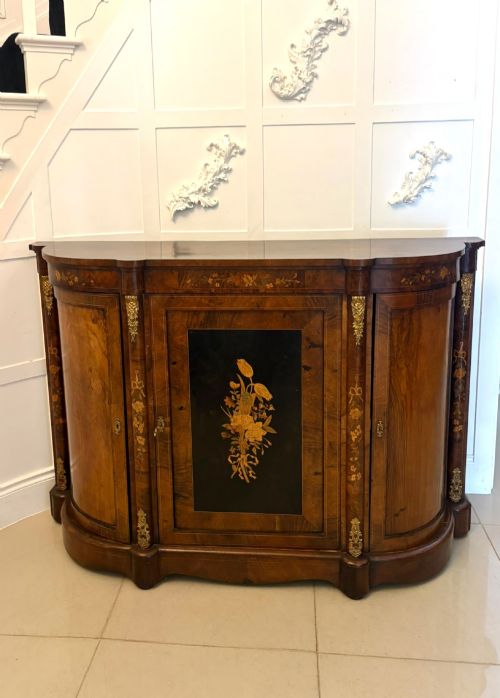
The version most commonly encountered is the Victorian burr walnut credenza featuring detailed floral marquetry. These items reflect mid to late nineteenth-century craftsmanship, spanning decades from eighteen-fifty to nineteen-hundred.
How They Were Made
Craftsmen built these cabinets upon solid timber carcases, applying figured burr walnut and rosewood veneers to achieve rich surface patterns. Boxwood and various contrasting woods were then meticulously hand-cut and fitted into the veneer to create elaborate floral marquetry panels.
Gilt bronze ormolu mounts are frequently cast and applied to corners and borders, enhancing the architectural lines of the furniture. Glass panels and mirrored backs complete the construction, requiring precise joinery to house delicate internal shelving and display areas securely.
Marquetry Buffet Display Retail Price Guide 2026
Typical asking prices for marquetry buffet display among the pieces listed under this phrase on Sellingantiques today, from the lower quarter to the upper quarter. They describe what is for sale here now, not the wider market.
Some nineteenth-century makers hid tiny floral motifs in the marquetry corners, leaving a secret garden tucked behind the ormolu mounts.
What Varies in Quality
The refinement of the marquetry work sets top-tier examples apart from simpler items. Superior pieces display crisp, tight-grained floral inlays with minimal filler, whereas lesser examples rely on coarser, more repetitive patterns.
The choice and figuring of the primary timber also dictate distinction. Heavily figured burr walnut and carefully selected amboyna command greater attention than plain walnut surfaces, while crispness in the brass ormolu mounts indicates superior workshop output.
Shapland and Petter·Gillow·Edwards and Roberts·James Plunckett
The Marquetry Buffet Display Glossary
- Marquetry
- Decorative patterns formed by fitting together thin slices of wood veneer onto a carcase. This technique allows for complex pictorial or floral designs across cabinet doors.
- Credenza
- A low cabinet, frequently enclosed by doors and mounted with ormolu, designed for display and storage. It stands as a primary form within nineteenth-century dining and drawing rooms.
- Ormolu
- Gilt bronze mounts applied to furniture edges and feet for architectural ornamentation. This metallic detail adds a bright contrast against dark walnut and ebonised surfaces.
- Burr Walnut
- Timber taken from walnut tree growths, producing swirling, highly figured grain patterns. It serves as the primary veneer choice for high-status Victorian cabinets.
- Boulle
- Marquetry style utilising tortoiseshell and brass inlay, often seen on French nineteenth-century pieces. This technique creates a striking metallic contrast against dark backgrounds.
Marquetry Buffet Display: Frequently Asked Questions
What rooms suit a marquetry buffet display?
These cabinets suit large dining rooms or formal reception spaces where their length and reflective glass elements can anchor the room. They function well against plain walls that allow the burr walnut grain and boxwood inlay to stand out.
Purchasers often utilise the flat top surfaces for displaying silver, ceramics, or lamps. The internal shelving provides practical storage for glassware and table linen while keeping items protected behind glazed doors.
How do I identify a Victorian piece?
Victorian cabinets typically feature dense burr walnut veneers, brass ormolu mounts, and intricate boxwood floral marquetry. The construction often employs mahogany or oak as secondary timbers inside the carcase.
Cabinets from this era frequently incorporate mirrored backs or serpentine glass doors. Dating relies on stylistic cues like French revival influences and proportions associated with the mid to late nineteenth century.
How do I care for walnut veneer?
Maintain walnut veneer by keeping the cabinet away from direct sunlight and steady heat sources to prevent the timber from drying out. Dust regularly with a dry, soft cloth and avoid chemical polishes.
Apply a traditional beeswax sparingly to nourish the wood surface and preserve the sheen. Gentle handling ensures the delicate boxwood inlay remains secure within the surrounding veneer.
What is the difference between a credenza and a sideboard?
Credenzas are typically low, enclosed cabinets featuring central doors flanked by curved glass end cupboards. They were designed primarily for formal display rather than heavy serving use.
Sideboards often include taller backboards, mirrors, or raised drawer sections intended for dining room utility. Both forms share nineteenth-century origins and utilise similar burr walnut and marquetry techniques.