





Victorian Inlaid Candle Stand
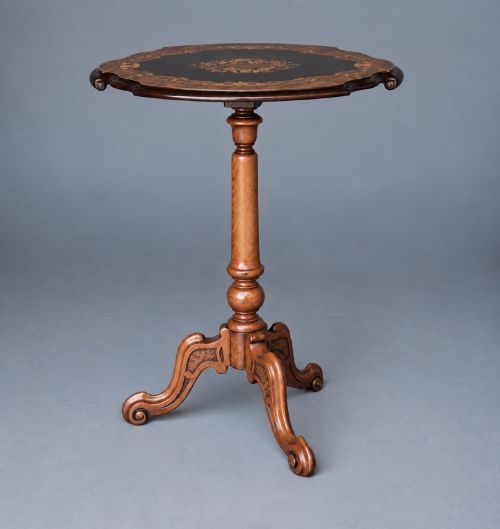
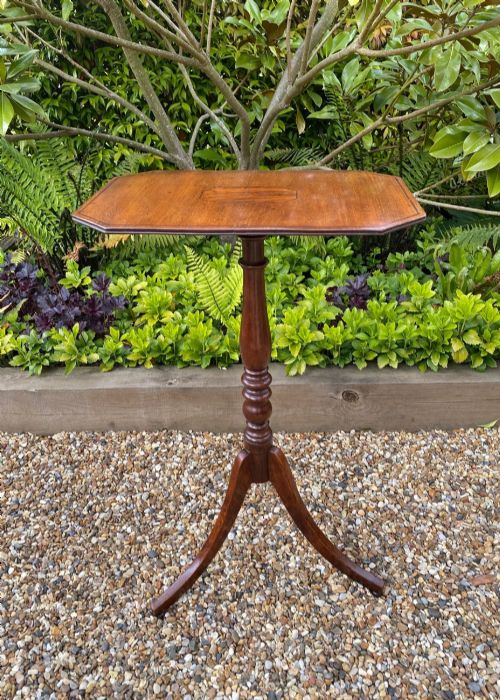
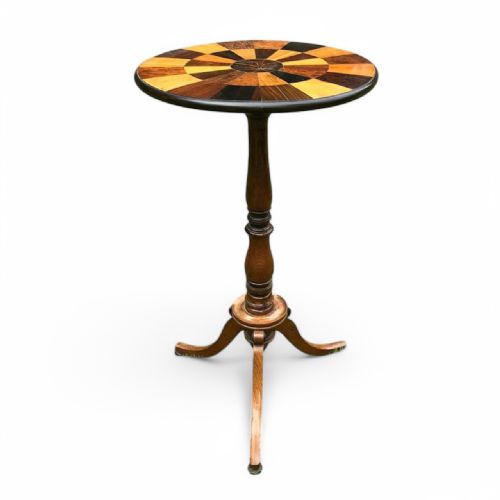
These Victorian inlaid candle stand pieces combine timberwork and refined utility, offering a distinct surface for display.
Victorian Inlaid Candle Stand
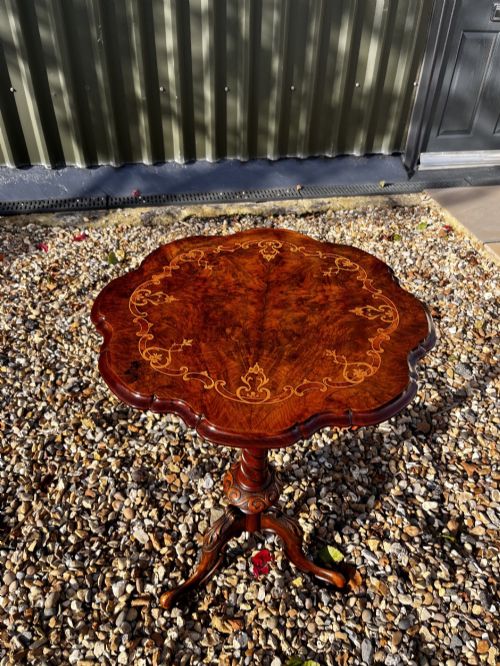
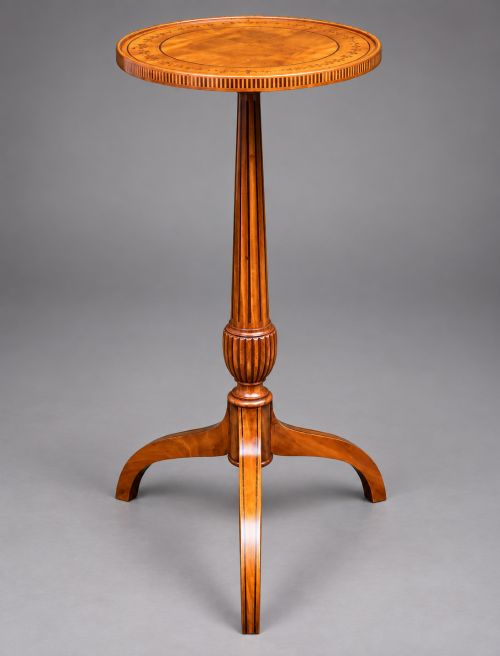
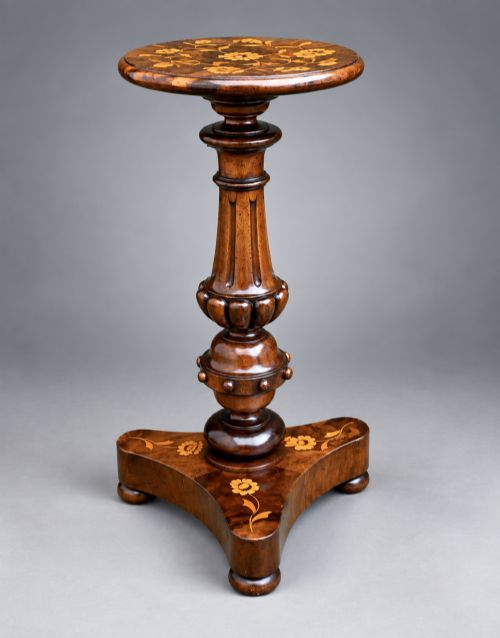
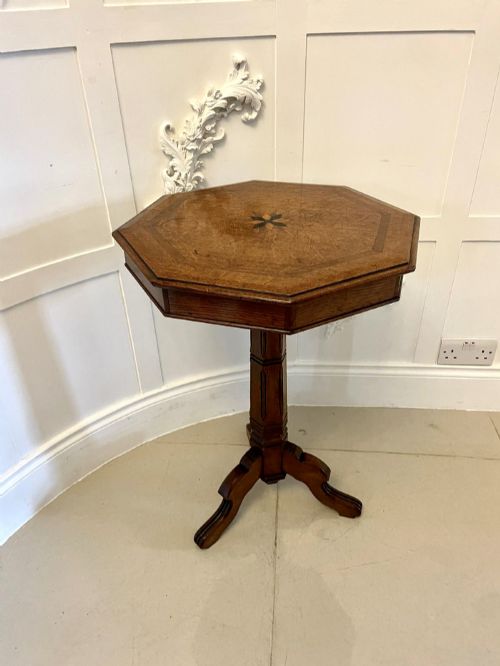
A victorian inlaid candle stand is typically encountered as a compact occasional table or wine table designed for small spaces. The pieces listed on this page span the 19th Century, drawing on Victorian, Sheraton Revival, Dutch Marquetry, and Regency styles.
Makers utilised various timber forms such as round dish-topped tripod tables and circular lamp tables. These objects frequently served functional domestic roles before evolving into decorative furniture.
Originating largely from 19th-century English workshops, the selection also includes specific candlestick forms in materials like Ashford marble and pewter with tortoiseshell.
Materials and construction
Construction relies heavily on traditional cabinet timbers including walnut, burr walnut, mahogany, oak, cherry, and satinwood. These woods provide stable, dense bases suitable for turned shafts and tripod legs.
Surface decoration is achieved through wood inlay, marquetry inlay, and contrasting inlaid woods. Artisans meticulously fitted decorative veneers into the primary timber ground to create intricate geometric or floral patterns.
Victorian Inlaid Candle Stand Retail Price Guide 2026
Typical asking prices for victorian inlaid candle stand among the pieces listed under this phrase on Sellingantiques today, from the lower quarter to the upper quarter. They describe what is for sale here now, not the wider market.
The listings span the 19th Century and include walnut, mahogany, oak, satinwood, and pewter alongside marble.
Evaluating quality and execution
The sophistication of the marquetry inlay and the choice of primary timber distinguish finer examples from simpler utilitarian pieces. Burr walnut and satinwood surfaces demand greater skill in preparation and application than plain oak or mahogany.
Structural integrity rests on the stability of the tripod base and the precision of the turning on the central pillar. Superior examples maintain tight joinery and crisp detailing without excessive restoration.
The Victorian Inlaid Candle Stand Glossary
- Tripod table
- A small occasional table supported by three legs radiating from a central pillar. This form became particularly popular during the 18th and 19th centuries for portability.
- Marquetry
- Decorative veneer work arranged in pictorial or geometric patterns using various coloured woods. It requires immense patience and precision from the cabinet maker.
- Satinwood
- A durable, lustrous timber with a natural golden sheen utilised extensively in high-status 19th-century furniture. It serves as an ideal contrasting ground for darker woods.
- Ashford marble
- A polished composite stone inlay technique developed in Derbyshire, incorporating local minerals into black marble. Pieces featuring this material display striking botanical motifs.
Victorian Inlaid Candle Stand: Frequently Asked Questions
What is a candle stand used for?
These tables and stands were originally designed to hold lighting apparatus such as candles or small lamps close to seating areas. Today, collectors utilise them as compact side tables for display purposes.
Their modest footprint allows them to fit easily into corners or beside chairs without dominating a room.
How do I identify a Victorian piece?
Victorian furniture often relies on historical revival styles such as Sheraton Revival or Dutch Marquetry while employing industrial-era precision in timber preparation. Examining the secondary woods and construction methods helps confirm the nineteenth-century date.
Signatures or registration marks are occasionally found, though many pieces remain unmarked.
Are these stands sturdy enough for daily use?
Most tripod tables and candle stands are structurally sound for holding lightweight objects like books or small lamps. The three-legged design provides natural stability on uneven floors.
Care should be taken not to overload the tops, as the slender legs are built for elegance rather than heavy weight.
How should I care for inlaid wood?
Inlaid surfaces require consistent indoor humidity levels to prevent the delicate veneers from lifting or cracking. Gentle dusting with a dry cloth is usually sufficient for routine maintenance.
Avoid placing these items near direct heat sources or in strong sunlight, which can fade satinwood and walnut.