





Sheraton Revival Wine Table
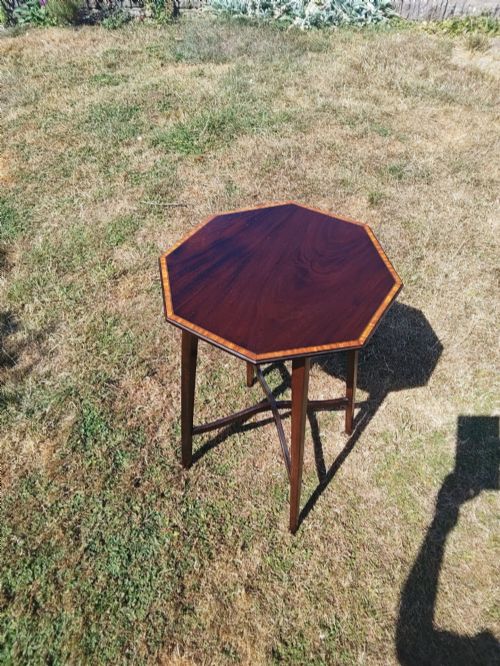
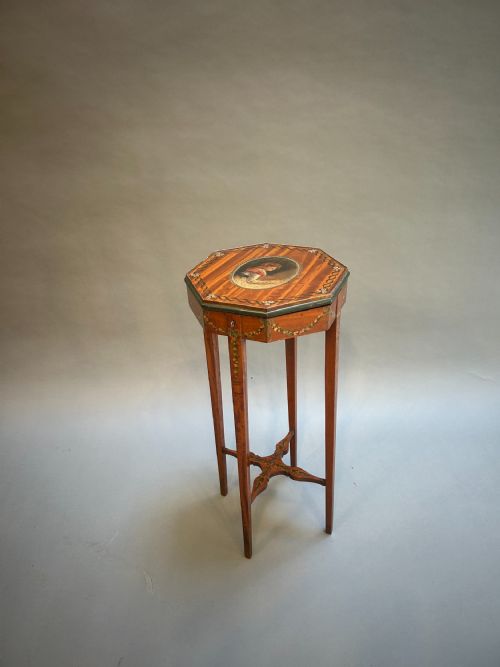
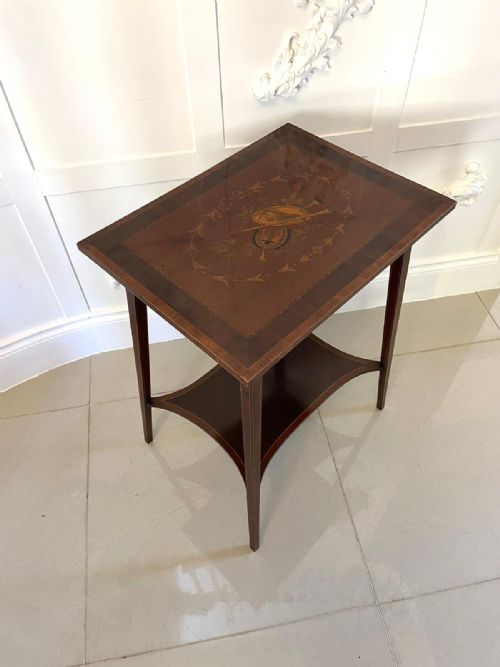
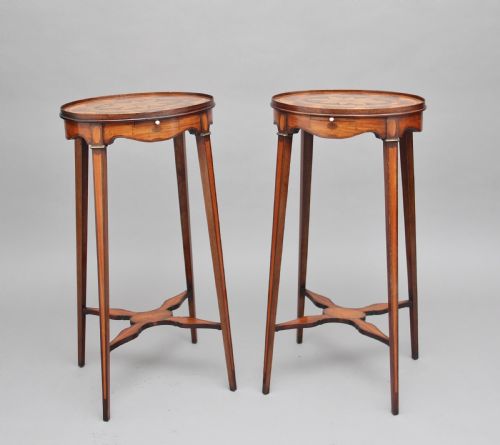
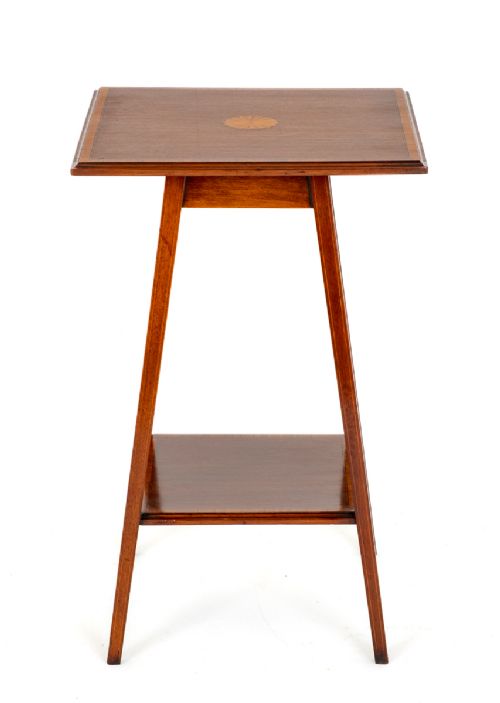
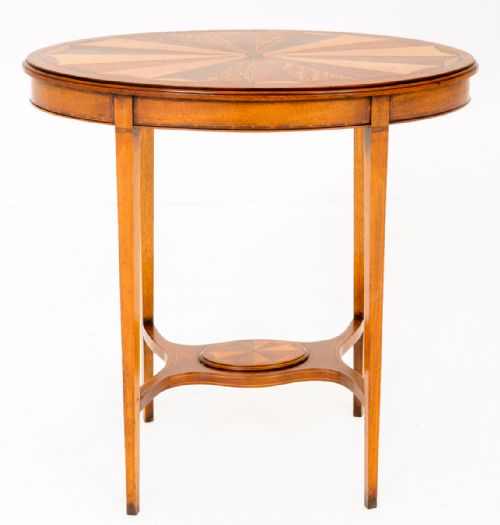
These Sheraton Revival wine table examples combine light timbers and delicate classical ornament, offering compact surfaces suited to traditional and modern rooms alike.
Sheraton Revival Wine Table
A Sheraton revival wine table represents the late nineteenth and early twentieth century revival of eighteenth century neoclassical design, drawing heavily on the vocabulary of Thomas Sheraton. Buyers encounter circular, octagonal and oval top forms alongside tall slender variants designed for specific display purposes.
The materials and construction reflect the Edwardian and Victorian periods, spanning from the late nineteenth century into the early twentieth century. These pieces function as occasional, lamp and side tables, appearing frequently in mahogany and satinwood.
Makers of this era produced compact tables that served as wine tables, urn stands and occasional pieces for the drawing room. The evidence shows both single items and matched pairs surfacing across Edwardian and Victorian inventories.
Materials and construction
Makers utilised solid timbers and fine veneers, building tabletops and supports primarily in mahogany and satinwood. Cabinetmakers incorporated boxwood and other contrasting woods for linear stringing and detailed inlay work.
Surface decoration frequently combined wood inlay with hand painted details on timber tops. Brass elements appear selectively as structural or decorative accents on specific forms.
Sheraton Revival Wine Table Retail Price Guide 2026
Typical asking prices for sheraton revival wine table among the pieces listed under this phrase on Sellingantiques today, from the lower quarter to the upper quarter. They describe what is for sale here now, not the wider market.
Some tall wine tables were built narrow enough to prevent guests from overzealously gesturing near the claret.
Assessing quality and execution
Quality rests upon the crispness of the inlay and the selection of figured timber veneers such as flamed mahogany and satinwood. The precision of the hand painting on the top surfaces further separates standard production from superior examples.
Proportion and stability define the better items in this category, where slender supports remain rigid and upright without wobble. The subtlety of the boxwood stringing and the integration of brass components reveal the maker's hand.
The Sheraton Revival Wine Table Glossary
- Sheraton Revival
- A late nineteenth and early twentieth century design movement that reinterpreted the neoclassical furniture forms promoted by designer Thomas Sheraton. This style favoured satinwood, mahogany, painted decoration and classical inlay motifs.
- Satinwood
- A lustrous, hard timber with a natural golden yellow sheen used extensively for veneers and solid tabletops during the Victorian and Edwardian periods. It provides a pale canvas for contrasting wood inlay and hand painting.
- Inlay
- A decorative technique where pieces of contrasting wood, such as boxwood, are inserted into recessed cavities in the primary timber. This method creates geometric borders and floral motifs on the tabletop.
- Occasional Table
- A small, versatile table intended to be moved around a room as needed for holding drinks, lamps or decorative objects. The evidence shows these serving also as wine tables, lamp tables and centre tables.
- Stringing
- A thin, narrow strip of contrasting wood inlaid into the surface of a piece to form linear borders and framing lines. Cabinetmakers used boxwood stringing to define the edges of mahogany and satinwood tops.
Sheraton Revival Wine Table: Frequently Asked Questions
What is a Sheraton revival wine table?
A Sheraton revival wine table is a small, decorative table produced during the Victorian and Edwardian eras, inspired by eighteenth century neoclassical designs. These pieces typically feature slender proportions and contrasting wood inlays.
They were built to hold small items, drinks or lamps in principal rooms. The form bridges decorative arts and practical utility.
How do I date an Edwardian wine table?
Dating relies on timber selection, construction methods and characteristic decorative details recorded in the period evidence. Edwardian pieces often combine mahogany or satinwood with boxwood stringing.
Makers of the late nineteenth and early twentieth centuries utilised specific styles of painted decoration and inlay that distinguish them from earlier Georgian originals.
Where were these tables used?
These tables served primarily as occasional surfaces in drawing rooms, parlours and libraries. Their compact footprints allowed placement beside seating or in corners.
Owners utilised them as lamp stands, display surfaces and wine tables during formal entertaining and daily domestic life.
What woods were used in these tables?
Makers constructed these pieces using mahogany and satinwood as the principal primary timbers. Boxwood was frequently employed for fine stringing and inlay details.
Selected examples incorporated painted wooden tops and brass fittings to enhance the neoclassical aesthetic.
Are painted tops original to the period?
Hand painted tops form a recognised part of the stylistic repertoire seen in Victorian and Edwardian pieces. Artisans decorated satinwood and mahogany surfaces with floral or classical motifs.
These painted elements match the decorative ambition of the Sheraton revival style recorded in historical inventories.