
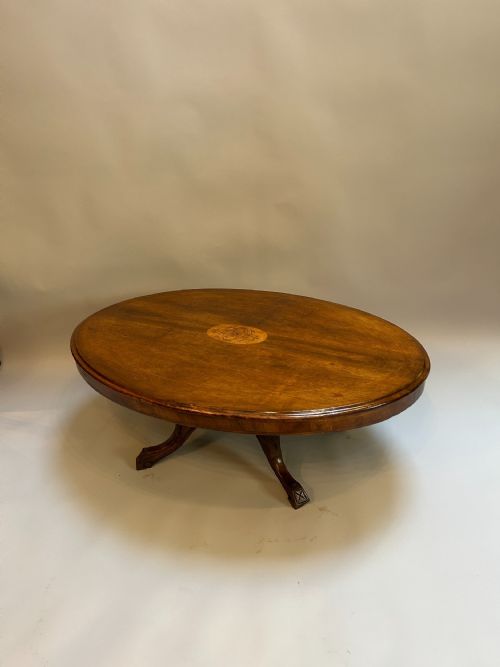


Victorian Marquetry Tripod Table
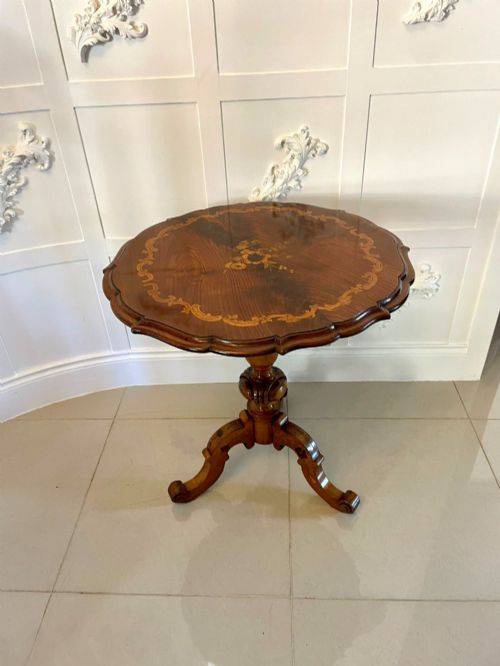
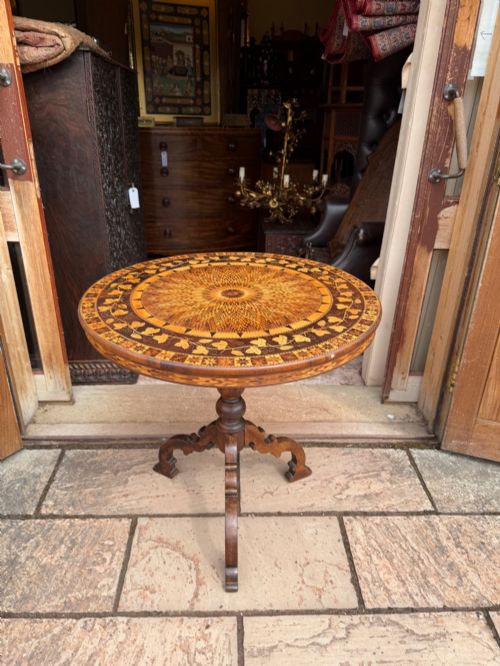
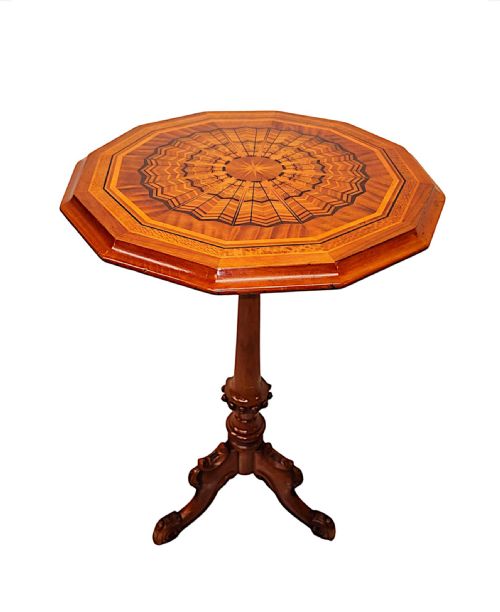
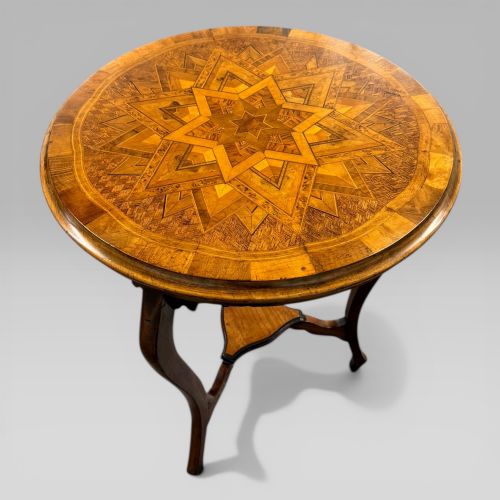
A victorian marquetry tripod table brings complex floral and geometric wood inlay together with a sturdy three-legged pedestal support for decorative utility.
Victorian Marquetry Tripod Table
A victorian marquetry tripod table combines a circular, oval or hexagonal top featuring intricate wood inlay with a central pillar and three supporting legs. These pieces emerge predominantly from the nineteenth century, spanning decades from eighteen fifty to eighteen ninety.
The assortment includes specialised forms such as games tables, sewing tables, work tables and wine tables alongside general occasional tables. Walnut and burr walnut dominate the surfaces, complemented by rosewood, mahogany, fruitwood and satinwood.
Stylistic influences stretch across domestic Victorian production to continental centres, incorporating Italian Sorrento ware, Swiss Black Forest carving and nineteenth-century Italian workshop traditions.
What varies in quality
The fineness of the marquetry cutting and the diversity of the timber species determine the upper tier of execution. Tighter joints in the inlay work and sophisticated pictorial or geometric compositions separate ambitious cabinet work from standard production.
The sculptural form of the pedestal and the carving on the tripod legs dictate the architectural success of the piece. Substantial timber thickness and balanced proportions ensure stability across different table formats.
Some nineteenth-century makers concealed folding chessboards inside occasional tables so family members could transition from tea to gaming instantly.
Gillows·Anton Seuffert
The Victorian Marquetry Tripod Table Glossary
- Marquetry
- Decorative veneer work forming pictures or patterns by assembling pieces of different coloured woods. This technique requires meticulous hand-cutting and fitting.
- Tripod base
- A furniture support utilising a central column resting on three individual legs. This design provides stable placement on uneven floors.
- Sorrento ware
- Inlaid wood ornamentation originating from the Italian coastal town of Sorrento during the nineteenth century. These items frequently display architectural views or intricate floral motifs.
- Burr walnut
- Timber taken from the warted excrescences of walnut trees, producing swirling grain patterns. Cabinet makers prized this material for high-status table surfaces.
- Tilt-top
- A hinged tabletop mechanism allowing the surface to fold vertically when not in use. This clever engineering saved domestic floor space in nineteenth-century parlours.
Victorian Marquetry Tripod Table: Frequently Asked Questions
How were these tables used originally?
Nineteenth-century households utilised these tables for serving tea, holding lamps, or displaying decorative ornaments in the parlour. Specialised variants accommodated needlework, chess, and card games.
Their lightweight tripod construction allowed servants or family members to reposition them easily around the room as social activities shifted throughout the day.
What woods appear most frequently?
Walnut and burr walnut form the primary foundation for the majority of these nineteenth-century pieces. Cabinet makers also incorporated rosewood, mahogany, and satinwood into the main structures.
Contrast veneers for the marquetry panels typically include various fruitwoods, boxwood, and specialised specimen timbers sourced internationally.
How do tilt-top mechanisms function?
A clever hinge and catch mechanism underneath the tabletop allows the surface to pivot from horizontal to vertical. This clever engineering enabled the furniture to store flat against a wall.
Original brass catches secure the top firmly in place when lowered for daily domestic use.
What distinguishes Sorrento ware?
Sorrento ware originates from Italian workshops specialising in minute parquetry and marquetry depicting local scenery, figures, or delicate floral arrangements. These pieces utilise warm Mediterranean timber tones.
Makers in this region achieved remarkable detail using tiny geometric tessellations alongside pictorial veneer work.