


Victorian Inlaid Breakfast Table
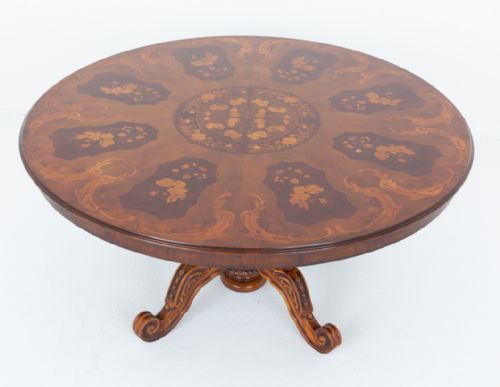
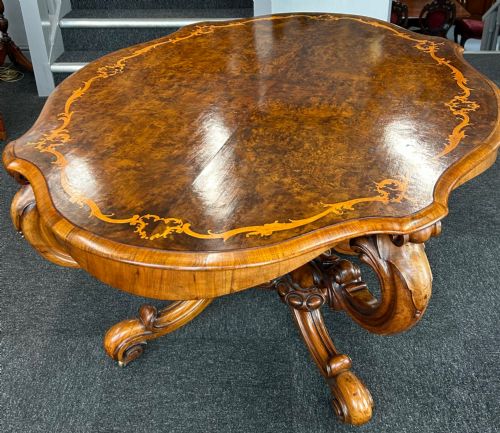
A victorian inlaid breakfast table provides a central surface for morning dining or drawing room display, combining figured timber with precise decorative work.
Victorian Inlaid Breakfast Table
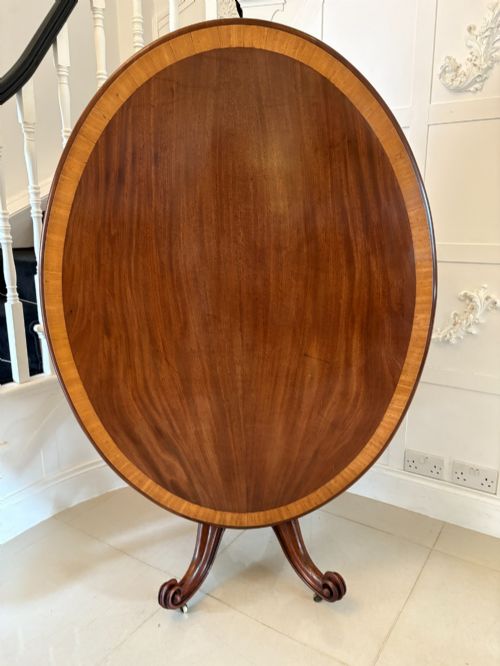
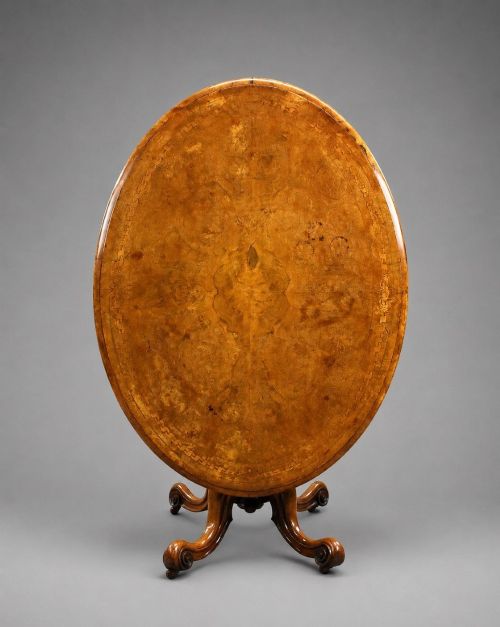
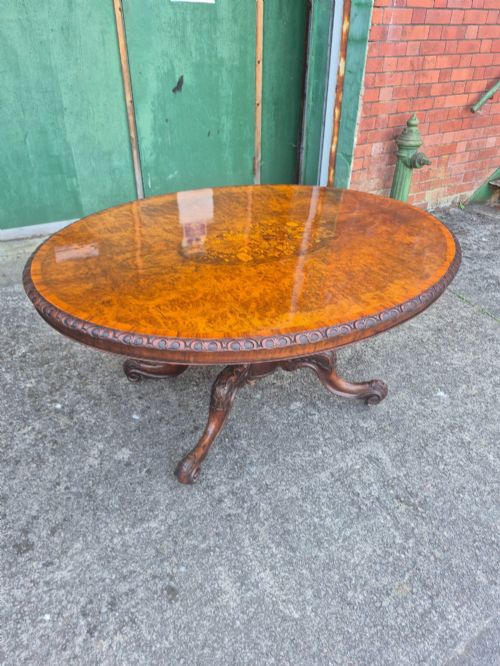
A victorian inlaid breakfast table combines the functional proportions of a large pedestal dining piece with the refined ornamentation typical of nineteenth-century reception rooms. These circular, oval, and rectangular surfaces appear frequently in burr walnut, often paired with tilt-top or snap-top mechanisms designed to save space when not in use.
The surviving examples range from the 1860s through the late nineteenth century, spanning Victorian, Edwardian, and occasional Regency revivals. Buyers encounter specific variants such as loo tables and centre tables, which share the characteristic pillar-and-claw or pedestal support system.
Most pieces on offer utilise walnut and burr walnut veneers, though rosewood, oak, sycamore, and satin birch also appear. The physical evidence points to heavy domestic use paired with ornamental ambition, resulting in substantial furniture built for the principal rooms of large houses.
Materials and Technique
Cabinet makers constructed these tables using solid secondary timbers as a carcass for highly figured burr walnut, rosewood, or birdseye maple veneers. The characteristic warmth and movement of the top surface derive from carefully matched veneer leaves laid over a stable base.
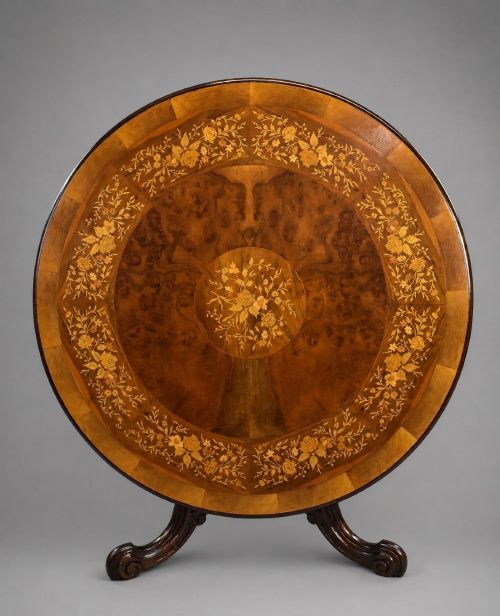
Decoration relies heavily on contrasting wood inlays, including boxwood, fruitwood, and ebony, shaped into floral marquetry, arabesques, and cross banding. Many examples integrate a tilt-top action enabled by a brass or iron catch mechanism mounted to a carved wooden pedestal.
Listings feature walnut, burr walnut, rosewood, oak, sycamore, and satin birch, spanning the Victorian period alongside Edwardian and Regency styles.
Craftsmanship and Proportion
The distinction between standard domestic output and exhibition quality lies in the depth of the marquetry and the choice of timber figure. Superior examples display dense, highly figured burr walnut paired with crisp, multi-wood inlay work that remains flush with the surrounding surface.
Structural integrity of the central pedestal and leg junction marks another division in standard. Tables with deeply carved tripod bases and robust tilt mechanisms maintain stability over decades of use, whereas lesser pieces show more mechanical wear at the pivot points.
Jackson and Graham·John Kendal·George Smith
The Victorian Inlaid Breakfast Table Glossary
- Burr Walnut
- A timber harvested from the wart-like growths on walnut trees, yielding highly swirled and mottled grain patterns. Cabinet makers prized this wood for veneering large table tops.
- Marquetry Inlay
- The art of forming decorative patterns using thin slices of various coloured woods fitted into a veneer background. This technique creates floral and geometric motifs across the table surface.
- Tilt Top Table
- A table fitted with a hinged mechanism allowing the top to pivot to a vertical position. This design enabled servants to store the furniture against a wall when the room served other purposes.
- Loo Table
- A nineteenth-century round or oval table originally intended for the card game loo. These pieces share forms and sizes with standard breakfast tables.
- Cross Banding
- A border technique where veneer strips run perpendicular to the main grain of the table top. This frames the central panel and protects the edge grain.
Victorian Inlaid Breakfast Table: Frequently Asked Questions
How do I use a tilt top table?
Release the under-table wooden or brass catch to pivot the surface from horizontal to vertical. This allows the piece to stand flat against a wall.
Return the top to the horizontal position and engage the lock before placing heavy objects on the surface.
Were these tables used for breakfast?
Original nineteenth-century domestic habits applied these large pedestal surfaces to morning dining and general parlour tasks. Their generous dimensions accommodated multiple settings.
Later use often shifts these objects to centre tables or occasional display furniture in large reception spaces.
How do I identify a loo table?
Loo tables share the circular or oval proportions of breakfast tables and often feature the same tilt-top mechanism. The distinction lies in their historical association with card games.
Most examples employ burr walnut and inlaid veneers supported by a central carved pedestal.
What woods were used for the inlay?
Cabinet makers utilised contrasting light and dark timbers such as boxwood, fruitwood, and ebony to create floral marquetry and geometric borders. These materials stand out against the darker walnut background.
Precision in cutting and fitting these thin wood sections defines the quality of the decoration.