



Victorian Inlaid Bench
These Victorian inlaid bench pieces combine period seating forms with decorative marquetry, offering a classic addition to a traditional interior.
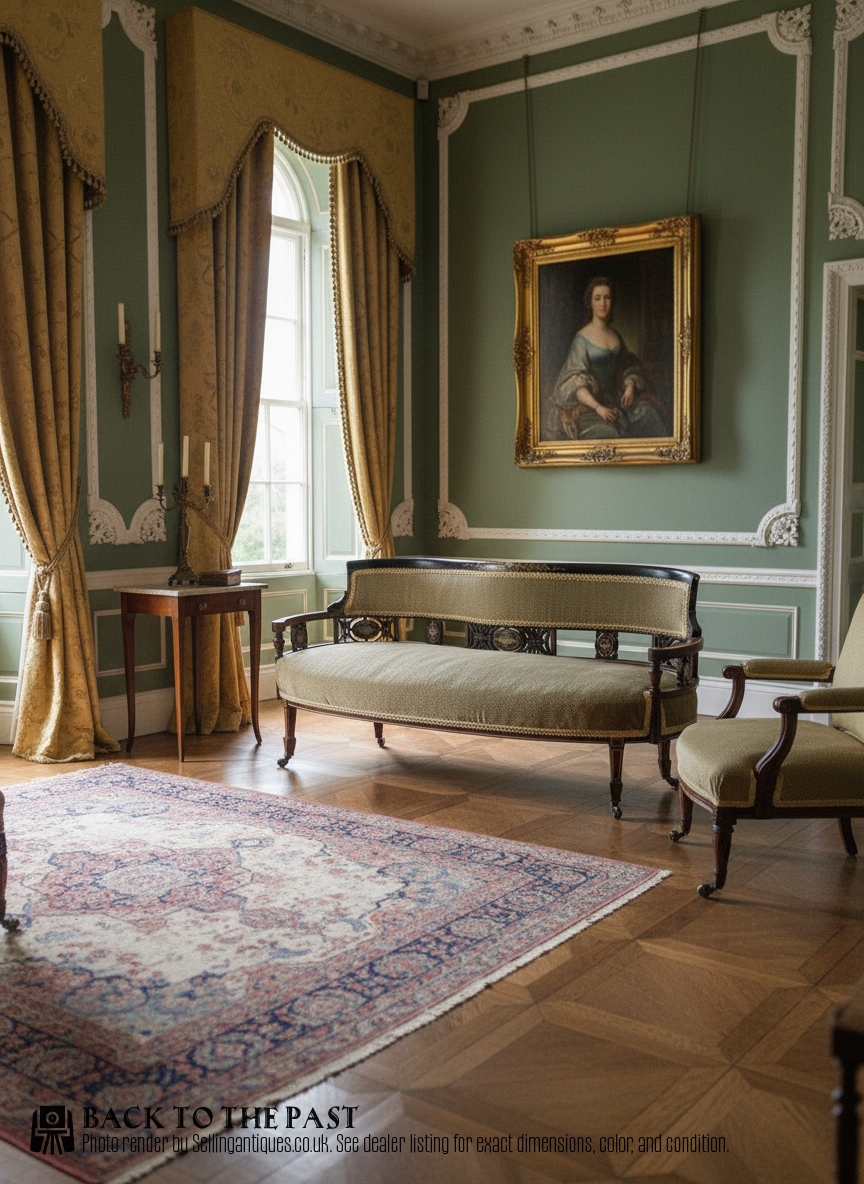
Victorian Inlaid Bench
When you search for a victorian inlaid bench, you encounter a selection of seating forms created during the nineteenth century and the early twentieth century. The inventory on this page centres primarily on settees, sofas, and conversation seats rather than standard hallway benches.
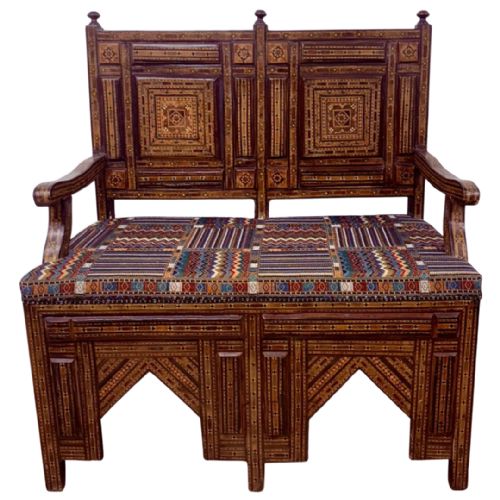
The styles span traditional Victorian and late Victorian designs alongside specific revival movements like Sheraton Revival, Moorish Revival, and Egyptian Revival. These variations reflect the diverse taste of the nineteenth century, ranging from classical European interpretations to exotic influences.
Originating from periods recorded around 1870, 1880, 1910, and broader nineteenth-century spans, these pieces serve as practical seating while providing distinct decorative character through their woodwork.
How they were made
Cabinet makers utilised dense hardwoods such as mahogany, rosewood, walnut, and oak as the structural foundation for these seating pieces. These timbers provided the durability required for domestic furniture frames while offering a smooth surface for ornamentation.
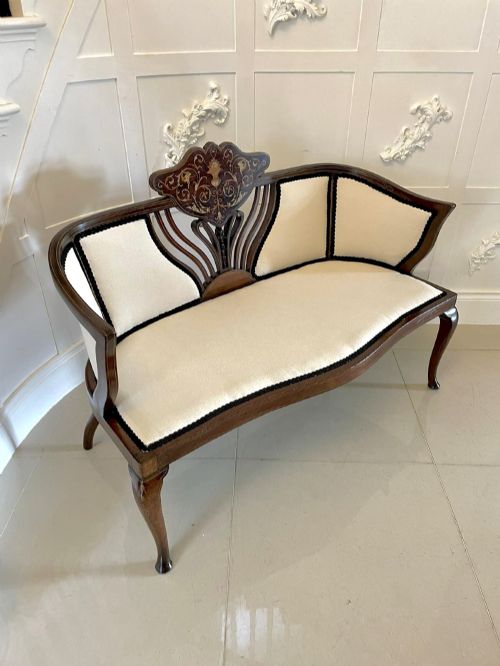
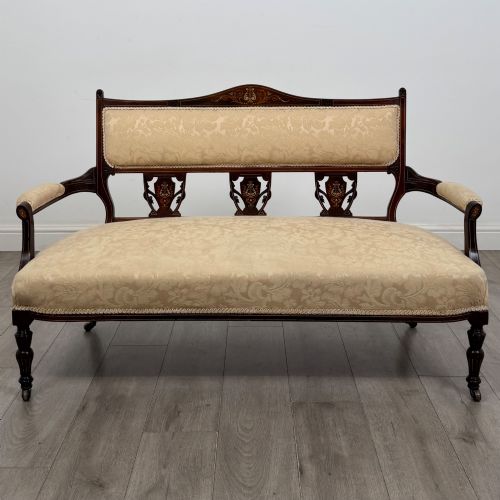
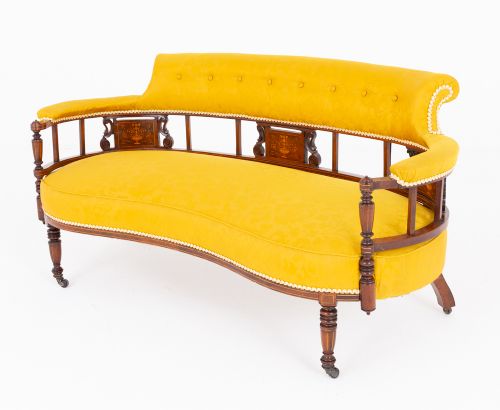
Marquetry inlay and brass elements frequently decorate the wooden surfaces, incorporating lighter woods like satinwood to create contrasting geometric or floral patterns. Upholstery materials including fabric and damask were applied to seats and backs to ensure comfort.
Victorian Inlaid Bench Retail Price Guide 2026
Typical asking prices for victorian inlaid bench among the pieces listed under this phrase on Sellingantiques today, from the lower quarter to the upper quarter. They describe what is for sale here now, not the wider market.
Listings feature seating from the nineteenth and early twentieth centuries, spanning periods recorded around 1870, 1880, 1910, and broader Victorian spans.
What varies in quality
The refinement of the marquetry inlay distinguishes finer examples from standard production, with intricate, sharply cut contrasting timbers demonstrating superior craftsmanship. The choice of primary timber, such as selected rosewood or figured mahogany, also indicates the grade of the piece.
The integrity of the structural joinery and the execution of revival styles determine the overall standard. Pieces that maintain crisp carving alongside well-preserved upholstery materials represent the upper tier of the range.
The Victorian Inlaid Bench Glossary
- Marquetry Inlay
- Decorative technique of applying small pieces of veneer to a structure to form intricate pictorial or geometric patterns. This method enhances the visual depth of wooden furniture surfaces.
- Settee
- A long upholstered seat with a back and arms designed for multiple people. It functions as a primary living space seating option.
- Satinwood
- A durable tropical timber with a lustrous golden yellow appearance often utilised for contrasting inlay work. Cabinet makers favoured it for detailed decorative elements.
- Damask Upholstery
- A reversible figured fabric traditionally woven on a jacquard loom with patterns formed by the weave. It provides a textured and decorative surface for seating cushions and backs.
Victorian Inlaid Bench: Frequently Asked Questions
What is a victorian inlaid bench?
A victorian inlaid bench generally refers to nineteenth-century seating such as settees, sofas, and window seats decorated with wood marquetry.
These pieces combine functional wooden framing with decorative surface ornamentation characteristic of the period.
Which woods were used?
Maker workshops constructed the frames using dense hardwoods including mahogany, rosewood, walnut, and oak.
Contrasting timbers like satinwood were integrated specifically for the marquetry inlay work.
How do revival styles differ?
Styles encompass Sheraton Revival, Moorish Revival, and Egyptian Revival, each drawing inspiration from distinct historical and cultural motifs.
These aesthetic movements dictate the specific decorative patterns found on the timber frames.
Where were they placed?
Original placement varied from principal reception rooms and salons to hallways and window alcoves depending on the specific form.
Conversation seats and settees were designed to facilitate social interaction within domestic interiors.