



Victorian Hunting Painting
When you search for a victorian hunting painting, you uncover a rich tradition of sporting art capturing hounds, horses, and field sports.
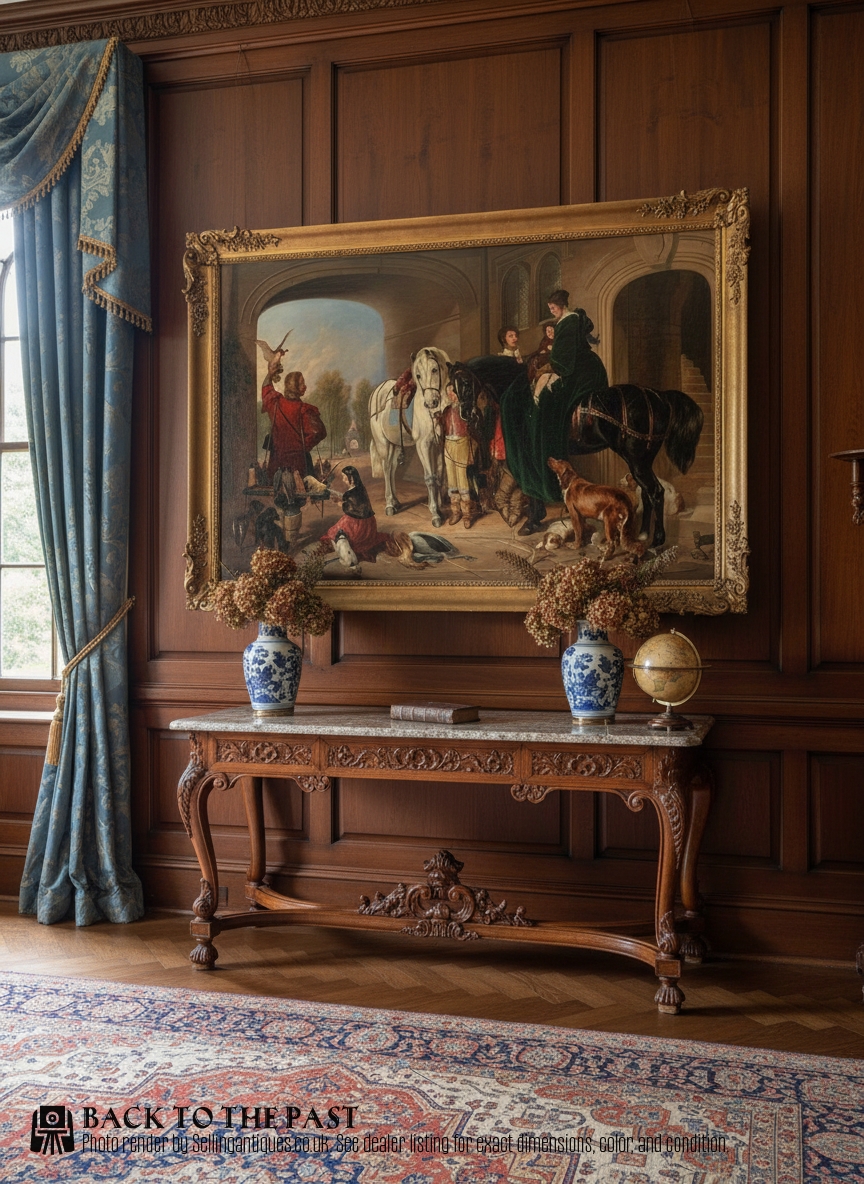
Victorian Hunting Painting
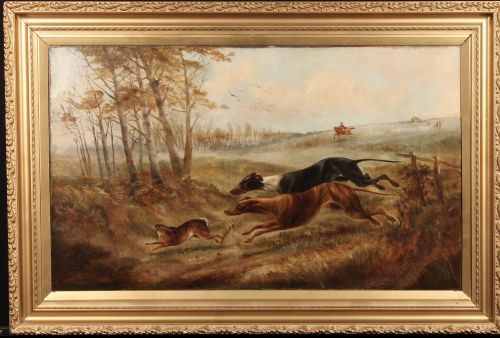
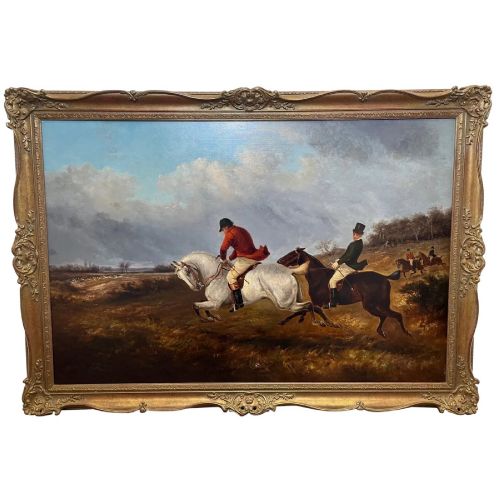
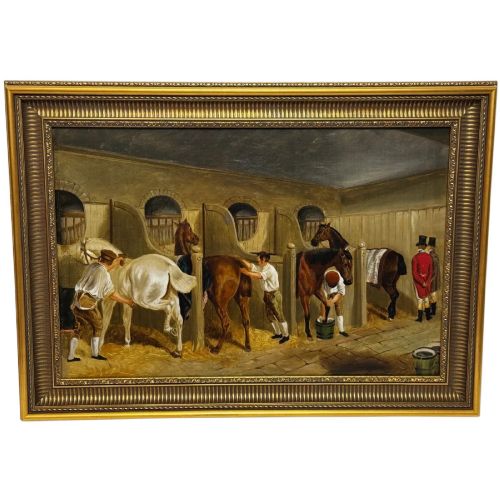
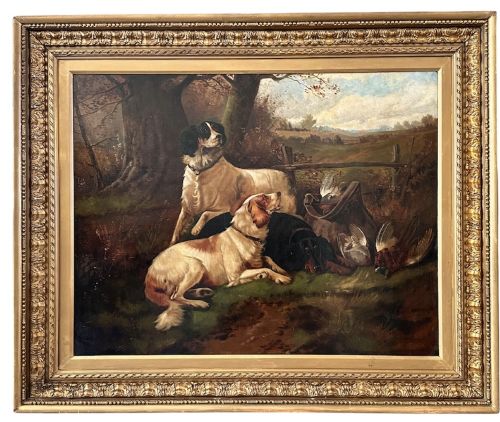
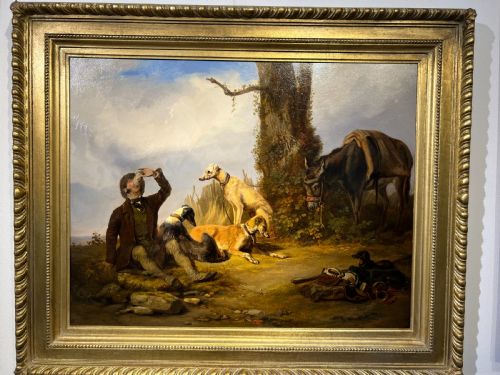
A victorian hunting painting brings nineteenth-century field sports, equestrian pursuits, and sporting dogs directly into view. These works range from expansive landscape scenes of mounted hunts with red coats to detailed animal portraits of hounds, spaniels, and gun dogs.
The most common examples on this page are oil paintings on canvas depicting horses, packs of hounds, and game in rural landscapes. Watercolour and bodycolour pieces also appear, alongside decorative glass and reverse glass paintings showing equestrian subjects.
Makers and artists of the period documented the social importance of the hunt, recording specific packs like the Berkeley Hunt or individual animals with careful realism. Buyers find works spanning mid-century canvases to turn-of-the-century watercolours.
Materials and technique
Artists of this era predominantly used oil paint on canvas or wooden panel, building up rich layers to render the texture of horses' coats, hunting dogs, and wintry landscapes. Watercolours on paper, sometimes enhanced with bodycolour, captured finer illustrative details for framed works.
Frames played an integral part in presentation, frequently utilising gilt wood and gold leaf to complement the warm tones of the painted scenes. Decorative objects such as glass vases employed hand-painted enamel to depict hunting motifs around the vessel.
Techniques varied from loose, atmospheric brushwork in field scenes to precise academic realism in animal portraits. Artists balanced naturalistic observation of anatomy with dramatic lighting to convey the movement of hounds and horses in motion.
Listings feature works spanning the nineteenth century through the early twentieth century, utilising oil on canvas, watercolor, and glass.
Distinctions in craftsmanship
Quality in a victorian hunting painting rests upon the artist's command of animal anatomy and movement. Master painters rendered the musculature of horses and the alertness of hounds with anatomical precision, whereas weaker works display stiffness in pose and proportion.
The handling of the landscape background and atmospheric lighting separates standard decorative pieces from works by established sporting artists. Superior compositions integrate the dogs, horses, and human figures harmoniously into a convincing country setting rather than isolating them against generic backdrops.
Original framing and the preservation of the canvas surface contribute significantly to the standing of a piece. Works retaining their period gilt wood frames and stable paint layers without extensive modern overpainting hold greater appeal for collectors of sporting art.
George Armfield·Thomas Smythe·Michelangelo Meucci·John Sargent Noble·Sir Edwin Henry Landseer·Edgar Hunt·John Sherrin·John Frederick Herring Senior·Benjamin Blake·John Arthur Lomax·Arthur Wardle·Basil Nightingale·Colin Graeme Roe·Fannie Moody·John Frederick Herring Jnr·Jules Chardigny·Alfred Duke·Heywood Hardy·Philip H Rideout·John Alfred Wheeler
The Victorian Hunting Painting Glossary
- Oil on Canvas
- A traditional painting medium where pigments suspended in drying oil are applied to stretched fabric. This combination allowed artists to achieve deep colour saturation and subtle tonal gradations.
- Bodycolour
- An opaque watercolour paint mixed with a white pigment to create solid, flat areas of colour. It was frequently utilised alongside transparent watercolour to add highlights to animal subjects.
- Gilt Wood
- Wood carved and coated with a thin layer of gold leaf or metallic powder. This finish was standard for framing fine art and sporting paintings during the nineteenth century.
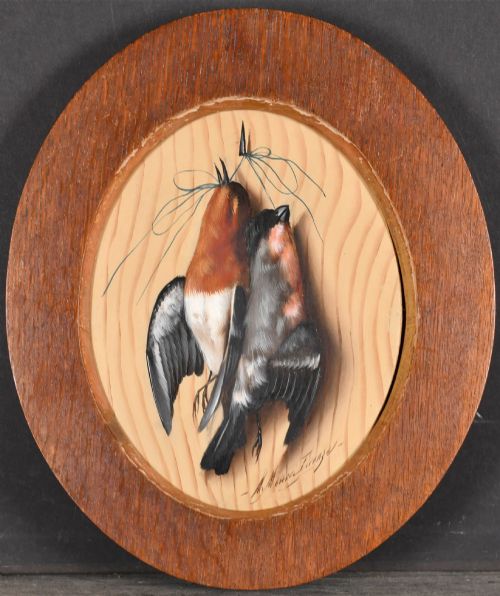
- Trompe l'Oeil
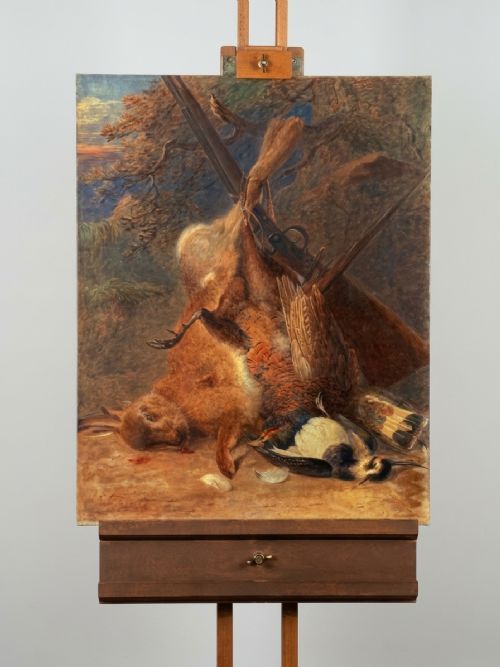
- An artistic technique that uses realistic imagery to create the optical illusion that the depicted objects exist in three dimensions. In this context, it often appears in game still lifes.
- Reverse Glass Painting
- An art form where the image is painted directly onto the back side of a glass panel and viewed from the front. This technique produces a glossy surface finish characteristic of certain decorative pieces.
Victorian Hunting Painting: Frequently Asked Questions
What subjects do these paintings feature?
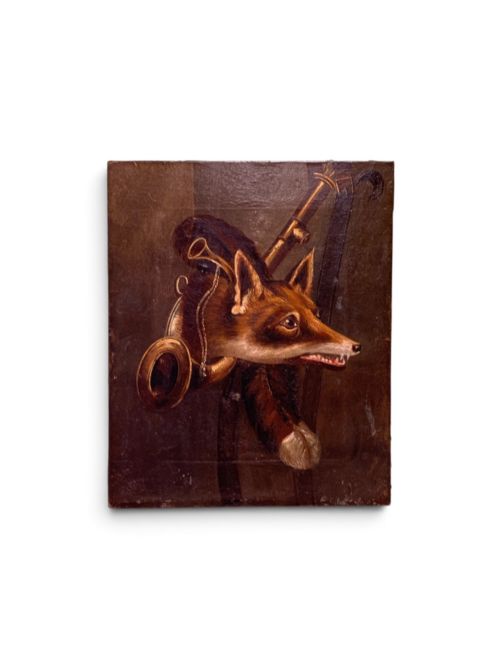
These works primarily depict rural sporting scenes, including mounted fox hunts, packs of hounds in landscapes, and individual portraits of horses and hunting dogs. Game still lifes featuring hares, woodcocks, and songbirds also appear frequently within the genre.
Artists of the period recorded the animals and scenery of the English countryside with careful attention to detail. Many pieces focus specifically on the relationship between the huntsman, his hounds, and their quarry.
How can I identify the date of a painting?
Dating relies upon stylistic clues, artist signatures, framing, and recorded exhibition histories from the nineteenth and early twentieth centuries. Clothing styles of figures in the landscape and the specific breed types of dogs often provide clear chronological markers.
Many works are signed or initialled by the artist, allowing researchers to cross-reference active working dates. Period frames, while sometimes replaced later, frequently offer additional clues regarding the era of creation.
Where were these artworks displayed originally?
Victorian sporting paintings were typically commissioned for country houses, hunting lodges, and estate libraries. Landowners and participants in field sports displayed them to celebrate their equine stock and favourite hunting hounds.
Today, these pieces transition easily into modern home interiors, adding traditional character to studies, hallways, and living rooms. Their warm earth tones and rural subject matter complement both period properties and contemporary spaces.
What is the difference between a sporting art scene and an animal portrait?
A sporting art scene captures a narrative action, such as a hunt in progress across fields, hounds taking a fence, or a day's bag gathered in the field. These compositions emphasise movement, landscape, and the collective energy of the hunt.
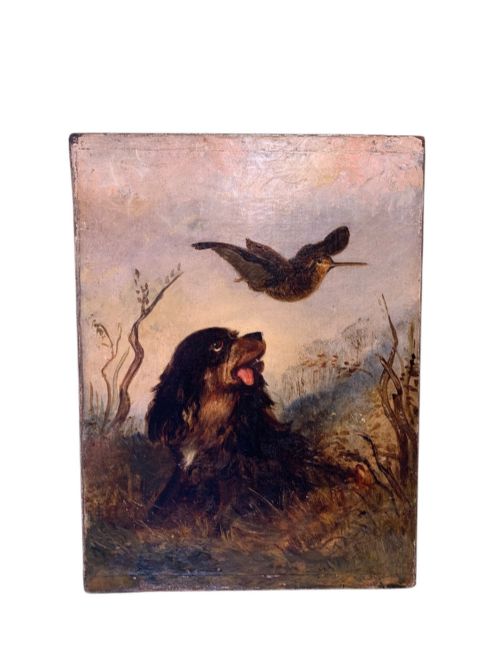
An animal portrait focuses squarely on a specific creature, such as a prize bloodhound, pointer, or terrier, posed individually or in a small group. These works prioritize anatomical accuracy and character study over narrative action.